

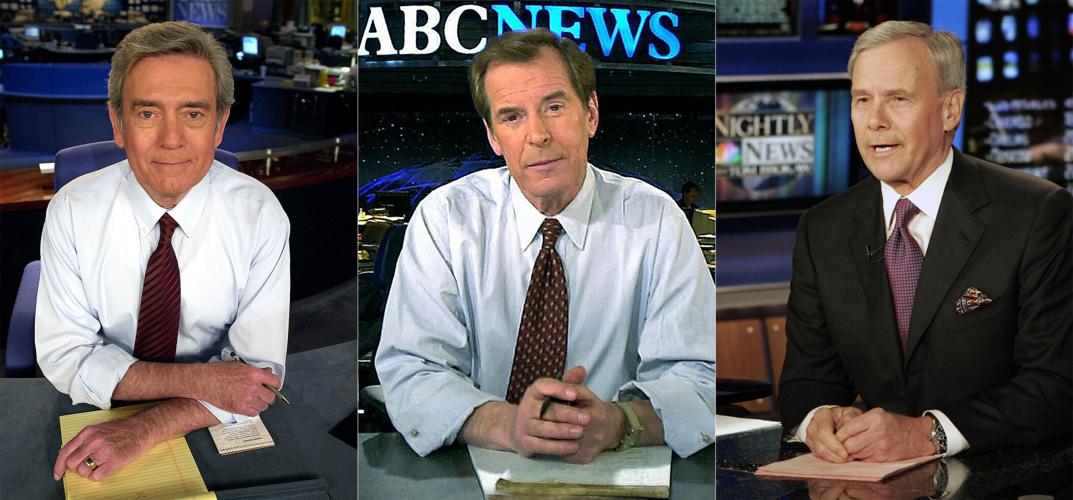
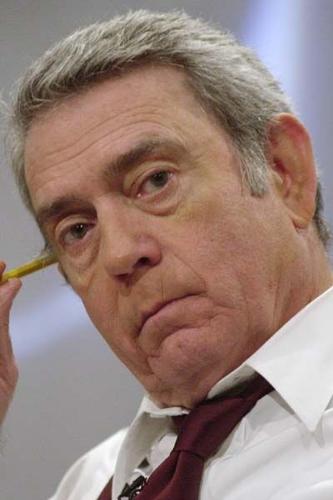
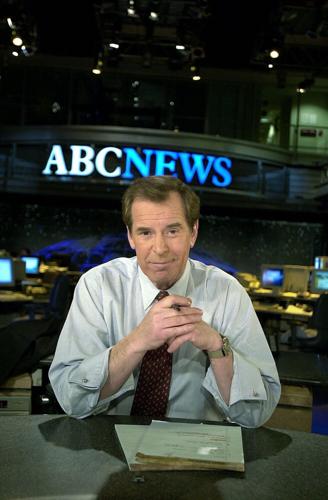

Most Americans were guided through the events of the day by one of three men: Tom Brokaw of NBC News, Peter Jennings of ABC and Dan Rather of CBS. Each had extensive reporting experience before that, Brokaw and Rather were at the White House during Watergate, and Jennings has been a foreign correspondent.
NEW YORK (AP) — "Turn on your television."
Those words were repeated in millions of homes on Sept. 11, 2001. Friends and relatives took to the telephone: Something awful was happening. You have to see.
Before social media and with online news in its infancy, the story of the day when terrorists killed nearly 3,000 people unfolded primarily on television. Even some people inside New York's World Trade Center made the phone call. They felt a shudder, could smell smoke. Could someone watch the news and find out what was happening?
Most Americans were guided through the unimaginable by one of three men: Tom Brokaw of NBC News, Peter Jennings of ABC and Dan Rather of CBS.
"They were the closest thing that America had to national leaders on 9/11," says Garrett Graff, author of "The Only Plane in the Sky," an oral history of the attack. "They were the moral authority for the country on that first day, fulfilling a very historical role of basically counseling the country through this tragedy at a moment its political leadership was largely silent and largely absent from the conversation."
The news media has changed in the ensuing 20 years, and some experts believe the same story would feel even more chaotic and terrifying if it broke today.
But on that day, when America faced the worst of humanity, it had three newsmen at the peak of their powers.
***
Brokaw, Rather and Jennings were the kings of broadcast news on Sept. 11, 2001. Competitive drive and ego had led them to that place. Each had anchored his network's evening newscasts for roughly two decades at that point. Each had extensive reporting experience before that — Brokaw and Rather at the White House during Watergate, Jennings primarily as a foreign correspondent.
While they weren't the only journalists on the air — CNN's Aaron Brown memorably narrated the scene from a New York rooftop, for example — ABC, CBS or NBC were the first choices for news.

Unlike today, when a TV studio is likely to be stuffed with people when a big story breaks, back then it was pretty clear who was in charge.
"The three of us were known because we had taken the country through other catastrophes and big events," Brokaw recalled this summer. "The country didn't have to, if you will, dial around to see who knew what."
Each man was in New York that morning. They rushed to their respective studios within an hour of the first plane hitting the World Trade Center at 8:46 a.m.
Was it a terrible accident? The second plane bursting into the towers with a ball of flame, and scary reports from the Pentagon, answered that question but left many more.

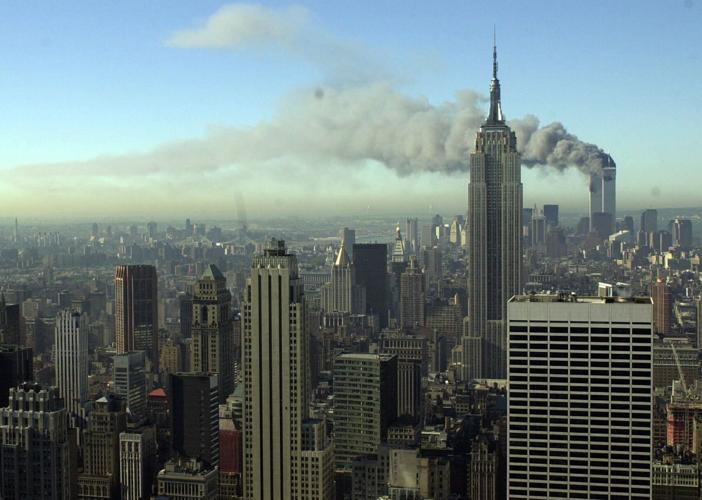
Smoke billows across the New York City skyline after two hijacked planes crashed into the twin towers on Sept. 11, 2001.
Initial network reports were handled by journalists of considerable reputation: Katie Couric, Matt Lauer, Bryant Gumbel, Charles Gibson, Diane Sawyer. Yet there was an unmistakable sense that the first string had arrived when Brokaw, Jennings and Rather took over.
"It was clear that it was an attack on America," says Marcy McGinnis, who was in charge of breaking news at CBS that day. "You want the most experienced person in that chair because they bring so much. They bring all of their life experience, they bring all of their anchoring experience."
It's hard to convey the confusion and anxiety they stepped into. At point Brokaw wondered aloud whether damage to the towers would be so severe they would have to be taken down. Yet viewers could see that, moments earlier, most of one tower had already collapsed.
Things were happening too quickly to keep up.
"The country needed some sort of stability, some sort of ground," says David Westin, ABC News president at the time. "Where are we? What's going on? How bad can this get? It needed some sense of, 'There's some things we do know and some things we don't know. But this is how we go forward from here.'"
Those are usually duties handled by politicians who take to the airwaves at the first sign of a wildfire, hurricane, pandemic or some other disaster. Yet government leaders were kept out of sight for much of Sept. 11 until it was clear the attack was over.
Until late afternoon, President George W. Bush stayed in the air on Air Force One; then-primitive communications captured TV signals only intermittently, allowing the president to watch broadcast TV only when the plane flew over big cities.
The president's absence accentuated the importance of the television anchors and, in fact, led to anger by some members of the Bush administration toward Jennings that lingers to this day. Egged on by Rush Limbaugh, they felt Jennings slighted Bush in the way that he pointed out that the president was out of sight for several hours during the crisis. Westin said Jennings was misinterpreted.
***
On that day, each anchor exhibited particular strengths.
Brokaw, who had just authored "The Greatest Generation," a book about those who fought World War II, was instantly able to put the event into context: We were witnessing history, he explained, and not just news.

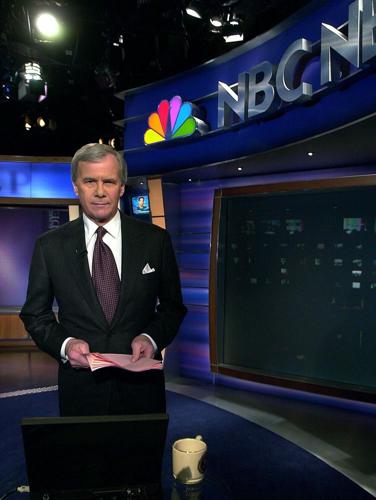
Tom Brokaw poses on the set of the "NBC Nightly News" at an NBC studio in New York, Feb. 1, 2001.
He called it the biggest attack on U.S. soil since the War of 1812, said the profile of Manhattan had changed forever, that day-to-day life would not be the same. "This has been a declaration of war on the United States," he told viewers.
Looking back, Brokaw says he felt it was his primary job to give viewers more than what they could see for themselves onscreen.
"Throughout my career, I was constantly trying to think, 'What's the big picture here?'" he says. "I think that was especially true that day."
Rather would tap his foot on the brakes, reminding those watching to distinguish between fact and speculation. Before Twitter and Facebook existed, he cautioned that rumors would "spread like mildew in a damp basement."
When he took over CBS coverage, he told viewers that "the word of the day is steady, steady. Yes, there have been some terrible things happening but until and unless we know the facts, it's very difficult to draw many conclusions."
He reminded people that "the whole city is not in smoke and flames, not by a long shot."
Sometimes his caution got the better of him, as he repeatedly referenced unconfirmed reports that the first tower had fallen. By then, viewers could see that for themselves.

CBS News anchor Dan Rather waits for a news conference to begin at the CBS Broadcast Center in New York in this Oct. 18, 2001, file photo.
"Emotions and tensions were high that day," Rather told The Associated Press recently. "In order to cut through the noise, to help calm the panic, you have to be clear, concise and transparent. People will know exactly where they stand and can assess for themselves."
Surprisingly few false reports slipped through in those early hours, most prominently that a car bomb had exploded at the State Department in Washington. One group falsely claimed responsibility for the attack. Speculation was kept largely in check, though in the shadow of the World Trade Center attack eight years earlier, Osama bin Laden's name quickly came up.
Jennings was the consummate anchorman. He skillfully weaved all of the elements — eyewitness accounts, expert analysis, fast-breaking bulletins and what viewers saw with their own eyes — into a compelling narrative.
"That's what he was born to do," says Kayce Freed Jennings, widow of the ABC anchorman, who died of lung cancer in August 2005. "He was in a zone. He was a great communicator and, perhaps, great communication was the most important thing he could offer that day."

Peter Jennings poses on the set of ABC's "World News Tonight" in New York Feb. 5, 2001. Jennings, 62, a Canadian, became the network's top news anchor in September 1983.
Each of the anchors, trained in the old school, kept emotions in check. The exception was Jennings, whose eyes were moist when the camera returned to him following a report by ABC's Lisa Stark.
He revealed that he had just checked in with his children, who were deeply stressed. "So if you're a parent and you've got a kid in some other part of the country, call 'em up," he advised.
"There was more of a formality even 20 years ago than there is today, where there is no limit to how personal anchors will get sometimes," MSNBC's Brian Williams says now. "For Peter to do that kind of instantly included all of us."
At first, talk of casualties was kept at a minimum. No one knew. That changed when the second tower imploded, still the morning's most breathtaking moment. The anchors prepared viewers for the worst.
"There are no words to describe this," Rather said then. "It's a time to watch, absorb and think. What we had hoped and prayed would not happened, could not happen, has happened. New York's World Trade Center, in effect, has been destroyed. The loss of life will be high."
It's going to be horrendous, Brokaw told viewers. The damage is beyond what we can say.
"We're all human," Brokaw said this summer, "even those of us who are journalists who spend our lives trying to put things into context and add to the viewers' understanding. We have to be both empathetic and help the viewer through what they are seeing."
That night, after more than a dozen hours on the air, Brokaw returned to an empty apartment, his wife and family out of town and unable to get back. He poured himself a drink and took a phone call with the news that a family friend had died, unrelated to the attacks.
For 40 minutes, he sat on the edge of his bed and cried.
***
Brokaw stepped down from "NBC Nightly News" after the 2004 election. Now 81 and ailing, he keeps busy writing books but seldom appears on television. Rather left CBS News after the fallout from a 2004 story about Bush's National Guard service. Now 89, he's an energetic tweeter about politics and the media.
New anchors are in their old roles at ABC (David Muir), CBS (Norah O'Donnell) and NBC (Lester Holt).

Tom Brokaw is formally retiring from NBC News after an extraordinary 55 years with the network. Brokaw is best known for having anchored the "…
If a Sept. 11-styled attack was to happen in today's media world, where would people turn for news? The cable news networks are better established now as a place to go for breaking news, yet they're also much more driven by opinion. How many people would instantly want their news seen through an ideological prism?
Many would likely go to social media first, Graff said. Television anchors are already acutely aware, during breaking news, that many people watching them are also monitoring Twitter feeds.
"I have a hunch that we would spend a lot of our time knocking down misinformation on social media," Williams says.
Besides opinion and speculation, the Internet would be home to more reporters, amateur or otherwise. First word that something was wrong might not have come from a plane hitting the World Trade Center, but in a tweet from someone saying their plane had been hijacked.
Recreated scenes of passengers rushing the cockpit of United Airlines Flight 93 to confront hijackers before the plane crashed in Pennsylvania became a part of Sept. 11 lore. Today, someone might post pictures of the real thing on Instagram.
The world would surely see in graphic detail the horror of what was going on in the World Trade Center — the mangled bodies, uncontrollable fires and decisions about whether to jump or burn.
Television news had gatekeepers making editorial decisions on Sept. 11 — most prominently, the decision not to show pictures of people leaping or falling to their deaths. Networks eventually halted reruns of planes striking the towers, worried that traumatized children would think the same tragedy was happening again and again.
On social media, there are no such guardrails.
"It would defy censorship," says David Friend, author of "Watching the World Changes: The Stories Behind the Images of 9/11." "As panic-inducing as it was and as tragic an experience it was historically in this country, had the current technology been around in 2001, I think you would have had something far more heart-wrenching."
***

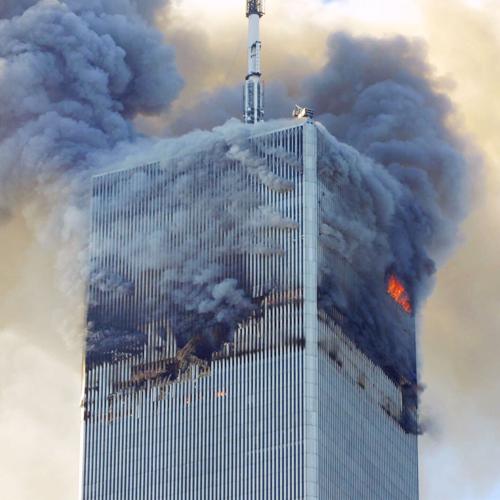
FILE - Fire and smoke billows from the north tower of New York's World Trade Center on Sept. 11, 2001 after terrorists crashed two hijacked airliners into the World Trade Center and brought down the twin towers.
The passage of time and David Westin's current job — he's now an anchor on Bloomberg Television — have given him perspective on what Peter Jennings did on Sept. 11, 2001. He believes Jennings was the best television news anchor ever and, as terrible as the day was, it was his crowning achievement.
"All three were prepared on that day," says Russ Mitchell, an anchor for WKYC-TV in Cleveland. Two decades ago, he was a stand-in for Rather if he needed help on Sept. 11. "All of their careers had led up to that point."
There's one other thing the men appeared to have in common.
Freed Jennings said she doesn't believe her husband ever looked at tapes of his performance that day. "That wasn't his way," she said. Brokaw said he hasn't, mostly because he's afraid he'd spot a mistake that would eat at him. Rather hasn't either, and his reason is simplest.
Living through the day once was enough.
***
PHOTO ARCHIVE
Remembering 9/11 in photos

The south tower of the World Trade Center collapses on September 11, 2001 in New York City. (AP Photo/Diane Bondareff)

People flee the scene near New York's World Trade Center after terrorists crashed two planes into the towers on Tuesday, September 11, 2001. In a horrific sequence of destruction, terrorists hijacked two airliners and crashed them into the World Trade Center in a coordinated series of attacks that brought down the twin 110-story towers. (AP Photo/Diane Bondareff)

Smoke rises at ground zero after the fall of the twin towers on September 11, 2001 in New York City.(AP Photo/Shawn Baldwin)

People flee lower Manhattan across the Brooklyn Bridge in New York, Tuesday, Sept. 11, 2001, following a terrorist attack on the World Trade Center. (AP Photo/Daniel Shanken)

EDITORS: NOTE GRAPHIC CONTENT--- A person falls from the north tower of New York's World Trade Center, Sept. 11, 2001. (AP Photo/Richard Drew)

New York Gov. George Pataki, left, New York City Mayor Rudolph Giuliani, center, and Sen. Hillary Rodham Clinton, D-N.Y., tour the site of the World Trade Center disaster, Wednesday, Sept. 12, 2001. (AP Photo/Robert F. Bukaty)

In this September 11, 2001 photo, people walk over New York's Brooklyn Bridge from Manhattan to Brooklyn following the collapse of both World Trade Center towers. (AP Photo/Mark Lennihan)

In this September 11, 2001 photo, people walk over New York's Brooklyn Bridge from Manhattan to Brooklyn following the collapse of both World Trade Center towers. (AP Photo/Mark Lennihan)

Smoke rises from north tower of the twin towers of the World Trade Center after a hijacked plane crashed into it on September 11, 2001.(AP Photo/Louis Lanzano)

In this September 13, 2001 photograph, a woman poses with a picture of a missing loved one who was last seen at the World Trade Center when it was attacked on September 11, 2001.(AP Photo/Kathy Willens)

Emergency crews arrive after the fall of the twin towers on September 11, 2001 in New York City.(AP Photo/Shawn Baldwin)

People flee the scene near New York's World Trade Center after terrorists crashed two planes into the towers on Tuesday, September 11, 2001. In a horrific sequence of destruction, terrorists hijacked two airliners and crashed them into the World Trade Center in a coordinated series of attacks that brought down the twin 110-story towers. (AP Photo/Diane Bondareff)

Cars are buried in rubble in the aftermath of the September 11 attacks.(AP Photo/Shawn Baldwin)

A fire truck is buried under debris in the aftermath of the September 11 attacks.(AP Photo/Shawn Baldwin)

Rubble-buried cars and a destroyed building in the aftermath of the September 11 attacks.(AP Photo/Shawn Baldwin)

Flags and signs are displayed on Sept. 13, 2001 at a construction site near Times Square in New York City after the World Trade Center attacks on September 11, 2001.(AP Photo/Robert F. Bukaty)

Construction workers continue to clear the rubble at the site of the World Trade Center, destroyed in the September 11, 2001 terrorist attacks, on September 15, 2001.(AP Photo/Charlie Krupa)

Emergency workers arrive at ground zero after the September 11 terrorist attacks in New York City.(AP Photo/Shawn Baldwin)

An American flag at ground zero on the evening of Sept. 11, 2001 after the September 11 terrorist attacks on the World Trade Center in New York City.(AP Photo/Mark Lennihan)

Demolition worker Steve Lebowski cuts away twisted beams which fell from the south tower of the World Trade Center into the upper levels of the Deutsche Bank building overlooking ground zero in December 2001. (AP Photo/Lisa Poseley)

A construction worker rests on Sept. 12, 2001 after a day of working at ground zero after the September 11 terrorist attacks on the World Trade Center in New York City.(AP Photo/David Karp)

The New York City skyline on the evening of September 17, 2001 after the September 11 terrorist attacks on the World Trade Center in New York City.(AP Photo/Mark Lennihan)

In this Sept. 13, 2001 photograph, lit candles and flowers are placed at a memorial for the victims of the the September 11 terrorist attacks on the World Trade Center.(AP Photo/Diane Bondareff)

Pedestrians look at a memorial for firefighters who died in the September 11 World Trade Center attacks on September 14, 2001.(AP Photo/Charlie Krupa)

A destroyed Brooks Brothers store near ground zero on Sept. 11, 2001 after the September 11 terrorist attacks on the World Trade Center in New York City.(AP Photo/Mark Lennihan)

In this Sept. 13, 2001 photograph, a man sells American flags on a street corner after the September 11 terrorist attacks on the World Trade Center in New York City.(AP Photo/Robert F. Bukaty)

The "patio" of the Hard Hat Cafe at New York's Liberty and Church Streets, offered ground zero workers a respite from their recovery efforts in the fall of 2001. (AP Photo/Lisa Poseley)

Firemen gather on a debris-covered street after the collapse of the twin towers of the World Trade Center on September 11, 2001 in New York City.(AP Photo/Richard Drew)

Emergency workers at ground zero on Sept. 11, 2001 after the terrorist attacks on the World Trade Center in New York City.(AP Photo/Mark Lennihan)

A destroyed fire truck on September 14, 2001 near ground zero after the September 11 attacks.(AP Photo/Stuart Ramson)

A collapsed building and a fire truck at ground zero on Sept. 12, 2001 after the September 11 terrorist attacks in New York City.(AP Photo/Shawn Baldwin)

A fireman, covered in debris, rinses his eyes out after the collapse of the twin towers of the World Trade Center on September 11, 2001 in New York City.(AP Photo/Richard Drew)

Debris fall from one of the burning twin towers of the World Trade Center after a hijacked plane crashed into the tower on September 11, 2001 in New York City.(AP Photo/Richard Drew)

This is an undated photo taken by Joel Meyerowitz photographer who was granted unparalleled access to Ground Zero. Meyerowitz was able to photograph over 8,500 images from the site. (Ap Photo/Joel Meyerowitz)

The World Trade Center towers burn after being attacked by terrorists, Tuesday, Sept. 11, 2001, in New York. (AP Photo/Diane Bondareff)

Police officers help rinse a man's eyes after the fall of the twin towers on September 11, 2001 in New York City.(AP Photo/Shawn Baldwin)

Firefighters walk through the rubble in the aftermath of the September 11 attacks.(AP Photo/Shawn Baldwin)

The north tower of the World Trade Center's twin towers burns after a hijacked plane crashed into it on September 11, 2001 in New York City.(AP Photo/Louis Lanzano)

A man cries on September 11, 2001 after witnessing the collapse of the north tower of the World Trade Center in New York City.(AP Photo/Shawn Baldwin)

A firefighter holds a shovel as he walks through the rubble in the aftermath of the September 11 attacks.(AP Photo/Shawn Baldwin)

The twin towers of the World Trade Center burn after hijacked planes crashed into them on September 11, 2001 in New York City.(AP Photo/Louis Lanzano)

Firemen rest on Sept. 12, 2001 after a day of working at ground zero after the September 11 terrorist attacks on the World Trade Center in New York City.(AP Photo/David Karp)

In this Sept. 14, 2001 photograph, a garbage worker passes by a memorial at a construction site in Times Square in New York City after the September 11 terrorist attacks.(AP Photo/Amy Sancetta)

An ABC reporter in front of a car covered with posters of missing people from the September 11 terrorist attacks on the World Trade Center in NYC on Sept. 13, 2001.(AP Photo/David Karp)

Emergency workers near ground zero on September 11, 2001 after the 9/11 terrorist attacks on the World Trade Center in New York City.(AP Photo/Mark Lennihan)

Firefighters extinguish a fire in the aftermath of the September 11 attacks in 2001.(AP Photo/Shawn Baldwin)

A steel cross, recovered from the World Trade Center debris, stands over New York's West St. in the fall of 2001, covered with signatures of the recovery workers and messages to victims. Since workers' schedules usually prevented them from attending church, services were held daily at the foot of the cross. (AP Photo/Lisa Poseley)

A flag flies at half-mast on September 18, 2001 after the September 11 terrorist attacks on the World Trade Center in New York City.(AP Photo/Robert F. Bukaty)

Cars are buried under debris in the aftermath of the September 11 attacks.(AP Photo/Shawn Baldwin)

Smoke rises from the burning twin towers of the World Trade Center after hijacked planes crashed into the towers on September 11, 2001 in New York City.(AP Photo/Richard Drew)

In this September 15, 2001 photograph, a fireman washes his uniform with water after the September 11 terrorist attacks on the World Trade Center in New York City.(AP Photo/Robert F. Bukaty)

In this Sept. 11, 2001 photo, people walk to New York's Brooklyn Bridge from Manhattan to Brooklyn following the collapse of both World Trade Center towers. (AP Photo/Mark Lennihan)(AP Photo/Mark Lennihan)

FILE - In this Sept. 13, 2001 file photo, an American flag flies over the rubble of the collapsed World Trade Center buildings in New York. For years, a handful of current and former American officials have been urging President Barrack Obama to release secret files that they believe document links between the government of Saudi Arabia and the terrorist attacks of September 11, 2001. Other officials, including the executive director of the 9-11 commission, have said the classified documents don’t prove that the Saudi government knew about or financed the attacks_and that making them public would fuel bogus conspiracy theories. (AP Photo/Beth A. Keiser, File)

FILE - In this Tuesday, Sept. 11, 2001 file photo, plumes of smoke rise from the World Trade Center buildings in New York. The Empire State building is seen in the foreground. For years, a handful of current and former American officials have been urging President Barrack Obama to release secret files that they believe document links between the government of Saudi Arabia and the terrorist attacks of September 11, 2001. Other officials, including the executive director of the 9-11 commission, have said the classified documents don’t prove that the Saudi government knew about or financed the attacks_and that making them public would fuel bogus conspiracy theories. (AP Photo/Patrick Sison, File)

A tow truck with the word "revenge" painted on the window drives on Hudson St. in New York Thursday, Sept. 13, 2001 near the World Trade Center. (AP Photo/Mark Lennihan)

