

NEW YORK — Depositors withdrew savings and investors broadly sold off bank shares Monday as the federal government raced to reassure Americans that the banking system was secure after two bank failures fed fears that more financial institutions could fall.
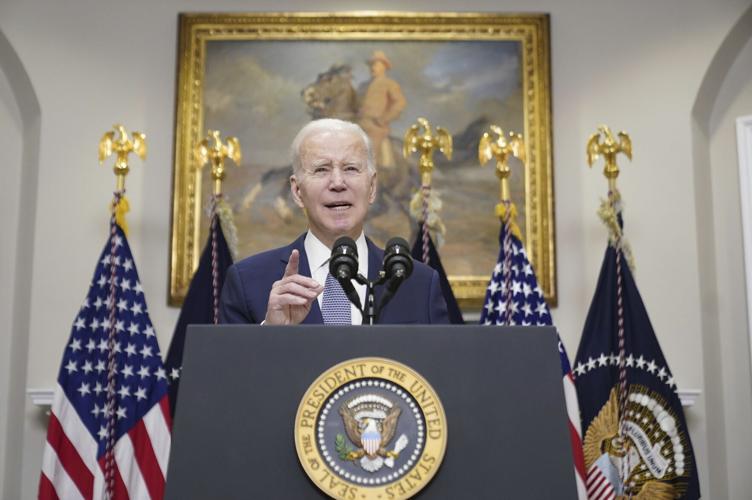
President Joe Biden insisted that the system was safe after the second- and third-largest bank failures in the nation's history happened in the span of 48 hours. In response to the crisis, regulators guaranteed all deposits at the two banks and created a program that effectively threw a lifeline to other banks to shield them from a run on deposits.
"Your deposits will be there when you need them," Biden told the public, seeking to project calm. He also said the banking executives responsible for the failures would be held accountable.

President Joe Biden speaks about the banking system in the Roosevelt Room of the White House on Monday in Washington.
In other developments, the Federal Reserve announced that it would review its supervision of Silicon Valley Bank.
"We need to have humility and conduct a careful and thorough review of how we supervised and regulated this firm, and what we should learn from this experience," said Michael Barr, the Fed's vice chair for supervision, who will lead the effort.
Regulators closed the bank Friday after depositors rushed to withdraw their funds all at once. The only larger failure in U.S. banking history was the 2008 collapse of Washington Mutual. New York-based Signature Bank also collapsed in the third-largest failure in the U.S.
In both cases, the government agreed to cover deposits, even those that exceeded the federally insured limit of $250,000.
Despite the message from the White House, investors broadly dumped shares in bank stocks. Shares of First Republic Bank plunged more than 70% even after the bank said it was taking emergency funding from the Federal Reserve and additional money from JPMorgan Chase.
First Republic wasn't alone. Shares of well-known franchises like Charles Schwab, Fifth Third Bank, Truist, Comercia and Ally Financial all fell sharply.
The selloff happened in part because the country woke up to a new banking system and investors had to find the winners and losers, banking experts said.

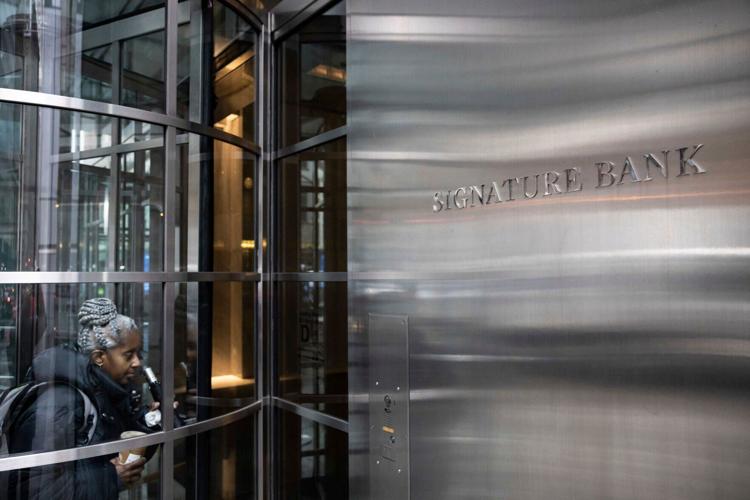
A person enters the Signature Bank headquarters in New York on Monday.
There was no guarantee that the anxiety would not spread. Customers at other banks with deposits over the $250,000 limit remained at risk of losing access to their money for a time.
Just because the government covered for Silicon Valley Bank and Signature Bank "doesn't mean they are going to cover for these smaller banks," said Chris Caulfield, a senior partner at West Monroe.
But the government's actions suggested it would stand behind all deposits if doing so prevents damage to the broader economy.
"Everything is now covered. That's a fact. No matter how specialized or isolated your bank is, if there's a risk of contagion, regulators have made it clear that they are going to intervene," said Norbert Michel, a banking policy expert at the libertarian-leaning Cato Institute.
Amid the selloff of midsize banks, investors kept relatively calm over the health of the nation's biggest banking bulwarks, such as JPMorgan Chase, Citigroup, Bank of America and Wells Fargo. Investors apparently concluded that the only place to be safe in banking was with the nation's most strictly regulated institutions.
Regional banks were seen as the riskiest, since they do not have the scale to compete against larger competitors. Large account balances — once seen as a positive sign that a bank's clients are well off — were a liability since they could be withdrawn at the first sign of trouble.
"I wouldn't want to be running a regional bank right now where my services are no different from my competition," Caulfield said.

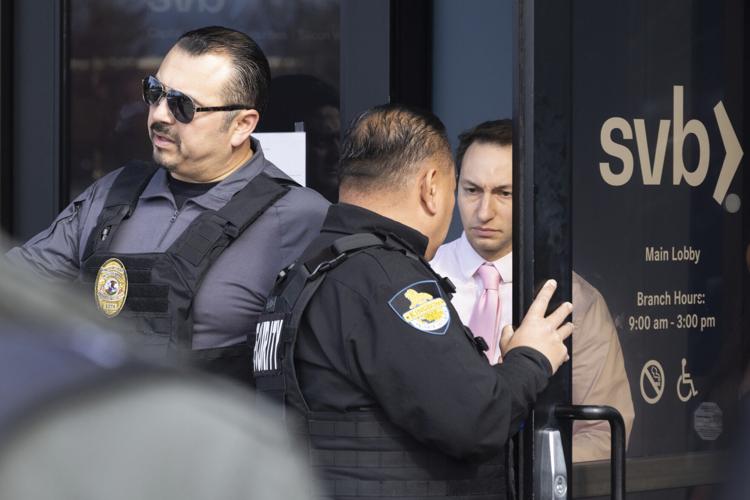
Igor Fayermark, right, from the Federal Deposit Insurance Corporation (FDIC), exits Silicon Valley Bank's headquarters in Santa Clara, Calif., on Monday.
International regulators also had to step in to ease fears. The Bank of England and U.K. Treasury said they facilitated the sale of a Silicon Valley Bank subsidiary in London to HSBC, Europe's biggest bank. The deal protected 6.7 billion pounds ($8.1 billion) of deposits.
Under the plan announced by U.S. regulators, depositors at Silicon Valley Bank and Signature Bank were able to access their money. A new Fed program will allow banks to post those securities as collateral and borrow from the emergency facility.
The Treasury has set aside $25 billion to offset any losses. However, Fed officials said they do not expect to have to use that money, given that the securities posted as collateral have a very low risk of default.
New York bank regulators took possession of Signature Bank on Sunday, ousting its leaders and handing day-to-day control over to the Federal Deposit Insurance Corp.
New York Gov. Kathy Hochul said the decision by the state Department of Financial Services was aimed at holding off a bigger crisis involving more banks.
"Our view was to make sure that the entire banking community here in New York was stable, that we can project calm," Hochul said Monday at a news conference.
She said a high volume of withdrawals that began last week continued with online transactions through the weekend. The bank was open Monday under the name of Signature Bridge Bank.
Signature, which was founded more than two decades ago, has about 40 offices across the country and says it focuses on banking for privately owned businesses, their owners and senior managers.
Though Sunday's steps marked the most extensive government intervention in the banking system since the 2008 financial crisis, the actions were relatively limited compared with 15 years ago.
The two failed banks themselves have not been rescued, and taxpayer money has not been provided to them.
Some prominent Silicon Valley Bank executives feared that if Washington did not rescue their bank, customers would make runs on other financial institutions. Stock prices plunged at other banks that cater to technology companies, including First Republic and PacWest Bank.
Among the bank's customers are a range of companies, including many California wineries that rely on Silicon Valley Bank for loans and technology startups devoted to combating climate change.
By the numbers: President Biden at the two-year mark
6.5% annual inflation
Updated
6.5%: Annual inflation remains stubbornly high, but is slowly falling after reaching a four-decade high of 9.1% in June.
10.46 million job vacancies
Updated
10.46 million: The latest Labor Department figures show more than 10 million job vacancies in the U.S., nearly 1.8 jobs for every unemployed person. Jobless rate at 3.5%, matching a 53-year low. Zero recessions — so far.
$31.38 trillion national debt
Updated
$31.38 trillion: The federal debt stood at $27.6 trillion when Biden took office.
$24.2 billion in security aid to Ukraine
Updated
$24.2 billion: The amount of U.S. security assistance committed to Ukraine since the Russian invasion nearly 11 months ago.
38: The number of High Mobility Artillery Rocket Systems, known as HIMARS, committed to send to Ukraine. A gamechanger, allowing Ukrainian forces to fire at Russian targets from far away, then drive away before artillery can target them.
2.38 million migrants stopped at border
Updated
2.38 million: For the 12 months ending Sept. 30, 2022, Customs and Border Protection reported stopping migrants at the U.S. border nearly 2.4 million times, a record surge driven by sharp increases in Venezuelans, Cubans and Nicaraguans. The previous high was 1.66 million in 2021.
97 federal judges confirmed
Updated
97: Confirmation of Biden's picks to the federal bench, including Supreme Court Justice Ketanji Brown Jackson, outpacing the president's two immediate predecessors.
89 pardons and commutations
Updated
89: The president has granted nine pardons and 80 commutations, far more than any of his recent predecessors at this point. Donald Trump had granted 11 by this time, George W. Bush seven. Barack Obama didn't take any clemency action in his first two years.
$3.36 average gas price
Updated
$3.36: The average price per gallon that American motorists are paying at the pump has fallen since peaking at $5.02 per gallon in June. Motorists were paying a $2.39 per gallon average the week Biden took office.
666 million vaccines administered
Updated
666 million: The number of COVID-19 vaccines administered to Americans under Biden. Twenty million had received the jab before Biden took office. The vaccine was not approved until late in Trump's presidency.
15.9%: The percentage of Americans 5 and older who have gotten updated bivalent vaccine.
680,000 COVID-19 deaths
Updated
680,000: The recorded death toll from the coronavirus pandemic during Biden's term. The worst pandemic in more than a century had already taken more than 400,000 American lives by Biden's inauguration and has taken 1.1 million total since March 2020.
36 states visited
Updated
36: Biden has spread his travel across 36 states (shown here in Pennsylvania) to promote his agenda, but still needs to cross off Arkansas, Indiana, Kansas, Maine, Mississippi, Montana, Nebraska, North Dakota, South Dakota, Tennessee, Utah, Vermont, West Virginia and Wyoming.
197 days in Delaware
Updated
197: There's no place like home. The president spent all or part of 197 days in his home state of Delaware, traveling most weekends to either his home near Wilmington or his vacation home at Rehoboth Beach, according to an AP tally. Beyond the weekend visits, he's also made quick trips for funerals, policy events and to cast his ballot in a Democratic primary.
6 chats with Xi
Updated
6: Biden has spoken with Chinese President Xi Jinping a half-dozen times since the start of his term. All but one of those were phone or video calls. They met in person on the sidelines of a summit in Indonesia in November.
22: The minimum number of times that Biden has publicly lapsed into a nostalgic recollection of an intimate conversation he had with Xi during a visit to China when Biden was vice president. Biden said Xi asked him to define America and he responded with one word: Possibilities. Biden even managed to squeeze in the anecdote during a celebration this week for the NBA champion Golden State Warriors.
21 news conferences
Updated
21: Biden held fewer solo or joint news conferences than his three most recent predecessors at the same point in their presidencies.
$1 trillion in infrastructure
Updated
$1 trillion: The amount allocated for roads, bridges, ports and more in Biden's bipartisan infrastructure legislation, arguably the most significant legislative achievement of his first two years in office.
$40 billion for bridges
Updated
$40 billion: The amount in the infrastructure bill dedicated to repair and rebuild the nation's bridges, the single largest dedicated investment in bridges since the construction of the Eisenhower-era interstate highway system.
43,000: The number of bridges in the U.S. rated as poor and needing repair, according to the White House.
1 state dinner
Updated
1: The president's lone state dinner to date honored French President Emmanuel Macron. Biden held back on some of the the traditional pomp — and partying — at the White House in the early going of his presidency because of COVID-19 concerns.
0 Cabinet departures
Updated
0: Not one of Biden's original Cabinet appointees has left the administration.
A closer look
Updated
Taking stock of President Joe Biden's first two years in office compared to his three most recent predecessors.

