

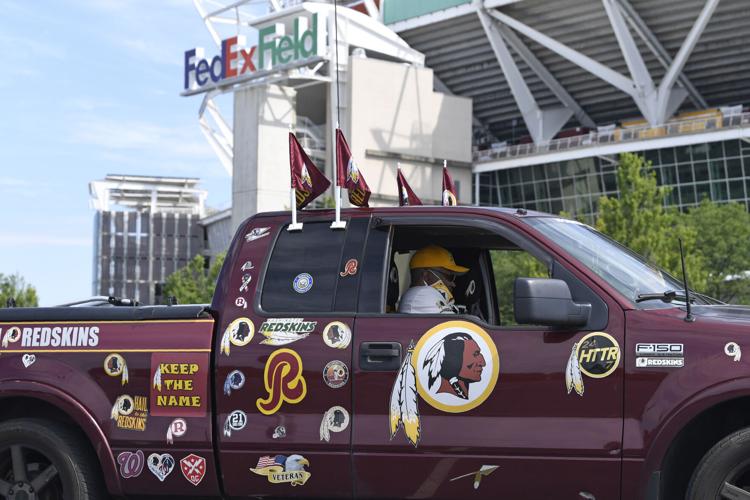

FILE - In this July 13, 2020, file photo, Rodney Johnson of Chesapeake, Va., sits in his truck outside FedEx Field in Landover, Md. Washington's NFL team will not be called the Warriors or have any other Native American imagery in the new name when it's revealed next year. (AP Photo/Susan Walsh, File)
Washington will not have any kind of Native American imagery as part of its next name, and the subject is still evolving across sports in the year since the storied NFL franchise dropped arguably the most polarizing moniker left in the pros.
Tuesday marks the one-year anniversary since Washington dropped the name Redskins and the accompanying Indian head logo after 87 years amid pressure from sponsors and decades of criticism that both are offensive to Native Americans. The Washington Football Team will be around for one more season, with a new name set to be revealed in early 2022.
With Major League Baseball's Cleveland Indians set to adopt a new name at some point and the Atlanta Braves, the NFL's Kansas City Chiefs, the NHL's Chicago Blackhawks and the NCAA's Florida State Seminoles holding onto theirs for now, Washington's process is the furthest along and bears watching as the possibilities get narrowed down.
"The Washington Football Team's announcement that they will not be using Native American imagery is a major step towards reconciliation, justice and equality, but there's still more work to be done," said Crystal Echo Hawk, founder and executive director of Native American-led nonprofit IllumiNative. "This is a step in the right direction, we ask that the NFL, MLB and NHL urge the Kansas City Chiefs, Atlanta Braves and Chicago Blackhawks to follow Washington Football Team president Jason Wright's lead in order to stand on the right side of history."
Wright, who was named Washington's team president in August, ruled out Warriors in a lengthy post on the team's website Monday, saying feedback from Native American communities showed "deep-seated discomfort" about that name.
"Failing to acknowledge our past use of Native imagery in the consideration of the new name wouldn't be mindful of the individuals and communities that were hurt by the previous name," Wright said. "We will choose an identity that unequivocally departs from any use of or approximate linkage to Native American imagery."
Wright said Washington is "down to a short list" of names. After several months of chatter about "R" options such as Redwolves, Redtails/Red Tails or Redhawks, it's possible "Red" is taken out of the equation entirely.
That would distance Washington from the old name more than changes at the college level in the 1990s: St. John's going from Redmen to Red Storm and Miami of Ohio dropping Redskins to become the RedHawks.
Wright said team officials are "confident that our new brand identity will honor our legacy and lead us into our future as a franchise."
As the latest reckoning over racial injustice, iconography and racism continues in the U.S., Washington is far from the only franchise considering a change, while others defend the status quo. A closer look:
***

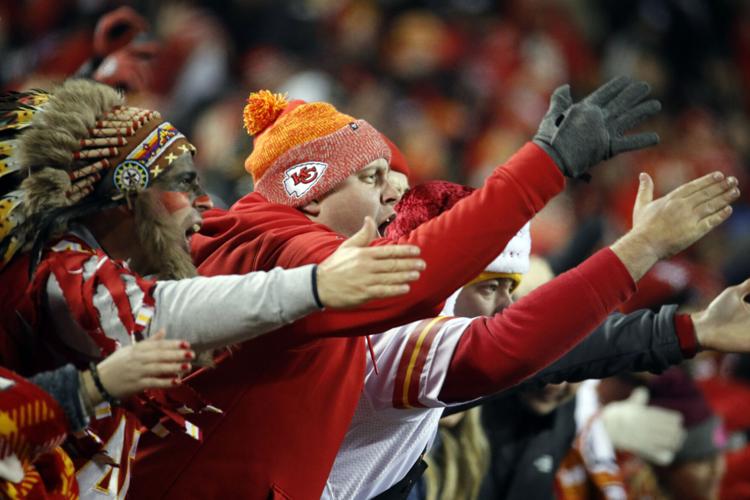
FILE - In this Dec. 13, 2018, photo, Kansas City Chiefs fans chant and do the chop during the second half of the team's NFL football game against the Los Angeles Chargers in Kansas City, Mo.
FOOTBALL
Protests have followed the Chiefs on two Super Bowl trips, and last fall they barred headdresses and war paint for fans at Arrowhead Stadium. They're still facing calls to abandon a tradition of fans breaking into a "war chant" while making a chopping hand motion designed to mimic the Native American tomahawk — which is not unique to Kansas City.
A coalition of Native American groups put up billboards in the Kansas City area to protest the tomahawk chop and Chiefs' name.
North of the border, Edmonton of the Canadian Football League reversed course last summer by dropping the name Eskimos in the aftermath of Washington's decision, temporarily becoming the EE Football Team. On June 1, Elks was announced as Edmonton's new name.
***

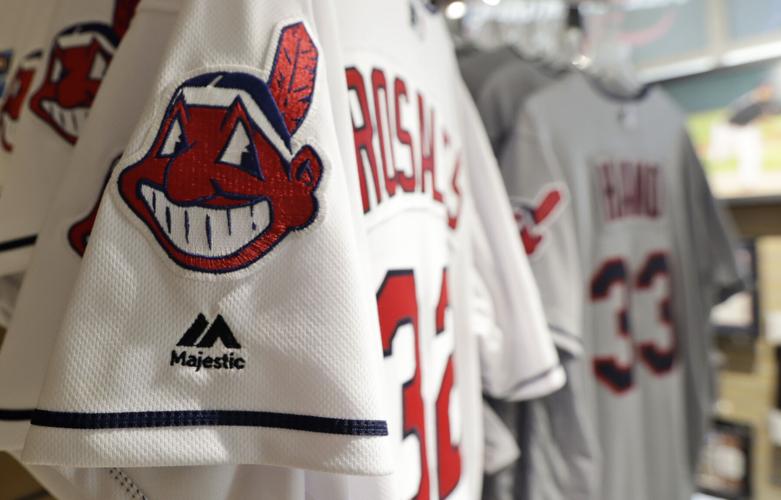
Jerseys with Chief Wahoo are displayed in the team shop, Wednesday, July 3, 2019, in Cleveland.
BASEBALL
Cleveland and Atlanta appear to be at opposite ends of the spectrum.
Cleveland announced in December it was dropping Indians and, like Washington, is vetting a final list of possibilities. While Cleveland has not given a firm timetable on a new name, owner Paul Dolan told The Associated Press in December it will not have any association with anything Native American.
The Braves have resisted calls for a name change. The team has not waivered from a firm statement in a letter to season-ticket holders in 2020 that said: "We will always be the Atlanta Braves."
Even the "tomahawk chop" has returned along with fans this season after a Cardinals pitcher said during the 2019 playoffs that it was disrespectful, and the team stopped encouraging the chant. The death of Hall of Famer Hank Aaron in January led some fans to propose a switch to Atlanta Hammers to honor "Hammerin' Hank."
***

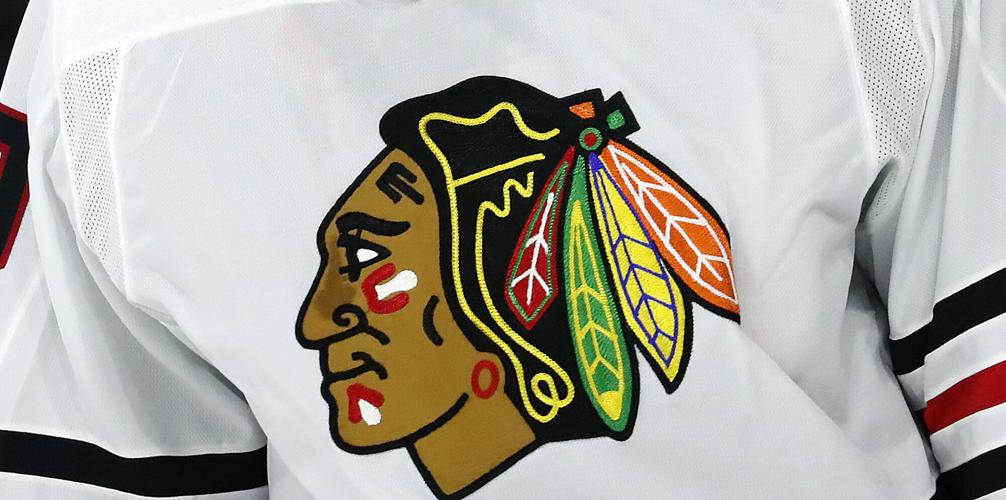
FILE - The Chicago Blackhawks logo is shown on a jersey in Raleigh, N.C., in this May 3, 2021, file photo.
HOCKEY
The Chicago Blackhawks have shown no signs of considering a name change any time soon, with the club contending it honors Black Hawk, a Native American leader from Illinois' Sac & Fox Nation. CEO Danny Wirtz said in December that the Blackhawks "continue to deepen our commitment to upholding our namesake and our brand."
Like the Chiefs, the Blackhawks banned headdresses at home games as part of their pledge to honor the Native American community, with which the team has tried to strengthen ties over the past year.
***
COLLEGE
After Miami of Ohio, St. John's, Syracuse, North Dakota and others made changes, a handful of U.S. colleges and universities maintained Native American nicknames for sports teams and received waivers from the NCAA because of support from local tribes. Those includes the Florida State Seminoles, Utah Utes and Central Michigan Chippewas.
Illinois retired the Chief Illiniwek mascot in 2007 but has kept the Fighting Illini name.
***
K-12 SCHOOLS
The National Congress of American Indians reports 29 schools in the U.S. have moved away from a Native American name or imagery so far in 2021. It's not clear how many more changes happened in the immediate aftermath of Washington's decision from July 13-Dec. 31, 2020.
The NCAI's National School Mascot Tracking Database lists 1,890 schools with Native American mascots.
"True respect for Native people and other people of color requires our country to rid itself of the symbols of racism and intolerance that have far too long been embedded in popular culture and which have marginalized and dehumanized us," NCAI president Fawn Sharp said. "NCAI will not rest until all offensive Native-themed mascots and associated imagery are removed from popular culture."
***
HISTORY
Photos: Washington's football team through the years
1962
Updated
Bobby Mitchell of the Washington Redskins jumps to haul in a pass from quarterback Norman Snead in the second period of their game against the St. Louis Cardinals in St. Louis, Oct. 15, 1962. The play covered 11 yards and gave the Redskins a first down on their 22-yard line. Moving in to tackle Mitchell are Pat Fisher (37) and Billy Stacy (24) of the Cardinals. The game ended in a 17-17 tie. (AP Photo/Fred Waters)
1967
Updated
Washington Redskins defensive captain Sam Huff poses in front of his jersey in the locker room in Washington, D.C., Dec. 12, 1967. Huff announced he will retire Dec. 17, after his team's final game of the year. Huff, 33, one of professional football's all-time linebackers and five times an All-National Football League selection, has spent the past four years with Washington following an eight year stint with the New York Giants. (AP Photo)
1969
Updated
Vince Lombardi, back on the sidelines after a year?s absence in the coaching ranks, views his charges as the Washington Redskins met the Chicago Bears in an exhibition game, played, Aug. 3, 1969 in Washington. The Redskins won, 13-7. (AP Photo/Harvey Georges)
1971
Updated
Washington Redskins’ Coach George Allen gestures as a free agent gets set to run the 40-yard dash on Friday, March 5, 1971 in Washington during first free agent tryout camp in the nation’s capital. About 275 football prospects showed up demonstrating their talents in an effort to make the Washington Redskins professional football team. (AP Photo/BD)
1973
Updated
Defense-minded Washington Redskins' coach George Allen is shown conferring with his defensive leader linebacker Jack Pardee during a recent game. Allen leads the NFC champion Skins against the Miami Dolphins, AFC champion team, in the super bowl in Los Angeles, Jan. 6, 1973. (AP Photo)
1973
Updated
Washington Redskins running back #43, Larry Brown, is stopped in his tracks by Miami Dolphins defender #75, Manny Fernandez, who grabs him around the neck during action at Super Bowl VII in Los Angeles, January 14, 1973. The Dolphins defeated the Redskins 14-7, to complete the season undefeated. (AP Photo)
1973
Updated
Washington Redskins' Brig Owens intercepts a pass from Miami Dolphins' quarterback Bob Griese intended for Marv Fleming (80) in end zone during third quarter of the Super Bowl in Los Angeles, Jan. 14, 1973. (AP Photo)
1983
Updated
Washington Redskins star running back John Riggins speaks to reporters during a news conference, Jan. 26, 1983, at the team's hotel in Costa Mesa, Calif. The Redskins are in California preparing for next Sunday's Super Bowl against the Miami Dolphins. (AP Photo/Ed Reinke)
1983
Updated
An unidentified grounds man paints Washington Redskins name and helmet design in the end zone despite the threat of rain with four days to go before Sundays Super Bowl XVII pitting the Miami Dolphins against the Redskins at the Rose Bowl, Wednesday, Jan. 26, 1983, Pasadena, Calif. (AP Photo)
1983
Updated
Washington Redskins receiver Charlie Brown (87) gets ready to spike the ball after he scored fourth quarter touchdown against the Miami Dolphins in Super Bowl XVII in Pasadena, Calif., Jan. 30, 1983. Coming over to congratulate Brown are teammates Alvin Garrett (89) and Clarence Harmon (38). Redskins won 27-17. (AP Photo)
1983
Updated
Washington Redskins running back John Riggins (44) eludes tackle by Don McNeal (28), of the Miami Dolphins, for gain during Sunday night's Super Bowl XVII game in the Rose Bowl in Pasadena, Ca., on Jan. 30, 1983. Riggins, named the game's Most Valuable Player, rushed for 166 yards, a Super Bowl record. The Redskins beat the Miami Dolphins 27-17. (AP Photo)
1983
Updated
Washington Redskins quarterback Joe Theismann (7) holds game ball as he signals No. 1 at the end of Super Bowl XVII, Sunday, Jan. 30, 1983, Pasadena., Calif. Theismann and running back John Riggins led the Skins to a 27-17 win over the Miami Dolphins. The rest of the group is unidentified. (AP Photo)
1983
Updated
Washington Redskins owner Jack Kent Cooke, left, running back John Riggins, and head coach Joe Gibbs, right, share the game ball in the locker room after Sunday night's Super Bowl XVII win in Pasadena, Ca., on Jan. 30, 1983. The Redskins beat the Miami Dolphins 27-17. Riggins was named Most Valuable Player of the game. (AP Photo)
1983
Updated
Washington Redskins quarterback Joe Theismann wears a big grin in 'Skins lockerroom following his team's 27-17 Super Bowl XVII win over the Miami Dolphins Sunday, Jan. 30, 1983 in the Pasadena Rose Bowl. (AP Photo)
1984
Updated
FILE - In this Jan. 22, 1984, file photo, Los Angeles Raiders running back Marcus Allen high-steps his way down the sideline past Washington Redskins' Anthony Washington (24) and Todd Bowles (28) during NFL football's XVIII in Tampa, Fla. Allen rushed for a Super Bowl-record 191 yards on 20 carries and scored two touchdowns as the Raiders trounced the Redskins, 38-9. (AP Photo/File)
1988
Updated
In this Jan. 31, 1988, file photo, Washington Redskins quarterback Doug Williams prepares to let go of a pass during first quarter of Super Bowl XXII against the Denver Broncos in San Diego. Williams, who set a record with 340 yards passing in the NFL football game and became the first African-American quarterback to win a Super Bowl. (AP Photo/Elise Amendola, File)
1988
Updated
FILE - In this Jan. 31, 1988, file photo, Washington Redskins running back Timmy Smith (36) goes around Denver Broncos linebacker Jim Ryan (50) on a long run during NFL football's Super Bowl XXII in San Diego. Smith finished the game with a Super Bowl-record 204 yards and two scores in a 42-10 win over Denver. Instead of that being a launch to a successful career, drug problems and injuries limited Smith to 15 games and 476 yards rushing for the rest of his career. (AP Photo/Bob Galbraith, File)
1988
Updated
Denver Broncos quarterback John Elway (7) scrambles under pressure from Washington Redskins Dexter Manley and Monte Coleman (51) in Super Bowl XXII, Jan. 31, 1988, in San Diego. Elway was sacked five times and threw three interceptions as the Broncos lost 42-10, their second consecutive Super Bowl loss. (AP Photo)
1988
Updated
Washington Redskins quarterback Doug Williams is surrounded by members of the media after leading the Redskins to a 42-10 victory over the Denver Broncos in Super Bowl XXII in San Diego, Jan. 31, 1988. Williams completed 18 of 29 attempts and was named Most Valuable Player. (AP Photo)
1988
Updated
President Reagan readies to throw a football to Washington Redskins' receiver Ricky Sanders during ceremonies honoring the Super Bowl XXII champions at the White House in Washington, D.C., Feb. 4, 1988. The ball was presented to the president by quarterback Doug Williams. The Redskins defeated the Denver Broncos 42-10, at Jack Murphy stadium in San Diego, Calif. (AP Photo/Doug Mills)
1992
Updated
Washington Redskins quarterback Mark Rypien reacts after Gerald Riggs ran the ball into the end zone for a second quarter touchdown against the Buffalo Bills in Super Bowl XXVI in Minneapolis, Minn., Sunday, Jan. 26, 1992. Rypien, named the game's most valuable player, passed for 292 yards and two touchdowns to lead the Redskins to their third Super Bowl victory. Redskins won 37-24. (AP Photo/Mark Duncan)
1992
Updated
Washington Redskins quarterback Mark Rypien winds up and gets ready to release a pass during first quarter action at the Super Bowl in Minneapolis on Jan. 26, 1992. (AP Photo/Doug Mills)
1992
Updated
Washington Redskins Art Monk evades a tackle by Buffalo Bills Mark Keloso after he took in pass from Mark Rypien during first quarter of Super Bowl XXVI in Minneapolis Sunday, Jan. 26, 1992. (AP Photo/Bill Haber)
1992
Updated
Washington Redskins wide reciever Art Monk picks up yardage after pulling in a pass during first quarter action in Sunday, Jan. 26, 1992 Super Bowl XXVI in Minneapolis, Minnesota. Monk caught five passes in the Redskins first drive. (AP Photo/David Longstreath)
1992
Updated
Washington Redskins coach Joe Gibbs helps from the sideline during Super Bowl game with the Buffalo Bills in Minneapolis on Jan. 26, 1992. (AP Photo/John Gaps III)
1992
Updated
Buffalo Bills coach Marv Levy, right, talks with Washington Redskins coach Joe Gibbs after the Redskins defeated the Bills, 37-24, in Super Bowl XXVI football game at Minneapolis on Jan. 26, 1992. (AP Photo/Doug Mills)
1993
Updated
Washington Redskins head coach Joe Gibbs listens to a reporters question during a news conference, Friday, March 6, 1993 at Redskin Park in Ashburn, Virginia where he announced his retirement. Gibbs, who led the Redskins to three Super Bowl victories in 12 years, will be succeeded by Richie Petitbon, who was the assistant head coach for defense. (AP Photo/Greg Gibson)

