


TEMPE, Ariz. — Recent moves by President Joe Biden to pressure TikTok over its Chinese ownership and approve oil drilling in an untapped area of Alaska are testing the loyalty of young voters, a group that's largely been in his corner.
Youth turnout surged in the three elections since Donald Trump was elected president in 2016, helping Biden eke out victories in swing states in 2020, pick up a Democratic Senate seat in the 2022 election and stem potential losses in the House.

President Joe Biden speaks during an event March 23 in the East Room of the White House in Washington. Recent moves by Biden to pressure TikTok over its Chinese ownership and approve oil drilling in an untapped area of Alaska are testing the loyalty of young voters.
Biden has tried to offer relief from student loan debt and has advocated for abortion rights. He signed a massive climate spending bill along with the most sweeping gun violence bill in decades.
Still, the Biden administration irked environmentalists and young people by approving the huge Willow oil drilling project on Alaska's North Slope.
The 80-year-old president, expected to launch a reelection campaign, has never been the favorite candidate of young liberals itching for a new generation of American leadership. And his plan to wipe out billions of dollars in student loan debt is in jeopardy at the Supreme Court.
The risk for Biden is that young left-of-center voters will sit out an uninspiring election.
"I'm a Democrat, but I'm not voting for Biden," said Mark Buehlmann, a 20-year-old Arizona State University student who said he likely would abstain if Biden is the Democratic nominee. "He's maybe capable of doing a good job, but he's not capable of gathering the troops, rallying the people. Especially the Democratic voter base. I don't think he's a strong candidate."
TikTok allows users, 150 million of whom are in the United States, to post short, creative videos for friends and strangers. Its algorithm has an uncanny ability to figure out what interests its users and serve up videos they'll enjoy. It's become a supremely popular — some say addictive — place for young people to find entertainment and community.
Western governments are growing increasingly worried that TikTok's owner, Beijing-based ByteDance, might give browsing history or other data about users to China's government or promote propaganda and disinformation. The U.S. and other nations banned TikTok from government-owned devices, as have several states.
Biden has come under increasing pressure from GOP lawmakers to take action against TikTok. The U.S. Committee on Foreign Investment, part of Biden's Treasury Department, threatened to ban TikTok if ByteDance doesn't sell its stake in the app, according to a Wall Street Journal report this month.
In interviews at Arizona State, one of the largest college campuses in the U.S. and a contributor to Biden's narrow 10,000-vote win in the swing state, young people described a TikTok ban as somewhere between an annoyance and an inevitability — but not something that would change their views of the president.
"Most people don't really think about those kinds of things," Lucas Vittor, a 19-year-old business administration student from Houston, said of a TikTok ban. "I think that they'll probably just see it as, 'He's an oppressive leader, an old dude, he doesn't know about social media.'"
If TikTok disappears, another app will emerge to capture the attention of young people, Vittor predicted. Other social media platforms, including YouTube and Instagram, incorporate similar algorithm-driven video features, though some users find them clunky compared to TikTok.

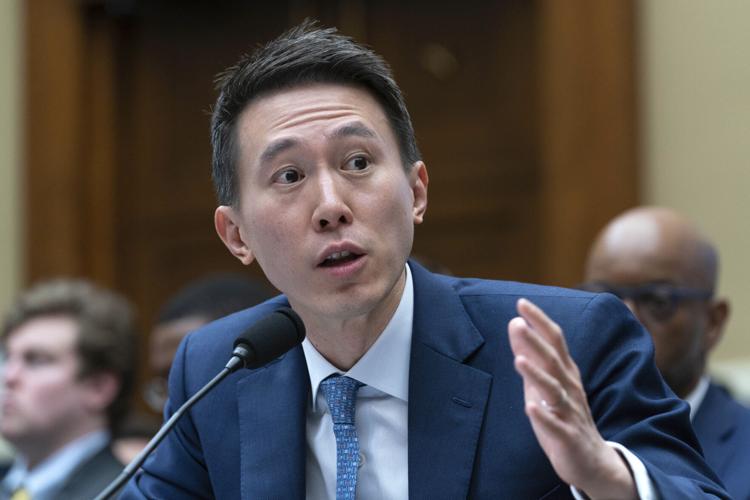
TikTok CEO Shou Zi Chew testifies during a hearing of the House Energy and Commerce Committee on the platform's consumer privacy and data security practices on Thursday on Capitol Hill in Washington.
"It's not really Biden's issue," said Ginny Xu, a 20-year-old chemical engineering student from Goodyear, Arizona. "It's more of a bipartisan thing — 'safety' from China."
Losing access to TikTok would be disappointing, Xu said, but it wouldn't dissuade her from voting for Biden if there's no better Democratic choice.
Her friend, 20-year-old chemical engineering student Maddie Bruce, agreed. "I just am not a big Joe Biden fan," Bruce said. She would prefer to see another Democrat run but would still vote for Biden, she said.
The 2018 and 2020 midterms brought the highest levels of youth turnout of the past three decades, according to the Center for Information & Research on Civic Learning and Engagement at Tufts University.
And when they do vote, young people overwhelmingly back Democrats.
Biden won 63% of voters age 18 to 24, compared with 34% for Trump, according to AP VoteCast, an electorate survey. Republican House candidates did better with young voters in last year's midterms, but Democrats still had a 14-percentage point advantage, winning voters 24 and younger 54% to 40%.
"If Democrats are looking for their secret weapon, young voters are it," said Jack Lobel, spokesperson for Voters of Tomorrow, which organizes young voters online and in person. "For Democrats especially, who already have young voters basically on their side, we are the untapped potential that campaigns are looking for."
A TikTok ban might irritate a lot of young voters, but Biden can point to a strong record of standing up for young people's interests, Lobel said.
Marisol Ortega, a 21-year-old journalism student from Glendale, Arizona, said many of her peers are looking for someone younger and more exciting, even if they'll likely hold their nose and vote for him.
How to take a break from social media
Be easy on yourself and ask for help about social media use
Updated
"If you're reading this article, kudos to you for thinking about reevaluating social media," Agarwal said Trying to meet your goals is all about celebrating the small wins.
At the least, set small benchmarks for yourself like spending 10 minutes less on social media than the day before. The right amount of social media time is different for everyone since some people actually use these apps to brand and help market themselves. Find your own social media sweet spot, and remember, even if you scroll too much on social media one day, you can try and meet your goal tomorrow.
Another way to keep you on track is to share your goal with someone you trust. A friend or loved one who can kindly nudge you when they notice you've been on social media for awhile.
Helpful exercise to remind you what you're missing by scrolling
Updated
Scrolling through social media while hanging out with friends isn't uncommon nowadays, but when you think about how unengaged you are in those moments, it can put social media use into perspective.
Agarwal suggests the next time you're in a room with others at a family or friends gathering and you see yourself scrolling through social media instead of engaging with others, take a minute to physically remove yourself from the room and isolate in another room. Listen and feel how much you may be missing out on.
"What that does is it gives your brain a signal. If you force yourself to leave the room, you realize how much you're using that app and missing out on other people," Agarwal said. "It's a good physical reminder of being present in the moment and not on your on your phone and scrolling through social media."
Use your phone's screen-time tracking feature and limit social media use
Updated
Most smart phones nowadays track your screen-time and usage already. It's a good idea to figure out your average screen time per day so you have a benchmark that you can work on.
On iPhone, you can go into your "Screen Time" settings, which displays the amount of time you spend on each app and allows you to put timers on specific apps to limit how long you're on them. Android phones have similar features in the "Digital Wellbeing" settings. Additionally, Facebook, Instagram and TikTok offer the same features within the app settings themselves.
Physically distance yourself from your phone and apps
Updated
When you're at home and have free time, put your phone in a drawer or somewhere you can't see it. Oftentimes limiting the ability to quickly and easily pick up your phone is enough to keep you off of social media, said Agarwal. If your phone is what keeps your hands from fidgeting, try to have some objects around the house that relieve stress, like a stress ball, fidget toy or yarn and crochet hooks.
Hide your social media apps on your phone by placing the app on the second or third page of your home screen or bury the app inside an "app folder" with a bunch of others. When you're waiting in line or have a free five minutes, instead of grabbing your phone — take in the view, practice some breathing exercises or read a book.
Benefits of taking a social media break
Updated
Ever hear of "text neck?" It's the result of looking down at our phones when scrolling or texting, straining the neck muscles over a long period of time. Taking a break from social media helps relieve neck pain and gives your eyes a break from bright screens.
People may also be more connected than ever through social media, but a 2018 University of Pennsylvania study found that people who limit their time on social media experience less depression and feelings of loneliness.
Taking a break from social media will give you better sleep, too. Research suggests that nighttime use of social media is driven by FOMO (fear of missing out), and keeps people scrolling longer at night instead of going to sleep.
Reevaluate what you want out of social media
Updated
What is the reason that brought you onto social media? This is the question Agarwal said to ask yourself when trying to figure out if it's time to take a social media break. If you're not getting the same satisfaction from the reason you use social media, it may be time to look for alternatives.
If you joined social media to...
1. Find community: Look for clubs and groups in your neighborhood where you can meet and interact with others IRL (in real life).
2. Be inspired: Consume other forms of media like magazines, books, podcasts, movies or live events.
3. Buy and sell things: Try using other apps, like OfferUp or NextDoor, or visiting local events and marketplaces in person.
Two and a half hours.
Updated
Two and a half hours — that's the average amount of time people spend on social media each day.
It may not sound like a lot, but that time can really add up — and at what cost? Social media has proven negative effects on mental health (especially for teens), self-image and for some is a huge time-waster.
University of Penn's Anish Agarwal, an emergency physician, researcher, and deputy director for the Center for Digital Health, said it's important to constantly be reevaluating the role social media plays in daily life.
The bottom line: taking a break from social media is healthy for you. Read on for guidance and tools to help you limit screen time on these apps.

