

Arizona Daily Star election endorsements
Voters have significant decisions to make in this general election. After interviews with candidates and our own research, we offer information on races in which candidates directly serve Arizona, particularly Southern Arizona. Early voting began Oct. 12 and Election Day is Tuesday, Nov. 8.
- Updated
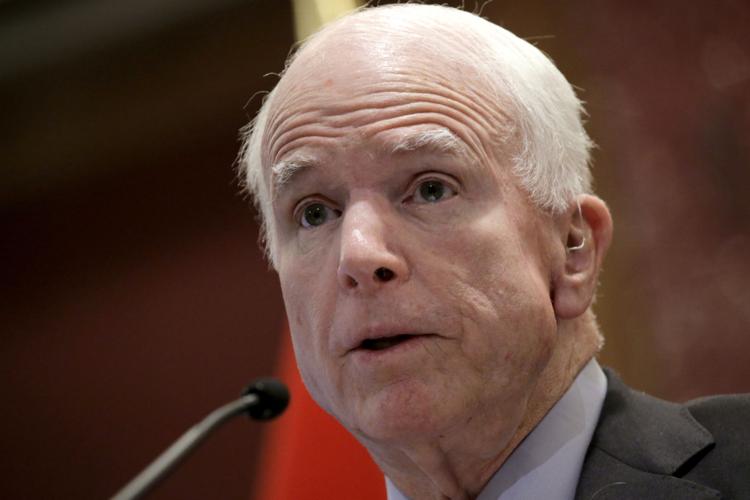
John McCain brings a wealth of experience in foreign affairs and powerful seniority to his position as senator. After 30 years in the Senate, he’s developed perspective that comes from witnessing, from a front-row seat, American history being made.
In that time, Arizona has grown tremendously. McCain, who we have criticized from time to time for looking to the world stage rather than focusing more on state needs, says that his priorities for Arizona are “fire and water.”
McCain, 80, is running against Ann Kirkpatrick, a Democrat who has represented Congressional District 1 for two terms.
Kirkpatrick shares many of our priorities: college affordability; equal rights and protection against discrimination for Arizonans who are lesbian, gay, bisexual or transgender; work permits and security against deportation for immigrant children, known as “Dreamers,” brought into the U.S. without proper documentation; and promoting trade and commerce with Mexico.
But when it comes to encyclopedic knowledge of a complicated world, McCain has the advantage. He chairs the Senate Armed Services Committee and has been so involved in American foreign policy that he brings a perspective others can’t.
He’s been in Washington long enough to have seen policy cycles, to watch as partisanship and ideology have taken deep root, particularly in his own party. “A lot has changed over the years,” he said. “I think it disillusions young people.”
We agree.
Yet we noticed something in interviews with Kirkpatrick and McCain — he uses “us” and “them” when referring to his Republican Party and to Democrats.
Kirkpatrick emphasized her bipartisan work with Republican Arizona Rep. Paul Gosar — they have teamed up on “common sense kind of things” that directly affect their constituents, as well as forest health and forest-fire prevention efforts. She has also broken with Democrats by voting against the Wall Street bailout, cap and trade, and the Dodd-Frank regulations on the financial industry.
McCain’s priority of “fire and water” for Arizona is wise. Wildfires have caused tremendous damage across the state in recent years.
“Our whole state is hostage to forest fires,” he said. He helped get Air Force planes transferred to help fight the blazes.
For water, McCain said it’s time to consider water reuse, although he acknowledges there’s a “psychological barrier” to doing so.
McCain said technology is key to developing solutions to potential water shortages and for border security.
He said he supports the comprehensive immigration reform package that came out of a bipartisan effort in 2013 nicknamed the “Gang of Eight.” The legislation, which stalled, would create a path to citizenship or legal residency for people in the country illegally and address business concerns by making it easier for immigrants to come to the U.S. to work in labor-intensive industries such as agriculture.
McCain also suggested that giving Border Patrol agents who work along the U.S.-Mexico border hardship pay, in part because of the extreme climate here. That could make the job more attractive, he said.
- Updated
Pima County needs a sheriff who is a law-enforcement professional with wide experience in both the field and administrative posts. Our county is large and diverse. It requires a leader with a steady hand. A person who can build bridges across communities and political viewpoints.
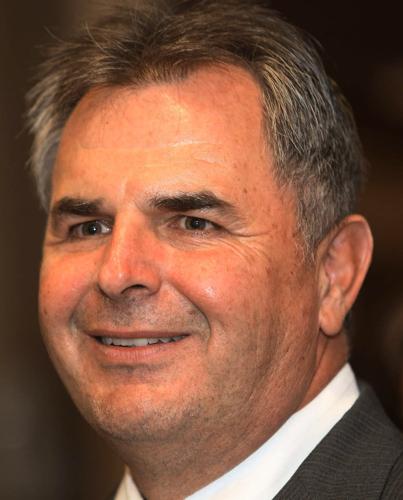
Mark Napier is that person.
Napier, a Republican, is running against Chris Nanos, a Democrat who was appointed sheriff in 2015 when Clarence Dupnik retired after a 35-year career as sheriff.
Napier ran for sheriff in 2012 and came close to unseating Dupnik. The Star endorsed Napier then, for the same reasons we endorse him now: Heis a steady professional with an impressive range of education and experience.
In a recent joint interview with the Star, Napier said improving compensation for sheriff’s department personnel is his top priority. He has criticized Nanos for several high-level employees who had retired from the force, but have been hired back at generous salaries. Nanos responded that several had been hired by Dupnik, not him, and he appeared to take the criticism as an insult to those specific employees rather than seeing the big picture of how the practice affects the whole organization.
Nanos has served as sheriff for 17 months and it is clear he does not possess the patience or composure needed to be the county’s top elected law-enforcement official.
For example, Nanos lashed out at the FBI, offering to show them how to do real police work, after the agency opened an investigation into Nanos’ decision to give a no-bid contract for an in-house café to a relative of one of his staff members.
During a recent interview with the Star’s editorial board, Nanos criticized Napier for sending campaign mailers to Democrats and for meeting with tea party Republican groups, something Nanos said he wouldn’t do if invited.
Napier said he reached out to Democrats because they’re residents of Pima County. A sheriff shouldn’t be partisan when deciding which speaking invitations to accept, he said, because every county resident is a constituent to serve.
We agree and that’s one reason we endorse Mark Napier.
- Updated
While all five seats on the Pima County Board of Supervisors are on the ballot in the general election, only Districts 1 and 3 have competitive races. We are focusing our attention on those, and offer our recommendations:
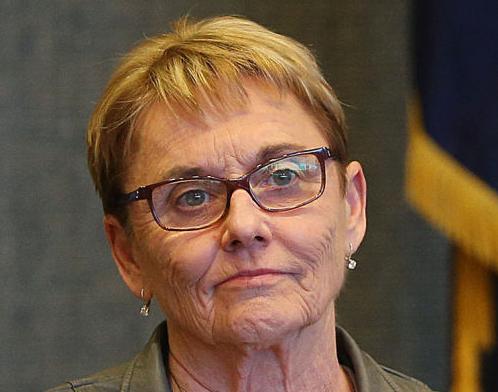
The Star endorses Brian Bickel for the northwest-side District 1, and incumbent Sharon Bronson for the largely rural west-side District 3.
Bickel is running against incumbent Republican Ally Miller, who has routinely made false statements about Pima County, its personnel and her habit of using her personal email account to conduct county business.
We do not endorse Bickel as simply an “anti-Ally Miller” position.
His career as a hospital administrator and in the military, specifically as a liaison with the civilian community, makes him an attractive candidate. Both roles required communication skills, the ability to negotiate details while keeping the big picture in mind and vision to guide a complex organization.
Bickel identified his top priority as the county’s tax structure and diversifying its tax base, because, as he said, the budget is heavily dependent on property tax, which is a volatile revenue source that fluctuates from one year to the next depending on the market and property valuations.
Bickel’s approach to economic development is forward-looking and embraces collaboration.
He recognizes government’s role to help bring big businesses to Pima County, which happened with the successful joint public-private effort to land Caterpillar’s headquarters, but also wisely knows there is a limit to what elected officials can and should do with taxpayer money to lure new businesses.
“The problems we’re dealing with aren’t partisan,” he said.
We find much to like in Brian Bickel as a fresh perspective on the board. And we find much to like in Sharon Bronson, an incumbent running against newcomer and Republican Kim DeMarco.
Bronson has the advantage of being the incumbent, but her time in office has been spent wisely.
She knows that the way to improve Pima County isn’t to slash and burn its budget, but to increase revenue — she also cited the Caterpillar deal as an effective use of public-private partnerships to build business.
Bronson’s expression of regionalism was refreshing, especially given our area’s tendency toward parochialism. Working together is powerful and the way forward. As she said, “Twentieth century economic development was different.”
Also valuable is Bronson’s institutional knowledge of Pima County.
She has the long view and has been on the board when it worked well, even when members disagreed. “There is a way to work together,” she said.

- Updated
Tom O’Halleran knows firsthand the price of putting the common good above party politics — and how he’s handled that experience is one of the primary reasons to send him to Congress.
Twelve years ago, O’Halleran was a Republican in the state House, representing a district in Northern Arizona. He had power and influence, but he went against his party leadership by working to increase funding for Child Protective Services.
The Republican leadership took away his chairmanship of the Committee on Natural Resources and Agriculture. He lost the 2008 primary, and, two years ago unsuccessfully ran for the seat as an independent.
The party affiliation may have changed — he’s running for Congress as a Democrat — but his core values and priorities have not. This is a quality we look for in a candidate: allegiance to a moral center instead of political ideology or party labels.
He is running against Paul Babeu, a tea-party Republican who is now the Pinal County sheriff. Babea’s extreme right-wing views on government, social issues, gun rights and immigration are helping to cause gridlock in Washington. Electing another hardliner will make the problem worse.
O’Halleran grew up in Chicago and was a police officer and later a government bond trader there. He retired to Arizona in 1994, “got bored very fast and got involved in local community issues, like water.” He lives in Sedona.
He ran for the state Legislature and said he was disheartened by what he saw at the Capitol. “I saw how legislators treated citizens who had traveled hundreds of miles to speak” about the budget or other priorities.
Leadership should be about bringing people together, O’Halleran said.
He and fellow Republican Pete Hershberger of Tucson formed a coalition with Democrats and moderate Republicans to allocate more money to protect neglected and abused children through Child Protective Services (now known as the Department of Child Safety).
“The Republicans’ leadership didn’t want to do anything with it,” he said. Both men lost their chairmanships, but the legislation passed.
We see the spirit of service in O’Halleran. He is clear that success is a choice to make: “We need collaborate effort — and we make it a priority or not.”
Consistent with his approach, O’Halleran has identified infrastructure — including broadband in rural areas, possibly powered by solar — as a top priority. Infrastructure isn’t glamorous, but it’s a necessity. That’s the kind of nuts-and-bolts thinking that prompts us to endorse Tom O’Halleran for Congress.

- Updated
Four years ago, when Martha McSally, a retired Air Force colonel, first ran for public office, she was a newcomer to politics. Her clear intelligence and drive were obvious, as was her mastery of military matters. But she spoke in generalities about policy matters — as many novice candidates do.
That was then. Four years later, with two years in Congress under her belt, McSally is a strong, smart and pragmatic representative of Congressional District 2, one of the state’s most evenly divided districts politically.
This is why we endorse Martha McSally for Congress in CD2.
McSally, a Republican, is facing a challenge from Democrat Matt Heinz, a physician and former state lawmaker.
Heinz is a solid candidate with good legislative experience. We believe that his bipartisan work and expertise in health policy in the Legislature recommends him as a problem-solver.
But the representative from CD2 will be one of 435 members of the U.S. House, and Southern Arizona needs someone who can effectively advocate for Davis-Monthan Air Force Base, Fort Huachuca and our region’s other military installations.
McSally is that person.
She first came to Tucson when she was stationed at Davis-Monthan Air Force Base and has established herself as an expert on the A-10 fighter. She was stationed at D-M four times and commanded the deployable squadron of A-10s.
She knows the importance of the A-10 to D-M and has made defending the viability of the aircraft a top priority. She’s focused on the A-10 in the short term, but also looks to the future by working to attract and expand other missions — such as drones or F-16s — to the base. “I come with credibility,” she said.
The Air Force wants to retire the A-10s and replace them with the much more technologically advanced —and much louder — F-35s. McSally held hearings on the viability of the A-10 to emphasize its effectiveness in close-air support in combat.
She’s also advocated to keep the EC-130H Compass Call electronic warfare and jamming squadron at D-M.
McSally has been successful for two years in keeping full funding for the A-10 and EC-130H. She also was a strong advocate for preventing the Air Force from retiring the A-10 until there was a fly-off between the A-10 and the F-35 to evaluate the two fighters. She wrote the requirements for that fly-off test.
Much of McSally’s thinking is rooted in the military mindset. “Veterans know how to come up with an objective” and figure out what needs to happen to accomplish that goal.
“I have situational awareness,” McSally said. “What can we get done?”
She did this with her WASP legislation. It allows women who served in World War II — the Women Airforce Service Pilots — to be buried at Arlington National Cemetery.
We do have our difference with McSally on issues, such women’s access to the full range of reproductive health care. But when it comes to Southern Arizona issues, McSally has been there, doing the work and getting results.
When faced with a challenge, McSally said she asks herself, “What’s the best way to get this done?” That’s a question key toward being effective in a divided Congress and representing a politically divided district.
- Updated
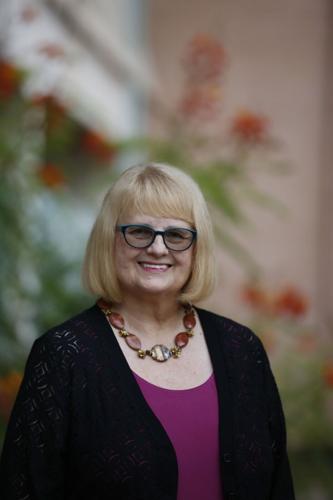
Legislative District 2 encompasses part of Tucson, along with Green Valley, the suburban town of Sahuarita, large stretches of sparsely populated rural areas to the west and south, and the border community of Nogales.
It’s a district with high-poverty regions as well as wealthier retirement and master-planned communities.
It’s an eclectic district, and effective representatives must be well-versed in everything from water to education to rural transportation.
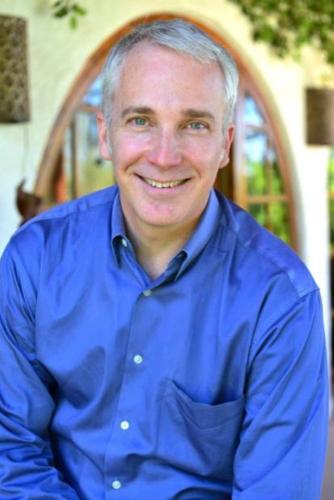
For this reason and for their record of service, the Star endorses Andrea Dalessandro for state Senate and Rosanna Gabaldon and Chris Ackerley for the House.
All three are incumbents.
Dalessandro, a Democrat, is being challenged by Republican business owner Shelley Kais; Ackerly is a Republican and Gabaldon is a Democrat, and they’re facing Daniel Hernandez, a Democrat now on the board of the Sunnyside Unified School District.
Gabaldon said her top priority is water sustainability, an issue that requires a deep dedication to master because it’s vitally important but not as flashy as other needs.
She co-chairs the Southeast Arizona Citizen Advisory Council of the U.S. International Boundary Water Commission. She’s keyed in on the infrastructure needs at the border to help the economically essential trade that comes through Nogales.
Ackerley has been a high school physics and math teacher for 17 years and teaches in the Amphitheater Public Schools district. He said that he’s “not only seen, but felt” the effects of shrinking per-pupil funding at the hands of the Republican majority.
He broke with his party over education funding, specifically for the Joint Technical Education District and all-day kindergarten.
He speaks with personal experience from within the classroom and, we believe, can be effective in conveying to his caucus the effects political decisions have on students and schools.
Dalessandro focused on education and identified funding inequities as a top priority.
She advocates closing the numerous narrow tax breaks that are targeted at specific industries as a way to generate more money for public education at all levels.
She also wants to stem the tide of money being diverted for private and religious school tuition through generous tax credits – it takes money out of the public school system and, she said, it doesn’t specifically benefit low-income students who would otherwise be going to poor-quality neighborhood schools.
Residents of LD2 would be well-served by returning Andrea Dalessandro, Chris Ackerley and Rosanna Gabaldon to the state Legislature.
- Updated
Voters in Legislative District 9, which includes central Tucson and the wealthier Catalina foothills, will choose at least one new representative on Nov. 8.
State Sen. Steve Farley, a Democrat, is running unopposed for re-election, and we look forward to his continued fierce advocacy for Tucson, children, education and transportation.
He’s been a reasonable, reliable and questioning voice in the Legislature — qualities much needed in the face of a right-wing senate leadership.
On the House side, we endorse incumbent Randy Friese and newcomer Pamela Powers Hannley.
They are a solid combination and compliment each other’s strengths with experience and policy knowledge.
Friese and Powers Hannley are Democrats running against another newcomer, Republican Ana Henderson.
Powers Hannley identified the economy as her top priority, which isn’t unusual for a political candidate.
What makes her stand out, however, is that she’s not identifying “jobs” as her platform but puts economic stability and viability in a larger frame. She thinks of it “broadly, to lift people out of poverty.”
She supports an increased minimum wage and identifies corporate tax cuts and loopholes as a target to increase state revenue to spend on urgent needs, such as public education.
“These are issues that are not one-party issues,” she said. She cited paycheck equality and fairness as an example.
She also rightly points out that the southern end of LD 9, in midtown Tucson, is rife with rundown housing and that many residents don’t have the means to maintain or improve their property.
She raised the possibility of Arizona forming a public bank, which could give residents low-interest loans to improve their homes or businesses. We’re not ready to sign on to that just yet, but we appreciate her innovative thinking and reaching for different ideas.
Friese took a similarly broad approach to his top priority, public education — “with the emphasis on public,” he said. With the passage in May of Proposition 123, which allows the state to take more money from the state land trust to fund K-12 education, he worries that Arizonans think, wrongly, that the schools funding problem is solved.
Friese says the payout schedule under Prop. 123 isn’t sustainable and he would like to see more money is taken from the state land trust go to schools in bad economic times, to offset reduced funding from the general fund. Less is distributed to schools in good times — which allows more of it to be invested and earn interest. As with Powers Hannley, we applaud his willingness to search for creative solutions to ongoing challenges.
Friese and Powers Hannley support reining in talk of private school tuition vouchers and state income tax credits that allow Arizonans to donate to private school tuition organizations must be done.
Only one-third of the tax credit donations given to private and religious schools to help pay tuition goes to children from poor families.
Friese, a trauma surgeon who cared for victims of the Jan. 8, 2011 mass shooting, including Gabby Giffords, has made common sense gun public safety, along with education, the centerpiece of his legislative work.
He says that, as a surgeon, he witnesses the damage done by guns in the wrong hands almost every day. He is a strong advocate for requiring comprehensive background checks at every gun purchase.
He wants to keep guns away from dangerous people, but also wants to “protect law-abiding citizens from inadvertently selling a weapon that will be used to harm someone.”
Friese faces an uphill climb on his gun safety efforts in the Legislature, but we appreciate his diligent and informed work to make the people of Arizona more safe. We trust he will continue his mission in the upcoming legislative sessions.

- Updated
Campaign season is filled with big promises of sweeping change and lofty but generic goals — the kind of rhetoric that gets supporters energized.
So it’s particularly refreshing to hear candidates speak in specifics about how to be effective in meaningful, doable ways.
This is the mind frame of the candidates the Star endorses in Legislative District 10: David Bradley for Senate; and Stefanie Mach and Kirsten Engel for the House.
Bradley and Mach are incumbent Democrats and Engel, also a Democrat, is running for the first time.
Republican Randall Phelps is challenging Bradley, and Republican Todd Clodfelter is making his third run for the Legislature.
Bradley is running for his second term in the state Senate, and served from 2003 to 2011 in the state House.
His professional experience leading child welfare and family agencies makes him a knowledgeable and much-needed voice for the most vulnerable. He brings real-world practical experience to policy and operational discussions that make him a valuable asset for not only his district, but for children across Arizona.
That work informs his legislative approach. He told the Star he’s learned to focus on “things that chip away around the edges” instead of waiting for massive changes to happen.
Bradley is pragmatic, a desirable quality in an elected official, especially one who is in the minority in the Maricopa County-focused and Republican-dominated Legislature.
He’s worked to expand community schools, a program that brings social services and sometimes health care into schools. Reinforcing schools’ importance in neighborhoods and residents’ lives helps strengthen bonds between campuses and families, which is to the good.
Mach, who describes her achievements in the Legislature as being “more behind the scenes,” puts public education and sentencing reform as her top priorities.
We appreciate Mach’s ability to frame big issues, such as public education, in a compassionate way that also conveys urgency and knowledge. Relying on crushing loads of homework and teaching to the standardized test doesn’t help students, she said.
“We need to change our attitude about what is education,” Mach said. “For example, things like learning how baking cookies is science.”
Mach’s focus on criminal justice and prison conditions and sentences makes sense. She wants to address the roots of some criminal behavior, rather than only deal with the results after a person has been arrested, convicted and sentenced. Better and more drug treatment programs, could help people stay out of the court and corrections system in the first place, she said.
“Prison reform is needed not only to save money, but to have a safe system,” Mach said. “Everything is connected.”
All three candidates make the connection between Arizona’s paltry investment in public education and the state’s economic health and the number of people living in poverty.
Engel, who is a professor of environmental law at the University of Arizona James E. Rogers College of Law, said she was moved to advocate for public education from early childhood programs through the university level.
Her expertise in environmental and water law will also serve Southern Arizona well because she isn’t motivated by ideology, but by facts and laws.
The conversation about improving education, and the funding for it, often centers around K-12 schools. Engel, however, expanded her target to community colleges and Arizona’s three state universities. She makes a convincing argument about the necessity of a strong education system.
Engel cited the Legislature’s decision to end all state funding to Pima and Maricopa community colleges as a particularly harmful decision. Making it more difficult for people, particularly adults, to go back to school for re-training or an associate’s degree damages the economy.
The same is true at the university level, she said. Employers have a hard time finding qualified local employees, companies don’t want to relocate to a state with an anemic education system and recent college graduates have a hard time finding a good-paying job, so they leave Arizona.
Engel said she would close corporate tax loopholes, because “we’re not getting the benefit” as a lure to companies.
“The money in the budget is there, it’s a matter of priorities,” she said.

- Updated
The Arizona Legislature was designed as a gathering of citizen lawmakers – people from all walks of life who come together a few months each year to do the state’s business.
Its effectivness in the modern age of special interests and political power consolidation can be argued, but two candidates in Legislative District 11 offer compelling reasons why electing people with a wide variety of backgrounds makes sense.
The Star endorses Ralph Atchue for state Senate and Corin Hammond in the House. Both are running for their first term, and both are Democrats.
Atchue faces incumbent Republican Steve Smith.
Hammond is running against Vince Leach and Mark Finchem, both incumbent Republicans who have shown themselves to be overtly motivated by their personal religious and far-right-wing political positions.
The Arizona House needs fewer ideologues and more members who are motivated by a desire to solve problems for Arizona residents.
We believe Atchue and Hammond meet that criteria.
Atchue, who lives in Eloy, is an Air Force veteran who spent 33 years in the United States Postal Service, including as a postmaster.
He has negotiated labor contracts, representing, at different times in his career, the administration and the union. The ability to work with competing factions and improve life for all residents is sorely needed in the Arizona Legislature.
“Isn’t there a way we can find common ground and build on that?” he said. “I see myself as a facilitator.”
Atchue is worried that the Legislature is damaging Arizona’s national reputation.
“They’re making it much more difficult for working-class people,” Atchue said. He cited low funding for public education, a lack of accountability, use of private prisons and an ideology that demands tax cuts no matter what to underscore his point.
“Our state Legislature no longer has the voters’ best interest in mind,” he said.
Hammond lives in Marana and is a doctoral student in soil and water chemistry. She studies the reclamation of mine waste — an expertise she can put to good use in the Legislature.
Hammond identified public education and increasing teacher salaries as a primary focus. She laments that after voters narrowly passed Proposition 123 in May, people think that school funding problems are fixed because it allocates more state land trust money to K-12 schools for the next decade.
“Prop. 123 does not change that Arizona teachers are paid far lower wages” she said. “It does not fix the fact that schools are crumbling.”
Both Atchue and Hammond opposed Prop. 123.
School funding in Arizona is among the lowest in the nation and, Hammond said, “it’s hurting our state brand.”
It’s a compounding problem that can only be remedied when Arizona can “offer nationally competitive salaries for teachers, and reduce class size,” she said.
District 11 includes rural areas, which Hammond sees as ripe for, and in need of, economic development. “We should be developing our tech businesses and industry,” she said.
One of the things that most impressed us about Atchue and Hammond is how they answered the question, “How did you prepare for this race, and to serve?”
Both studied legislation, boned up on policy positions, the state budget and how the Legislature has kept gas tax money that should go to the cities and counties for road repair. They did their homework.
But Atchue said it best.
“What’s prepared us more than anything is talking to people,” he said. “I’ve knocked on over 6,000 doors. People want to talk about education, jobs, why can’t Tucson and other cities pass local ordinances?”
That last concern refers to the Republican majority’s passage of laws that keep cities and towns from passing their own ordinances that involve guns, which is specifically aimed at Tucson.
“There is no better source than the voters,” Atchue said.
Hammond said she’s spoken with thousands of voters, and agrees with Atchue that many people feel disenfranchised and aren’t engaged in the political process — an apathy both aim to change.
“People are surprised that somebody cared enough to come to the door,” Atchue said. “And that’s enough to have hope.”
John McCain brings a wealth of experience in foreign affairs and powerful seniority to his position as senator. After 30 years in the Senate, he’s developed perspective that comes from witnessing, from a front-row seat, American history being made.
In that time, Arizona has grown tremendously. McCain, who we have criticized from time to time for looking to the world stage rather than focusing more on state needs, says that his priorities for Arizona are “fire and water.”
McCain, 80, is running against Ann Kirkpatrick, a Democrat who has represented Congressional District 1 for two terms.
Kirkpatrick shares many of our priorities: college affordability; equal rights and protection against discrimination for Arizonans who are lesbian, gay, bisexual or transgender; work permits and security against deportation for immigrant children, known as “Dreamers,” brought into the U.S. without proper documentation; and promoting trade and commerce with Mexico.
But when it comes to encyclopedic knowledge of a complicated world, McCain has the advantage. He chairs the Senate Armed Services Committee and has been so involved in American foreign policy that he brings a perspective others can’t.
He’s been in Washington long enough to have seen policy cycles, to watch as partisanship and ideology have taken deep root, particularly in his own party. “A lot has changed over the years,” he said. “I think it disillusions young people.”
We agree.
Yet we noticed something in interviews with Kirkpatrick and McCain — he uses “us” and “them” when referring to his Republican Party and to Democrats.
Kirkpatrick emphasized her bipartisan work with Republican Arizona Rep. Paul Gosar — they have teamed up on “common sense kind of things” that directly affect their constituents, as well as forest health and forest-fire prevention efforts. She has also broken with Democrats by voting against the Wall Street bailout, cap and trade, and the Dodd-Frank regulations on the financial industry.
McCain’s priority of “fire and water” for Arizona is wise. Wildfires have caused tremendous damage across the state in recent years.
“Our whole state is hostage to forest fires,” he said. He helped get Air Force planes transferred to help fight the blazes.
For water, McCain said it’s time to consider water reuse, although he acknowledges there’s a “psychological barrier” to doing so.
McCain said technology is key to developing solutions to potential water shortages and for border security.
He said he supports the comprehensive immigration reform package that came out of a bipartisan effort in 2013 nicknamed the “Gang of Eight.” The legislation, which stalled, would create a path to citizenship or legal residency for people in the country illegally and address business concerns by making it easier for immigrants to come to the U.S. to work in labor-intensive industries such as agriculture.
McCain also suggested that giving Border Patrol agents who work along the U.S.-Mexico border hardship pay, in part because of the extreme climate here. That could make the job more attractive, he said.
Pima County needs a sheriff who is a law-enforcement professional with wide experience in both the field and administrative posts. Our county is large and diverse. It requires a leader with a steady hand. A person who can build bridges across communities and political viewpoints.
Mark Napier is that person.
Napier, a Republican, is running against Chris Nanos, a Democrat who was appointed sheriff in 2015 when Clarence Dupnik retired after a 35-year career as sheriff.
Napier ran for sheriff in 2012 and came close to unseating Dupnik. The Star endorsed Napier then, for the same reasons we endorse him now: Heis a steady professional with an impressive range of education and experience.
In a recent joint interview with the Star, Napier said improving compensation for sheriff’s department personnel is his top priority. He has criticized Nanos for several high-level employees who had retired from the force, but have been hired back at generous salaries. Nanos responded that several had been hired by Dupnik, not him, and he appeared to take the criticism as an insult to those specific employees rather than seeing the big picture of how the practice affects the whole organization.
Nanos has served as sheriff for 17 months and it is clear he does not possess the patience or composure needed to be the county’s top elected law-enforcement official.
For example, Nanos lashed out at the FBI, offering to show them how to do real police work, after the agency opened an investigation into Nanos’ decision to give a no-bid contract for an in-house café to a relative of one of his staff members.
During a recent interview with the Star’s editorial board, Nanos criticized Napier for sending campaign mailers to Democrats and for meeting with tea party Republican groups, something Nanos said he wouldn’t do if invited.
Napier said he reached out to Democrats because they’re residents of Pima County. A sheriff shouldn’t be partisan when deciding which speaking invitations to accept, he said, because every county resident is a constituent to serve.
We agree and that’s one reason we endorse Mark Napier.
While all five seats on the Pima County Board of Supervisors are on the ballot in the general election, only Districts 1 and 3 have competitive races. We are focusing our attention on those, and offer our recommendations:
The Star endorses Brian Bickel for the northwest-side District 1, and incumbent Sharon Bronson for the largely rural west-side District 3.
Bickel is running against incumbent Republican Ally Miller, who has routinely made false statements about Pima County, its personnel and her habit of using her personal email account to conduct county business.
We do not endorse Bickel as simply an “anti-Ally Miller” position.
His career as a hospital administrator and in the military, specifically as a liaison with the civilian community, makes him an attractive candidate. Both roles required communication skills, the ability to negotiate details while keeping the big picture in mind and vision to guide a complex organization.
Bickel identified his top priority as the county’s tax structure and diversifying its tax base, because, as he said, the budget is heavily dependent on property tax, which is a volatile revenue source that fluctuates from one year to the next depending on the market and property valuations.
Bickel’s approach to economic development is forward-looking and embraces collaboration.
He recognizes government’s role to help bring big businesses to Pima County, which happened with the successful joint public-private effort to land Caterpillar’s headquarters, but also wisely knows there is a limit to what elected officials can and should do with taxpayer money to lure new businesses.
“The problems we’re dealing with aren’t partisan,” he said.
We find much to like in Brian Bickel as a fresh perspective on the board. And we find much to like in Sharon Bronson, an incumbent running against newcomer and Republican Kim DeMarco.
Bronson has the advantage of being the incumbent, but her time in office has been spent wisely.
She knows that the way to improve Pima County isn’t to slash and burn its budget, but to increase revenue — she also cited the Caterpillar deal as an effective use of public-private partnerships to build business.
Bronson’s expression of regionalism was refreshing, especially given our area’s tendency toward parochialism. Working together is powerful and the way forward. As she said, “Twentieth century economic development was different.”
Also valuable is Bronson’s institutional knowledge of Pima County.
She has the long view and has been on the board when it worked well, even when members disagreed. “There is a way to work together,” she said.
Tom O’Halleran knows firsthand the price of putting the common good above party politics — and how he’s handled that experience is one of the primary reasons to send him to Congress.
Twelve years ago, O’Halleran was a Republican in the state House, representing a district in Northern Arizona. He had power and influence, but he went against his party leadership by working to increase funding for Child Protective Services.
The Republican leadership took away his chairmanship of the Committee on Natural Resources and Agriculture. He lost the 2008 primary, and, two years ago unsuccessfully ran for the seat as an independent.
The party affiliation may have changed — he’s running for Congress as a Democrat — but his core values and priorities have not. This is a quality we look for in a candidate: allegiance to a moral center instead of political ideology or party labels.
He is running against Paul Babeu, a tea-party Republican who is now the Pinal County sheriff. Babea’s extreme right-wing views on government, social issues, gun rights and immigration are helping to cause gridlock in Washington. Electing another hardliner will make the problem worse.
O’Halleran grew up in Chicago and was a police officer and later a government bond trader there. He retired to Arizona in 1994, “got bored very fast and got involved in local community issues, like water.” He lives in Sedona.
He ran for the state Legislature and said he was disheartened by what he saw at the Capitol. “I saw how legislators treated citizens who had traveled hundreds of miles to speak” about the budget or other priorities.
Leadership should be about bringing people together, O’Halleran said.
He and fellow Republican Pete Hershberger of Tucson formed a coalition with Democrats and moderate Republicans to allocate more money to protect neglected and abused children through Child Protective Services (now known as the Department of Child Safety).
“The Republicans’ leadership didn’t want to do anything with it,” he said. Both men lost their chairmanships, but the legislation passed.
We see the spirit of service in O’Halleran. He is clear that success is a choice to make: “We need collaborate effort — and we make it a priority or not.”
Consistent with his approach, O’Halleran has identified infrastructure — including broadband in rural areas, possibly powered by solar — as a top priority. Infrastructure isn’t glamorous, but it’s a necessity. That’s the kind of nuts-and-bolts thinking that prompts us to endorse Tom O’Halleran for Congress.
Four years ago, when Martha McSally, a retired Air Force colonel, first ran for public office, she was a newcomer to politics. Her clear intelligence and drive were obvious, as was her mastery of military matters. But she spoke in generalities about policy matters — as many novice candidates do.
That was then. Four years later, with two years in Congress under her belt, McSally is a strong, smart and pragmatic representative of Congressional District 2, one of the state’s most evenly divided districts politically.
This is why we endorse Martha McSally for Congress in CD2.
McSally, a Republican, is facing a challenge from Democrat Matt Heinz, a physician and former state lawmaker.
Heinz is a solid candidate with good legislative experience. We believe that his bipartisan work and expertise in health policy in the Legislature recommends him as a problem-solver.
But the representative from CD2 will be one of 435 members of the U.S. House, and Southern Arizona needs someone who can effectively advocate for Davis-Monthan Air Force Base, Fort Huachuca and our region’s other military installations.
McSally is that person.
She first came to Tucson when she was stationed at Davis-Monthan Air Force Base and has established herself as an expert on the A-10 fighter. She was stationed at D-M four times and commanded the deployable squadron of A-10s.
She knows the importance of the A-10 to D-M and has made defending the viability of the aircraft a top priority. She’s focused on the A-10 in the short term, but also looks to the future by working to attract and expand other missions — such as drones or F-16s — to the base. “I come with credibility,” she said.
The Air Force wants to retire the A-10s and replace them with the much more technologically advanced —and much louder — F-35s. McSally held hearings on the viability of the A-10 to emphasize its effectiveness in close-air support in combat.
She’s also advocated to keep the EC-130H Compass Call electronic warfare and jamming squadron at D-M.
McSally has been successful for two years in keeping full funding for the A-10 and EC-130H. She also was a strong advocate for preventing the Air Force from retiring the A-10 until there was a fly-off between the A-10 and the F-35 to evaluate the two fighters. She wrote the requirements for that fly-off test.
Much of McSally’s thinking is rooted in the military mindset. “Veterans know how to come up with an objective” and figure out what needs to happen to accomplish that goal.
“I have situational awareness,” McSally said. “What can we get done?”
She did this with her WASP legislation. It allows women who served in World War II — the Women Airforce Service Pilots — to be buried at Arlington National Cemetery.
We do have our difference with McSally on issues, such women’s access to the full range of reproductive health care. But when it comes to Southern Arizona issues, McSally has been there, doing the work and getting results.
When faced with a challenge, McSally said she asks herself, “What’s the best way to get this done?” That’s a question key toward being effective in a divided Congress and representing a politically divided district.
Legislative District 2 encompasses part of Tucson, along with Green Valley, the suburban town of Sahuarita, large stretches of sparsely populated rural areas to the west and south, and the border community of Nogales.
It’s a district with high-poverty regions as well as wealthier retirement and master-planned communities.
It’s an eclectic district, and effective representatives must be well-versed in everything from water to education to rural transportation.
For this reason and for their record of service, the Star endorses Andrea Dalessandro for state Senate and Rosanna Gabaldon and Chris Ackerley for the House.
All three are incumbents.
Dalessandro, a Democrat, is being challenged by Republican business owner Shelley Kais; Ackerly is a Republican and Gabaldon is a Democrat, and they’re facing Daniel Hernandez, a Democrat now on the board of the Sunnyside Unified School District.
Gabaldon said her top priority is water sustainability, an issue that requires a deep dedication to master because it’s vitally important but not as flashy as other needs.
She co-chairs the Southeast Arizona Citizen Advisory Council of the U.S. International Boundary Water Commission. She’s keyed in on the infrastructure needs at the border to help the economically essential trade that comes through Nogales.
Ackerley has been a high school physics and math teacher for 17 years and teaches in the Amphitheater Public Schools district. He said that he’s “not only seen, but felt” the effects of shrinking per-pupil funding at the hands of the Republican majority.
He broke with his party over education funding, specifically for the Joint Technical Education District and all-day kindergarten.
He speaks with personal experience from within the classroom and, we believe, can be effective in conveying to his caucus the effects political decisions have on students and schools.
Dalessandro focused on education and identified funding inequities as a top priority.
She advocates closing the numerous narrow tax breaks that are targeted at specific industries as a way to generate more money for public education at all levels.
She also wants to stem the tide of money being diverted for private and religious school tuition through generous tax credits – it takes money out of the public school system and, she said, it doesn’t specifically benefit low-income students who would otherwise be going to poor-quality neighborhood schools.
Residents of LD2 would be well-served by returning Andrea Dalessandro, Chris Ackerley and Rosanna Gabaldon to the state Legislature.
Voters in Legislative District 9, which includes central Tucson and the wealthier Catalina foothills, will choose at least one new representative on Nov. 8.
State Sen. Steve Farley, a Democrat, is running unopposed for re-election, and we look forward to his continued fierce advocacy for Tucson, children, education and transportation.
He’s been a reasonable, reliable and questioning voice in the Legislature — qualities much needed in the face of a right-wing senate leadership.
On the House side, we endorse incumbent Randy Friese and newcomer Pamela Powers Hannley.
They are a solid combination and compliment each other’s strengths with experience and policy knowledge.
Friese and Powers Hannley are Democrats running against another newcomer, Republican Ana Henderson.
Powers Hannley identified the economy as her top priority, which isn’t unusual for a political candidate.
What makes her stand out, however, is that she’s not identifying “jobs” as her platform but puts economic stability and viability in a larger frame. She thinks of it “broadly, to lift people out of poverty.”
She supports an increased minimum wage and identifies corporate tax cuts and loopholes as a target to increase state revenue to spend on urgent needs, such as public education.
“These are issues that are not one-party issues,” she said. She cited paycheck equality and fairness as an example.
She also rightly points out that the southern end of LD 9, in midtown Tucson, is rife with rundown housing and that many residents don’t have the means to maintain or improve their property.
She raised the possibility of Arizona forming a public bank, which could give residents low-interest loans to improve their homes or businesses. We’re not ready to sign on to that just yet, but we appreciate her innovative thinking and reaching for different ideas.
Friese took a similarly broad approach to his top priority, public education — “with the emphasis on public,” he said. With the passage in May of Proposition 123, which allows the state to take more money from the state land trust to fund K-12 education, he worries that Arizonans think, wrongly, that the schools funding problem is solved.
Friese says the payout schedule under Prop. 123 isn’t sustainable and he would like to see more money is taken from the state land trust go to schools in bad economic times, to offset reduced funding from the general fund. Less is distributed to schools in good times — which allows more of it to be invested and earn interest. As with Powers Hannley, we applaud his willingness to search for creative solutions to ongoing challenges.
Friese and Powers Hannley support reining in talk of private school tuition vouchers and state income tax credits that allow Arizonans to donate to private school tuition organizations must be done.
Only one-third of the tax credit donations given to private and religious schools to help pay tuition goes to children from poor families.
Friese, a trauma surgeon who cared for victims of the Jan. 8, 2011 mass shooting, including Gabby Giffords, has made common sense gun public safety, along with education, the centerpiece of his legislative work.
He says that, as a surgeon, he witnesses the damage done by guns in the wrong hands almost every day. He is a strong advocate for requiring comprehensive background checks at every gun purchase.
He wants to keep guns away from dangerous people, but also wants to “protect law-abiding citizens from inadvertently selling a weapon that will be used to harm someone.”
Friese faces an uphill climb on his gun safety efforts in the Legislature, but we appreciate his diligent and informed work to make the people of Arizona more safe. We trust he will continue his mission in the upcoming legislative sessions.
Campaign season is filled with big promises of sweeping change and lofty but generic goals — the kind of rhetoric that gets supporters energized.
So it’s particularly refreshing to hear candidates speak in specifics about how to be effective in meaningful, doable ways.
This is the mind frame of the candidates the Star endorses in Legislative District 10: David Bradley for Senate; and Stefanie Mach and Kirsten Engel for the House.
Bradley and Mach are incumbent Democrats and Engel, also a Democrat, is running for the first time.
Republican Randall Phelps is challenging Bradley, and Republican Todd Clodfelter is making his third run for the Legislature.
Bradley is running for his second term in the state Senate, and served from 2003 to 2011 in the state House.
His professional experience leading child welfare and family agencies makes him a knowledgeable and much-needed voice for the most vulnerable. He brings real-world practical experience to policy and operational discussions that make him a valuable asset for not only his district, but for children across Arizona.
That work informs his legislative approach. He told the Star he’s learned to focus on “things that chip away around the edges” instead of waiting for massive changes to happen.
Bradley is pragmatic, a desirable quality in an elected official, especially one who is in the minority in the Maricopa County-focused and Republican-dominated Legislature.
He’s worked to expand community schools, a program that brings social services and sometimes health care into schools. Reinforcing schools’ importance in neighborhoods and residents’ lives helps strengthen bonds between campuses and families, which is to the good.
Mach, who describes her achievements in the Legislature as being “more behind the scenes,” puts public education and sentencing reform as her top priorities.
We appreciate Mach’s ability to frame big issues, such as public education, in a compassionate way that also conveys urgency and knowledge. Relying on crushing loads of homework and teaching to the standardized test doesn’t help students, she said.
“We need to change our attitude about what is education,” Mach said. “For example, things like learning how baking cookies is science.”
Mach’s focus on criminal justice and prison conditions and sentences makes sense. She wants to address the roots of some criminal behavior, rather than only deal with the results after a person has been arrested, convicted and sentenced. Better and more drug treatment programs, could help people stay out of the court and corrections system in the first place, she said.
“Prison reform is needed not only to save money, but to have a safe system,” Mach said. “Everything is connected.”
All three candidates make the connection between Arizona’s paltry investment in public education and the state’s economic health and the number of people living in poverty.
Engel, who is a professor of environmental law at the University of Arizona James E. Rogers College of Law, said she was moved to advocate for public education from early childhood programs through the university level.
Her expertise in environmental and water law will also serve Southern Arizona well because she isn’t motivated by ideology, but by facts and laws.
The conversation about improving education, and the funding for it, often centers around K-12 schools. Engel, however, expanded her target to community colleges and Arizona’s three state universities. She makes a convincing argument about the necessity of a strong education system.
Engel cited the Legislature’s decision to end all state funding to Pima and Maricopa community colleges as a particularly harmful decision. Making it more difficult for people, particularly adults, to go back to school for re-training or an associate’s degree damages the economy.
The same is true at the university level, she said. Employers have a hard time finding qualified local employees, companies don’t want to relocate to a state with an anemic education system and recent college graduates have a hard time finding a good-paying job, so they leave Arizona.
Engel said she would close corporate tax loopholes, because “we’re not getting the benefit” as a lure to companies.
“The money in the budget is there, it’s a matter of priorities,” she said.
The Arizona Legislature was designed as a gathering of citizen lawmakers – people from all walks of life who come together a few months each year to do the state’s business.
Its effectivness in the modern age of special interests and political power consolidation can be argued, but two candidates in Legislative District 11 offer compelling reasons why electing people with a wide variety of backgrounds makes sense.
The Star endorses Ralph Atchue for state Senate and Corin Hammond in the House. Both are running for their first term, and both are Democrats.
Atchue faces incumbent Republican Steve Smith.
Hammond is running against Vince Leach and Mark Finchem, both incumbent Republicans who have shown themselves to be overtly motivated by their personal religious and far-right-wing political positions.
The Arizona House needs fewer ideologues and more members who are motivated by a desire to solve problems for Arizona residents.
We believe Atchue and Hammond meet that criteria.
Atchue, who lives in Eloy, is an Air Force veteran who spent 33 years in the United States Postal Service, including as a postmaster.
He has negotiated labor contracts, representing, at different times in his career, the administration and the union. The ability to work with competing factions and improve life for all residents is sorely needed in the Arizona Legislature.
“Isn’t there a way we can find common ground and build on that?” he said. “I see myself as a facilitator.”
Atchue is worried that the Legislature is damaging Arizona’s national reputation.
“They’re making it much more difficult for working-class people,” Atchue said. He cited low funding for public education, a lack of accountability, use of private prisons and an ideology that demands tax cuts no matter what to underscore his point.
“Our state Legislature no longer has the voters’ best interest in mind,” he said.
Hammond lives in Marana and is a doctoral student in soil and water chemistry. She studies the reclamation of mine waste — an expertise she can put to good use in the Legislature.
Hammond identified public education and increasing teacher salaries as a primary focus. She laments that after voters narrowly passed Proposition 123 in May, people think that school funding problems are fixed because it allocates more state land trust money to K-12 schools for the next decade.
“Prop. 123 does not change that Arizona teachers are paid far lower wages” she said. “It does not fix the fact that schools are crumbling.”
Both Atchue and Hammond opposed Prop. 123.
School funding in Arizona is among the lowest in the nation and, Hammond said, “it’s hurting our state brand.”
It’s a compounding problem that can only be remedied when Arizona can “offer nationally competitive salaries for teachers, and reduce class size,” she said.
District 11 includes rural areas, which Hammond sees as ripe for, and in need of, economic development. “We should be developing our tech businesses and industry,” she said.
One of the things that most impressed us about Atchue and Hammond is how they answered the question, “How did you prepare for this race, and to serve?”
Both studied legislation, boned up on policy positions, the state budget and how the Legislature has kept gas tax money that should go to the cities and counties for road repair. They did their homework.
But Atchue said it best.
“What’s prepared us more than anything is talking to people,” he said. “I’ve knocked on over 6,000 doors. People want to talk about education, jobs, why can’t Tucson and other cities pass local ordinances?”
That last concern refers to the Republican majority’s passage of laws that keep cities and towns from passing their own ordinances that involve guns, which is specifically aimed at Tucson.
“There is no better source than the voters,” Atchue said.
Hammond said she’s spoken with thousands of voters, and agrees with Atchue that many people feel disenfranchised and aren’t engaged in the political process — an apathy both aim to change.
“People are surprised that somebody cared enough to come to the door,” Atchue said. “And that’s enough to have hope.”


View this profile on Instagram#ThisIsTucson 🌵 (@this_is_tucson) • Instagram photos and videos
Most viewed stories
-
'Salsa Daddy' coming to the Tucson book festival
-
Over 40 events happening in Tucson March 11-15 📖☘️
-
Tucson's St. Patrick's Day events start Saturday with festival ☘️
-
Nearly 90 fun events happening in March! 🌺
-
Cinammon rolls and double chocolate muffins: 1989 Bakehouse is now open on Fourth Avenue
-
Dante's Kitchen is getting 'sexy' menu redo
-
Tucson volunteers slay buffelgrass to save saguaros