

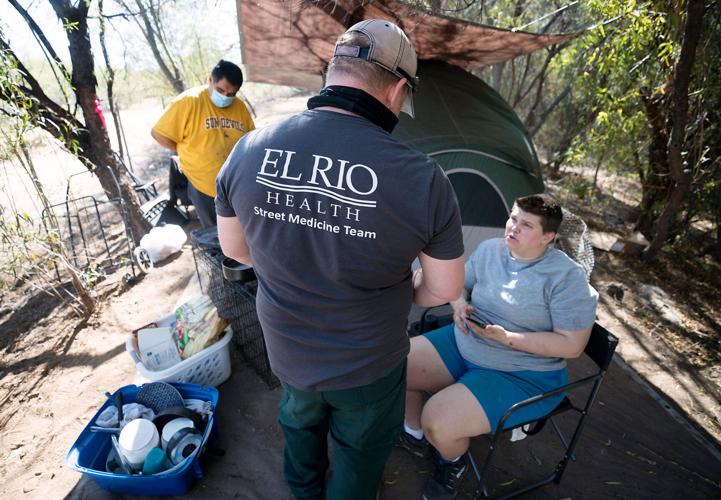
As city officials grapple with Tucson’s increasing homeless population, community groups continue to support unsheltered individuals waiting for transitional or permanent housing, through temporary shelter, services and hygiene supplies.
The nonprofit Gospel Rescue Mission has been providing resources to the homeless community since 1953. Outreach coordinator Roger Aguilar said that when someone comes to them for help, the first step is to take care of the individual’s immediate needs like providing clothes, food and shelter.
After those are addressed, the next step is to help the individual with more complex needs, including job recovery, help with addiction, housing assistance and job training and certification, according to Aguilar, adding that Gospel Rescue Mission has partnerships with more than 40 businesses and service providers across town that help provide services tailored to an individual’s particular needs.
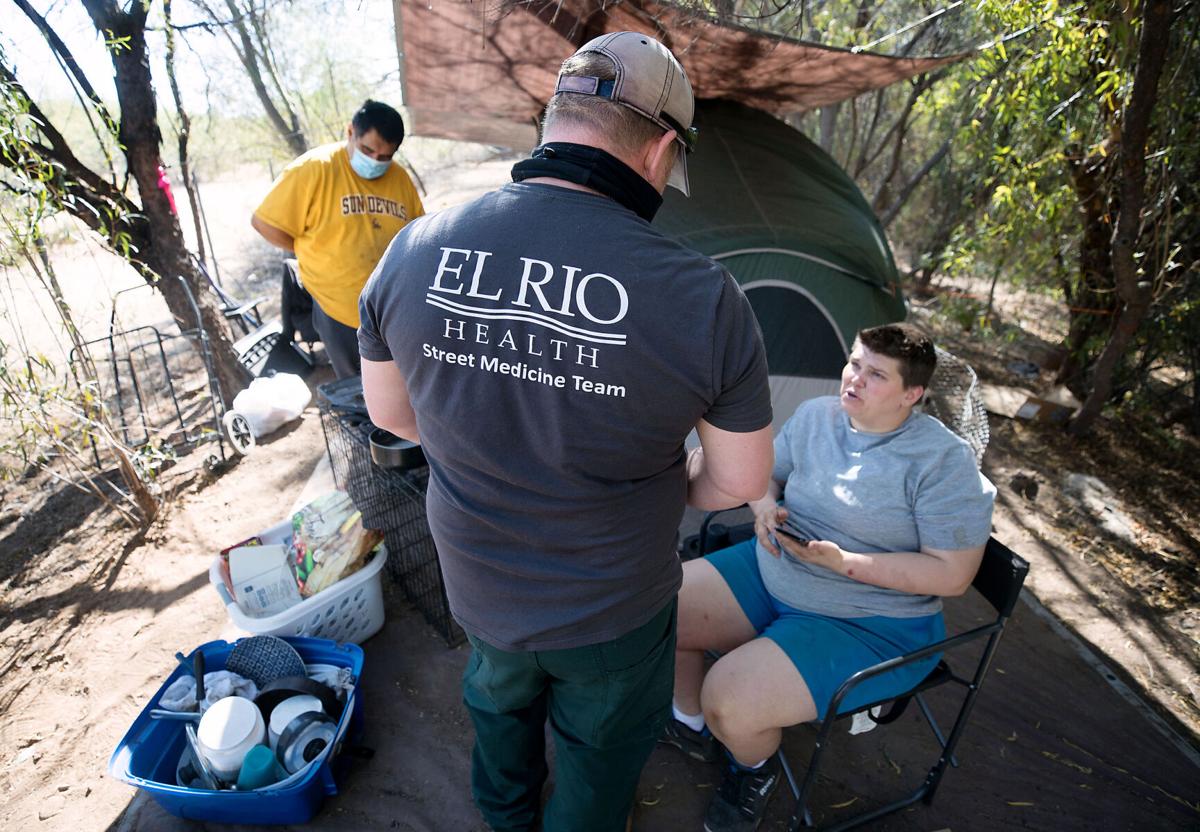
The mission’s partnership with El Rio Health guarantees that within their first week of staying at the shelter, each person will receive a physical and dental evaluation. Additional services will be provided based on those evaluations.
Aguilar says the program is different from the city’s Housing First effort because the mission is focused on healing the homeless individual before placing them into housing.
“If you’re an addict … putting you in a house doesn’t fix your addiction problems,” he said. “We like to treat the person, body, mind and spirit so that we can go from homelessness to wholeness.”
Mobile model
In Phoenix, Cloud Covered Streets provides hygiene care and supplies for homeless individuals every Monday, Wednesday and Friday, and is looking to expand their footprint into Tucson.

Founder Robert Thornton and his team start their days at 9 a.m., traveling across the Phoenix area to provide services. Their van has a shower, with interested parties being able to sign up for a time slot. When it’s their turn, the person is handed a clean towel, washcloth, and a new set of clothes — including undergarments. Once finished with their shower, they are given a hygiene kit that includes deodorant, lotion, a toothbrush and toothpaste, sunscreen and more.
Every person also has the option to get their haircut on site by a licensed hairstylist. Cloud Covered Streets also provides them with a warm meal — usually hot dogs and hamburgers — that are grilled on site.
Thornton said their numbers are growing, but they remain steady with a regular set of individuals. He said these people will learn the schedule and route of the organization and follow them around town to shower or get food. Some of their regulars have even become volunteers or employed by the company, which catapulted them into the workforce and out of homelessness, Thornton said.
“That’s what it’s all about … making connections with the people that we serve and just letting them know that somebody cares about them,” he said.
The biggest obstacle for Cloud Covered Streets is finding a consistent set of volunteers, according to Thornton. Oftentimes, people will sign up to volunteer but then never show up or will only show up once.
The group is in the process of expanding to Tucson, but has had trouble with organization, logistics and finding someone to oversee the Tucson chapter.
The city of Tucson is committed to decreasing the number of unhoused individuals and providing resources to those who remain in the area, said Austin Puca, a member of the Planning and Community Development Division of the Housing and Community Development Department.
Puca explained that the primary form of funding comes from entitlement grants, the two main ones being a community development grant and an emergency solution grant.
The funding is voted on by the Mayor and Council, but once the organization has the money, it’s their responsibility to ensure it is allocated properly and that they are completing continuous quality improvements.
One such focus is providing personalized attention to the different populations of the homeless community — including youth, LGBTQ+, people of color and more — to ensure they are cared for in the most appropriate manner.
Get a roundup of solutions reporting from the Arizona Daily Star at linktr.ee/starsolutions. Video by Caitlin Schmidt / Arizona Daily Star.

