



California and Nevada won't be able to take any of the water that Arizona has been storing in Lake Mead at least through the end of this year, a top U.S. Interior Department official said this week.
In a letter to U.S. Sen. Jeff Flake, R-Arizona, Deputy Interior Secretary Mike Connor wrote the department won't release any water that one of the three states in the Colorado River's Lower Basin has left unused in the lake "without the consensus of all three Lower Basin States. . ."
Flake had been pushing for such a commitment for some time, and trying to get it inserted into legislation. The Interior Department and the other two Lower Basin states had opposed putting it in legislation. But Connor agreed to commit administratively to keeping the water stored in Mead. His letter was sent to Flake on Tuesday.
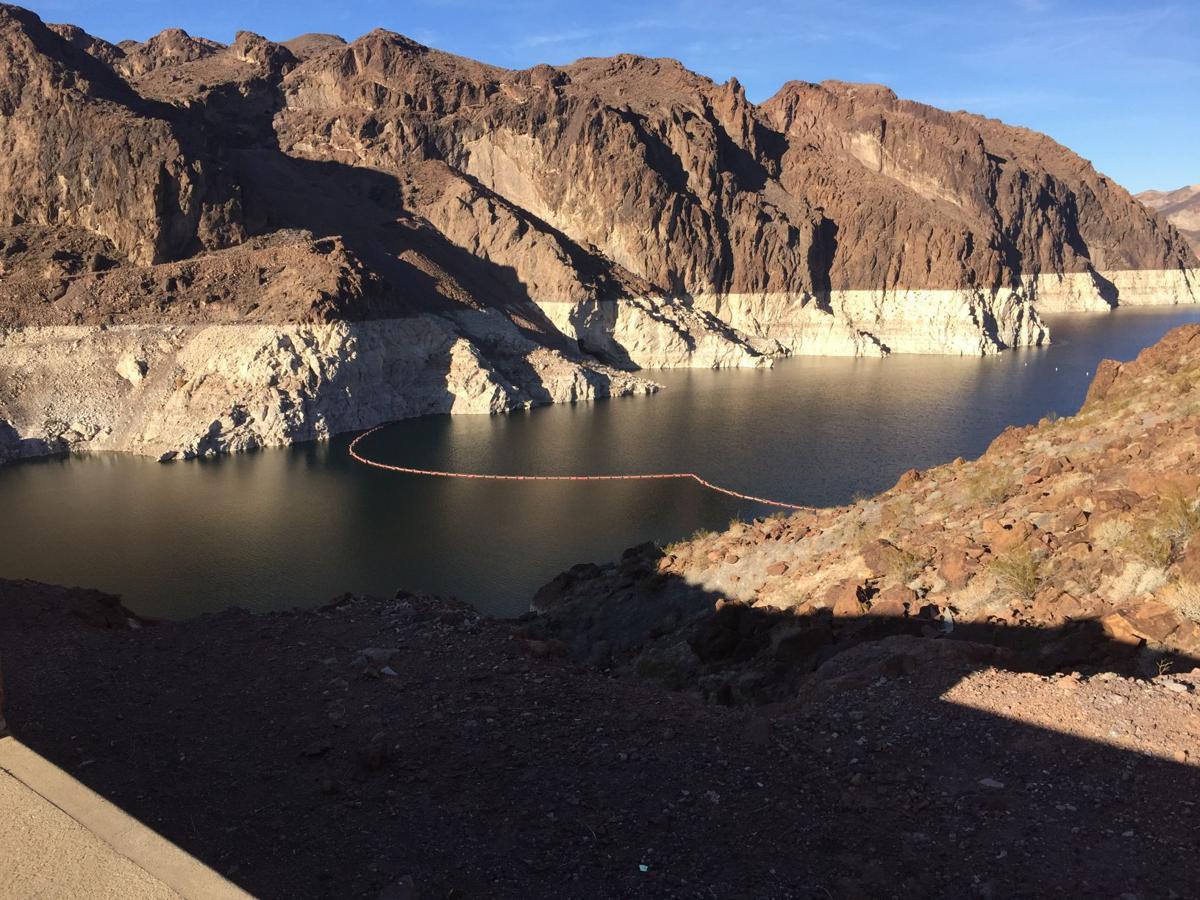
By the end of this year, Arizona, Nevada and California will have left more than 400,000 acre feet of water since 2014 in the declining Lake Mead that they have the right to use but have decided not to. They have jointly agreed to do that to try to slow the rate of decline at the lake. It has dropped steadily since the ongoing, regional drought began in about 2000.
“Arizona can now rest assured that no other state will gets its hands on the water we have saved in Lake Mead,” Flake said in a news release.
“This is a big win for Arizona in the combined effort to combat the drought, prevent a water shortage, and ensure continued access to our share of the Colorado River.”
The Interior Department can't commit to keeping the unused water in Mead beyond 2016 because a new administration and new Interior Secretary will take office next January.
But Connor wrote in his letter to Flake that the department hopes that its current commitment will help clear the way for a multi-year agreement among the Lower Basin states to come up with solutions for the lake's declining levels.
Through such agreements, "issues such as this can be 'locked in' across multiple years and across executive branch administrations," Connor wrote.
Such an agreement would require the three states to take large enough cuts in river water to prevent the lake from falling far enough and fast enough to require much more severe cutbacks. The three states are currently negotiating a draft agreement in which Arizona would cut its CAP use by up to 600,000 acre-feet, or 40 percent of the project's total supply, when the lake drops to 1,025 feet below sea level. The other states and the reclamation agency would take smaller cuts.
In his letter to Flake, however, Connor repeated his past warning that if an agreement isn't reached, "it appears clear
that additional actions, including potentially by the Secretary of the Interior, will be required to protect the basin from the adverse consequences of worsening drought and declining reservoir storage."
Connor has said that if necessary, Interior Secretary Sally Jewell may order mandatory cuts for all three Lower Basin states if the states can't reach agreement on their own.

