


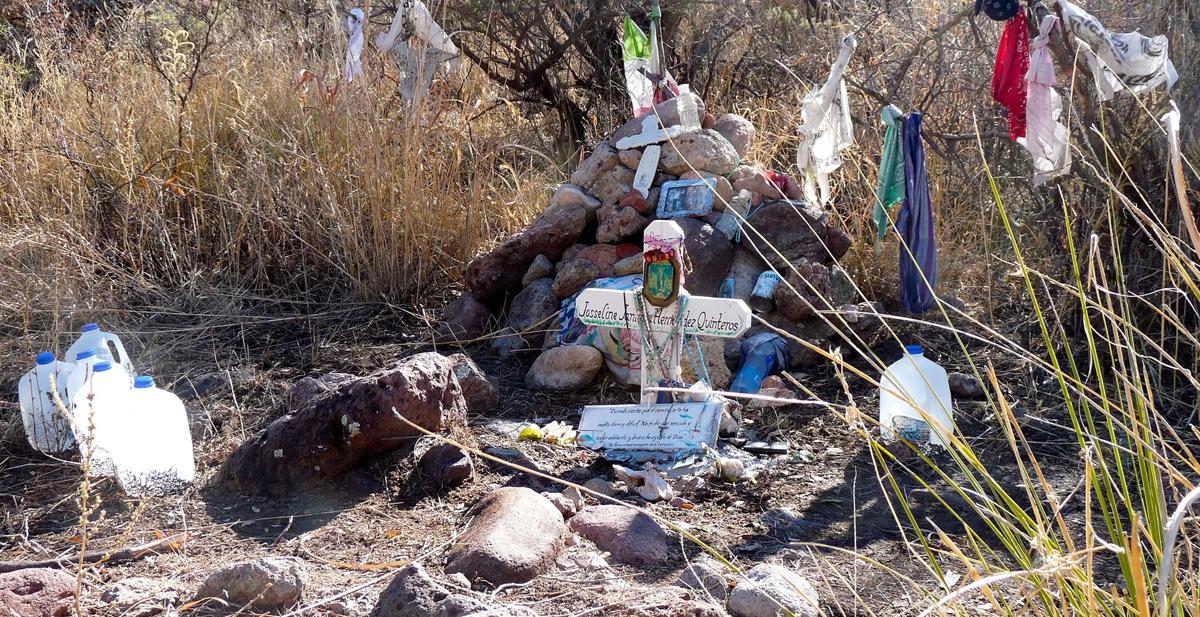
Remains of 181 migrants were found in the Arizona desert through the end of September, 37 more than in all of last year and the most since 2013, according to the group Humane Borders.
The rise in migrant deaths comes during a year of intense heat and little precipitation for Arizona — but also at a time when the number of people caught crossing the border has fallen sharply.
The new international border wall near Yuma and San Luis, Arizona, on October 6, 2020. Video by Kelly Presnell / Arizona Daily Star
Humanitarian groups and county officials along the border blame the rising deaths on years of border security policies that have pushed migrants toward riskier routes into the U.S. — along with this year’s harsh weather, expanded border security and COVID-19 health restrictions.
“It’s kind of like stopping water: If you block it up in one place, it’s going to go somewhere else,” said Pima County Sheriff Mark Napier. “We’re seeing the results of that as an increase in deaths.”
The number of deaths is tracked by the humanitarian group Humane Borders, using data from the Pima County Medical Examiner’s Office and other public sources. The group, which releases numbers quarterly, recovered remains of 181 people in the desert through September, with 85 of those cases coming in the last three months alone.
This year’s deaths are just five shy of the 186 recorded in 2013, according to Humane Borders. Since then, annual deaths have ranged from 124 in 2017 to 166 in 2016.
Tucson and Phoenix had it hottest summer on record in 2020, which was also one of the state’s driest years, according to the National Weather Service. It said the just-ended monsoon season was the sixth-driest since 1895, with 0.10 inches of rain measured. Almost 94% of Arizona is currently in severe drought, according to the U.S. Drought Monitor.
Napier said the heat alone is not what kills migrants — the lack of water is the main issue.
“The difference between it being 103 degrees in the desert and you having no water or 105 degrees in the desert with no water, it’s had a minimal effect,” Napier said. “If you’re walking 20 miles in the desert and you have no water, it’s life-threatening.”
Sophie Smith, a co-founder of the Arivaca-based humanitarian organization People Helping People, said what water is available to migrants is unsafe.
“There are few to no water sources out here,” Smith said. “The water sources that do exist are usually cattle ponds for ranchers out here and are contaminated, so it’s really common for people to drink water that’s dirty to survive.”
Smith believes migrants keep coming because they have little choice, “fleeing not only economic violence and poverty that create circumstances that are very deadly, but literal threats to life” back home.
Beginning in 1994, she said, immigration enforcement resources were steered toward ports of entry and safer areas to cross the border, pushing migrants to cross in increasingly dangerous areas. She said that’s no accident.
“It’s written into the policy,” Smith said. “The language of the policy explains that border patrol aims to put people into hostile terrain where they may find themselves in mortal danger as a way to diminish crossing levels as a deterrent.”
A new wrinkle this year is the imposition of Centers for Disease Control and Prevention policies, aimed at checking the spread of COVID-19, that allow border patrol agents to immediately expel migrants to Mexico.
Where migrants used to be released in border cities like Nogales, Smith said, they may now wind up in tiny border towns “with few to no resources” – leaving them with few places to turn but back north.
Risks of crossing the border range from the desert climate and border patrol to coyotes — both the four-legged kind and human traffickers. But Santa Cruz County Sheriff Tony Estrada said, for many, the threat back home outweighs the risk of crossing.
“You wonder do these people ... how can they tolerate that?” Estrada said. “Desperation and hope drives them ... These have got to be a real special kind of people that are willing to do just about anything if you give them a chance.”
That chance has been increasingly narrowed by the growing border wall. While Napier believes the wall is important for the safety of Arizonans, he acknowledges that it has forced migrants into “more remote and dangerous” areas to cross.
Sometimes it’s not the authorities who find migrants, he said, but migrants who seek out authorities. Napier said more than 85% of his calls to Customs and Border Protection are to help rescue migrants who called 911 because they are stranded in the desert without water.
Sometimes authorities find migrants. And sometimes they find nothing more than a “leg bone or part of a skull.”
“It’s not like a National Geographic special, and you are on some archeological dig and you come up with human remains,” Napier said. That was “somebody’s mother, somebody’s son, somebody’s father.”
As an immigrant himself, Estrada said he admires what migrants and their families go through for the chance of a better life in the United States. But he calls it a “journey forged in desperation.”
“You wonder who that person was, what that person went through, who victimized them, obviously,” Estrada said. “But a lot of cases they’re not victims of anything other than the weather, the climate and the terrain.”
Photos of the U.S. – Mexico border fence
U.S. – Mexico border near Douglas, Ariz.
Updated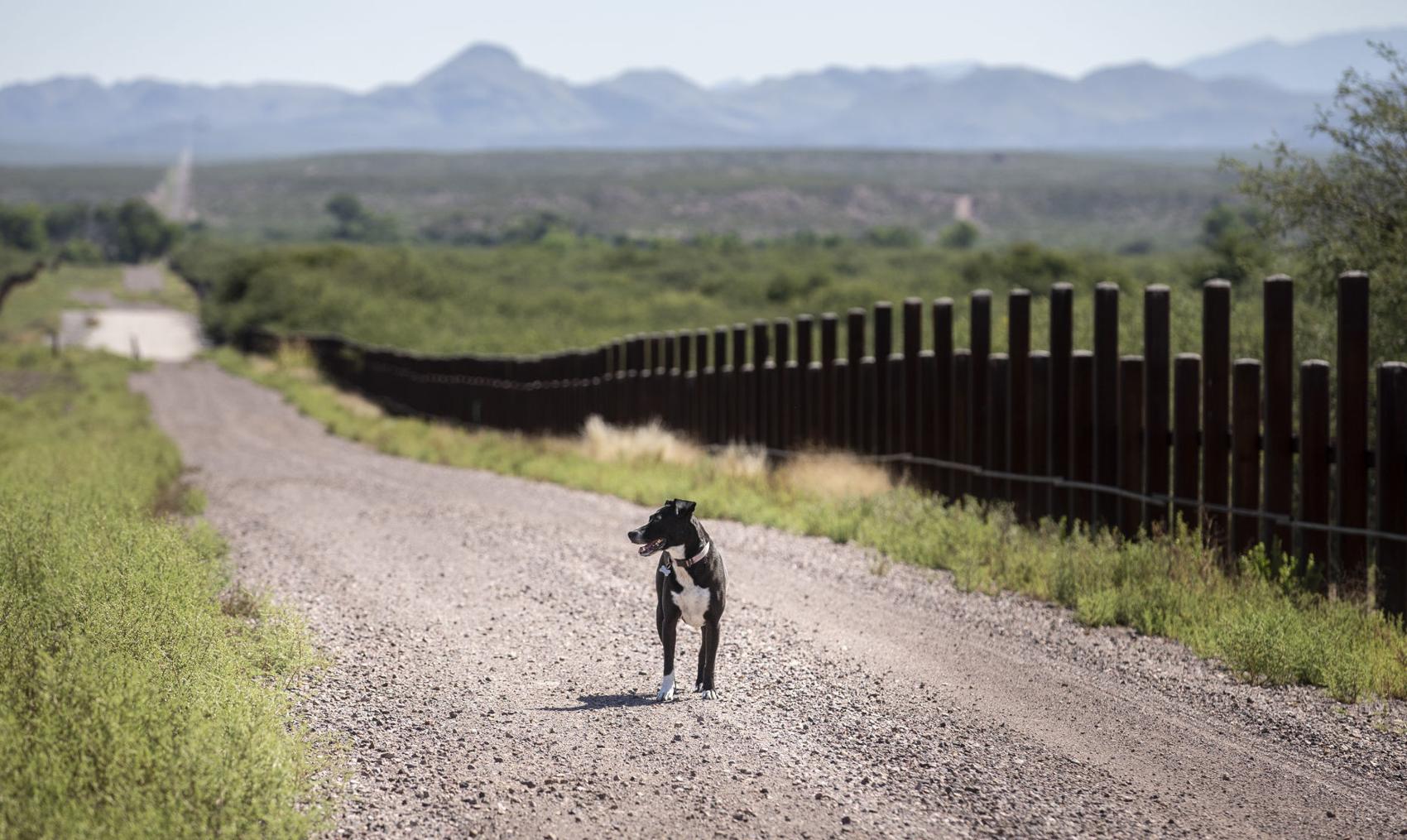
A dog stands on a road commonly used by Border Patrol near Slaughter Ranch Museum Thursday, Sept. 27, 2019.
U.S. – Mexico border near Douglas, Ariz.
Updated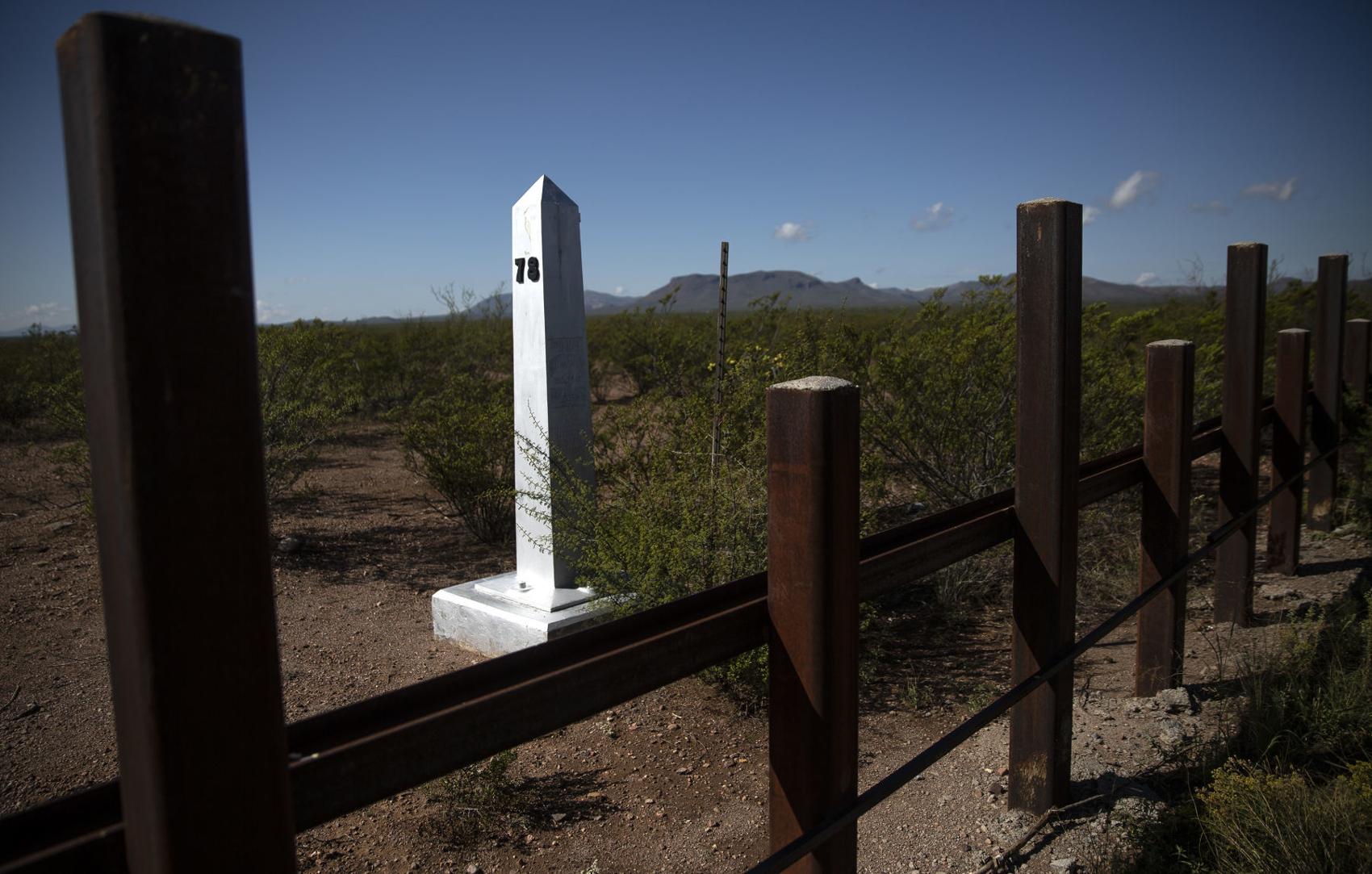
A border monument on the Mexico side of the border seen east of Douglas Thursday, Sept. 27, 2019.
U.S. – Mexico border near Douglas, Ariz.
Updated
The San Bernardino National Wildlife Refuge sits on the U.S. side of the border with Mexico east of Douglas Thursday, Sept. 27, 2019.
U.S. – Mexico border near Douglas, Ariz.
Updated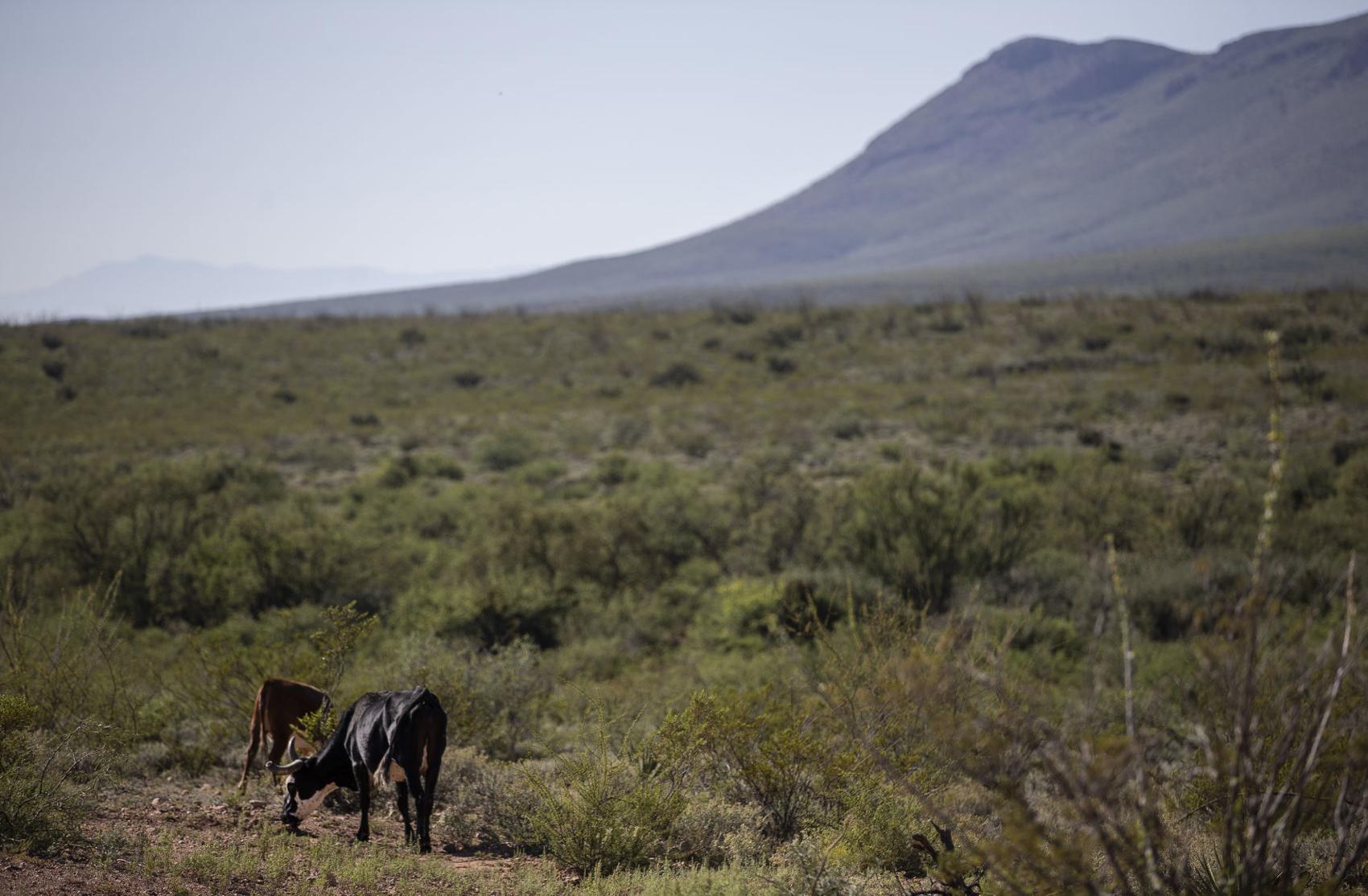
A bull and cow graze near the site of new wall construction east of Douglas Thursday, Sept. 27, 2019.
U.S. – Mexico border near Douglas, Ariz.
Updated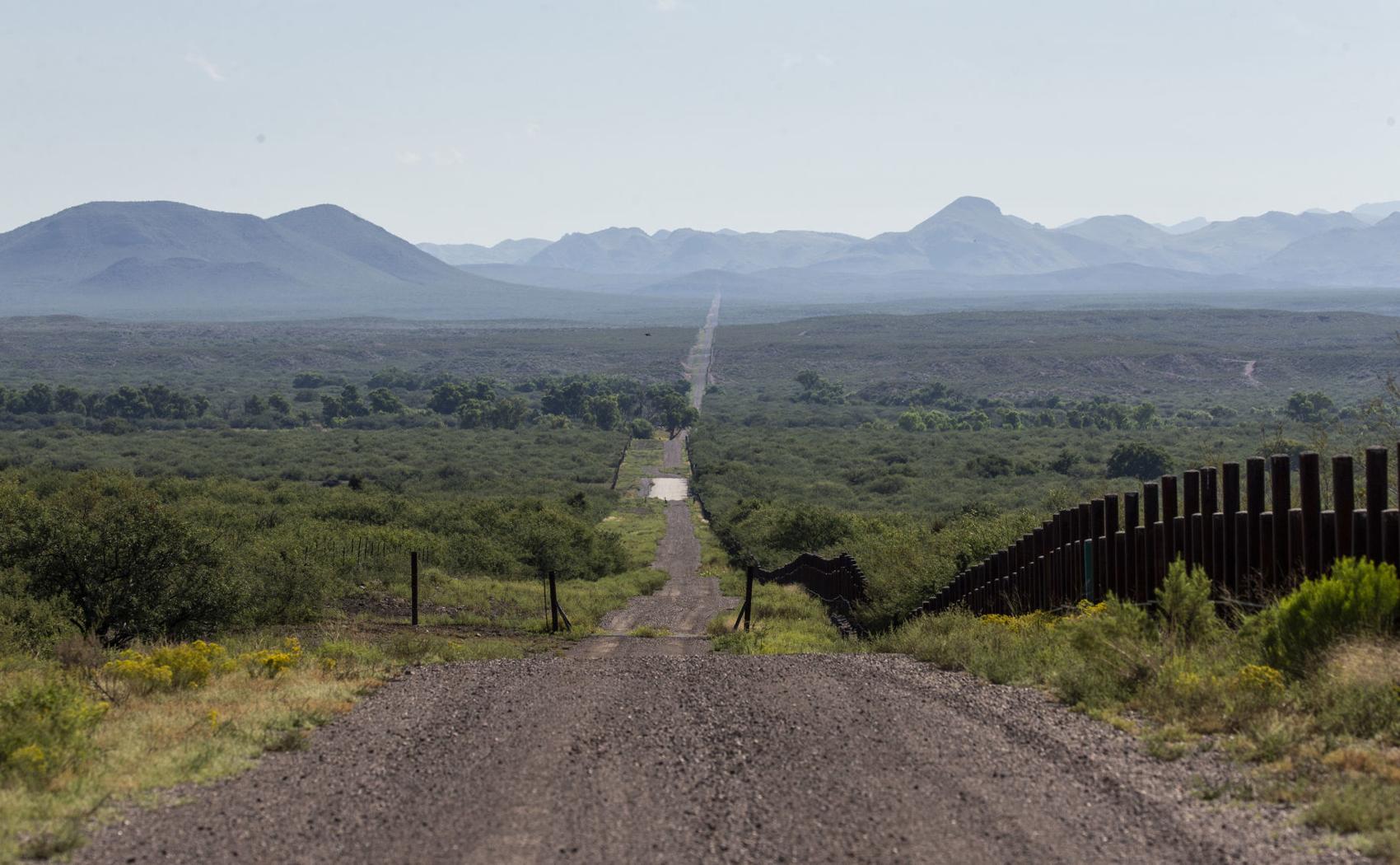
The border seen stretching from hills east of Douglas into the Guadalupe Mountains Thursday, Sept. 27, 2019.
U.S. – Mexico border near Douglas, Ariz.
Updated
Flowers grow around border fencing near the San Bernardino National Wildlife Refuge Thursday, Sept. 27, 2019.
U.S. – Mexico border near Douglas, Ariz.
Updated
Construction equipment set up at the site of new border wall construction on the US/Mexico border east of Douglas Thursday, Sept. 27, 2019.
U.S. – Mexico border near Douglas, Ariz.
Updated
A Border Patrol tower on the hills east of Douglas Thursday, Sept. 27, 2019.
U.S. – Mexico border near Douglas, Ariz.
Updated
Memorials place on graves at Julia Page Memorial Park in Douglas which sits along the U.S./Mexico border Thursday, Sept. 27, 2019.
U.S. – Mexico border near Douglas, Ariz.
Updated
A car drives through Douglas on a road parallel to the U.S./Mexico border wall Thursday, Sept. 27, 2019.
U.S. – Mexico border near Douglas, Ariz.
Updated
The Slaughter Ranch homestead Thursday, Sept. 27, 2019.
U.S. – Mexico border near Douglas, Ariz.
Updated
A lake on the Slaughter Ranch Thursday, Sept. 27, 2019.
U.S. – Mexico border near Douglas, Ariz.
Updated
A toy rocking horse placed on the side of East Geronimo Trail with a sign advertising five minute pony rides for 25 cents Thursday, Sept. 27, 2019.
U.S. – Mexico border near Douglas, Ariz.
Updated
Highway 2 in Mexico winds its way to Agua Prieta Thursday, Sept. 27, 2019.
U.S. – Mexico border near Douglas, Ariz.
Updated
The vehicle in a ditch was driven through the international border fence in Agua Prieta, Mex., into Douglas, Arizona in July 1987.
U.S. – Mexico border near Douglas, Ariz.
Updated
Mexican citizens run back into Agua Prieta, Mexico through a hole in the border fence at Douglas, Ariz., after the U.S. Border Patrol scared them back across the border in 1997.
U.S. – Mexico border near Douglas, Ariz.
Updated
The Raul Hector Castro Port of Entry on May 1, 2018, in Douglas, Ariz.
U.S. – Mexico border near Douglas, Ariz.
Updated
The Douglas, Ariz., border crossing in 1968.
U.S. – Mexico border near Lochiel, Ariz.
Updated
U.S./Mexico border fencing next to a old church building in Lochiel Tuesday, Oct. 1, 2019.
U.S. – Mexico border near Lochiel, Ariz.
Updated
Old border posts line the U.S./Mexico line near Lochiel Tuesday, Oct. 1, 2019.
U.S. – Mexico border near Lochiel, Ariz.
Updated
A Soal Off Roading sticker placed on a U.S./Mexico border post near Lochiel Tuesday, Oct. 1, 2019.
U.S. – Mexico border near Lochiel, Ariz.
Updated
Mountains in Santa Cruz County seen from Duquesne Road between Nogales and Lochiel seen Tuesday, Oct. 1, 2019.
U.S. – Mexico border near Lochiel, Ariz.
Updated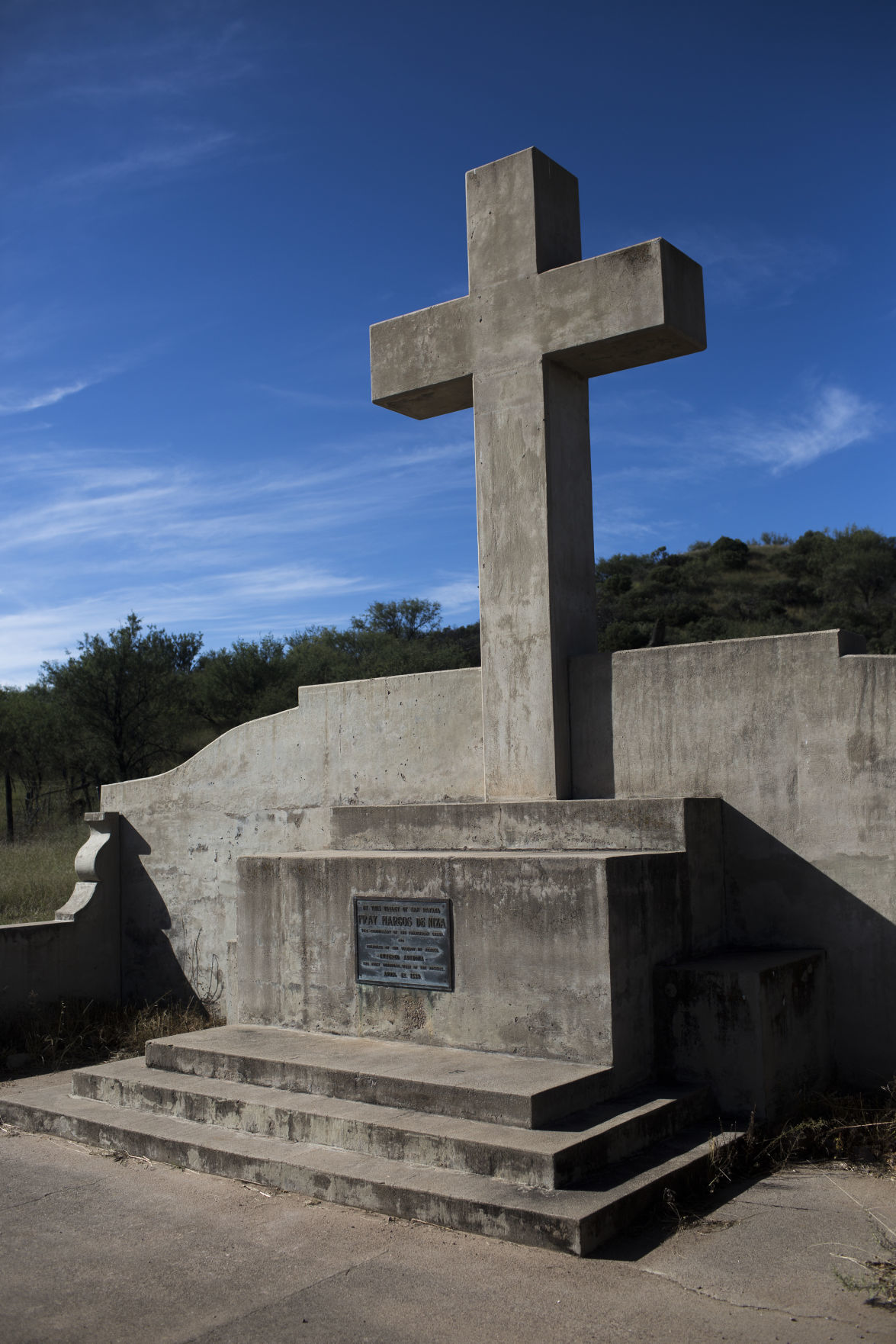
A monument in Lochiel marking where Fray Marcos De Niza entered Arizona Tuesday, Oct. 1, 2019.Tuesday, Oct. 1, 2019.
U.S. – Mexico border near Lochiel, Ariz.
Updated
Brothers Ramon and Ed De La Ossa mend fencing on their family's ranch in Lochiel after moving cattle Tuesday, Oct. 1, 2019. The ranch which used to span both sides of the U.S./Mexico border has been in the family for three generations.
U.S. – Mexico border near Lochiel, Ariz.
Updated
Ed De La Ossa mends fencing on his family's ranch in Lochiel Tuesday, Oct. 1, 2019. The ranch which used to span both sides of the U.S./Mexico border has been in the family for three generations.
U.S. – Mexico border near Lochiel, Ariz.
Updated
Ed De La Ossa moves cattle on his family's ranch in Lochiel Tuesday, Oct. 1, 2019.
U.S. – Mexico border near Lochiel, Ariz.
Updated
U.S. Customs inspector Helen Mills, right, greets Mexican counterpart Raymundo Aguirre Castillo at the U.S. - Mexican border station at Lochiel, Ariz., in 1979.
U.S. – Mexico border near Lochiel, Ariz.
Updated
The US Customs building, right, at Lochiel, Ariz., is just a short distance away from the international border in May 1972. For ten years, Mills has been managing the port of entry, which is mostly made up of five houses, a school and an vacant church, inspecting vehicles as they head into the US. During the week, from Monday through Saturday, Mills opens the border gate from 8 am to 10 am and from 4 pm to 6 pm. On Sunday the gate is open from 8 am to 6 pm. In that time barely a dozen vehicles make their way across the border but it is a major convenience to the local residents.
U.S. – Mexico border near Nogales, Ariz.
Updated
Pedestrians walk to the Nogales port of entry Tuesday, Oct. 1, 2019.
U.S. – Mexico border near Nogales, Ariz.
Updated
A pedestrian walks across North Grand Avenue in Nogales near the U.S./Mexico port of entries Tuesday, Oct. 1, 2019.
U.S. – Mexico border near Nogales, Ariz.
Updated
U.S. Customs and Border Protection officer R. Hernandez uses a density-measuring device on the rear quarter-panel of a Mexico-bound passenger vehicle at the DeConcini Port of Entry on Nov. 2, 2016, in Nogales, Ariz.
U.S. – Mexico border near Nogales, Ariz.
Updated
A Customs and Border Protection officer makes a visual check of a man's identification at the DeConcini Port of Entry on Feb. 15, 2017, in Nogales, Ariz. Busts of fraudulent border-crossing documents and the use of someone else's documents plummeted in Arizona and the rest of the border in the past decade.
U.S. – Mexico border near Nogales, Ariz.
Updated
Northbound commercial truck traffic lined up for inspection at the Mariposa Port of Entry on March 28, 2017, in Nogales, Ariz.
U.S. – Mexico border near Nogales, Ariz.
Updated
In the commercial lanes a semi truck stops between the lanes looking for the first available opening at the Mariposa Port of Entry in 2015.
U.S. – Mexico border near Nogales, Ariz.
Updated
Javier Castillo inspects a north-bound Mexican tractor-trailer at the Arizona Department of Transportation's inspection facility at the Mariposa Port of Entry on Sept. 19, 2017, in Nogales, Ariz. ADOT's International Border Inspection Qualification program, led by ADOT's Border Liaison Unit, teaches commercial truck drivers what to expect during safety inspections when they enter Arizona ports of entry.
U.S. – Mexico border near Nogales, Ariz.
Updated
A Border Patrol truck parked near the commercial port of entry in Nogales.
U.S. – Mexico border near Nogales, Ariz.
Updated
An illegal alien scales the U.S.-Mexico fence back toward Sonora after a Nogales Police Department officer, right, spotted him west of the Mariposa Port of Entry, Nov. 15, 2018, in Nogales, Ariz.
U.S. – Mexico border near Nogales, Ariz.
Updated
Kory's, a store catering to wedding, quincea–era and formal gowns, located at 15 N Morley Ave, Nogales, Ariz., sits katty corner to the Morley Gate Border Station on January 30, 2019.
U.S. – Mexico border near Nogales, Ariz.
Updated
Sun shines through the U.S.-Mexico bollard fence west of the Mariposa Port of Entry, Nov. 15, 2018, in Nogales, Ariz.
U.S. – Mexico border near Nogales, Ariz.
Updated
Children from Nogales, Sonora, climb through a hole in the international border fence to trick-or-treat in Nogales, Arizona, on Halloween in 1987.
U.S. – Mexico border near Sasabe and Lukeville, Ariz.
Updated
Border monument #166 is seen on the right as construction continues on the new 30-foot tall bollard fence that replaces old U.S./Mexico border fence two miles east of the Lukeville, Arizona port of entry on October 8, 2019. Photo taken from Sonoyta, Sonora, Mexico.
U.S. – Mexico border near Sasabe and Lukeville, Ariz.
Updated
Construction continues on the new 30-foot tall bollard fence along the U.S./Mexico border two miles east of the Lukeville, Arizona port of entry on October 8, 2019. Photo taken from Sonoyta, Sonora, Mexico.
U.S. – Mexico border near Sasabe and Lukeville, Ariz.
Updated
A Mexican worker rides his horse along a road south of the U.S./Mexican border wall on his way back into Sonoyta Wednesday, Aug. 28, 2019.
U.S. – Mexico border near Sasabe and Lukeville, Ariz.
Updated
New paneling of border wall seen about three miles east of the Lukeville/Sonoyta port of entry seen from the Mexico side of the border line Wednesday, Aug. 28, 2019.
U.S. – Mexico border near Sasabe and Lukeville, Ariz.
Updated
Old mesh paneling is removed in preparation for new wall to be built about three miles east of the Lukeville/Sonoyta port of entry seen from the Mexico side of the border line Wednesday, Aug. 28, 2019.
U.S. – Mexico border near Sasabe and Lukeville, Ariz.
Updated
A construction worker prepares cables to lift a piece of the 30-foot tall bollard fence along the U.S./Mexico border fence two miles east of the Lukeville, Arizona port of entry on October 8, 2019. Photo taken from Sonoyta, Sonora, Mexico.
U.S. – Mexico border near Sasabe and Lukeville, Ariz.
Updated
Border Patrol Officers to the side of a worksite about three miles east of the Lukeville/Sonoyta port of entry where new border wall is being installed seen from the Mexico side of the border line Wednesday, Aug. 28, 2019.
U.S. – Mexico border near Sasabe and Lukeville, Ariz.
Updated
Old wall east of the Lukeville/Sonoyta port of entry seen from the Mexico side of the border line Wednesday, Aug. 28, 2019.
U.S. – Mexico border near Sasabe and Lukeville, Ariz.
Updated
Raised wall east of the Lukeville/Sonoyta port of entry seen from the Mexico side of the border line Wednesday, Aug. 28, 2019.
U.S. – Mexico border near Sasabe and Lukeville, Ariz.
Updated
A work site east of the Lukeville/Sonoyta port of entry seen from the Mexico side of the border line Wednesday, Aug. 28, 2019.
U.S. – Mexico border near Sasabe and Lukeville, Ariz.
Updated
Normandy fencing placed against a section of border fence west of Lukeville Wednesday, Aug. 28, 2019.
U.S. – Mexico border near Sasabe and Lukeville, Ariz.
Updated
A semi passes by Quitobaquito Springs as it drives along Highway 2 in Mexico Wednesday, Aug. 28, 2019.
U.S. – Mexico border near Sasabe and Lukeville, Ariz.
Updated
An area referred to as "flood gate" along the U.S./Mexico border near Sasabe, Ariz. is on the list of the Department of Homeland Security’s priorities for building a border wall, but no funding has been allocated yet. September 16, 2019.
U.S. – Mexico border near Sasabe and Lukeville, Ariz.
Updated
Vehicle barriers mark the U.S./Mexico border within the Buenos Aires National Wildlife Refuge in Sasabe, Ariz. on September 16, 2019.
U.S. – Mexico border near Sasabe and Lukeville, Ariz.
Updated
A portion of the U.S./Mexico bollard border fence ends on the right and vehicle barriers begin within the Buenos Aires National Wildlife Refuge in Sasabe, Ariz. on September 16, 2019.
U.S. – Mexico border near Sasabe and Lukeville, Ariz.
Updated
A U.S. Customs and Border Protection Integrated Fixed Tower, left, near Sasabe, Ariz. on September 16, 2019.
U.S. – Mexico border near Sasabe and Lukeville, Ariz.
Updated
The new 30-foot tall bollard fence that replaced old U.S./Mexico border fence can be seen on the left. It's located about miles east of the Lukeville, Arizona port of entry on October 8, 2019. Photo taken from Sonoyta, Sonora, Mexico.
U.S. – Mexico border near San Luis, Ariz.
Updated
A US Border Patrol vehicle seen next to a section of new 30 foot high wall along the US/Mexico border near the commercial port of entry in San Luis Thursday, Aug. 8, 2019.
U.S. – Mexico border near San Luis, Ariz.
Updated
Old fencing is taken down along the United States/Mexico border seen from the northern end of San Luis, Mexico, Aug. 7, 2019.
U.S. – Mexico border near San Luis, Ariz.
Updated
A security guard stand in a construction site where a new fence will be placed on the United States/Mexico border seen from the northern end of San Luis, Mexico, Aug. 7, 2019.
U.S. – Mexico border near San Luis, Ariz.
Updated
Old fencing against new fencing along the United States/Mexico border seen from the northern end of San Luis, Mexico on Aug. 7, 2019.
U.S. – Mexico border near San Luis, Ariz.
Updated
Crews prepare ground for a new fence to be placed on the United States/Mexico border seen from the northern end of San Luis, Mexico on Aug. 7, 2019.
U.S. – Mexico border near San Luis, Ariz.
Updated
Vehicles in line to enter the United States from San Luis, Mexico on Aug. 7, 2019.
U.S. – Mexico border near San Luis, Ariz.
Updated
New fencing along the United States/Mexico border seen from the northern end of San Luis, Mexico on Aug. 7, 2019.
U.S. – Mexico border near San Luis, Ariz.
Updated
A new section of fencing on the U.S. - Mexico border in California, just west of Yuma, Ariz., in 1993.
U.S. – Mexico border near San Luis, Ariz.
Updated
Sand drifts through the "floating fence" that marks the border running through the dunes, Wednesday, July 25, 2018, west of San Luis, Ariz.
U.S. – Mexico border near San Luis, Ariz.
Updated
A sign warns of the dangers of trying to swim the All-American Canal just north of the Mexican border, Wednesday, July 25, 2018, west of San Luis, Ariz.
U.S. – Mexico border near San Luis, Ariz.
Updated
A long string of lights illuminate the no-man's land between the triple fencing of the Mexican border, Wednesday, July 25, 2018, San Luis, Ariz.
U.S. – Mexico border near San Luis, Ariz.
Updated
The border fence comes to an abrupt end at the currently dry Colorado River, Thursday, July 26, 2018, west of San Luis Rio Colorado, Sonora.

