

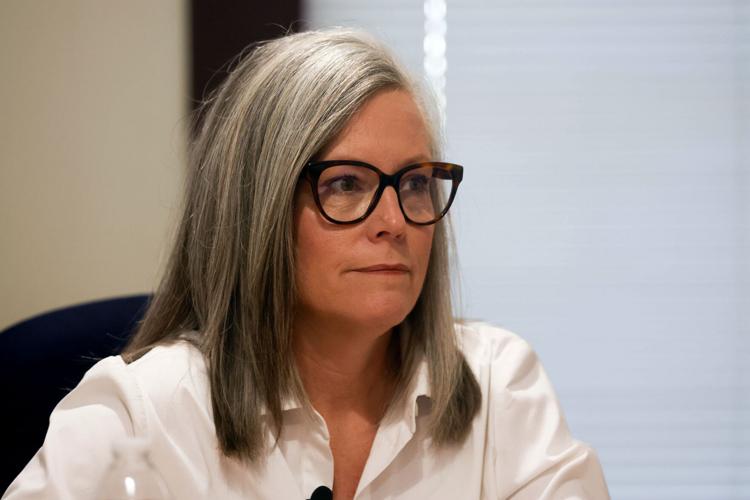
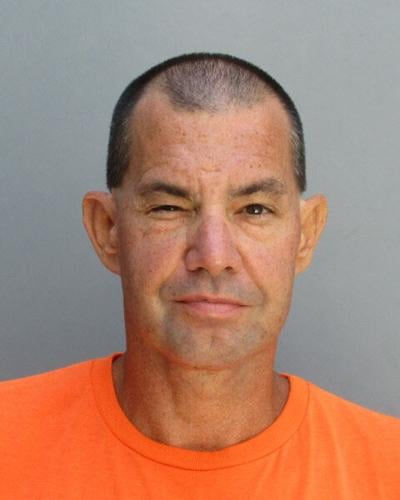
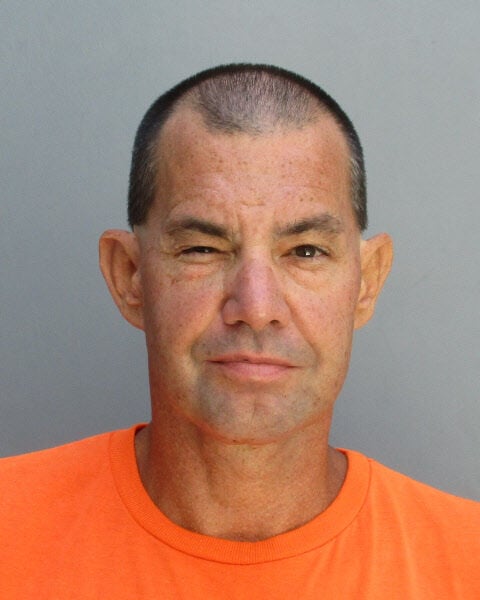
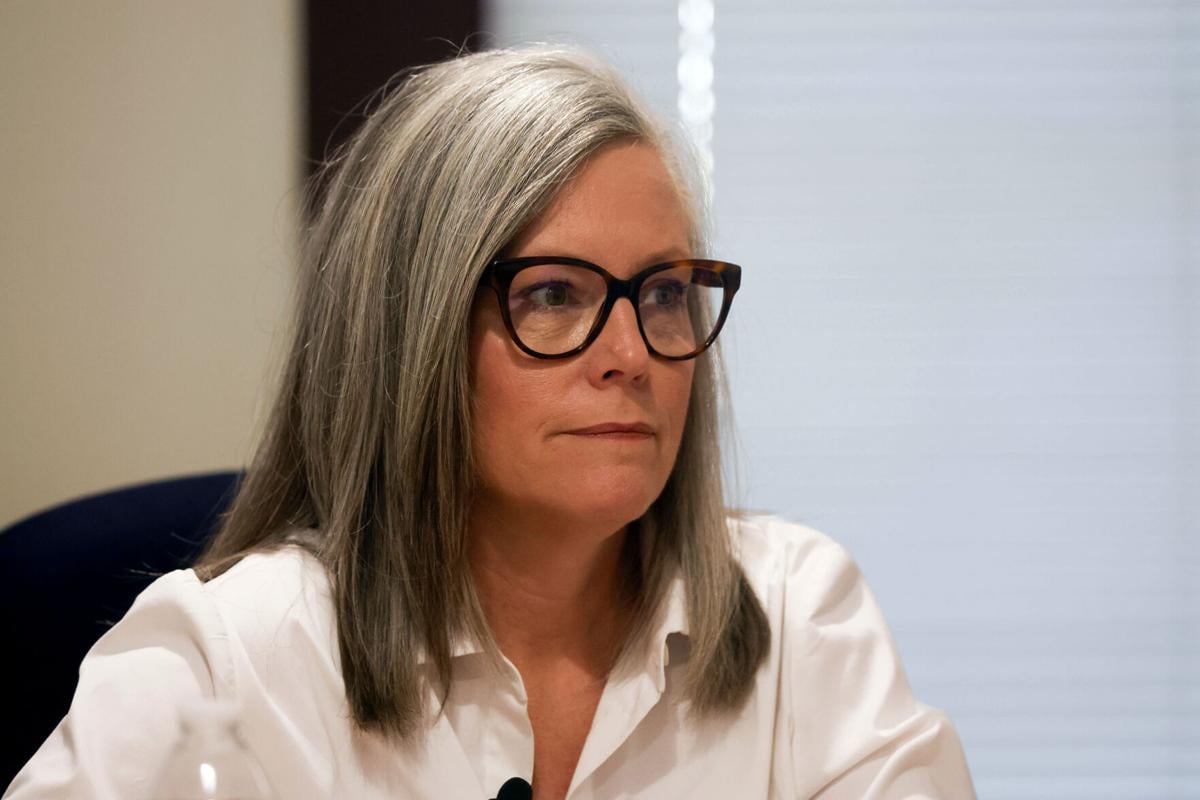
PHOENIX — He was fired last month by Gov. Katie Hobbs.
But David Duncan still intends to complete his report about what he has learned about the execution process in Arizona — and make it public, he told told Capitol Media Services.
Duncan said there are several conclusions from the research he already had done that he believes need to be shared. And it starts with the one method for legally executing inmates in Arizona that he was asked to review.
“I don’t think lethal injection can be workable,’’ he said. Duncan said there are too many things that can — and have — gone wrong as the state has used this procedure on condemned inmates.
But that’s not all.
“I am concerned about the continued absence of transparency,’’ Duncan said. That includes not just in the execution process but also what he said is the peril of obtaining lethal drugs “in these back-channel ways,’’ something the Department of Corrections, Rehabilitation and Reentry itself tried to do before the chemicals it had ordered from India were seized at Sky Harbor Airport by Customs and Border Protection.
“I have spoken to one former commissioner of the Food and Drug Administration who believes it’s very dangerous,’’ he said.
“In fact, these compounded drugs that the states have procured in these back channels have ended up in hospitals,’’ Duncan said. “And they are completely outside the regulatory that exists that protects us all.’’
And he said there’s a political cautionary tale to be told about his dismissal because his draft report didn’t reach the conclusions he says the governor wanted.
“I worry about what happened to me on any future effort by a governor or similarly situated officer to turn to an independent review person and to be able to find somebody of stature and qualification who would look at my experience and think, ‘Well, I really don’t want to engage in that fool’s errand,’” Duncan said.
Hobbs hired Duncan, a former federal magistrate, last year after saying she wanted a new Death Penalty Review Commissioner.
The task, the governor said, was to conduct a full review of the process, ranging from how and where the state gets its execution chemicals to transparency and media access and the procedures and protocols used by the Department of Corrections, Rehabilitation and Reentry used to put condemned inmates to death, including the training of those prison officials involved.
“The death penalty is a controversial issue to begin with,’’ Hobbs explained. “We just want to make sure the practices are sound and that we don’t end up with botched executions like we’ve seen recently.’’
In the interim, Attorney General Kris Mayes agreed not to seek any warrants to execute anyone until the report was done.
Duncan told Capitol Media Services he took the job under the premise that nothing would be off the table.
“I had no red flags at the beginning that there was any reason to suspect that the governor and her staff were not fully embracing the idea of an independent review commissioner and that they were hands-off, allowing me to come to my own conclusions,’’ Duncan said.
It was only later, he said, that it became clear that was not the case.
“At one point, the governor’s lawyer, Bo Dul, told me, ‘No, you’re not independent of the governor, you are independent of the Department of Corrections,’” Duncan related. That he said, was not the original idea.
But gubernatorial press aide Christian Slater called Duncan’s description of the conversation with Dul “a gross mischaracterization of what Bo said.’’
“She was merely reiterating that the scope and purpose of the review is defined by, and not independent of, the governor,’’ he said. And that, said Slater, was to come up with recommendations “under existing laws, not to recommend the firing squad executions or other changes to the laws.’’
That account is backed up by Dan Barr, the chief deputy attorney general whose office was part of the oversight of the report.
He said Dul never told Duncan what to say in the report. Barr said Dul told Duncan the study was to look “at the death penalty law as it is’’ and determine, within those constraints, whether there is a better way to conduct the executions.
And that, by definition, meant lethal injection which is what the law provides. That, said Barr, made Duncan’s suggestion of a firing squad as a more humane alternative not only irrelevant but beyond what he was asked to do.
But Duncan defended his controversial comments in the draft report about the firing squad being more humane than the current process. He said that idea fits squarely within what he was asked to do.
Duncan said Hobbs asked him to review the death penalty procedures — including the experience of the staff at the Department of Corrections, Rehabilitation and Reentry to conduct executions. And what he said he found were mistakes and problems that have led to multiple reports of inmates, strapped the the gurney, suffering as staffers had problems administering the fatal drugs.
The the whole point of mentioning the firing squad, Duncan said, was to get to what he said he believed to be the heart of the issue: determine if there is a way for Arizona to conduct executions in a way that is not just humane but, specifically, does not result in “botched’’ procedures.
And he said that, in turn, goes to issues he did find at the corrections department and were in his outline, like staff doing Wikipedia searches about lethal drugs.
He also mentioned not just the 2014 execution of Joseph Wood who took almost two hours to die after 15 injections. And even after executions were restarted in 2022, Duncan said in all three incidents there were issues with the execution team, which does not include medical professionals, having issues inserting the intravenous needles.
Duncan’s decision to finish his report on his own is occurring against some backlash against Hobbs for firing Duncan.
At a news conference last week Nicholas Sarwark, executive director of the Libertarian Party Institute, said Hobbs did the right thing last year in seeking an outside review.
“She asked a respected, retired federal jurist to look into the problems that we have had in Arizona,’’ he said.
“But she didn’t like the answers and she ran from the truth,’’ Sarwark continued. “If the governor wants to start killing people again with our money, she must first allow the report to be completed and release it to the public.’’
That’s not going to happen, with Hobbs pulling the plug and paying Duncan $36,000 for the work he had already done.
In his draft report — the one that resulted in Hobbs firing him — Duncan also said he was denied face-to-face interviews with the agency’s new medical/IV team and watch them actually rehearse an execution but instead was offered only the opportunity for written questions. Agency officials cited issues of confidentiality.
But Duncan, in an introduction to that draft, suggested that granting him that access could have made a significant difference in his ultimate findings.
“These interviews and observation of the rehearsal could affect my present conclusion that lethal injection while theoretically achievable is, in actual practice, fundamentally unreliable, unworkable and unacceptably prone to errors,’’ he said.
And Duncan said there may be another reason Hobbs dismissed him based on what she saw in his draft.
“I don’t know whether she just wants to make sure she’s on the right side of the capital punishment issue for the election,’’ he said, with Hobbs seeking a second four-year term in 2026. “I don’t know, because it sort of looks like that.’’
Hobbs has sidestepped questions about not only her own views on the death penalty but also whether she believes it actually is possible to kill someone with a lethal injection in a humane way.
All this comes as Rep. Patty Contreras, D-Phoenix, has introduced HCR 2001. It seeks to put the question of repeal of the death penalty on the 2026 ballot.
But the chances of that happening are virtually nil: Contreras had identical proposal in each of the past two sessions but could not get a hearing in the Republican-controlled legislature.
Meanwhile, Mayes has moved forward with pursuing the death penalty against Aaron Gunches.
Duncan said a public debate — and vote — might be appropriate.
“My kind of report is something that people could consider,’’ he said.
“If they’re uncomfortable with the firing squad and lethal injection doesn’t work to a satisfactory level, then maybe you’re left with it just doesn’t work,’’ Duncan said.
“And maybe the voters can decide that.’’

