


Rebuffed in their bid to totally quash a voter-approved ban on “dark money,” two organizations involved in trying to influence Arizona politics are now trying to at least get themselves and their donors exempted from its provisions.
In new legal filings, Attorney Scott Freeman again argues that Proposition 211 and its requirement for disclosure of the true source of campaign dollars violates state constitutional provisions guaranteeing free speech and privacy. Those claims, first filed last year, got him nowhere as they were rejected by Maricopa County Superior Court Judge Scott McCoy.
The judge, however, gave Freeman a do-over of sorts. He agreed to let the attorney for the Goldwater Institute adjust his claims, this time seeking not to void the law entirely but instead argue that the provisions of the initiative cannot legally be applied to the Free Enterprise Club and the Center for Arizona Policy, the two groups who filed the initial challenge.
But McCoy said that to get the exemption they seek, they have to show “reasonable probability that disclosure of its contributors’ names will subject them to threats, harassment or reprisals from either government officials or private parties.”
So now Freeman is back, armed with affidavits from the heads of both groups claiming there are dangers to themselves, their organizations and their donors if the names of the people giving money are made public.
Approved by voters in November by a nearly 3-1 margin, the initiative says that any organization that spends more than $50,000 on a statewide race — half that for other contests — has to publicly disclose anyone who has given at least $5,000.
More to the point, it says organizations have to trace the money back to the original source.
Until now, a donation could be listed as coming from some group with a name like “Arizonans for A Better Arizona.” with no clue who formed that group. This ensures that those who actually have financed that organization — and its efforts to influence voters — also must be made public.
In his first challenge, Freeman argued that interferes with the rights of donors.
“The act violates Arizonans’ right to speak freely by chilling donors from supporting causes they believe in and wish to support, lest their charitable giving become public knowledge,” he argued.
McCoy, however, said states are free to enact restrictions if they are “substantially related to sufficiently important governmental interests.” And he said courts around the nation have upheld financial disclosure laws.
In the new filings, Freeman has more specific arguments about how the law will cause donors to both organizations to cut back on their giving.
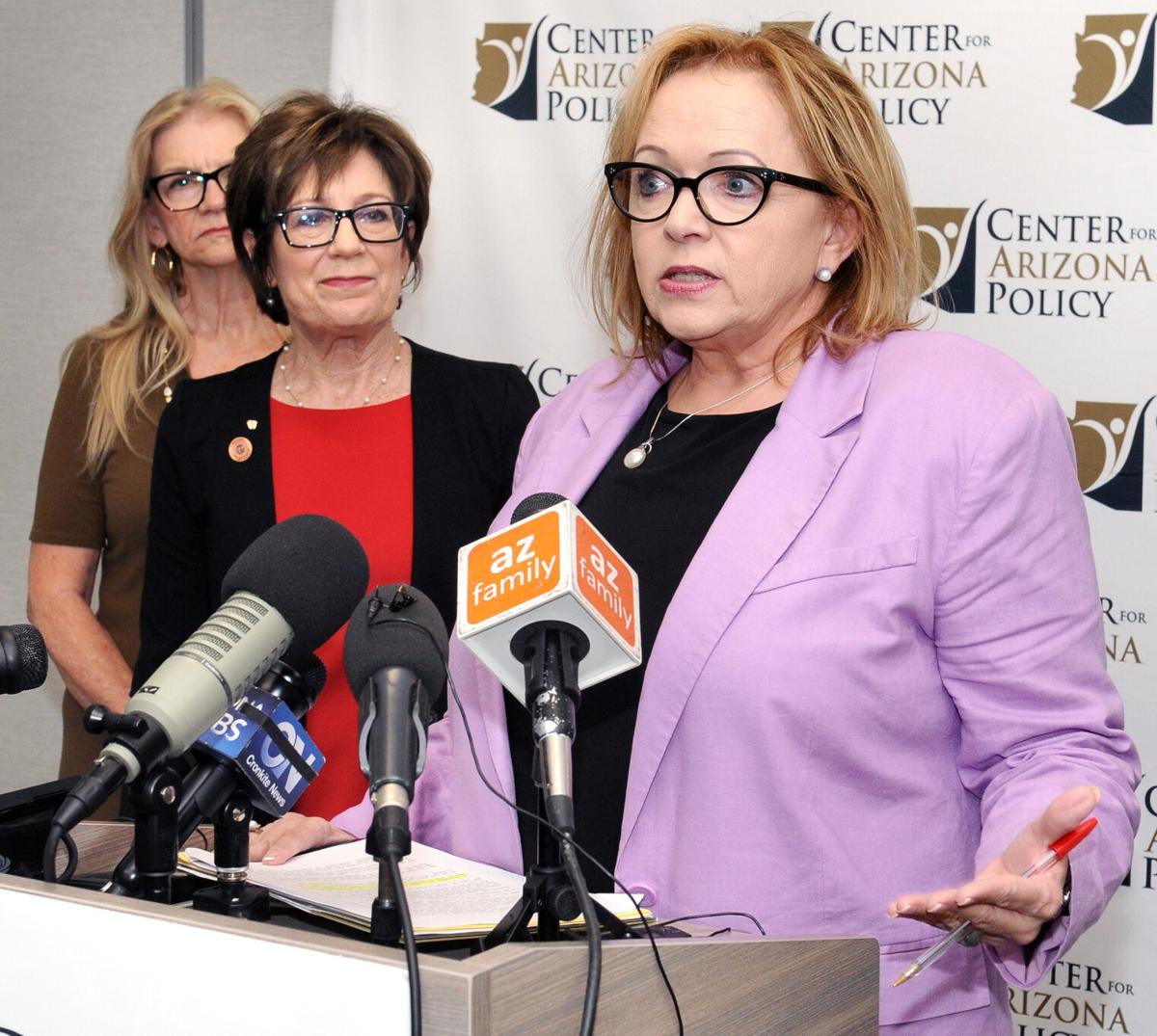
That starts with the Center for Arizona Policy whose president, Cathi Herrod, acknowledged has been in the middle of several controversies that involved trying to influence the outcome of elections.
For example, she said in her affidavit CAP worked to get an amendment on the ballot in 2006 and 2008 to define marriage as solely between one man and one woman. The first one failed; the second one was approved though that was rendered moot by the U.S. Supreme Court.
More recently, there were efforts to oppose the legalization of marijuana for recreational use. Voters approved it in 2020.
And Herrod said just this past year, CAP supported a campaign designed to deter people from signing petitions to ask voters to rescind universal vouchers. The measure never did get enough signatures.
She said she anticipates her organization will be involved in other “hot-button issues” in the future, like making it harder to put initiatives on the ballot, future debates about vouchers and a widely anticipated initiative to guarantee a woman’s right to terminate a pregnancy.
All that, said Herrod, has led to “harassment and intimidation that CAP and its staff have been subject to because of CAP’s speech and activities.”
“Harassment, often obscene, of me, as CAP’s public face, continues unabated on social media and through telephone calls to our office, with recent reference to me being ‘no better than the Taliban’ and a ‘zealous tyrant,’” she said.
All that occurred under prior laws which did not require disclosure and allowed donors to remain anonymous.
“If CAP were required to disclose confidential donor information, however, CAP’s donors would not be protected, and they are likely to face similar forms of retaliation for CAP’s positions, whether or not they agree with those positions,” Herrod said.
In his own affidavit, Scot Mussi, president of the Free Enterprise Club, detailed some of the efforts his own organization has conducted to influence public policy — and elected officials who may also be candidates for public office. And, like Herrod, Mussi said he and staffers have received numerous phone calls and voicemails from people threatening violence, harassment or intimidation.
More to the point, he said, would be the effect on FEC’s income.
“Donors have informed me that they would limit, alter, or eliminate their contributions to FEC if their names, addresses and employers are publicly disclosed,” Mussi said.
There also are affidavits from two individuals — their names are redacted — who said they would stop giving to certain organizations if their identities were made public.
Whether any of that convinces McCoy to exempt either group or the two individuals from the provisions of Proposition 211 is unclear.
In rejecting the first bid to void the entire law, the judge pointed out that when the Arizona Constitution was adopted ahead of statehood in 1912, it specifically required the Legislature to pass an election disclosure law to publicize “all campaign contributions to, and expenditures of campaign committees and candidates for public office.”
McCoy also noted the state constitution mandates enactment of voter registration and other laws “to secure the purity of elections and guard against abuses of the elective franchise.” And a third provision bars corporations doing business in the state from making political contributions to influence any election.
“The framers thus established a constitutional commitment to pure elections, to prevent corporate influences and to publicize sources of campaign funds,” he wrote. “The court finds it unlikely that the same framers somehow envisioned that Arizona’s Free Speech Clause would reach the (campaign finance) disclosures at issue.”
There also is a separate legal challenge that was filed in federal court by a conservative advocacy group founded by the Koch brothers.
Attorneys for Americans for Prosperity contend that Proposition 211 “trammels that right by subjecting countless Americans nationwide to governmental doxxing for doing nothing more than supporting their chosen nonprofit organizations and charities.” And they want U.S. District Court Judge Roslyn Silver to block the Citizens Clean Elections Commission from enforcing it.
No hearing has been set in that case.
Mitch McConnell suggested that big corporations should stay out of politics, but keep handing over campaign donations. Meanwhile, the Democrats lambasted the right for donations of dark money while they benefitted the most from dark money in 2020. When the system is in disarray, but it benefits both sides, is it possible to change it?

