


PHOENIX — On a party-line vote, two legislative panels approved a series of changes in election laws Tuesday Republicans say are needed to ensure Arizonans are not disenfranchised.
But even Rep. Alexander Kolodin, R-Scottsdale, one of the chief architects of the plan, acknowledged that, legally speaking, a provision to enshrine standards for checking signatures on early ballots into state law is not necessary to fix the election deadline problem at hand.
He said it is politically necessary for Republicans. They worry what will happen when county election officials face new deadlines to comply with a new state law that likely will mean more automatic recounts, and a federal law giving states less time to get results of the presidential race to Congress.
“When you compress timelines, you’re giving people less time to perform every stage of the process,’’ said Kolodin. “And one way that people who have some sort of quota to meet or people who have to get a certain thing done by a certain time might do that is by taking short cuts.’’
The way he figures it, codifying into law the rules, which the Secretary of State’s Office already requires election officials to follow in verifying signatures, sends a message.
“We’re saving time in this bill in a lot of ways,’’ Kolodin said. “But one way we can’t allow time to be saved in this bill is to rush the signature verification process.’’
He only by putting it into law, and attaching penalties, can there be an assurance corners won’t be cut.
“Otherwise the entire bill would potentially make our signature verification process less secure,’’ said Kolodin.
And without that provision, Kolodin said the bill would be dead in the Republican-controlled Legislature.
“I would not say that,’’ countered Rep. Laura Terech, who thinks a bipartisan deal can still be reached. The Phoenix lawmaker is the ranking House Democrat on the House elections committee and has been involved in crafting what her party considers a better alternative.
“I would say I think we will have conversations about, from everyone’s perspective, about what can we do on that measure,’’ Terech said. “If that is a sticking point, how do we get it to a point where we can all live with it.’’
But Terech also acknowledged she voted to do precisely the same thing last year — put the standards into state law — only to have the measure vetoed by Democratic Gov. Katie Hobbs.
“The standards in this bill are already several years old,’’ Hobbs wrote at the time. She said they were developed by the Secretary of State’s Office in consultation with county election officials.
What Hobbs didn’t say in that veto message, though, is that she was the secretary of state when the standards were developed and she considered them appropriate.
Terech said she’s not necessarily opposed to putting those standards into law.
“I’d be open to it,’’ she said. “But I’d want to have further dialogue with my colleagues and with the ninth floor (where the governor’s office is located) and what that might look like in a way that’s not overly restrictive.’’
County recorders in support
There’s another political reality legislative Democrats have to face.
With the need to act quickly, virtually all the county recorders support the package being pushed by the Republicans.
Jenn Marson, executive director of the Arizona Association of Counties, said county recorders say the Legislature needs to add 19 days between the primary and general elections to ensure there is time to finalize the results, send ballots to military and overseas voters, and get them back before Election Day on Nov. 5.
And recorders need another 17 days after the election to meet a new congressional deadline of Dec. 11 to get the result of the state’s presidential election to Congress or forfeit the right to have Arizona’s electoral votes counted.
“I guess, in our perfect world it’s safe to say, yeah, we would love a solution that just gets us the number of days,’’ Marson told Democrats who were objecting to the plan.
“But we live in a political reality,’’ she said. “We have to work with politicians who are going to hear a bill, pass a bill, and another politician who has to sign a bill. And we’re trying to find the best way forward to get something that gets us the right number of days, which is our main goal.’’
Not all county officials are on board.
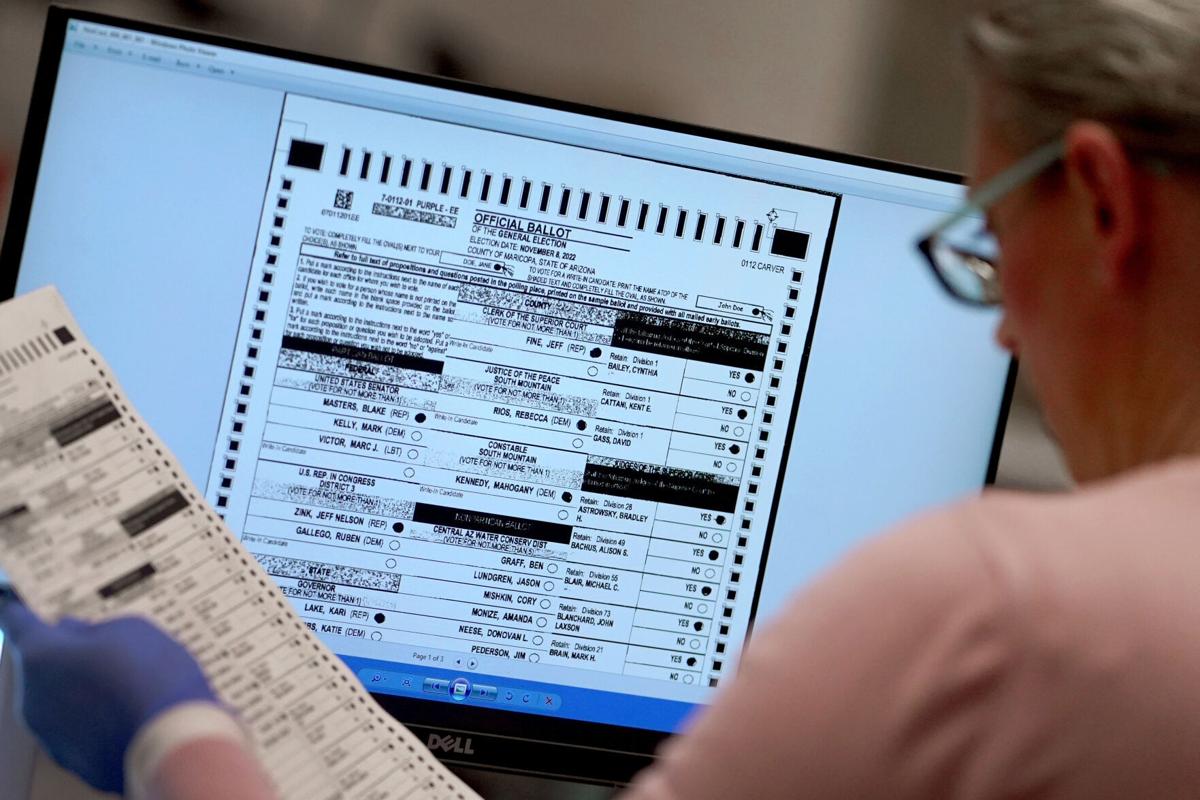
In a letter to legislators, Democratic Pima County Recorder Gabriella Cázares-Kelly objected to another element in the plan. It would would give residents just five calendar days after the election to “cure’’ ballots where officials said there appeared to be a mismatch between the signature on the ballot envelope and that in county records. She likes the current law, which allows five business days, giving voters through the following Tuesday to contact her office and verify their signatures.
But Sen. Ken Bennett, R-Prescott, said the change should help people who don’t have time during a workday to contact county recorders. Under this plan, he said, they would be able to reach out on Saturday or Sunday.
“How is it a barrier to voters?’’ he asked.
Cázares-Kelly also echoed views expressed by Hobbs that there is no reason to include putting the signature verification procedures into this particular fix to the election timeline.
“It doesn’t save money and most relevant in a timeline discussion, it doesn’t save time,’’ she wrote. Cázares-Kelly said it could result in more rejected signatures that will need to be cured.
Action sought by Friday
Republicans say final action is needed by the end of the week to make the necessary changes, including moving the primary up a week to July 30. That’s because that simple change has ripple effects on everything from deadlines for candidates to submit petitions to printing ballots.
But that requires cooperation of Democrats to have the changes take effect immediately. And that could force Republicans to agree to some alterations or risk having the whole plan fail.
Part of what is forcing lawmakers to act is a 2022 change in state law that likely will lead to more automatic recounts of close races beginning this year. Marson said those counts can take up to 24 days.
Amendments to the federal Electoral Count Act are also part of the issue.
The 1887 law set up procedures under which Congress tallies the electoral votes from each state to determine who was elected president.
But provisions of it came under scrutiny after the 2020 election when competing slates of electors in some states, including Arizona, claimed they were the rightful picks. The new law ensures it is the governor who sends the slate, that expedited judicial review is provided, and that it takes more than a handful of members of Congress to challenge a state’s electoral count.
That law also clarifies that the vice president’s role is only administrative, without the power to reject disputes over electors. That came after then-President Donald Trump tried to get his vice president, Mike Pence, to disregard the 2020 electoral tally.
What it also does, however, is provide a hard-and-fast deadline for states to get their formal results to Congress to have them considered. This year that falls on Dec. 11.
That’s not a problem in Arizona if there are no disputes, as the formal state canvass of the vote is set for Dec. 2.
But if there’s a recount ordered in the presidential race — something more likely under the 2022 change to state law — that can’t begin until after the canvass. And the state canvass can’t be done until each county has canvassed the votes.
The conclusion election officials reached, Marson said, is that under the current laws that recount would drag out long past the Dec. 11 deadline.
That deadline wasn’t as much of a problem in prior years. The U.S. Supreme Court had provided a “safe harbor,’’ giving states a bit more time to conduct their post-election activities despite the statutory deadlines as long as they got the process done at least six days before the Electoral College meets.
But with that safe harbor provision gone, Marson said the law can be read that electoral votes not finalized and transmitted by Dec. 11 simply might not be counted.
Get your morning recap of today's local news and read the full stories here: tucne.ws/morning

