


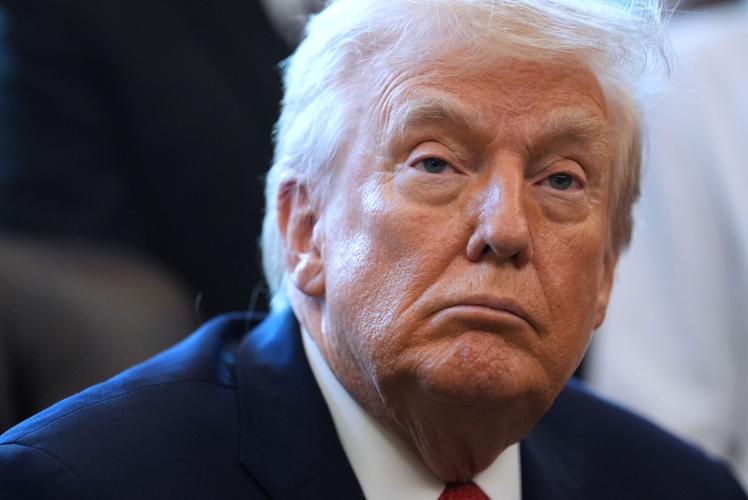
PHOENIX — There is no actual psychological or medical diagnosis for "Trump Derangement Syndrome."
But a Republican state lawmaker insists that it is a real mental health condition. And she wants the Arizona Legislature to order the director of the state health department to study it — with taxpayer dollars — and make recommendations for how to deal with it.
The far-reaching proposal by Sen. Janae Shamp of Surprise is directing the agency to study the "origins, manifestations and long-term effects on individuals, communities and the public discourse.'' And that specifically includes an analysis of "contributing factors,'' including media exposure.
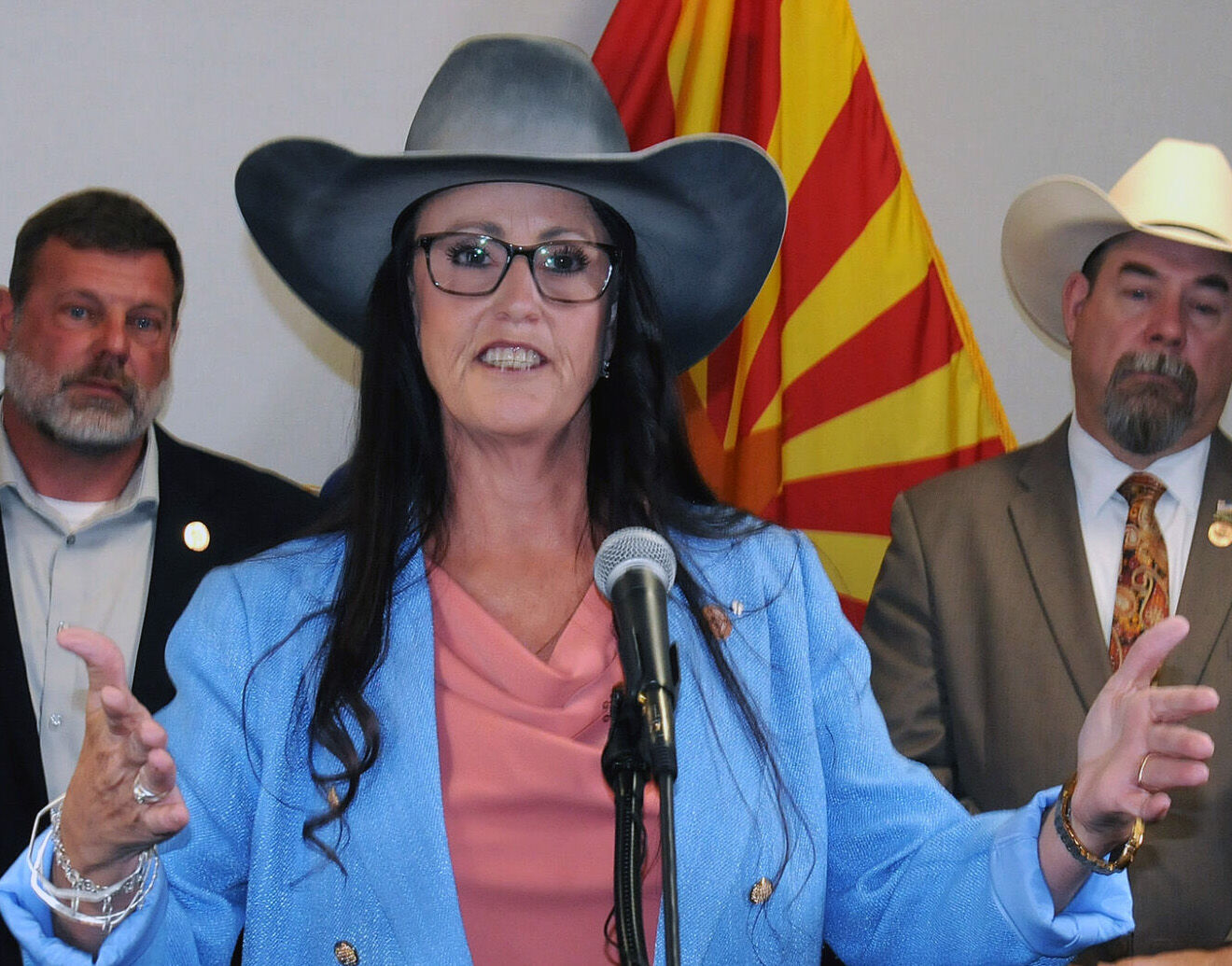
Under Arizona Sen. Janae Shamp's bill, researchers would be tasked with identifying the "initial emergence or earliest documented cases of Trump Derangement Syndrome."
But that's just part of what is in her SB 1070. Shamp also wants the report to explore "potential interventions or strategies to mitigate or prevent Trump Derangement Syndrome.''
The idea is not entirely new. In fact, some provisions of Shamp's legislation appear to be lifted, word-for-word, from a proposal by Warren Davidson, a Republican congressman from Ohio. Davidson wants a similar study conducted by the director of the National Institutes of Health into TDS, which his HR 3432 defines as "a behavioral or psychological phenomenon involving intense emotional or cognitive reactions to Donald J. Trump, his actions, or his public presence.'' And Shamp, like Davidson, said the problem dates back to 2016 when Trump ran for president the first time.
Shamp did not return repeated messages seeking comment about her measure.
Davidson, however, made his own intentions clear in a news release.
"TDS has divided families, the country, and led to nationwide violence,'' the Ohio Republican said in his statement, including two assassination attempts against Trump. He said his measure would require the federal agency to "study this toxic state of mind, so we can understand the root causes and identify solutions.''
Anyway, Davidson said, it makes more sense than giving NIH federal dollars to spend on "ludicrous studies such as giving methamphetamine to cats or teaching monkey to gamble for their drinking water.''
Shamp's legislation, like its federal counterpart, also contains no new funding. Instead, it simply gives the health director a year after her measure becomes law — assuming that happens — to issue its report.
But her SB 1070 is more than just a directive for a study. It also would put into law a laundry list of what she said are accomplishments of Trump as president, ranging from lower corporate tax rates, negotiating peace treaties, enhanced border security, more jobs through tariffs, and "affirming biological truth in federal policy to protect family values.''
And the measure even includes a legislative finding — even before there's actually any study — that selective media reporting and amplification of unverified claims about President Trump's conduct have fueled TDS, intensifying polarized public reactions and deepening societal division.''
Trump himself used the phrase just recently after the slaying of actor and director Rob Reiner and his wife, Michele Singer Reiner, in their home.
Their son, Nick Reiner, has been arrested in the deaths. But the president, in a social media post, said the activist actor and critic of Trump died due to ``the anger he caused others through ... a mind crippling disease known as TRUMP DERANGEMENT SYNDROME.''

The term Trump Derangement Syndrome became popularized in his second term to broadly refer to criticism of the president's actions and policies. The president used the term to refer to President Joe Biden and Vice President Kamala Harris and their supporters multiple times during his campaign.
If the Arizona bill is approved, the obligation to study would fall on Debbie Johnston who was appointed by Gov. Katie Hobbs to head the health department last month. An aide said that Johnston, who still has to be confirmed by the Republican-controlled Senate, would not comment on pending legislation..
And Christian Slater, press aide to the Democratic governor, also refused to weigh in.
But Will Humble, who served as health director under Republican Gov. Jan Brewer from 2009 until early 2015, said the idea has no scientific merit.
"There's no diagnostic code,'' he said, referring to the system to classify medical conditions, including mental health.
"This is a statement bill,'' he said. "It's a bureaucracy bill in the end to get the health department to create a worthless report.''
It remains to be seen whether Shamp will have any better luck than Davidson in advancing her measure.
His HR 3432 was assigned to the House Committee on Energy and Commerce the day it was introduced in May. And it hasn't advanced at all from there.
Shamp's bill has yet to be assigned to a committee.
But she also no longer has the political sway she once had to ensure that her proposals get a hearing.
At the beginning of last session Shamp was the majority leader, a position to which she had been elected by her Republican colleagues. But she was voted out by those same GOP lawmakers in June after she refused to go along with a bipartisan budget that Senate Republican leaders had negotiated with Hobbs.

