


PHOENIX — Efforts to allow Arizona cities and towns to limit the number of new Airbnb's and other short-term rentals have failed in the Legislature amid industry opposition.
But a lawmaker backing such legislation — mainly aimed at helping Sedona and other tourist towns overwhelmed by the surging number of short-term rentals, but also urban cities like Scottsdale with large numbers — is cheering the fact her current bill is advancing in some form.
Rep. Selina Bliss, R-Prescott, said she has failed for the past three legislative sessions to get lawmakers to back any new regulations on short-term rentals.
But she said she was able to pull proponents of new limits and industry representatives together and get them to agree on a proposal giving cities and towns some new tools to regulate short-term rentals.
"I brought together to the table last week the Realtors Association, Airbnb and the League of Cities and Towns,'' Bliss said in an interview Tuesday with Capitol Media Services.
"And I said, 'This is it people, we've got to do something,' '' she said. "And this is what the parties could agree to.''
Short-term rental companies are shielded from being regulated by cities, towns and counties under a law championed in 2016 by Republican former Gov. Doug Ducey.
Since then, only minor changes have been made by the GOP-controlled Legislature. They mainly allow cities to address complaints about "party houses'' by requiring basic contact information be provided, and rules allowing cities to act if there are repeated complaints about a property.
That hasn't slowed criticism about the proliferation of short-term rentals, whose numbers have exploded across the state in both urban and rural areas.
"We love Airbnbs and Vrbos, but we hate them as well because of the effect on our communities,'' Bliss told the House Commerce Committee on Tuesday. "So watching the evolution of the effects of the short-term rental industry on communities in Arizona has been somewhat painful."
The Realtors and Airbnb have successfully fought to stop almost all new regulations since the 2016 law went into effect. This year, they would not agree to Bliss's initial proposal, which would have let cities limit the number of new short-term rentals.
Bliss said she told the League of Cities and Towns' lobbyist that something was better than nothing.
She amended her bill Tuesday to strip out the part allowing cities to limit new short-term rentals and inserted a series of limited new rules. It passed the Commerce Committee on an 8-2 vote and now heads to the full House for consideration.
The new rules now in the bill include limiting occupancy to two people per bedroom plus two more adults, with children excluded. That should help ease complaints about excessive vehicles parking at the rental homes, Bliss said.
Also included are changes to current rules letting cities suspend a local license if there are three violations in 12 months; the amended bill now says three violations in 24 months, giving time for courts to act before the clock runs out.
Cities could also immediately act if there is just one serious health and safety violation, refuse a permit if there are unpaid fines, and allow cities to require that renters be checked for sex offender status.
"What the industry representatives agreed not to fight was a series of small new regulations,'' Bliss said in the interview. "I said, this is something, at least, this is something versus nothing — because the Realtors Association and Airbnb could not agree to my bill in its original format.''
The alternative to not compromising, Bliss said, was that her bill would not have received a hearing.
"So by these negotiations and compromise, I feel like we put the door open an inch, we can give the cities back some control,'' she said.
Tom Savage, a lobbyist for the League, told the committee he also agreed the amended bill was a promising development.
"While this bill is not a complete solution to every challenge associated with short-term rentals, it represents meaningful progress and reflects productive conversations we've had with the platform on some practical reforms,'' Savage said.
He said the high number of Airbnbs and other short-term rentals in Sedona and other tourist towns will continue to be a major issue.
Tom Farley, who lobbies for Airbnb and the Arizona Realtors Association, said the proposed new rules are dealing with "bad actors'' while avoiding limits that would affect the rights of property owners to rent out their properties.
"We have occupancy limits, instead of calling for caps and distances, which would trigger private property rights type of violations,'' Farley said.
Airbnb said in a statement that it will continue to fight efforts to limit its ability to do business in the state, while supporting policies that help local communities.
"Our approach to policy in Arizona remains guided by protecting Arizonans' constitutional property rights,'' the statement said.
"We won't back down from protecting those rights,'' it continued. "We've worked in good-faith with good faith partners to help ensure that data and facts, not bias or preconceived notions, guide policy development.''
Kathy Senseman, a lobbyist representing Sedona, said she was happy some new regulations are being contemplated but said they would not help the city she represents.
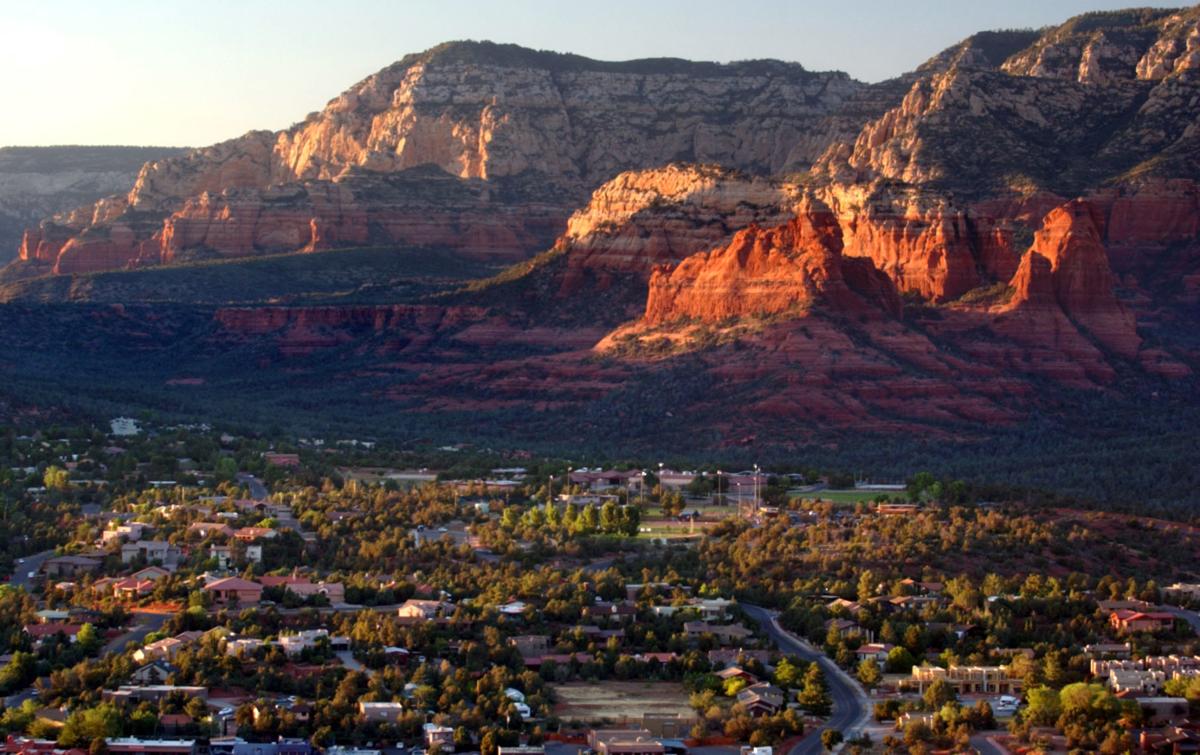
As many as 25% of the homes in Sedona are now being used as short-term rentals, pushing out local workers and others, she said, and residents of the hugely popular tourist community 90 miles north of Phoenix want the ability to protect their town.
"Thank you for the bill today, but I have to be kind of, I guess, the jerk in the room that says the bill, unfortunately, does nothing to address the problems that we have in rural Arizona,'' Senseman told the committee. "What is the tipping point in a community for when you can't have your bus drivers or your teachers or your policemen live in your community?''
But with the watered-down bill the only one at play, that left Senseman with little choice but to support it.
"We think there are some good changes here,'' she said. "We're appreciative of Airbnb for working with us. But I think we still need to address the elephant in the room in rural Arizona.''

