


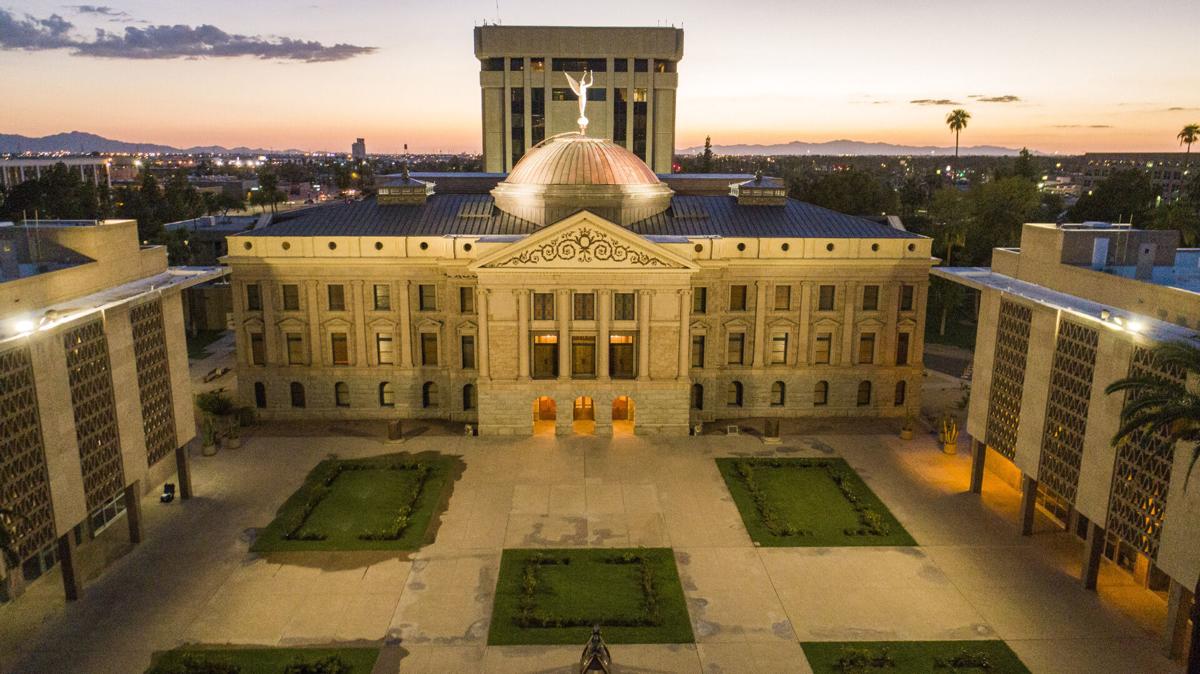
PHOENIX — Three months into the Arizona Legislature’s annual session, lawmakers are ready to take some time off and go to a work schedule many would love to have — just one day a week.
But the move to Wednesdays-only at the Capitol is a sign that lawmakers are ready to finally start tackling the most serious issue facing the Republican-controlled Legislature and Democratic Gov. Katie Hobbs this year: hammering out a state budget deal.
Getting to an agreement will be a hard lift this year, because a massive budget deficit means cuts, and lots of them. And there’s new spending that needs to be squeezed in as well, including more than $100 million to meet a federal judge’s order to improve prison health care; and a projected $450 million boost for the state’s Medicaid program.
Hobbs acknowledged last week that she’s hoping new revenue forecasts due April 11 will help close a massive gap between the shortfall her office’s budget team projects and the deficit expected by the Legislature’s budget team.
“I certainly think that those projections will help us have a better picture of where the revenue is because I think that’s one of the biggest places of contention right now,’’ Hobbs said.
Her office projects a deficit nearing $1 billion between the current and upcoming budget year. Analysts for the Legislature’s Joint Legislative Budget Committee put that number at $1.7 billion. And that doesn’t include $300 million in K-12 education spending labeled as “one-time’’ in the current budget that is likely to continue in the coming budget years.
‘Some of those are not going to happen’
Republican lawmakers have been griping for more than a month about Hobbs’ budget staff delaying the start of negotiations, with some early meetings canceled and others reset.
The governor said last week she wasn’t aware of any cancellations.
The first talks finally happened last week, GOP House Speaker Ben Toma said, nearly three months after Hobbs released her proposed state spending plan for the budget year that starts on July 1.
Republicans are looking at many of the same kinds of cuts that Hobbs outlined in her proposal — targeted spending reductions, delays of transportation projects included in the current budget, and raids on special funds.
Some of Hobbs’ proposals — such as major curbs on the state’s new universal private school voucher program — have no hope of getting support from Toma or any other GOP lawmaker, however.
“It’s pretty clear that some of those are not going to happen,’’ Toma said in a Friday interview. “It’s been pretty clear for quite some time, and nothing has changed from that perspective.’’
Toma was a major champion of the universal school voucher program and also led the charge for a massive income tax cut that is a major reason the state now faces a deficit.
Last year, before the tax cut that mainly benefits the wealthy fully affected state revenue, the state had a budget surplus of more than $2 billion. The budget deal majority Republicans reached with Hobbs last year included a host of new highway projects, new school spending, and a big infusion into the state’s Housing Trust Fund designed to help spur construction of low-income housing.
Hobbs and House and Senate Republicans agree many of those transportation projects will be delayed to save money. Hobbs also detailed many special funds she wants to raid, and GOP lawmakers have their own list.
‘Won’t be too far left or right’
The reality for both parties is they need the other to get a budget enacted, so the plan will likely not be packed with overly controversial items.
“I guess we’ll see where everybody lands, but the budget is not going to go too far left, it’s not going to go too far right,’’ Toma said. “And that’s by necessity in order to get a bipartisan budget done.’’
Sen. John Kavanagh, a Fountain Hills Republican who chairs his chamber’s Appropriations Committee, said the Senate has prepared a list of cuts, raids on budget funds and clawbacks of highway project cash included in the current year budget to fill the gap. That’s been sent to Hobbs’ team.
Kavanagh said he thinks any hope that new revenue numbers will save the governor’s plan will fall short.
“Unfortunately, it appears they wanted to wait for the April numbers, no doubt, hoping that there’ll be some massive discovery of new funds so they don’t have to do as much cutting, sweeping and deferring as we are going to have to do,’’ Kavanagh said. “That was never a valid excuse, because how much is it going to change?’’
House Minority Leader Lupe Contreras said GOP lawmakers griping about the governor’s budget plan is nothing new — he noted the same happened each year when Republican Gov. Doug Ducey was in office.
“There was always infighting with their own governor,’’ the Avondale Democrat said Friday. “Let’s be clear — it wasn’t a honeymoon when they ran all three chambers,’’ he said. “It’s just louder now because we have divided government. It’s just easier to be louder about it.’’
Toma declined to give any details on proposed House cuts, and Kavanagh also was mum on cuts Senate Republicans are proposing.
“We have a long list of things that we think are candidates for cuts, but I don’t want to start naming things when we have no firm agreement on it,’’ Kavanagh said. “But obviously, there’s going to be a lot of cuts, a lot of deferrals and a lot of fund sweeps because that’s the only way you get to $1.7 (billion) to $2 billion.’’
Both the House and Senate will now start meeting just once a week, saving members who are not in leadership or directly involved in budget talks the commute to the Capitol.
Senate Majority Leader Sonny Borrelli, R-Lake Havasu City, said sending most of the 90 senators and representatives home instead of having them hang out at the Capitol makes sense because there’s really little for them to do until a budget deal is struck. Most legislation is either already sent to Hobbs or ready for floor votes; Hobbs has signed 83 bills so far this year and hit 18 others with her veto stamp.
Having members come in once a week not only allows negotiators to keep them apprised of progress but keeps them close by for when a budget deal is finally struck.
“If you were gone for two weeks, and then all of a sudden, boom, we got a deal, then you’ve got to try to rein people in that are scattered all over the country,’’ Borrelli said.
Taking time off in the middle of a legislative session used to be rare, although mid-session doldrums while budget negotiations started in earnest were common. Last year, the Legislature took a series of breaks while Hobbs and GOP leaders did budget work, and a version of that plan emerged this year as well.
Contreras, the House Democratic leader, said he agrees with Toma and Senate President Warren Petersen’s plan to go to one meeting a week.
“Floor action is for bills and for the budget,’’ Contreras said. “I don’t think any member wants to show up just to gavel in and gavel out. That’s not what we’re there for.’’
‘Has to be accountability’
Contreras said shielding education from budget cuts is a top priority for Democrats, and they’ll be engaged as budget negotiations heat up to ensure Democratic priorities are preserved.
But he said his caucus also is clear-eyed about this year’s massive deficit and plans to ensure the Republicans are reminded tax cuts and school voucher spending opposed by Democrats got the state in its fiscal mess.
“There has to be accountability for why we are where we’re at,” Contreras said.
“But right now, we have to look at the numbers, and the numbers will dictate where we have to go from there,’’ he said. “We’re going in there like we do every year — we’re going to fight our fight, and we’re not going to roll over.’’
Get your morning recap of today's local news and read the full stories here: tucne.ws/morning

