

PHOENIX — President Trump has promised to bring manufacturing back to America.
But if he isn’t successful by 2029, Arizonans could end up having their ballots counted by hand.
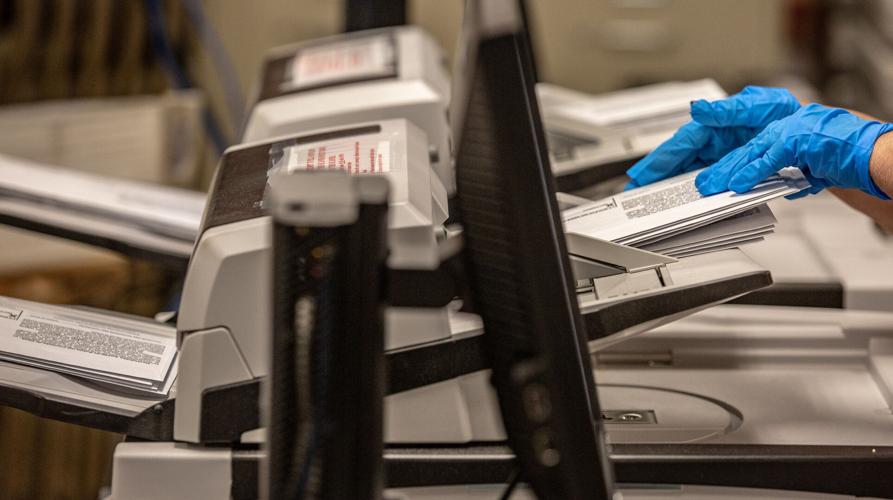
On party-line votes, both the Republican controlled House and Senate have approved legislation spelling out that, beginning that year, the Secretary of State’s Office cannot certify vote-recording and vote-tabulating equipment unless each and every part of the machine, including all components, are “sourced from the United States.’’ And that includes the software that runs the equipment.
HB 2651 also says the equipment has to actually be assembled in the United States.
The measure now goes to Gov. Katie Hobbs.
A big problem: There apparently is no election equipment now available that meets those conditions, according to Jenn Marson, lobbyist for the Arizona Association of Counties. And it is her organization’s members who would have to comply.
Marson told lawmakers there are probably companies that could meet the deadline. But the problem, Marson said, comes down to this: What if they can’t?
Rep. Brian Garcia said he thinks he knows what will be the result.

A bill passed in both the state House and Senate requires that beginning in 2029 the Secretary of State’s Office cannot certify vote-recording and vote-tabulating equipment unless every part of the machine, including all components and software, are “sourced from the United States.’’
“This would render us a full hand-count tabulation,’’ said the Tempe Democrat, something he said he just can’t support.
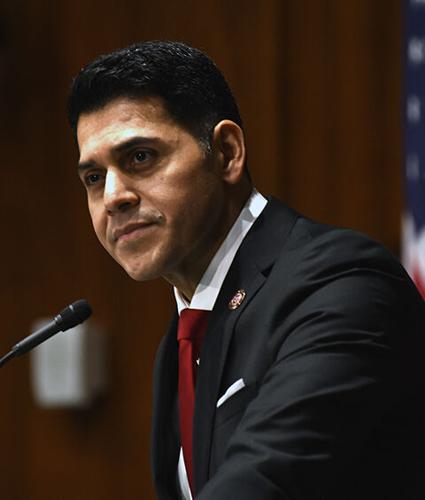
The proposal is being pushed by House Speaker Steve Montenegro.
“I believe this is going to secure better security standards,’’ the Goodyear Republican told colleagues during a hearing on the measure.
“It’s going to make it easier to investigate any machine issues,’’ he said. “And it’s going to help restore public trust in elections.’’
Montenegro noted that voting equipment already is classified as “critical infrastructure’’ by the Department of Homeland Security. He said that means they should be subject to strict regulation regarding not just production but the sources of all components.
“If there are issues that would arise with the voting machines, it’s easier to discover them if the machine hardware and software are created in Birmingham or Buffalo or Boise, not in Beijing.
Rep. John Gillette said this isn’t an academic concern.

Montenegro
“Almost every piece of software we get has a back door to China,’’ said the Kingman Republican, who said he has formerly done consulting on national security. He said that list of vulnerable equipment includes everything from common routers which computers used for communication to hospital equipment.
Gillette said this isn’t simple industrial espionage.
“It’s not going to a Chinese firm,’’ he said. “It’s going to the CCP,’’ meaning the Chinese Communist Party.
And Gillette said that foreign access to voting equipment means the results “could be altered by the Chinese government or the highest bidder through the Chinese government.’’
That, however, still leaves the question of meeting the deadline.
“We talked to the speaker about it,’’ Marson said.
“He is very confident that American manufacturing will step up its game and be ready,’’ she said. “We’re not so sure. And we’re just not sure what we’re supposed to do if it’s not.’’
The good news, Marson said, is that counties can continue to use equipment they already have on hand at the beginning of 2029. But she said that there eventually will be a need to replace that.
Marson also warned lawmakers that it’s not just a question of whether a company could have an entirely domestically produced machine ready by that date. She said the timeline is much shorter.
“Arizona requires that you be federally certified for election equipment before you can be state certified,’’ Marson said, a process that has to go through the federal Election Assistance Commission. And she said it’s currently taking the EAC about two years to perform the necessary checks.
“And so, even if American manufacturing steps up its game immediately as soon as this bill became law, I don’t know if they would be ready to have the machines that they’re going to start building — and have them be certified — in time for the state, then, to certify them if we needed new machines in February of 2029, for example’’ Marson said.
So what’s needed, she said, is “some sort of out if American manufacturing does not step up its game quite in time.’’
Lawmakers ignored the plea and approved the measure without the “what if’’ provision the counties are seeking.
But Sen. Mark Finchem said he’s convinced that companies, wanting to sell their equipment here, will come around.
“I’m pretty sure there’s a competitive edge they want to maintain,’’ said the Prescott Republican. But he also suggested that legislation like this might provide the necessary push to ensure that the equipment being used truly meets the requirements of critical infrastructure.
“There has been an abysmal failure of manufacturers to meet that standard,’’ he said. “I think there is a lot of inertia that is going on right now to get us there.’’
Sen. Lauren Kuby, however, said she sees the legislation as unnecessary.
“We are telling our counties to fix a non-existing problem with a non-existing solution,’’ said the Tempe Democrat. And she said the equipment already complies with “rigorous federal security standards’’ with testing by accredited laboratories.
The measure now heads to Gov. Katie Hobbs.

