

PHOENIX — Arizona’s high court justices have cleared the way for voters to decide whether they, and most other judges in the state, should be allowed to have de facto life terms.

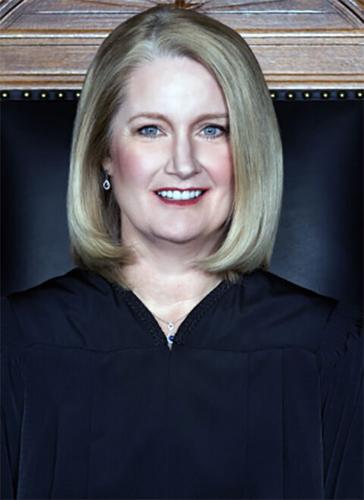
Chief Justice Ann Scott Timmer
In an order late Thursday, the state Supreme Court rejected claims that Proposition 137 illegally seeks to amend two separate and unrelated provisions of the Arizona Constitution about judicial elections.
If approved, the proposition would eliminate the requirement for judges, who are now selected by the governor, to seek voter approval on a regular basis for new terms. Instead, it would spell out that only a sitting judge who ran into trouble, such as a personal bankruptcy, a felony conviction or a sub-par evaluation from the Commission on Judicial Performance Review, would have to face voters.
Anyone else could remain on the bench, untouchable by voters, until they reached mandatory retirement age of 70.
The measure also would, for the first time, allow the majority party in the Legislature to appoint two members to the performance review commission. And it would require the commission to investigate any lawmaker’s complaint of malfeasance against any judge.
Challengers said the issues should be presented to voters as separate questions versus a take-it-or-leave-it approach. But Chief Justice Ann Scott Timmer, writing for the court, said they are sufficiently related to each other to be a single question.
The ruling was unanimous — at least of the five justices who heard the arguments.
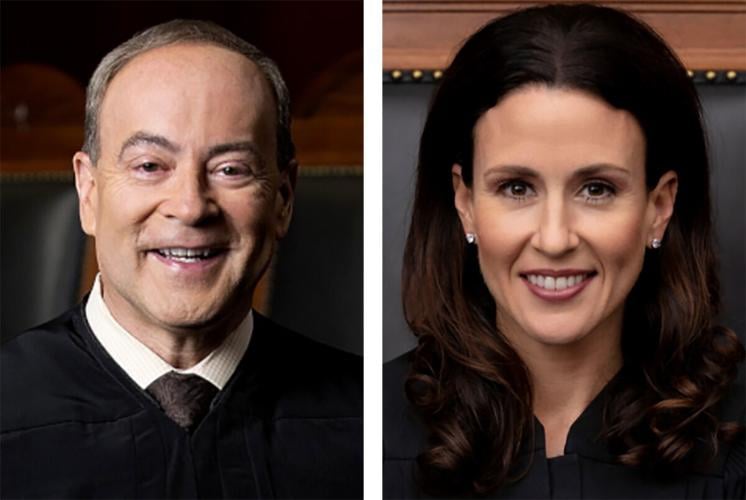
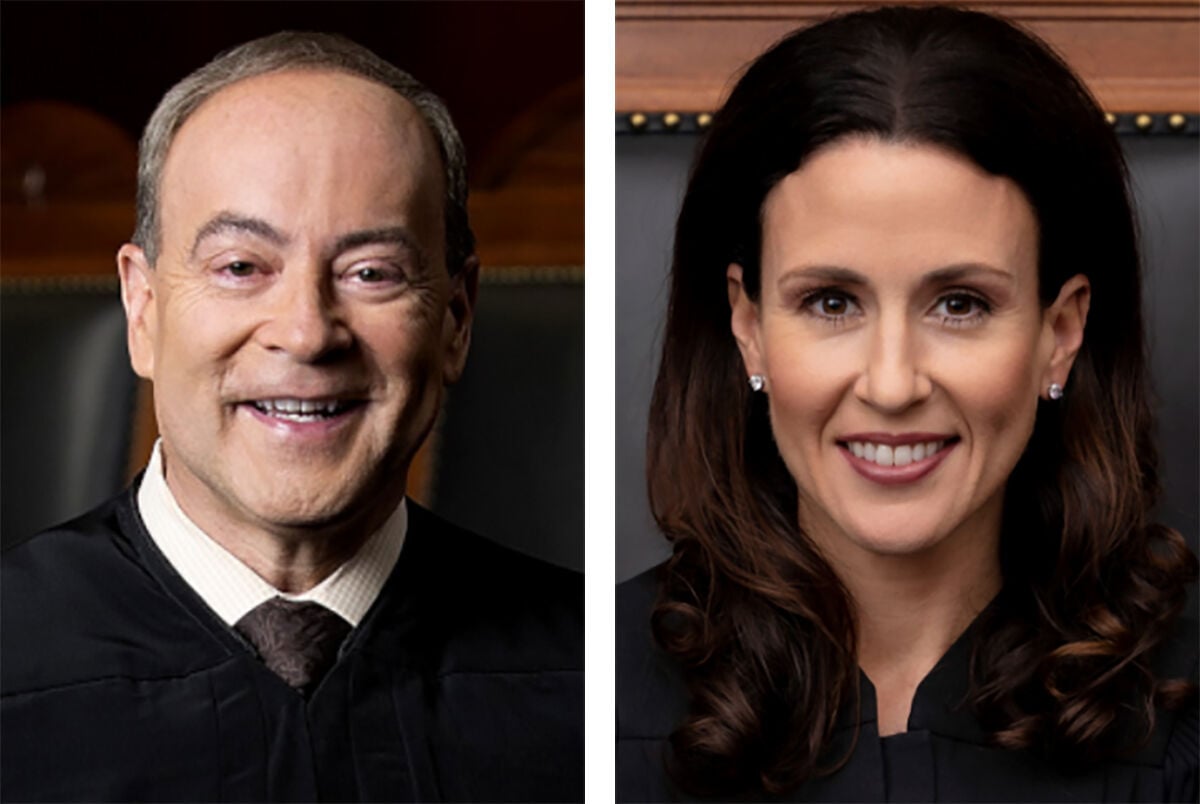
Justices Clint Bolick and Kathryn King, who are up for retention in the Nov. 5 election, recused themselves from participating.
The proposition was crafted by Sen. David Gowan, R-Sierra Vista, and sent to the ballot by the Legislature.
If voters approve Prop. 137 on Nov. 5, it would be effective retroactively, to Oct. 31. That means it would negate any separate decision by voters to reject new six-year terms for Bolick or King or both.
Campaigns on both sides
The group Progress Arizona already launched an effort to convince voters to turn both Bolick and King out of office as well as to defeat Prop. 137. It is not alone.
The National Democratic Redistricting Commission and Planned Parenthood Votes announced in May they intend to spend at least $5 million on supreme court races across the country, with a focus on six states, including Arizona. The reason, they said, is that those courts are crucial to determining whether abortion rights stay in place after the U.S. Supreme Court overturned Roe v. Wade in 2022.
Bolick and King, both appointed by Republican Doug Ducey when he was governor, provided two of the four votes on the court earlier this year that ruled an 1864 law outlawing abortion except to save the life of the mother trumped a 2022 law allowing the procedure until the 15th week. State lawmakers have since voted to repeal the old law.
On the other side, conservative political activist Randy Kendrick launched the Judicial Independence Defense PAC, putting up $100,000 of her own money of the $140,000 raised to convince voters specifically to retain the sitting justices.
Prop. 137 approval would bring a major shift in the “merit selection’’ process for judges.
Until 1974 in Arizona, all judges at all levels were elected, just like politicians.
That year voters approved a system where the governor selects members of the Supreme Court, the Court of Appeals and the superior court judges in the larger counties. That list now includes Pima, Pinal, Coconino and Maricopa.
The governor’s picks are limited, however, with the choices needing to come from a list of nominees from special screening panels.
Once on the bench, they are subject to regular voter review of four years for superior courts and six years for appellate-level courts. If turned out, the process starts over again.
Proponents say the system is too cumbersome, with upwards of 50 judges appearing on ballots in some counties. And, in most cases, they all have been returned to the bench.
But there’s also the fact that judges can face opposition over unpopular decisions, pretty much what is happening now with the targeting of Bolick and King.
That has led to another group that is weighing in.
Attorney Tim Berg who chairs Arizonans for an Independent Judiciary said its goal is not specifically to keep either Bolick or King on the bench but to educate people about the merit selection and retention process. He said that means convincing voters their choices should not be made based on whether they are happy with one or two decisions.
But Abigail Jackson, spokeswoman for Progress Arizona, said voters should have their say on judges, even if opposition is based on a single decision like the one on abortion.
Get your morning recap of today's local news and read the full stories here: tucne.ws/morning

