


The following is the opinion and analysis of the writer:
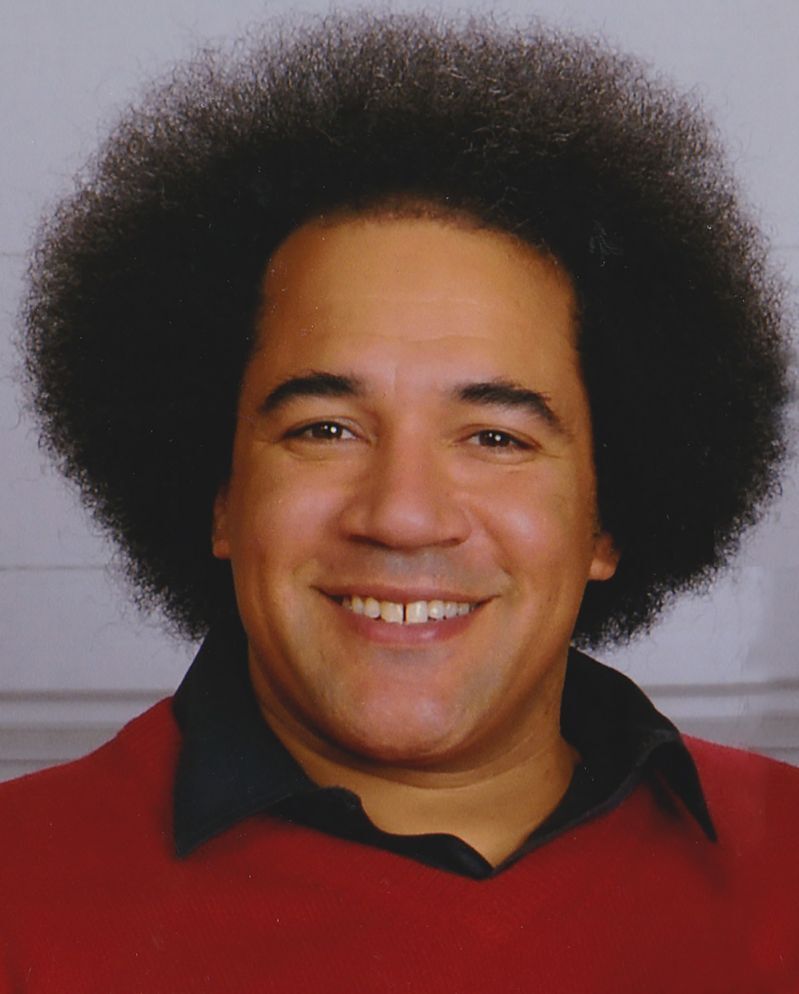
Raymond Merritt Jr.
The recent Arizona court rulings regarding the state’s failure to fund school facilities have sent shockwaves through the legislature. For decades, Arizona has been legally mandated to ensure that all students — regardless of zip code — attend schools that are safe and functional. Yet, as the state prepares for a massive remediation of school buildings, one 114-year-old Tucson treasure is being "thrown under the bus": the Arizona State Schools for the Deaf and the Blind (ASDB) Speedway campus.
Superintendent Annette Reichman has used a $3 million maintenance deficit as a primary reason to retreat to a leased elementary school in Oro Valley. However, if Arizona is finally being forced to repair its crumbling educational infrastructure, ASDB must be part of that remediation, not an exception to it. We must pause all relocation efforts immediately. Abandoning a state-owned, 56-acre asset for an $8 million private lease is not a fiscal solution; it is a surrender.
But fixing the buildings is only half the battle. The other half is solving a manufactured enrollment crisis driven by an outdated interpretation of federal law.
For years, school districts have hesitated to send students to ASDB because, under the Individuals with Disabilities Education Act (IDEA), a "Residential School" is often classified as the "most restrictive environment" (LRE). This label creates a legal barrier. Districts, fearing litigation, default to "mainstreaming" Deaf and Blind students in local classrooms — settings that are often more restrictive than a specialized campus because they lack the critical mass of peers and specialists.
We can dismantle this barrier by transforming the Speedway campus into a Public-State Hybrid Magnet School.
By entering into a robust Intergovernmental Agreement (IGA) with the Tucson Unified School District (TUSD), we can shift the campus’s legal status. If we open the gates to hearing and sighted students through a "Sensory Immersion" or bilingual-immersion model, the campus is no longer a "segregated" residential facility. It becomes a regular classroom setting where specialized instruction — whether in ASL or Braille — is the standard, not the exception.
This transformation solves the "LRE problem" and provides a massive incentive for school districts to send students back. In this model, the Deaf or Blind student is no longer isolated; rather, their peers are brought into a world-class environment designed for sensory excellence.
This brings us to the "math" of the crisis: Average Daily Membership (ADM). In Arizona, money follows the student. Currently, when a student is mainstreamed, the local district "hoards" that student’s ADM — which, with "Group B" weights for sensory impairment, is worth significantly more than a general education student. Districts are often reluctant to lose that funding to a separate state agency.
Under a Hybrid/Magnet model, ASDB and TUSD can share the ADM. Furthermore, by attracting students from the neighborhood seeking a unique, sensory-rich education, we capture "new" ADM that currently goes to charter or private schools. We turn the campus from a "cost center" into a "revenue hub" that supports its own maintenance.
The historic Tucson campus is not a liability; it is a flagship. If Arizona is truly committed to fixing its schools, it must start by stopping the retreat from Speedway Blvd. Blind and Deaf children deserve a campus that is a destination, not a compromise. Let’s use the current legal momentum to restore the buildings, but let’s use the Magnet model to fill them.
Follow these steps to easily submit a letter to the editor or guest opinion to the Arizona Daily Star.

