

The following is the opinion and analysis of the writer:
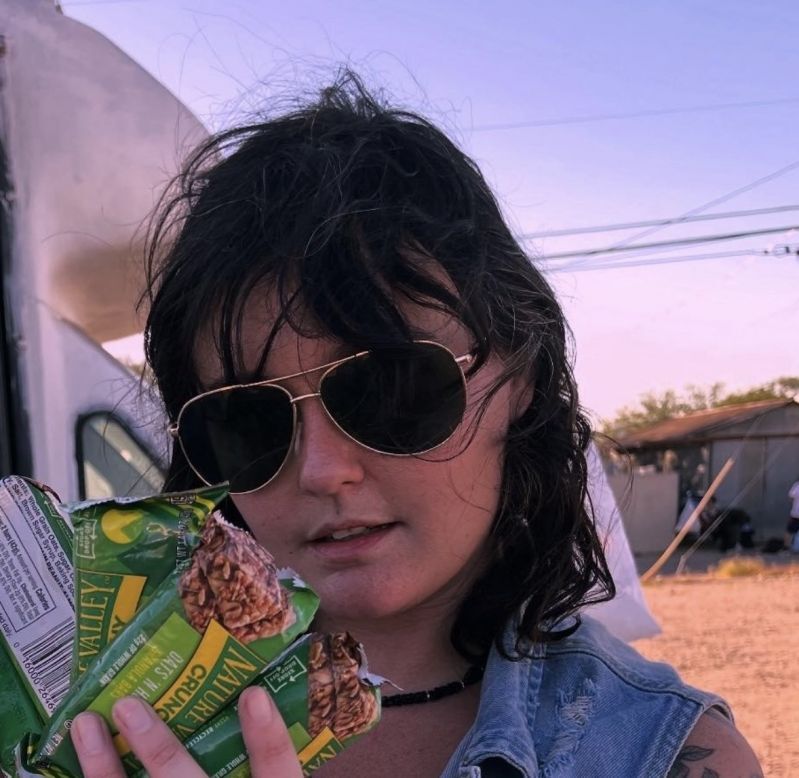
Victoria DeVasto
“They just don’t want help.”
Homelessness in Tucson: We need to think differently.
We need to stop dissuading “non-professionals" from providing basic care. Mutual aid groups and community based peer to peer support is crucial. Especially when larger, more capable entities are not grasping the issues.
Alternative services are incredibly necessary and thousands of people rely on this care every week. Mutual Aid groups like Community On Wheels, Community Care Tucson, Alma, ASA and others are familiar with the real issues people face. These groups operate on the acknowledgement that we all deserve care. Mutual aid groups act as a witness to the seemingly incomprehensible gaps between unhoused people and the services they desperately need.
We need to look at what shelter and transitional housing really look like for the people transitioning through them. We need eyes on what we associate as “permanent housing."
Often, we see a level system involved to get people off the streets: 1. shelter 2. transitional 3. permanent housing. As someone who works deeply in homeless services both professionally and personally — I see the biggest fault in step 3.
The agencies that offer "housing assistance" or a short-term housing voucher are often not really providing long term support at all. Vulnerable individuals who have just experienced a world of trauma and worked their way through the system are often incredibly overwhelmed and left in the dark. Getting to this point of "stable housing" is extremely difficult. People are often placed in apartment complexes run by slumlords. To quote a housing director — "These are the only places that take vouchers or the only people that will take our clients." People are encouraged to sign a 1 year lease and soon the support stops. This gets written off as a success story as this program fades quickly from their lives. After a few months of “transition assistance” — these people are locked into a lease with the expectation to pay thousands of dollars with no means to afford it. People often feel forced to resort to illegal measures to pay bills or they rack up thousands in missed payments and late fees. Slumlords bank on this as a means to evict people and cycle their rooms. They end up back on the streets with an eviction on their record, multiple court dates and fines — their situation is worse. The agencies that previously helped will not so easily accept them back because they are now more difficult to serve. A lot of people end up in jail or worse within a year. This is the unfortunate reality for so many people here. Getting to and through step 1 is hard enough. Assuming no severe substance use, SMI or a significant disability. (A lot of people have this).
There is not enough of anything. Not enough shelter beds, not enough outreach, not enough detox and recovery centers, not enough transitional housing, and certainly not enough safe and supportive permanent housing. Moreover, large homeless service agencies are feeding into the problem themselves, by supporting slum lords they are keeping them in business.
After people are “placed” for the month — the agencies celebrate. There are only a handful of people (some working within agencies themselves) who witness the full picture. Once they become aware — the hopelessness and burnout turns even the most passionate helpers into hardened skeptics.
What happens when we zoom out? Agencies need to stop funding and supporting slumlords and put funds toward real stable housing programs.
We need education for our outreach teams. What happens when they actually call this number? We need to stop villainizing drug users and recognize how ridiculous it is that addiction is considered both a health issue and criminal activity. We are never dealing with the root. We are always in a loop of response to the outcome of the systems we play into every day.
Without recognition that we need to think differently about homelessness and follow through with people, we are going in a circle. And it is getting drastically worse.
Please question the narratives you are fed. Please allow yourself to reconsider your stance on homelessness in Tucson, Arizona.
It is simply not what it seems.
Follow these steps to easily submit a letter to the editor or guest opinion to the Arizona Daily Star.

