


Roderic Ai Camp, 72, is a professor at Claremont McKenna College in California and one of the world’s authorities on Mexican politics. His studies on how leaders are recruited, emerge and maintain power, along with his biographical analyses of Mexico’s political, military, religious and corporate elite, are requisites for students worldwide. He is the author of more than 30 books on Mexico and a contributor to periodicals worldwide.
This interview, which covers the upcoming Mexican presidential elections, was conducted late last year. Mexicans go to the polls July 1.
What should foreigners know about Mexico voting patterns that might not be obvious?
The country has significant, “I always vote for my own party,” blocks. The two oldest parties, PAN (National Action Party) and PRI (Institutional Revolutionary Party), have the most dedicated blocks.
In the past, this meant that both parties had their blocks, as did the PRD (Party of the Democratic Revolution). This phenomenon gives PRI a substantial advantage in a multiparty system. PRI, in the past, has had 20- to 25-percent of voters already committed.
In the past two elections, a candidate needed only 36 to 39 percent to win, so we’re talking about convincing just 10 to 15 percent of truly independent voters to support your candidacy.
How much of a role will Facebook, Twitter and social networking play in 2018?
A huge one.
The numbers of Mexicans who get most, or all, of their information from social networking sites just keeps growing. They used to obtain most political information from TV.
Now, it reflects what is happening in the U.S. It is essential, especially, for us to watch the conduct of the better-educated, more well-off voters — those who have the least trust in institutions, be it government, the church or whomever.
The voters to watch are those Mexicans who are out-of-sync with all traditional sources of information.
What polls ought we watch?The two that I find most helpful, constantly, year after year, are Parametría, http://www.parametria.com.mx/ and Consulta Mitofsky, http://www.consulta.mx/. In particular, Mitofsky, is superb because Roy Campos (president) is one of our true intellectual pollsters, a man who asks excellent questions. I enjoy reading his personal assessments. I also closely follow Alejandro Moreno, who teaches at Instituto Tecnológico Autónomo de México (ITAM) and directs polls for Reforma newspaper. He is a genuine, scholarly expert on Mexican voters and voting patterns.What issues loom large in this election that may not have been prominent in past ones?
You don’t need a looming one. There is one that is already front-and-center, and that’s nationalism.Up until now, foreign affairs in recent decades has not played a significant role in presidential elections, but that is not going to be true this time. It makes this election unique.
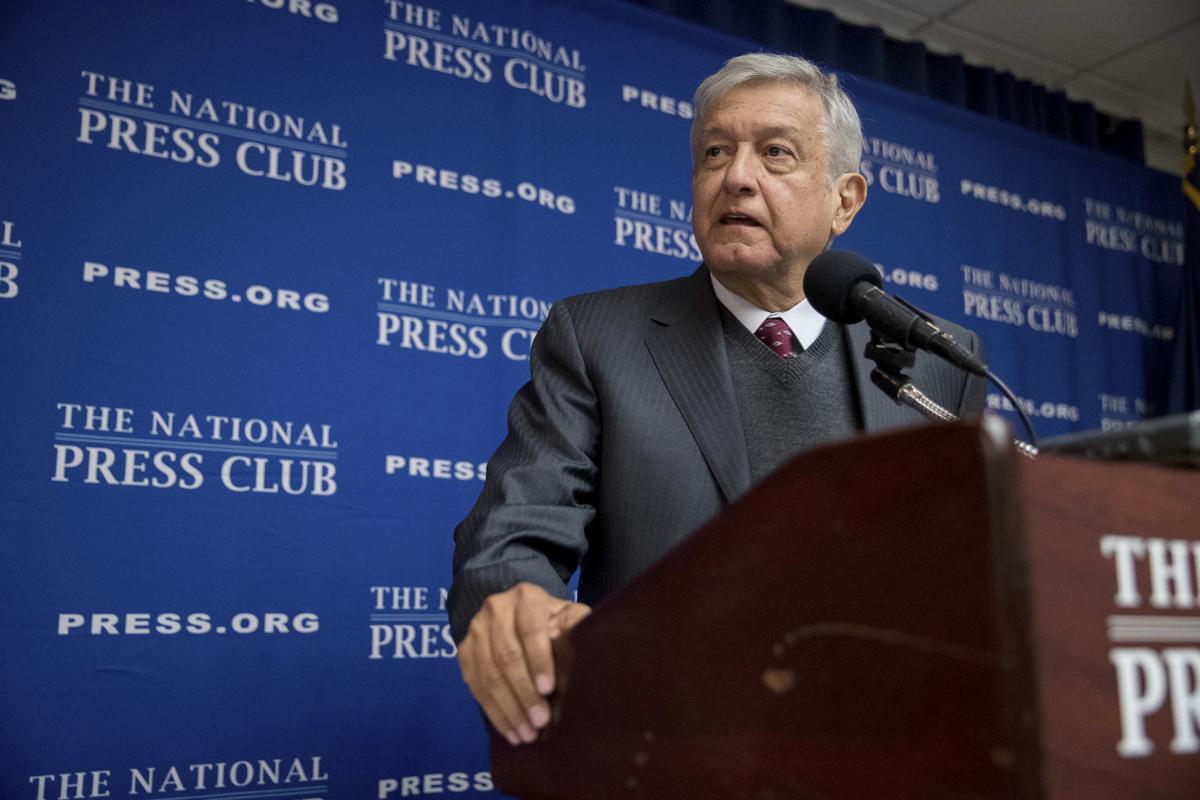
(Leading candidate Andrés Manuel López Obrador, known as AMLO) has been critical of Trump — and Trump is doing nothing to eliminate that need for criticism.
Do Mexicans in the U.S. influence an election?
To a certain extent, but not in actual ballots cast from abroad. We know from recent research that significant numbers of Mexicans listen to what relatives in the U.S. say.
“You ought vote for so-and-so in this election,” goes a long way, but it’s indirect and it’s still too early for that to occur.
Will the PRI be able to strike a deal with another party?
I do not believe PRI will get another major party to support it. Yes, maybe they’ll get one- to three-percent from a smaller party, which would help. If you understand Mexico’s electoral laws, you know this gives them more money and that’s helpful, however. So much more depends on the candidate. The most significant issue continues to be whether there will be a PRD-PAN alliance. That will be the likely battleground against AMLO.
What is going to happen in 2018 in Mexico?
Given the results of the three previous elections of Presidents (Vicente) Fox, Felipe Calderón and (Enrique) Peña Nieto (2000, 2006, 2012), in which no one was elected with a majority of the vote, there have to be alliances. And, yes, some essential demographic variables have emerged that offer more hints.
In simple terms, why must this happen? Is there not a single compelling candidate from one party?
Basically, a three-party system has just evolved a fourth one with the presence of the Movimiento de Regeneración Nacional (MORENA). That, in turn, has led to discussion of whether Mexico ought to have a second round of voting, similar to that of France. I don’t give that much credibility, at least this time around. I saw a poll, in fact, that says three in 10 Mexicans who say they vote, also say they won’t vote in a second-round. The alliances I foresee, are Partido de la Revolución Democrática (PRD) and Partido Acción Nacional (PAN). Particularly at this level, ideologically-opposed parties like PAN and PRD will consider joining together for the presidential race. Why? The race has shifted now to Andrés Manuel López Obrador leading his personal party, MORENA. He has taken away most of the clout of the traditional PRD and replaced them as one of three major parties. Now, PRD will be lucky if it gets 10- to 15-percent.What is the most obvious alliance at the moment?
The two strongest parties as we speak, and it’s still early, are PAN and Morena (National Regeneration Movement). So, it makes a lot of sense for PAN to reach out to PRD. Any alliance PRD can form would be helpful to PAN, because if you can get as much as 40 percent of vote, you almost reach the figure which sent Vicente Fox into the presidency.
What is your perspective on AMLO?
AMLO has both the most compelling advantages and disadvantages. He has made a name for himself by criticizing the other parties as “business as usual.”
As in an American election, the negatives are very important and people seem to forget this variable in Mexican presidential races.
The great limitation of López Obrador is his high negatives, which means he has to personally attract voters rather than relying on a long-standing party.
What are those negatives?
He has a hard time with women voters, in particular. They have been hesitant in past elections to vote for him.
Most observers did not take note of the role of women voters in the state elections of 2015. Women voted in 2015 in larger numbers, sometimes by as much as 8 percent, in certain states.
What might appear counterintuitive about Mexican voting patterns?
One thing that is surprising is that large groups of wealthy voters — a percentage out of proportion to their numbers — have supported AMLO in the past.
I can offer you an explanation which is not counterintuitive. They supported him not for ideological reasons, but because they perceived him as the most honest of the three candidates in 2012.
At that particular moment, that group of voters considered integrity to be paramount.
What about the PRI’s chances in 2018?
PRI is not a threat in and of itself at the moment, simply because public opinion holds the current administration in low esteem. Will that persist? I think so. But, PRI will be an important player if it can arrange its own political alliances.
What about an independent candidate, such as Dr. Jorge Castañeda, who has fought and finally been given the right to run an independent candidacy?
So far, there is no traction for independent candidates yet. Mexicans say they like the concept, but the fact is they vote for established parties.
We have no evidence that in a national election, more than 1 percent of the vote has gone to an independent, whether for congress or another office. Even the supposed “independent” governor of Nuevo León originally came from the PRI.
Is it possible that a charismatic, still unknown player might emerge?
Yes, it is possible, but I repeat, it won’t be a truly independent candidate. Rather, it will be someone from within an existing party.
Aren’t Mexican parties too fractious to united behind a single candidate? What guarantees are there that a coalition would hold?
You have to remember that, now, Congress is a significant player insofar as legislation. There is a wonderful, even amazing lesson in the Pacto para Mexico, which was signed in 2013 and in which the three major parties participated. They passed dynamic legislation and did so in some areas where the vast majority of Mexican society was opposed to these change, especially in the area of oil policy, and yet Congress said, “We intellectually believe that, to improve economic conditions, even though our constituencies are opposed, we need to pass this.”
This was unique and proved Mexican politicians could work out a much more difficult compromise for the long term. Remember, in this multiparty legislature, you need 51 percent to get anything passed. You’ve got to work on alliances before or after the election.
Could Mexico and the U.S. wind up with genuine enmity between them?
It would take exceptional antagonism, but the renegotiating of NAFTA, which has just started, provides a volatile issue. Canada and Mexico are in this negotiation to represent their best interests. It’s possible that a U.S. negotiator, if not given the authority to be reasonable by the president, could cause serious economic harm to the relationship. That, in turn, would make the drug and crime issues even more significant than already the case. Genuine discord? I don’t know. But, with our huge deficit in trade, and a president loyal to those that voted for him, it could spell serious economic consequences for Mexico. In such a case, AMLO benefits. The timing for this renegotiation is either perfect, or not, for him, depending on the outcome.

