

The following column is the opinion and analysis of the writers:
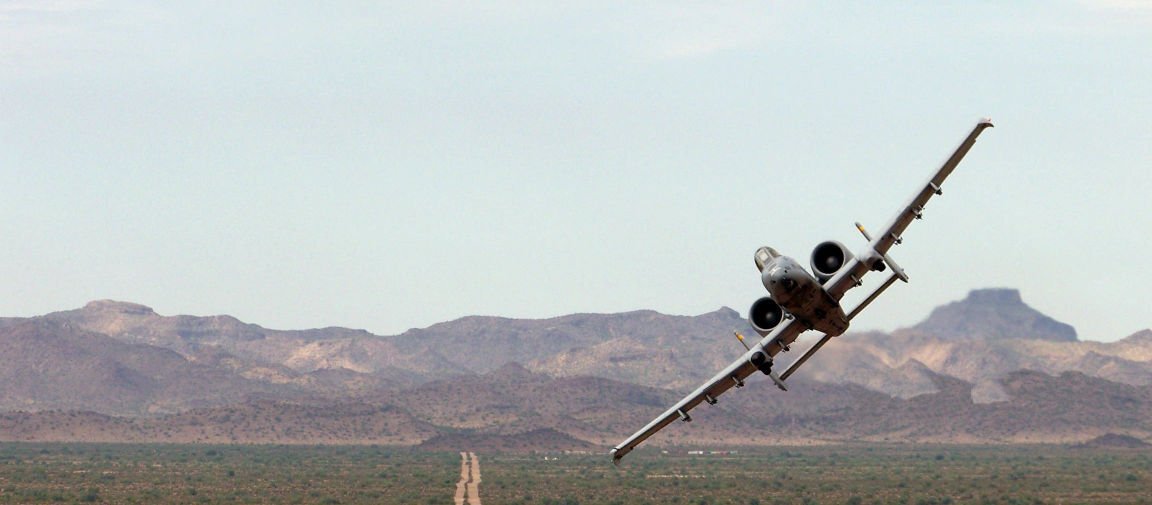
Where do Tucson’s A-10 Warthogs and F-16 Fighting Falcons go when they take off and head west? More often than not, they head to the Goldwater Range to practice flying. Most Air Force and Marine Corps fighter pilots since WWII have trained there. The range serves pilots from Davis-Monthan, the Air and Army National Guard, Luke Air Force Base in Phoenix, the Marine Corps in Yuma, and even aircraft carrier pilots out of San Diego.
The airspace over the range’s 1.7 million acres is a constant swirl of activity, but those military flights really involve only about 9% of the ground which remains largely pristine, beautiful Sonoran Desert — currently 38% of it is open to the public for hiking and camping and more could be. It’s a popular destination.
The land includes desert waterholes visited by Padre Kino three centuries ago, a famous historic trail called El Camino del Diablo used by forty-niners heading to California, Native American camps and sacred places, photogenic sand dunes, and mountain citadels inhabited by desert bighorn. Some of Arizona’s prettiest places are there.
Our concern is not the pilot training — our military is the best in the world. But the land belongs to the American public and we want to ensure that the ground is kept in good condition until the military is done with it.
Every 25 years, the range comes up for renewal, a process that includes self-evaluation by the military, public comments and congressional approval. We urge you to back the renewal — Tucson, the state’s economy and our nation’s defense depend on it.
But, we believe it is critically important to support renewal Alternative 2: To continue operations for another 25 years, keep the range’s Department of Interior partner and add a few sections of land near Gila Bend as a safety buffer. This will ensure seamless continuity of a successful system, so pilots won’t miss a day of training.
A 25-year renewal will allow each generation to decide how to best manage the land — it’s a fair and proven cycle for oversight and evaluation. A longer lease might save a little money, but at the cost of public oversight. What’s the cost of a renewal report every 25 years compared to flying an F-35 at $35,000 an hour?
Under another alternative, the Goldwater’s 1.7 million acres would be put forever under total military control, ditching its Interior Department partner. To us, that alternative sounds like a land grab, empire building or a way to sidestep oversight. Public recreation and tourism greatly benefit our economy, too.
The renewal requires good stewardship and periodic public reports on natural and cultural resources, all challenging work. Range managers certainly could use larger budgets and staffs. The problems they face are daunting and immediate: mission planning, monitoring the land’s health, restoration of landscape damage, interagency coordination, and fuller attention to public visitors.
Support Alternative 2. Just plain 2. Renew the Goldwater Range for 25 years and keep this magnificent desert region as open to the public as it is today.
Your comments and ours are due before March 1 at BMGR LEIS, P.O. Box 2324, Phoenix AZ, 85003. Visit www.barry-m-goldwater-leis.com for full information. Don’t delay. It’s important to you, the wildlife and cactus and your nation.

