

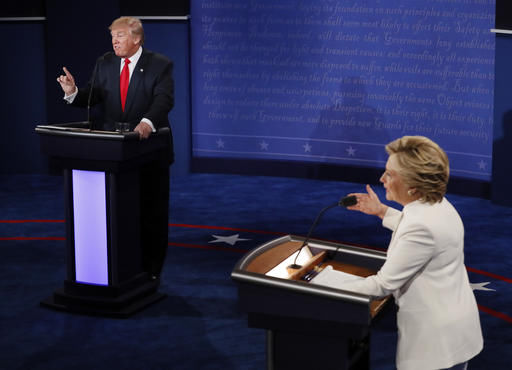

Presidential elections have traditionally been viewed as an opportunity to show students democracy in action but a volatile season has Tucson teachers treading cautiously.
Veteran teachers who once asked students to watch the debate or research the candidates have had to consider whether the language and messaging children will come across will be age appropriate.
And in Mary Martinez's south-side classroom, predominantly populated by Latino children, she has worked to ease fears that one candidate's policies will result in mass deportations and a wall that would separate them from loved ones.
“In second grade you don’t expect kids to think about or pay attention to elections but for them to have this fear and to be hearing such negativity, it’s unsettling,” said Martinez, a teacher at Sierra 2-8 School.
As a result, Martinez and other teachers across the Tucson-area, the state and the country, have found themselves turning the focus to the importance of voting and focusing less on the candidates themselves than they have in years past.
“We tend to focus more on the importance of having a voice in the direction we are going whether it’s in our community, our city, our state or our country,” Martinez said. “Because right now, our kids are torn between a man who supposedly doesn’t like Mexicans and wants to deport all Mexicans, and a lady running for president who is being called a crook and is under investigation.
“So it’s difficult to talk about the candidates and why people support one candidate or another when children, especially when they are young like my students, don’t understand how people could support either side.”
Across town in Sandy Faulk’s sixth-grade classroom at Twin Peaks Elementary School in Marana, the hostile behavior and dialogue being displayed on the national stage has opened up an opportunity to emphasize civility.
“Before we were able to have really great talks about democracy and we were able to discuss the debates and all aspects of the presidential election but this year it has been very difficult, even in the most structured environment,” Faulk said.
But during a recent conversation about the election, one student pointed out that the classroom of sixth-graders with varied opinions had managed to have a respectful discussion, something that the student said “some of the presidential candidates can’t even do.”
“That really hit home for me,” Faulk said. “For 11- and 12-year-olds to make that connection is huge and it’s very unfortunate that we haven’t been able to do more with the election this year because teachers are very hesitant to delve into it.”
Faulk and Martinez are not alone, according to Marisol Garcia, vice president of the Arizona Education Association.
Garcia, a social studies teacher, has struggled with election-related lessons in her own Phoenix classroom and has heard from teachers across the state seeking guidance.
The teachers are referred to the National Education Association, which has made resources available to teachers on how to create a safe classroom where people are safe to say what they believe and how to facilitate a class discussion, Garcia said.
“This is history and we’re living it,” Garcia said. “We want students to understand their civic duty but now we have another layer of responsibility to take the situation we are in and make it a teachable moment about how we speak to and treat one another.“

