


Tony Dungy is coming to Tucson.
The Super Bowl-winning coach, Pro Football Hall of Famer, NBC broadcaster and author will be a guest speaker in the annual "Fireside Chat" series hosted by Arizona basketball legend Bob Elliott.
The Fireside Chat is organized by the African American Museum of Southern Arizona. The museum, located on the UA campus, is co-founded by Elliott and his wife, Beverley. The African American Museum of Southern Arizona first opened its doors just over three years ago. Since then, they've had over 10,000 visitors.
"The community support has been unbelievable," Elliott said.
Dungy's Fireside Chat will be in the Palo Verde High School auditorium on Feb. 18 during Black History Month. Members of the African American Museum of Southern Arizona will receive priority seating. More information about the event can be found at aamsaz.org.
Dungy is the latest guest to be a part of the Fireside Chat, joining basketball legend Julius "Dr. J" Erving and Ruby Bridges, a civil rights activist who was the first Black student to attend William Frantz Elementary School during the New Orleans school desegregation crisis. Bridges is the subject of “The Problem We All Live With,” one of Norman Rockwell's most iconic paintings.

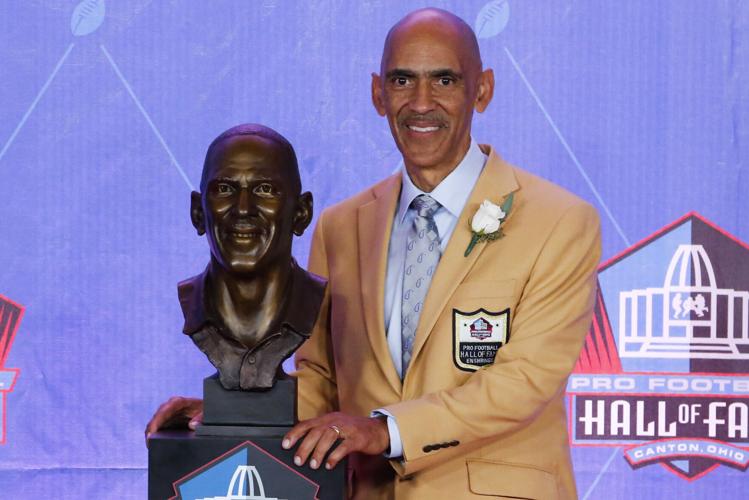
Pro Football Hall of Famer Tony Dungy is 65.
Other past speakers for the Fireside Chat series include Carlotta Walls of the “Little Rock Nine,” the first Black students to attend Little Rock Central High School in Arkansas, and Stacey Snowden, the daughter of former UA basketball head coach Fred Snowden, who was the first-ever Black head coach at a major university in 1972.
After Dungy's brief NFL career as a defensive back from 1977-80, he went into coaching and was an assistant at his alma mater Minnesota, then held defensive assistant roles in the NFL with the Pittsburgh Steelers, Kansas City Chiefs and Minnesota Vikings, before becoming a head coach for the Tampa Bay Buccaneers and the Indianapolis Colts.
Dungy has a 139-69 record as a head coach and is inducted into the Ring of Honor for both the Colts and Bucs. He's the first coach to defeat all 32 NFL teams.
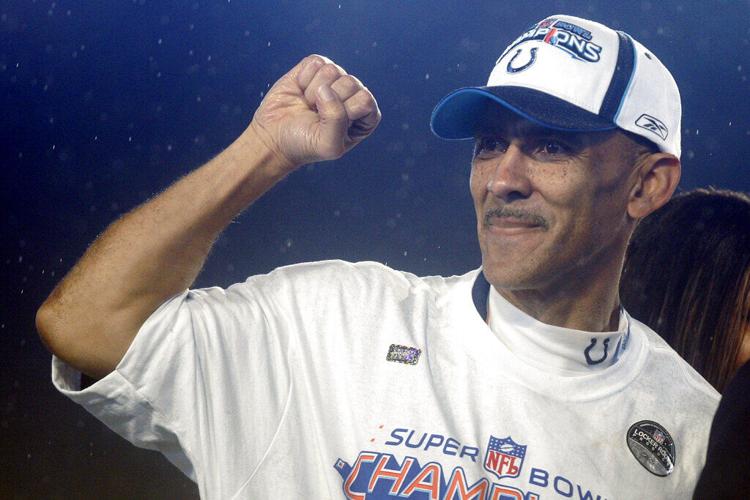
Dungy and former Colts star quarterback Peyton Manning led Indianapolis to a Super Bowl victory over the Chicago Bears to cap the 2006 season. Dungy is the first Black head coach to win a Super Bowl. He's one of four people to win a Super Bowl as a player and head coach, along with Tom Flores, Mike Ditka and Doug Pederson.
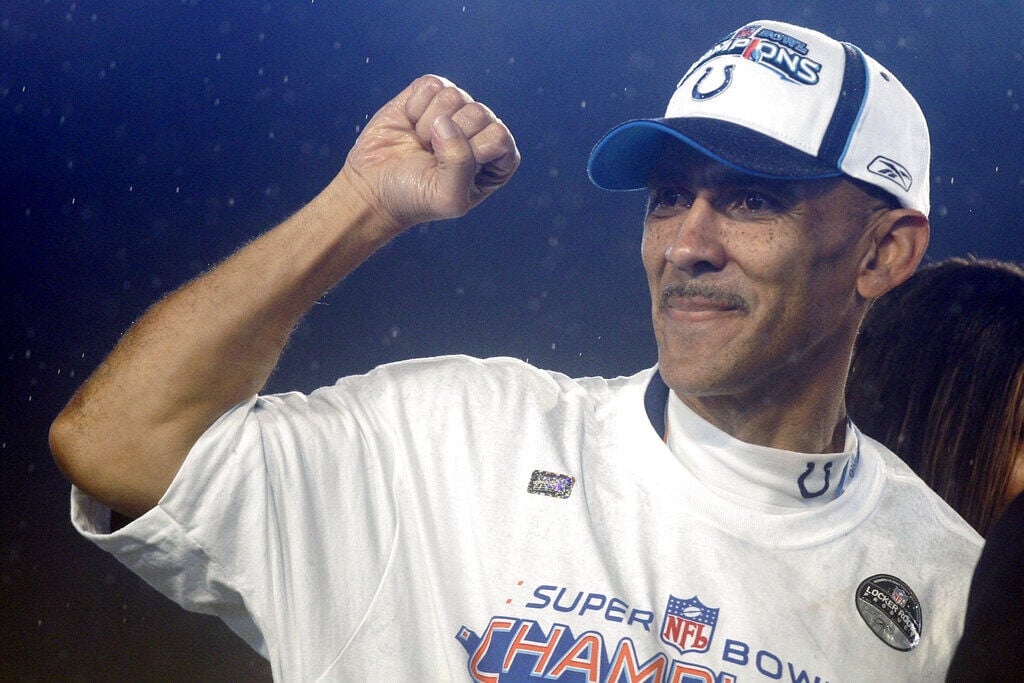
FILE - In this Feb. 4, 2007, file photo, Indianapolis Colts coach Tony Dungy celebrates after beating the Chicago Bears 29-17, in the Super Bowl XLI football game at Dolphin Stadium in Miami. In an effort to increase opportunities for minority candidates for NFL jobs covered by the Rooney Rule, it has been suggested to push back hirings until after the Super Bowl each year. (AP Photo/Chris Carlson, File)
Dungy retired after the 2008 season and became a broadcaster for NBC's coverage of Sunday Night Football. Dungy is also a New York Times best-selling author. His first book, "The Mentor Leader," was released in 2010.
Before Dungy's football career, he grew up near Elliott in Jackson, Michigan, while the former UA basketball star hailed from Ann Arbor, Michigan.
Elliott and Dungy competed against each other at a local summer basketball league — Dungy prepped at Parkside High School, while Elliott played at Pioneer High School. Their backgrounds and families connected them.
"We started a relationship because our families are so similar," Elliott said on ESPN Tucson's "Spears & Ali" last week. "It's almost eerie."
Both Elliott and Dungy's parents are educators, both of their fathers have doctorates and their mothers have masters degrees.
"The dads' personalities are so similar: they don't say much, but when they say something, you listen and take it in," Elliott said. "They were quiet and introverted. The mothers would hug you to death and make sure you're OK. His mom and my mom were both into english and linguistics as teachers."
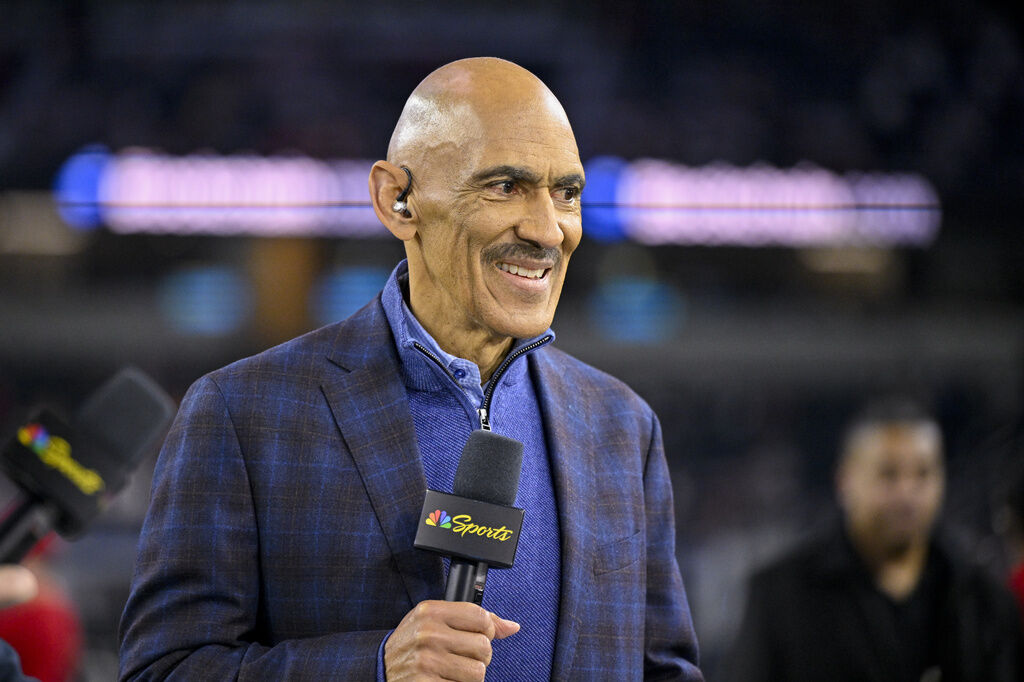
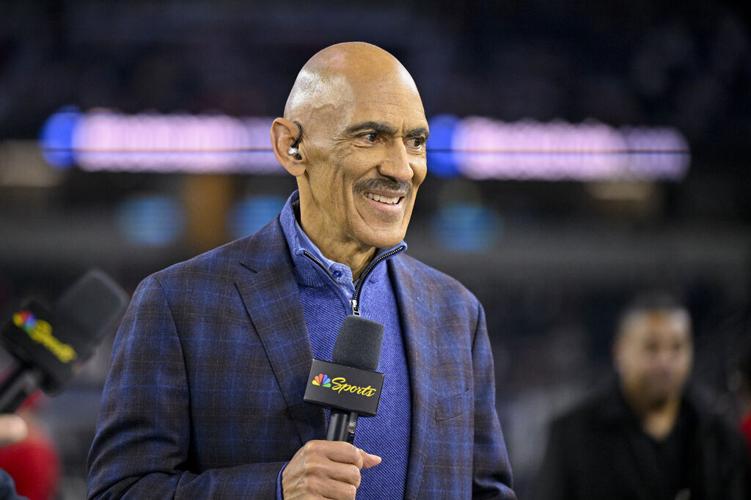
Former NFL head coach Tony Dungy is shown before an NFL football game between the Dallas Cowboys and the Tampa Bay Buccaneers in Arlington, Texas, Sunday, Dec. 22, 2024. (AP Photo/Jerome Miron)
The Elliotts and Dungys mirrored lifestyles. It's why Dungy wanted to follow Elliott to Tucson to play both football and basketball at Arizona, according to Elliott. The UA basketball program was led by Snowden, and the football program was coached by Jim Young.
"They couldn't agree on who would get charged the scholarship for Tony, so Tony ends up going to Minnesota," Elliott said.
Dungy played quarterback for the Golden Gophers and was a reserve guard for the UM basketball program. Dungy went undrafted to the Pittsburgh Steelers in 1977 and switched from quarterback to defensive back.
Grounded in his faith as an evangelical Christian, "a lot of people mistook (Dungy's) personality as if he's not a fiery and competitive guy," Elliott said.
For every coaching interview, Dungy had a crucifix lapel pin and bible in hand. When asked about his priorities in laugh, Elliott said Dungy always provided the same answer: "'God, family, football in that order, but I will give you a winning program.' The only team that agreed and gave him a chance was the Tampa Bay Buccaneers. That was his first head coaching job."

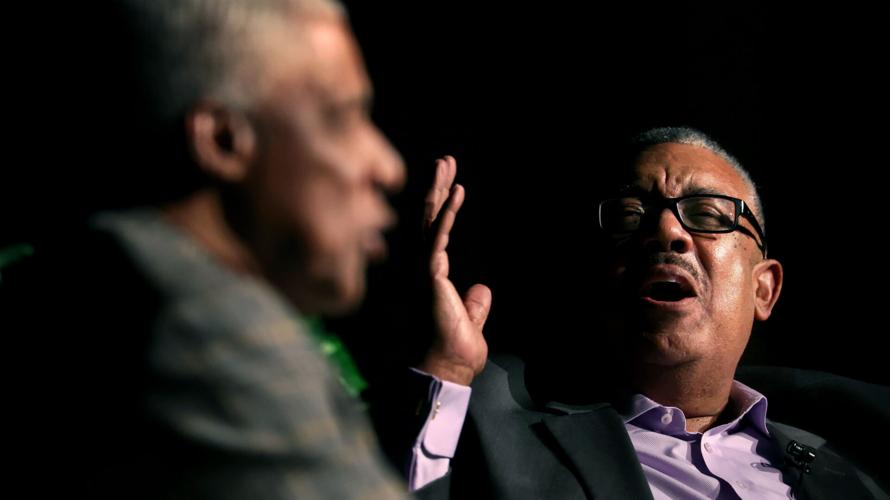
Bob Elliott, right, chats with his former teammate ABA and NBA great Julius “Dr. J” Erving at the African American Museum of Southern Arizona’s “An Evening with the Doctor” at Palo Verde High School on Thursday, Jan. 16, 2025.
Elliott, who said his Fireside Chat will be "an imitation of David Letterman," will dive into the history of Dungy's upbringing, faith and coaching legacy.
"You feel like in our living room, and the guests and I are just talking and talking about life," Elliott said.
The 70-year-old Dungy's appearance in Tucson will be just over a week following the Super Bowl in Santa Clara, California. NBC — with Dungy as an on-site analyst — is broadcasting the Super Bowl, so "we'll be able to get some insights into things not said on NBC during the Super Bowl."
The main objective of the Fireside Chat "is to humanize the person," said Elliott.
"'How did you become the person that you are?'" said Elliott.
"When you leave this fireside chat, you will feel that you know this person than you did before you arrived."

