


LAS VEGAS — Arizona and Arizona State are expected to lose 140 combined roster positions across their sports teams if the settlement terms of a multi-billion-dollar lawsuit against the NCAA are approved this spring.
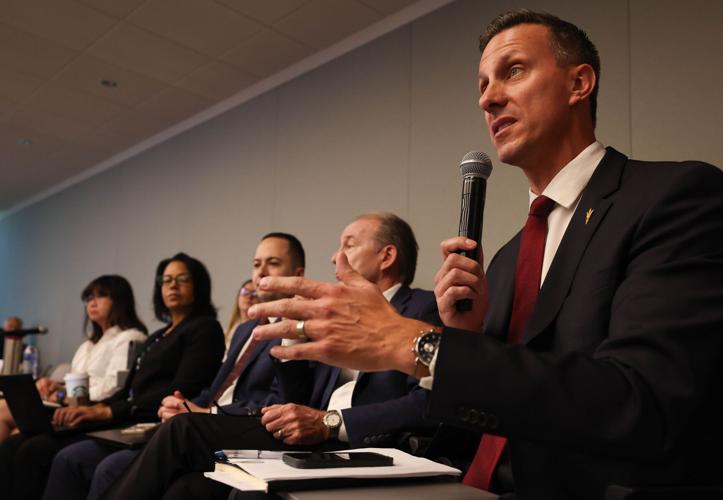
Wildcats athletic director Desiree Reed-Francois and her ASU counterpart, Graham Rossini, revealed the downsizing moves on Wednesday during a seminar in Las Vegas.
Each stated their department would lose 70 participants — not scholarship athletes but participants. That’s an important distinction competitively but doesn’t make either athletic director feel better about the situation.

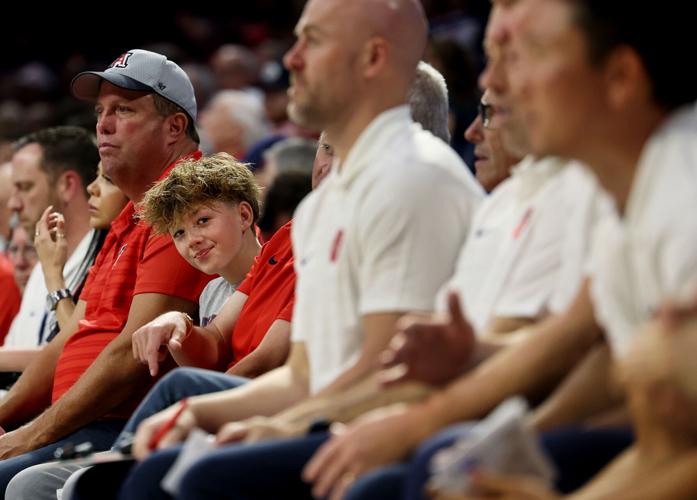
A young fan seated next to Arizona’s bench smiles as he watches the coaches react to the game in the second half during UA’s 117-54 win over Eastern New Mexico on Oct. 21, 2024.
They aren’t alone. Schools across major college football will be in similar situations in the 2025-26 competition year.
“We have to approach the first year of (settlement) implementation with empathy and grace,” Reed-Francois said during the Sports Business Journal’s forum on intercollegiate sports.
Longstanding NCAA rules set limits on the number of scholarship athletes per sport but no cap on the total number of participants, including walk-ons.
But the settlement terms of the House v. NCAA lawsuit will change the math dramatically by increasing the number of scholarships while capping the rosters.
Reed-Francois cited men’s basketball as an example. Currently, teams are allowed 13 scholarship players, plus however many walk-ons the coach deems necessary. Arizona’s published roster lists 20 players. One of the walk-ons is Reed-Francois’ son, Jackson, a junior guard.

UA AD Desireé Reed-Francois has shown she won’t sit idle in a rapidly changing NCAA landscape.
Starting next season, the cap will be 15 players. All 15 could be on scholarship, but the Wildcats cannot exceed that total with walk-ons.
As a result, four spots will be cut from Arizona’s roster. Reed-Francois’ advice to her son: Get better.
She called the House settlement “a massive change, a massive disruption. It has given us certainty, which we were all craving. But (the participation limit) is an unintended consequence.”
She would have preferred a grace period for implementation that allows walk-ons currently competing to remain on the rosters until their eligibility expires.
“I wish we had a do-over,” she said. (The power conferences were named defendants in the lawsuit, along with the NCAA, and agreement terms in May.)
Michigan athletic director Warde Manuel joined Reed-Francois and Rossini on the panel discussion about challenges facing college sports.
He said the Wolverines will add 74 scholarship positions across their array of sports but lose 170 participants.
“This is where we got it wrong,” he said.
Rossini echoed the sentiment and explained the Sun Devils will lose 70 participants across their 26 sports. He believes that over the longer haul, the House lawsuit will create financial pressures that could spur the elimination of Olympic sports.

Arizona State University athletic director Graham Rossini speaks during an Arizona Board of Regents meeting in Tempe.
The settlement allows schools to share up to approximately $20 million in revenue with athletes, in addition to the increases in scholarship costs.
(There is no requirement to share the full amount, but schools that spend less could suffer consequences in recruiting.)
Football and basketball will be fine. But sports that serve as the primary talent pipeline for Team USA are not profitable and might be on the chopping block after the 2028 Summer Games in Los Angeles.
“The Olympic movement in our country is in jeopardy,” Rossini said

