


BOISE, Idaho —
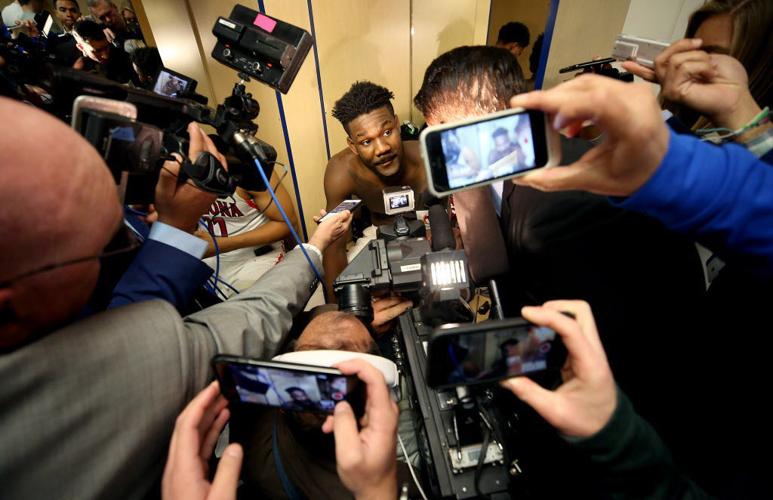
Standing next to Arizona’s Deandre Ayton on Thursday night, Buffalo’s Jeremy Harris looked a bit like the old TV character Gilligan.
Harris was giving up 7 inches and maybe 60 pounds. He wasn’t exactly the Big Unit.
If someone recast the sitcom “Gilligan’s Island” today, you’d want a guy with Harris’ countenance: a non-threatening appearance, slender, easygoing dude, unkempt hair.
Sort of the way many in college basketball cast Buffalo in Thursday’s first-round NCAA Tournament game against the supposed might of Arizona and its Big Unit.
But every time Harris made another basket, beating Ayton to the bucket — beating everybody and anybody — you could almost hear the Gilligan’s Island theme song:
“Just sit right back and you’ll hear a tale, a tale of a fateful trip. …”
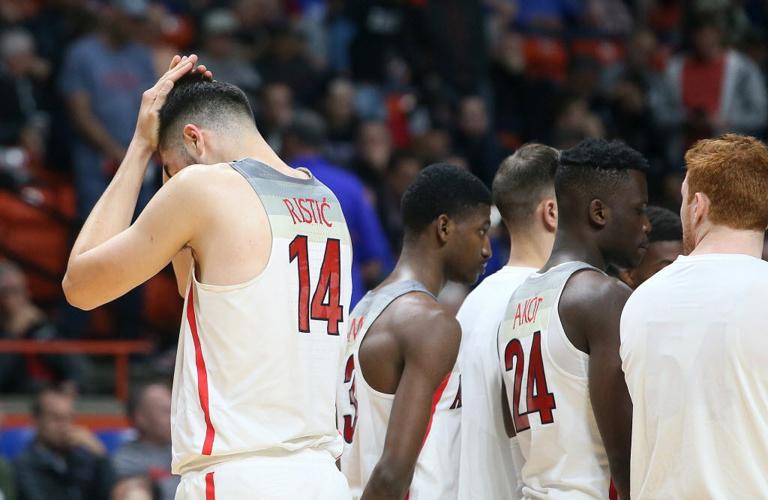
Arizona’s trip to Boise was not only a fateful trip, it was the end to a fateful season. Fans of UA basketball grieve the end to each season differently, but Thursday seemed to deliver an entirely different type of mourning.
After all that had gone wrong, from the FBI investigation to the Bahamas and so much more, Arizona’s exit seemed more inevitable than one creating a sense of heartbreak and disbelief.
Buffalo won 89-68, and it will be remembered for all the unrealized potential much like Arizona’s 76-51 Elite Eight loss to Utah 20 years ago next week.
This time, Buffalo’s Jeremy Harris and Wes Clark were what Utah’s Andre Miller and Michael Doleac were in 1998.
Arizona said goodbye to Mike Bibby and Miles Simon in ’98; on Thursday, it bid farewell to Ayton and Allonzo Trier.
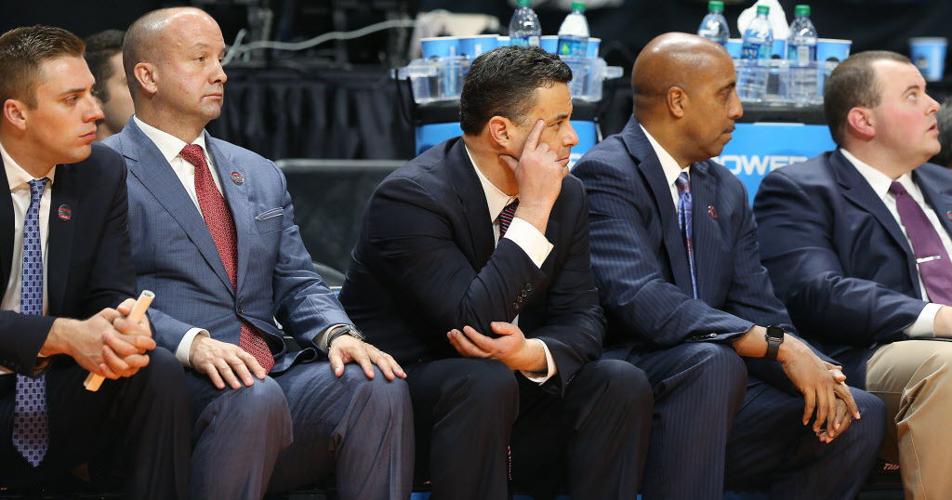
“When you get someone like (Ayton), you want to go all the way,” UA coach Sean Miller said. “But when you lose in the first round that’s a tough pill to swallow.”
Arizona has been swallowing tough pills since September.
What hurts most about losing to Buffalo isn’t the margin or the widespread angst of losing to a team that had never won an NCAA Tournament game. It is the fear that it might be years before Arizona passes this way again.
The future of Arizona basketball is so uncertain that someday Wildcats fans might consider being in the NCAA Tournament against a team like Buffalo a heady sensation.
About the only person in Idaho who didn’t seem surprised at the force of Buffalo’s victory was Nate Oats, the Bulls’ coach.
He and his staff watched video of Arizona and Pac-12 basketball games for what seemed like forever this week. The more they watched, the more they liked the Bulls and the less they feared the Wildcats.
“The more beatable they looked,” said Oats. “They weren’t that deep. We play fast. We have great guard play. I thought we could guard their guards. They had one ball-handler. I thought we could do a pretty good job.”
It was exactly the script No. 14-seeded East Tennessee State followed when it stunned No. 3 Arizona in a first-round game in 1992.
Big and slow doesn’t often work in the NCAA Tournament. Quick, fast and athletic does.
It’s Buffalo, not Arizona State, that should wear those “Guard U” T-shirts.
Arizona tried to get by using only its fastball Thursday. It was one-dimensional. That played into Buffalo’s trap: the Bulls produced a chest-heaving effort, as if they had been plugged into a battery charger all week.
Ayton, bless his basketball soul, took seven fewer shots than Clark. That should never happen, although Oats said it was almost predictable.
“Ayton’s really good, but you can take a big out of the game in college,” he said. “You can pack a guy (on defense), sit right behind Ayton the whole time. But you can’t take a guard out like that. You can’t take Wes Clark out of the game.
“The thing was, if Trier got hot, if Parker Jackson-Cartwright caught fire, we knew we’d be in some trouble. We knew they were going to have to miss some 3s.”
Oh, boy, did Arizona miss some 3s. It was 2 for 18.
The history of Arizona’s most anguishing NCAA exits the last 30 years can almost exclusively be traced to poor 3-point shooting.
The 1988 Final Four loss to Oklahoma? Arizona shot 6 for 23 from 3-point distance.
The ’94 Final Four loss to Arkansas? Arizona was 6 for 32.
The ’98 debacle against Utah? Arizona was 4 for 22.
The ’01 Final Four loss to Duke? Arizona shot 4 for 22.
The 2011 Elite Eight setback to UConn? Arizona was 4 for 21.
What we don’t now is if Thursday’s loss to Buffalo will long be regretted. The Wildcats were flawed, but a lot of that was covered up by what turned out to be historically weak Pac-12 competition.
On Wednesday, Miller said that the UA’s defensive improvement since mid-season had been “almost astronomical.”
Now it appears as if Arizona’s defensive improvement was more a testament to the league’s dreadful 0-3 finish in the NCAA Tournament.
Early in the second half, the top defensive player of the Miller years at Arizona, Nick Johnson, tweeted “Are we going to play some defense?”
Johnson correctly called it from a TV screen hundreds of miles away from Taco Bell Arena.
So in the end, Arizona joined Arizona State and UCLA as first-round losers to lightly-regarded teams from New York: Buffalo, Syracuse and St. Bonaventure.
It was all so tidy.
A few minutes before tipoff, Pac-12 commissioner Larry Scott stood at court level. His travel plans were not complicated. Ordinarily, he flies from one NCAA Tournament site to another, squeezing in as many games involving the Pac-12 as a travel agent can manage.
This week? No confusion.
New York 3, Pac-12 0.
It reminded me of the 1985 NCAA Tournament, the first of Lute Olson’s Arizona career. The Pac-12 went 0-3 and the Wildcats were the last team standing. Pac-10 commissioner Tom Hansen flew to Albuquerque just in time to watch Arizona lose 50-41 to Alabama.
It was the worst year in modern Pac-10/12 basketball history.
But after Arizona’s misadventure in Boise this week, that piece of history might require some rewriting.

