

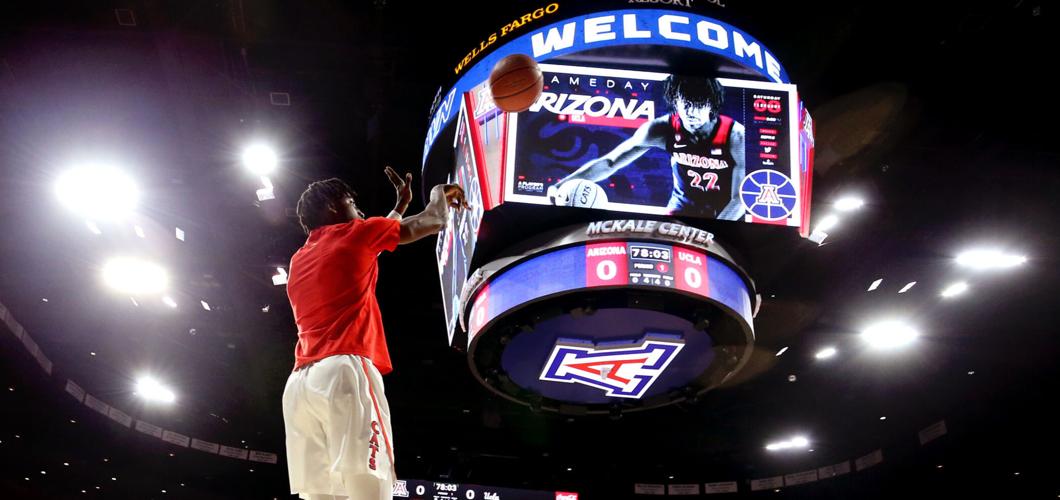
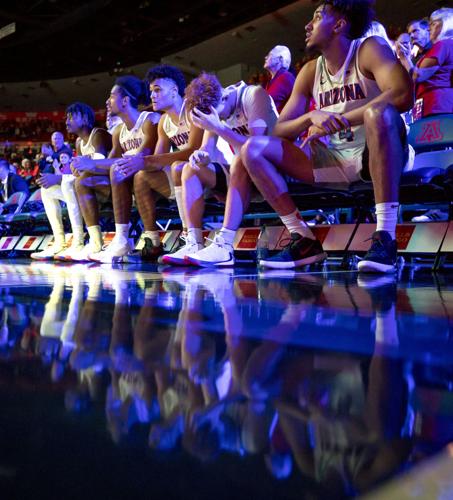
When Arizona officially opens its 2020-21 basketball season on Friday — COVID-19-permitting, of course — the McKale Center videoboard will still blare an updated version of its “This Is Arizona” pregame highlight reel.
There will be introductions, ear-blasting music, television cameras, sponsorship signage, concessions and “crowd noise” reacting to the action … but only about 400 people will be in the building.
Well, maybe about 1,000 if you count all the cardboard cutouts of fans and pets (including Sean Miller’s dog, Lambert) plus a cardboard Zona Zoo section. They’ll stand for the whole game, motionless.
By now, this sort of scene is normal in the pandemic-influenced world of 2020 sports, with cardboard cutouts and electronic noise having filled stadiums for Korean baseball, Major League Baseball, the NBA and NFL since sports gradually returned last spring.
The staffers at Arizona have an unusually difficult challenge: Trying to recreate the Pac-12’s best homecourt atmosphere without fans, who won’t be allowed until at least January.
That’s made life a little bit different for Suzy Mason, UA senior associate athletic director for facilities and event management, and her staff. But, as evidenced by the cancellation of Arizona’s first game with NAU on Wednesday and other COVID-19-related issues around the country, she also has some perspective.
“I think the motto has been, ‘Be grateful we have a season and be grateful we have an opportunity to host an event and have people play at it,’” Mason said. “I know that some schools can’t even have their parents at their games, and we still have the opportunity to work with game-day atmosphere, the piped in music, the ambient crowd noise and some of the marketing elements.
“Obviously, I don’t think any of us would ever want to host an event without fans but that’s what we’re doing. There’s a lot of things that we work through in a different way, but they’re a lot of the typical elements that we address with the general public in here.”
In developing the game-day plan for 2020-21, Mason and athletic department staffers have worked with officials from the NCAA, Pac-12, Pima County and other UA staffers on campus.
Fans leave flowers, notes and sports memorabilia below the statue of former University of Arizona basketball coach Lute Olson on the north side of the McKale Memorial Center. The longtime coach, who was known for putting the Wildcats into the national spotlight, died Thursday, Aug. 27. (Josh Galemore / Arizona Daily Star)
Here is how Mason and Chris Celona, UA’s associate athletic director for ticket sales, described how McKale will look differently not only for men’s and women’s basketball, volleyball and gymnastics this season:
- There will actually be fans — sort of. A maximum of 100 people per team who are on family guest lists will be admitted. Players can invite up to four guests each, as per normal NCAA rules, and their families will be seated separately in pods throughout the west side of McKale Center.
“It’s pretty much strictly family because they want them to sort of be in their bubble,” Mason said. “They don’t want the general public invited as part of the player guests lists.”
- Teams themselves can have 30 people in their most restricted (“Tier 1”) bubble on the floor, counting team staff, but all of them must take a PCR test 72 hours before the start and daily antigen tests. Officials are also subject to the same testing standards.
- Six people will be seated on the floor, including a TV replay coordinator and official scorer. Team benches will be in two rows, and extend around the corner of the floor, though they won’t be much more spread out than normal.
- The folding sections of seats that extend to the floor on the west and east sides of McKale will be pushed back, with a row of official personnel sitting just against the pushed-in seats, so as to stay beyond the 25-foot perimeter around Tier 1 players and staffers.
- On the north and south ends of McKale, however, folding seats will extend to the floor as usual, allowing for players to still enter and exit the floor via the tunnel created by those bleachers on the south end.
- Curtains will be draped over most of the north and south seats, similar to how they are used for some UA volleyball and gymnastics events.
“So you’ll have a little bit more ambiance, if you will, and less of a feeling of shooting in a big open arena,” Mason said. “We’ll have the curtain system deployed differently for men’s basketball than we’ve ever had before.”
There will also be a large banner on the east side with the words “Together we bear down.”
- A limited group of up to 13 media members, including radio broadcaster Brian Jeffries, will be seated in east and northeast sections. It remains to be seen if television crews will be on site or work the games remotely.
The McKale stat crew will be seated at center court but up in the east-side stands, while eight media members and staff photographers will be allowed to set up beyond the 25-foot distance from the court.
- Television will have two “slash” cameras elevated slightly in the corners off the floor, plus a straight view camera on the west side that will be pushed back 25 feet away from the sidelines, directly behind where the TV announcers normally sit on the west sidelines.
Also, an overview TV camera will be operated as normal in the upper west stands while UA already operates remote cameras on its overhead videoboard and on baskets (the “slam cams”). A a robotic camera also may be used on the floor.
Overall, TV crews are expected to use five cameras, while UA will use three for its video board production. There will be a total of four unstaffed cameras.
UA will produce a video feed of the action for the overhead video board, and that feed will be used to stream any women’s games that are not televised.
“So our fans can at least see them remotely along with those parents who can’t make it here and obviously (the parents of) foreign players,” Mason said. “We will be happy if people worldwide are watching Arizona basketball.”
- Fans watching at home on television may not see too many differences, especially since the cameras will be mostly cut tightly to the action.
“Most of the focus is going to be on the floor,” Mason said. “But I would think that based on the camera angles, you’re going to see (cardboard) cutouts as (players) come in and out of timeouts or come in and out of the game.”
- The cutouts will be visible in three primary areas: The lower-level folding seats behind the north and south baskets, and behind the team benches. The Zona Zoo cutouts will be placed behind the north basket where students normally sit, while familiar faces will be seen throughout.
“I don’t want to ruin the surprise,” Celona said, “but there will be some good men’s basketball alumni, let’s put it that way.”
- Pets will make an appearance, too. Fans can buy cardboard cutouts of themselves or another fans — or their pets — to be placed inside McKale all season for $65. Students’ cutouts are $40.
“Just looking through the images right now there are a handful of pets,” Celona said on Monday. “On the football side, there were a lot more. The majority are students and regular fans.” Celona said about 500 total cutouts were purchased in time for the season opener but that fans can still buy cutouts to be added later — and they will be in place for all UA events at McKale this winter.
- Masks will be required of everyone working or attending the game, except when eating or drinking. A limited number of prepackaged concession items will be available in a stand on the west side behind the family seating.
“There’s about four or five menu items, very similar to football and that’s to basically limit the consumption of food and drink inside, and to keep everybody masked up as much as possible,” Mason said. “I think our tone and tenor is more that of ambassadors and preaching public safety and health as opposed to rules and regulations that are more stringent.”
- Public-address announcers will call in substitutions like normal, while LED boards and all the usual sponsorship and advertising will be in place.
“Everything that was contractually obligated, we’re still going to continue to do,” Mason said. “The amount of sound and the noise and the levels are all pretty standardized from the conference, and will continue to be so for basketball just like football.”
Piped-in noise is being capped at 85 decibels for basketball and 75 decibels for football, though Mason says noise from an actual McKale crowd can exceed 110 decibels.
- And, of course, “U of A” chants will be heard — it’s just that they will be of fans recorded from pre-pandemic games at McKale.
“It will be very much be when you have a U of A highlight, you’re gonna hear U of A type audio,” Mason said. “You don’t want it to be a practice-like environment where it’s silent, and you hear the bouncing of the ball and the squeak of the sneakers. Nobody wants to play in front of that.
“Obviously, it’s still a high-energy game, and the players can bring their own energy but making the feel of McKale Center, and the sound at McKale Center, is absolutely the end goal of the season.”
Photos: 50 years of McKale Center at the University of Arizona
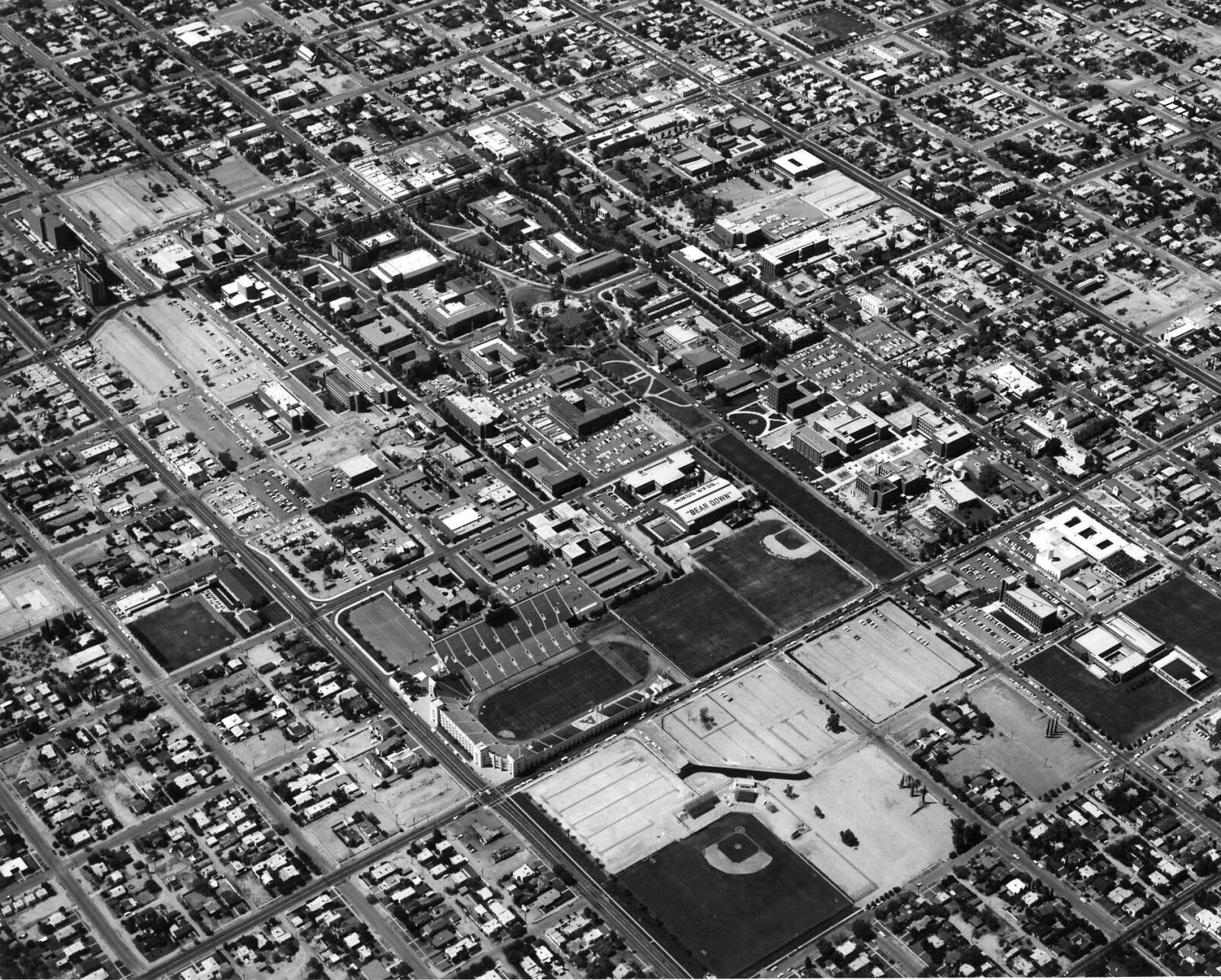
The University of Arizona campus in 1967, showing the empty lot right of Sancet Field at the bottom of the frame where McKale Center sits today. Construction of the viewing stands at Sancet Field underway. Arizona Stadium is starting to look like the current-day structure after a multi-level press box and 10,000 seats were added to the west grandstand in 1965. Note the Warren Ave. and Martin Ave. still poke through campus all the way to Speedway Blvd.

Excavation for McKale Center on the University of Arizona campus in January 1971. View is southeast. Dirt from the excavation is piled on an empty lot bounded by Martin Ave., Campbell Ave., and 4th and 5th streets. All but Campbell were eaten up by university expansion.
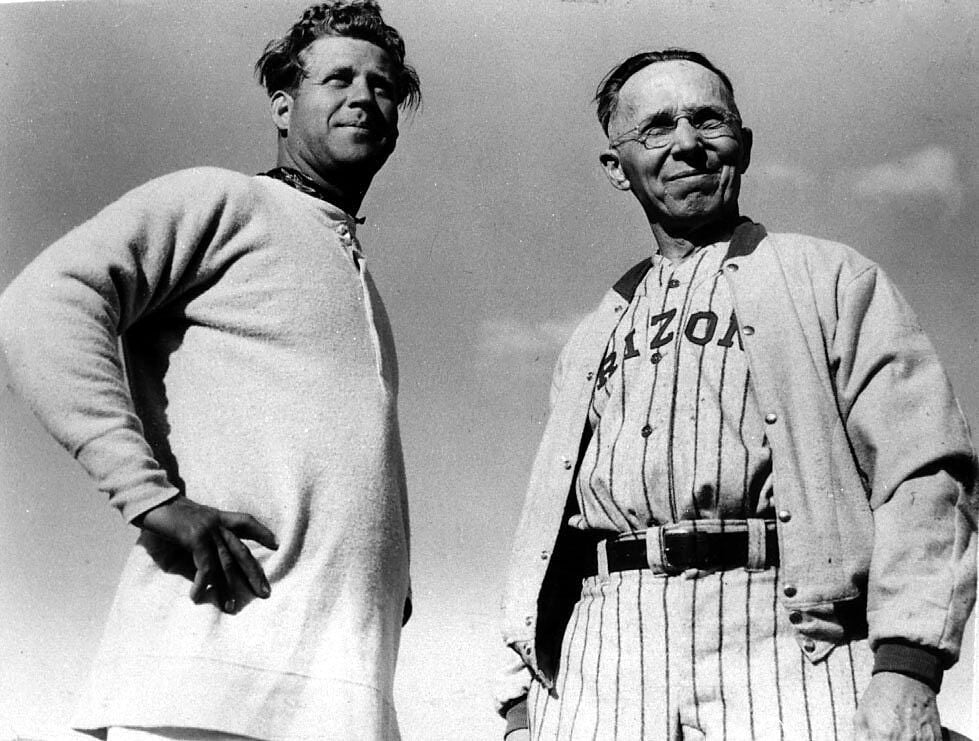
Hank Leiber, left, and legendary University of Arizona coach James Fred "Pop" McKale, ca. 1950s. Leiber was a baseball star for UA in the 1930s and played in two World Series with the New York Giants and made the All-Star game twice with the Chicago Cubs.
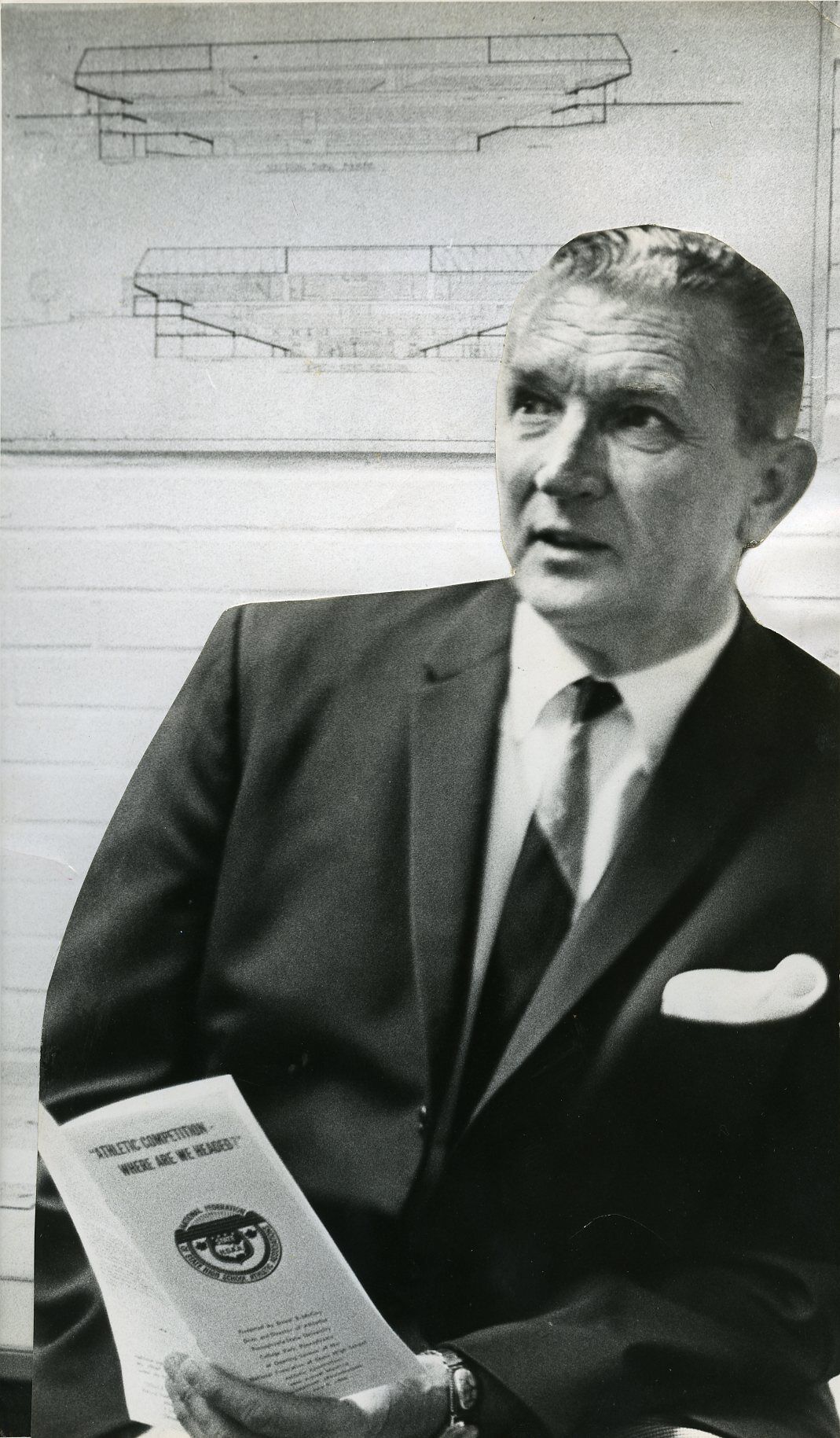
UA athletic director Dick Clausen, shown in 1969, Clausen was the driving force behind construction of McKale Center.

McKale Center under construction in 1972, looking southeast from the College of Optical Sciences.

McKale Center under construction in September 1971, looking southeast from the College of Optical Sciences.

Excavation for the service drive to the McKale Center floor in 1972. The steel beams to hold up the roof sit low across the bowl before being lifted into place.
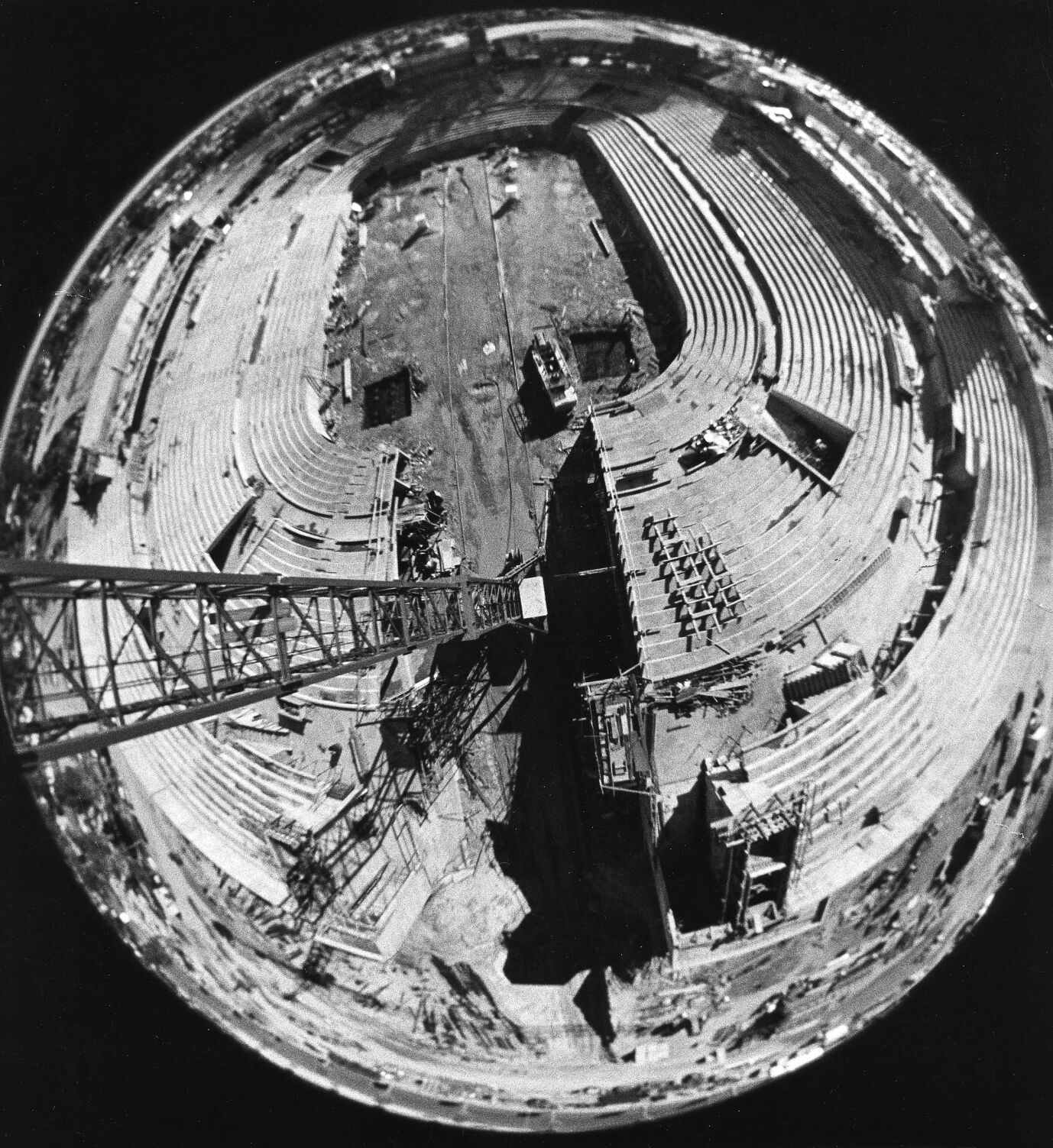
A camera with a fisheye lens gives a bird's eye view of progress on McKale Center in December, 1971.

Crowds raise the roof at the University of Arizona's McKale Center now, but in January 1972, it was a construction crew that was carrying out that task.
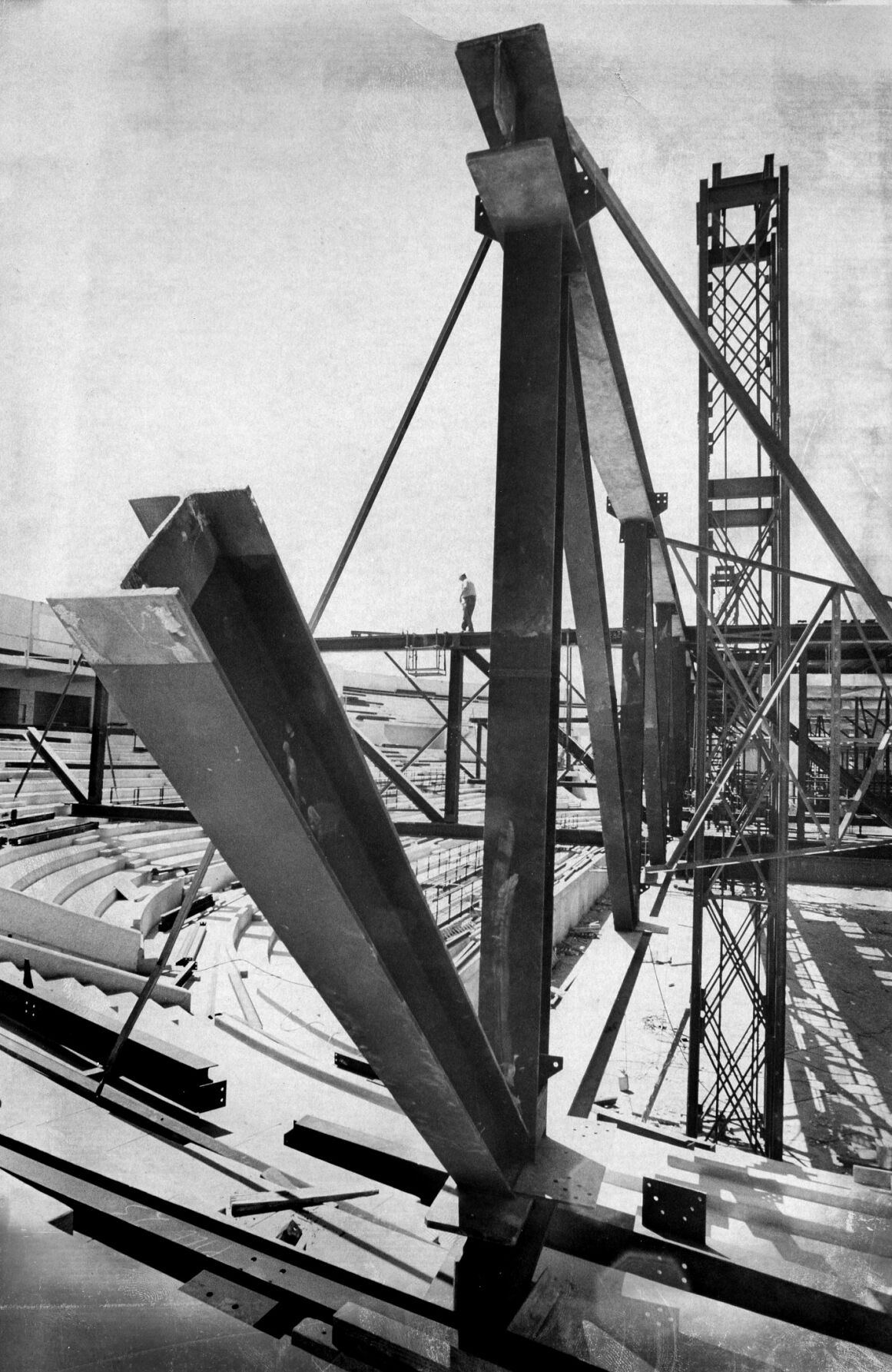
Steel beams that hold up the McKale Center roof sit on the concrete bowl before being raised into place in 1972.

McKale Center under construction from the interior in August 1972.

McKale Center interior takes shape on Aug. 4, 1972.

The new McKale Center starting to take shape as construction continues at the University of Arizona on August 4, 1972. The health and physical education complex includes a 15,000-seat basketball facility. McKale, named after legendary coach James "Pop" McKale Center, replaced the aging Bear Down Gym.

A protective plastic roof over the McKale Center floor on Dec. 12, 1972. The floor was scheduled for completion in October, but the concrete floor was not drying as expected. Workers erected the tent and used gas heaters to speed the process.

Workers lay the floor for McKale Center under a protective plastic roof on Dec. 19, 1972,
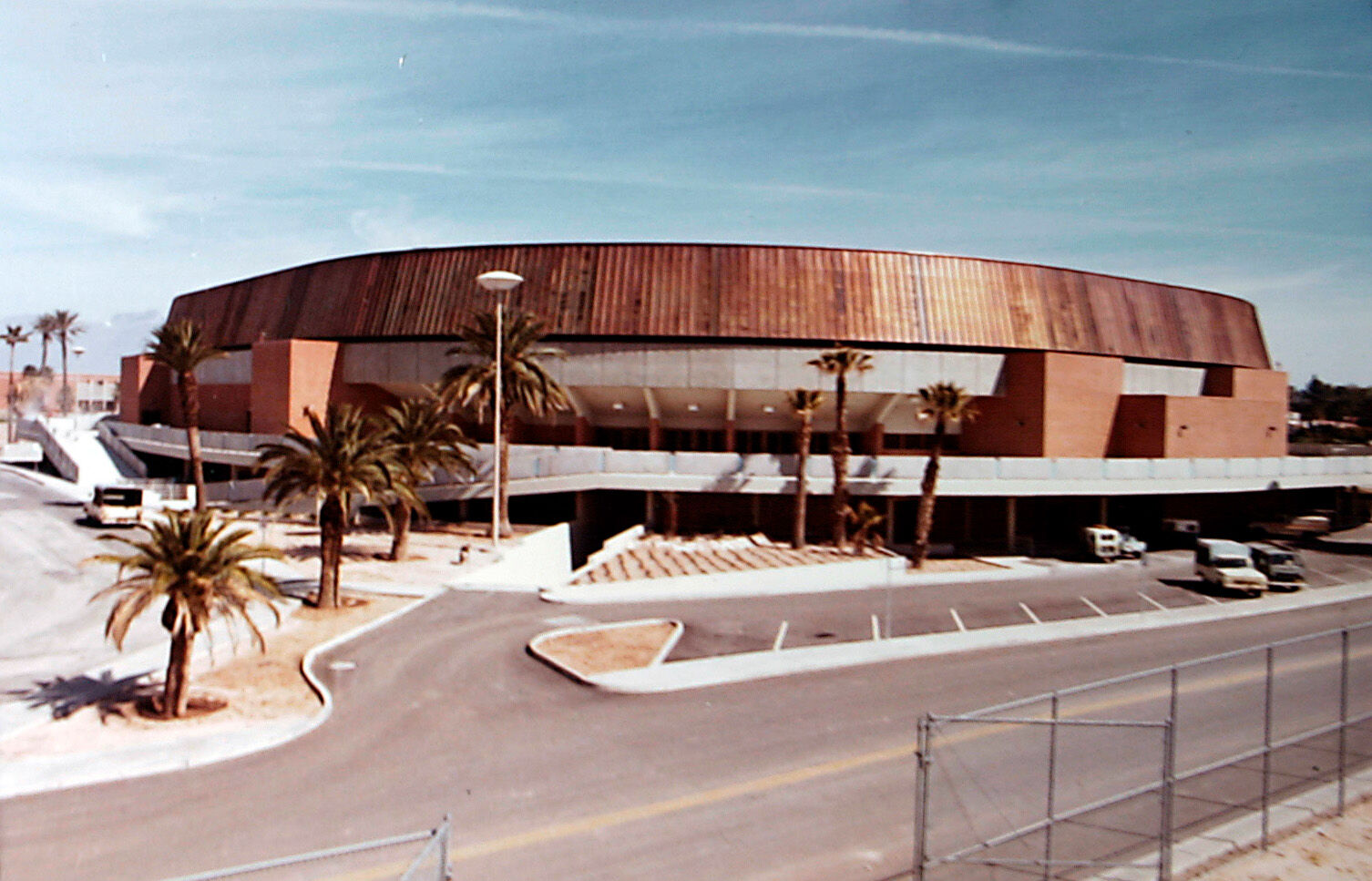
McKale Center with its gleaming copper dome in place on Feb. 28, 1973.

13,652 fans watched the Arizona Wildcats defeat Wyoming, 87-69, and move into a tie for the lead in the Western Athletic Conference on opening night of McKale Memorial Center, Feb. 1, 1973, Coniel Norman led the Wildcats with 37 points.

The newly-minted McKale Memorial Center on the southeast corner of the University of Arizona campus in May, 1973. Note Arizona Stadium with the original stands on the east side and the open north end. Warren Avenue still goes through campus. Martin Ave. dead-ends at the new McKale Lawn and extended UA Mall.

Betty McKale, daughter of legendary UA coach "Pop" McKale, tries out the dance hall piano under the watchful gaze of her father's painting (above) in the McKale Center trophy room (McKale Room) on Nov. 29, 1973.

The trophy room at McKale Center, also known as the McKale Room, shown on Nov. 29, 1973, displayed University of Arizona athletic trophies.

Football training room at McKale Center on March 24, 1975.
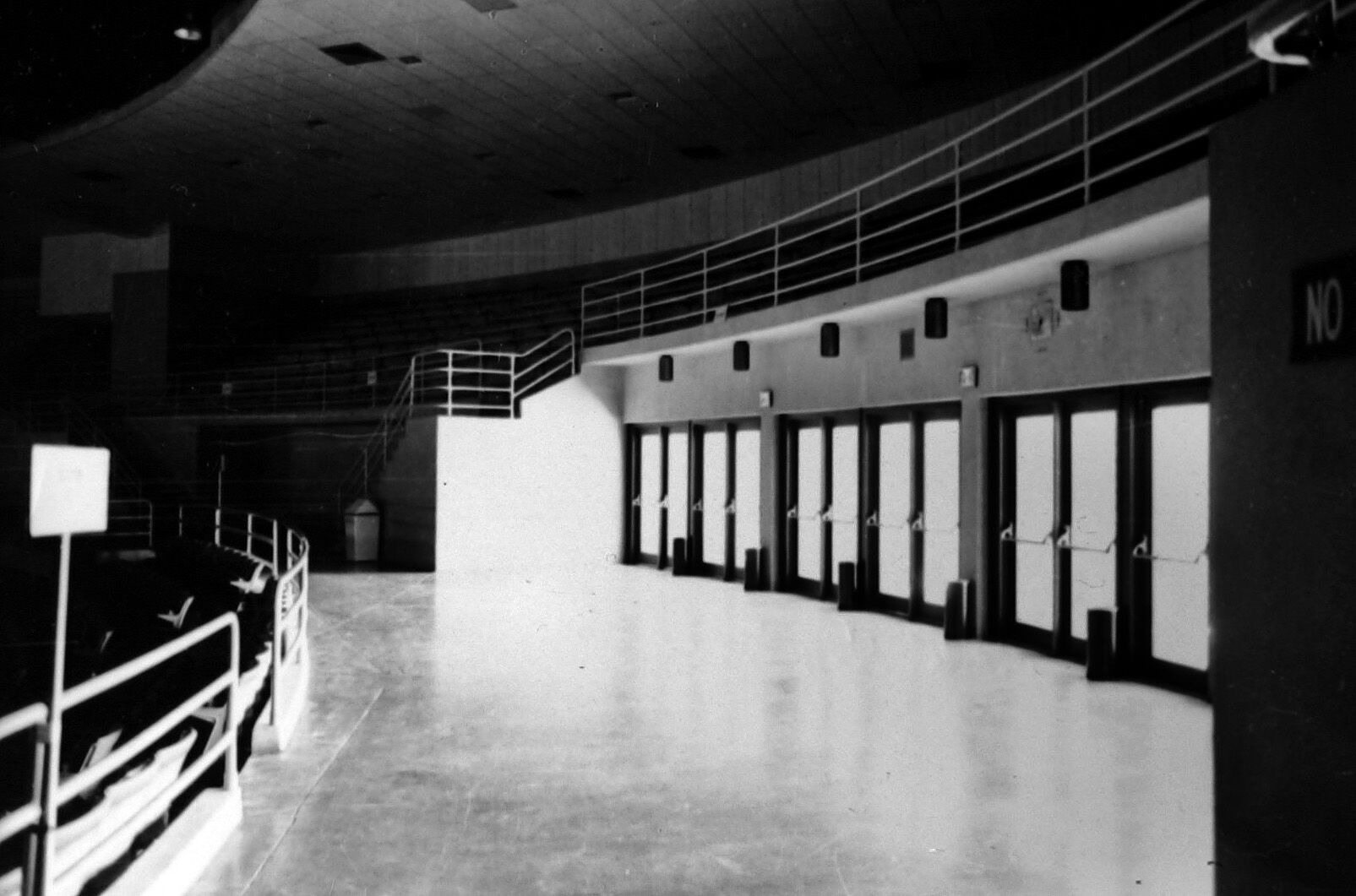
One of the entrances to McKale Center on March 24, 1975.

After playing on a borrowed wooden basketball floor during the 1975-76 season, the UA installed their own floor as seen on Oct. 28, 1976. It was put down on top of the original Tartan floor built at McKale Center. The first game on the new floor was against the Yugoslavian Olympic team.

After playing on a borrowed wooden basketball floor during the 1975-76 season, the UA installed their own floor as seen on Oct. 28, 1976. It was put down on top of the original Tartan floor built at McKale Center. The first game on the new floor was against the Yugoslavian Olympic team.
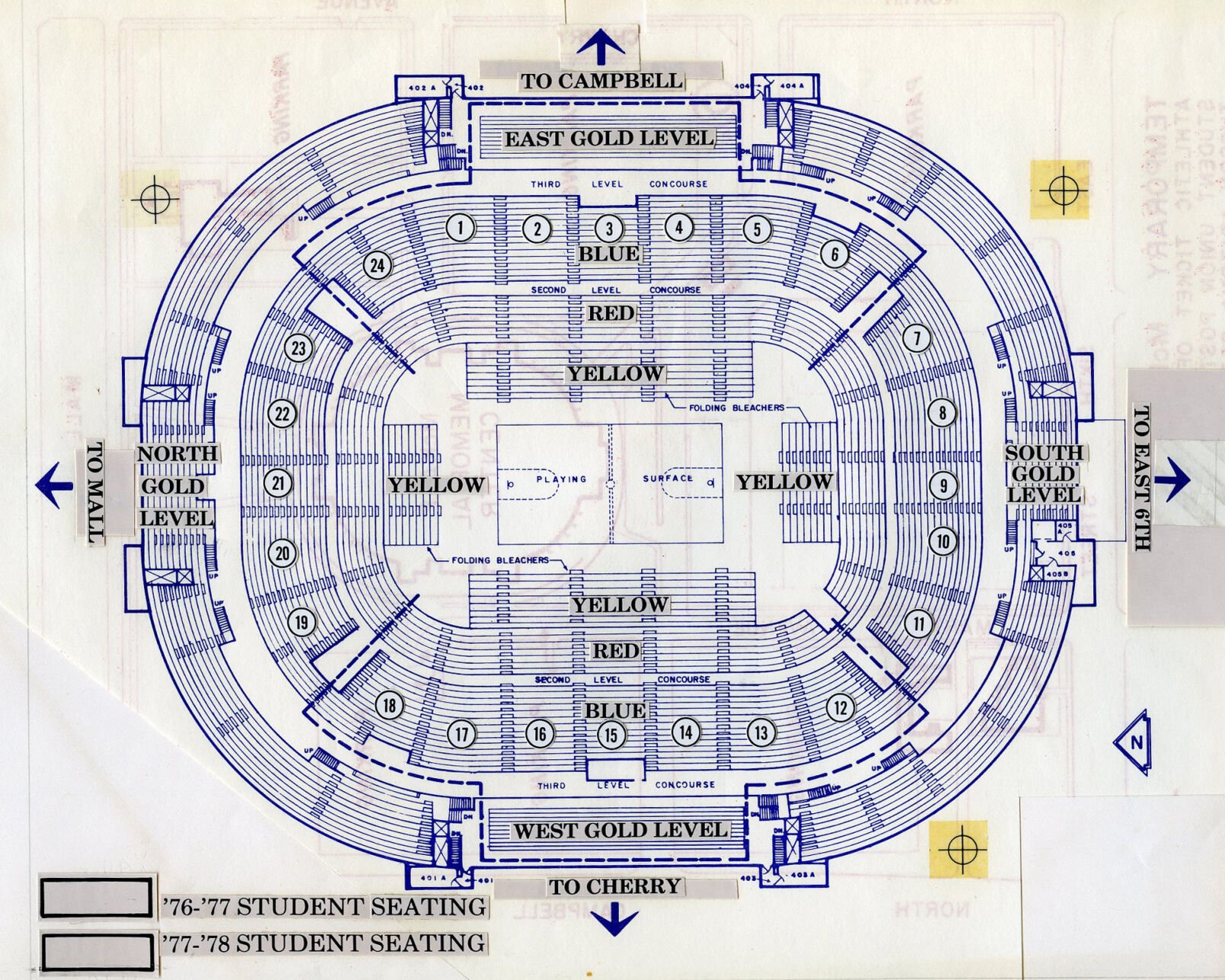
McKale Center seating chart published in the Tucson Citizen in 1977.

UA head coach Fred Snowden surrounded by players during University of Arizona basketball vs. Arizona State at McKale Center in Tucson on Mar. 6, 1976.

McKale Center as seen from Arizona Stadium, looking northeast, in 1982. Today, the realigned Warren Avenue dead-ends at the Cherry Avenue parking garage, which took the place of the surface lot at left.

1973: Players practice on the new McKale Center basketball floor on Nov. 19, 1973.
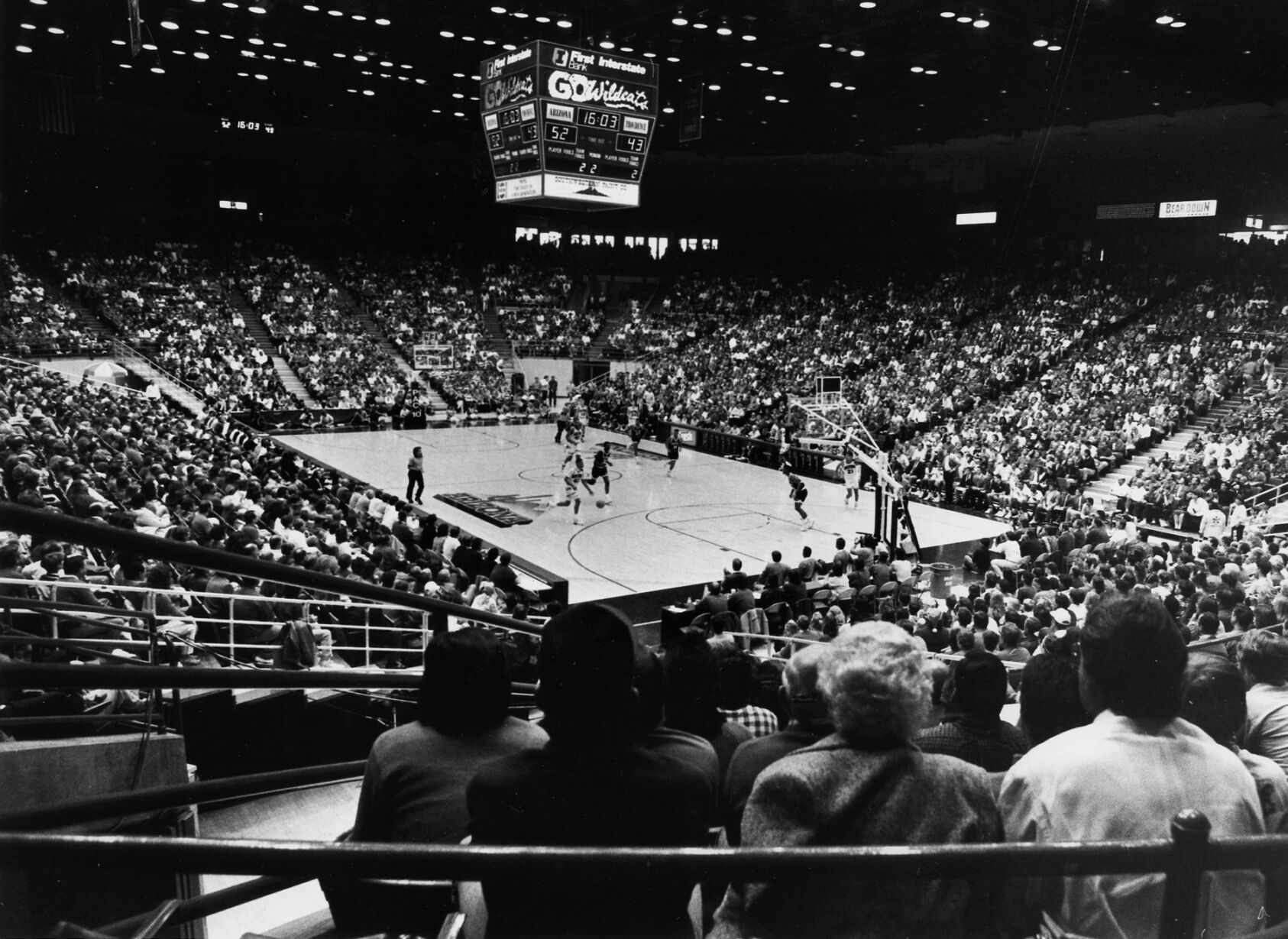
1990: The Arizona Wildcats men's basketball team during a game at McKale Center in December, 1990.

2014: Renovations inside McKale Memorial Center in 2014 included seating and a new basketball floor.

2018: Participants in coach David Rubio's volleyball camp break out into groups at McKale Center in Tucson on July 16, 2018.

2023: Just under 9,000 fans in the stands as Arizona women's basketball takes on Washington at McKale Center on January 27, 2023.

University of Arizona women's basketball players (dark jerseys) run the floor during a game against Arizona State at McKale Center on Jan. 9, 1978.
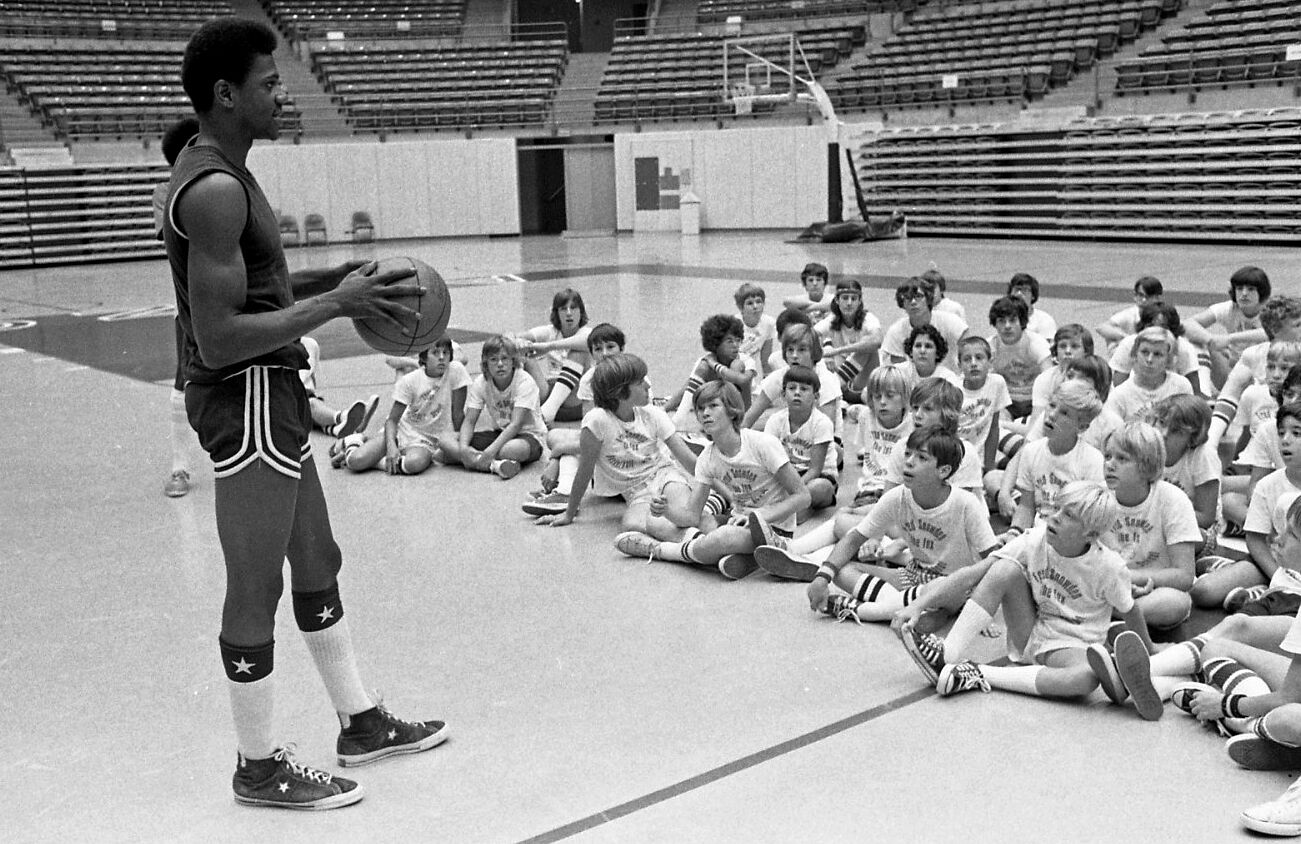
UA basketball legend Coniel Norman teaches young athletes about basketball basics at McKale Center in June, 1975.

Fans swarm the court after University of Arizona (still in the Western Athletic Conference) defeated basketball powerhouse UCLA (then #1 in the nation), 70-69, at McKale Center on Jan. 18, 1979.

Senator Barry Goldwater speaking at UA graduation ceremonies at McKale Center on May 13, 1989.

Former University of Houston athletic director Cedric Dempsey speaking in the McKale Room at McKale Center on Aug. 17, 1982, after being named athletic director of the University of Arizona. It was a post he kept until 1993.
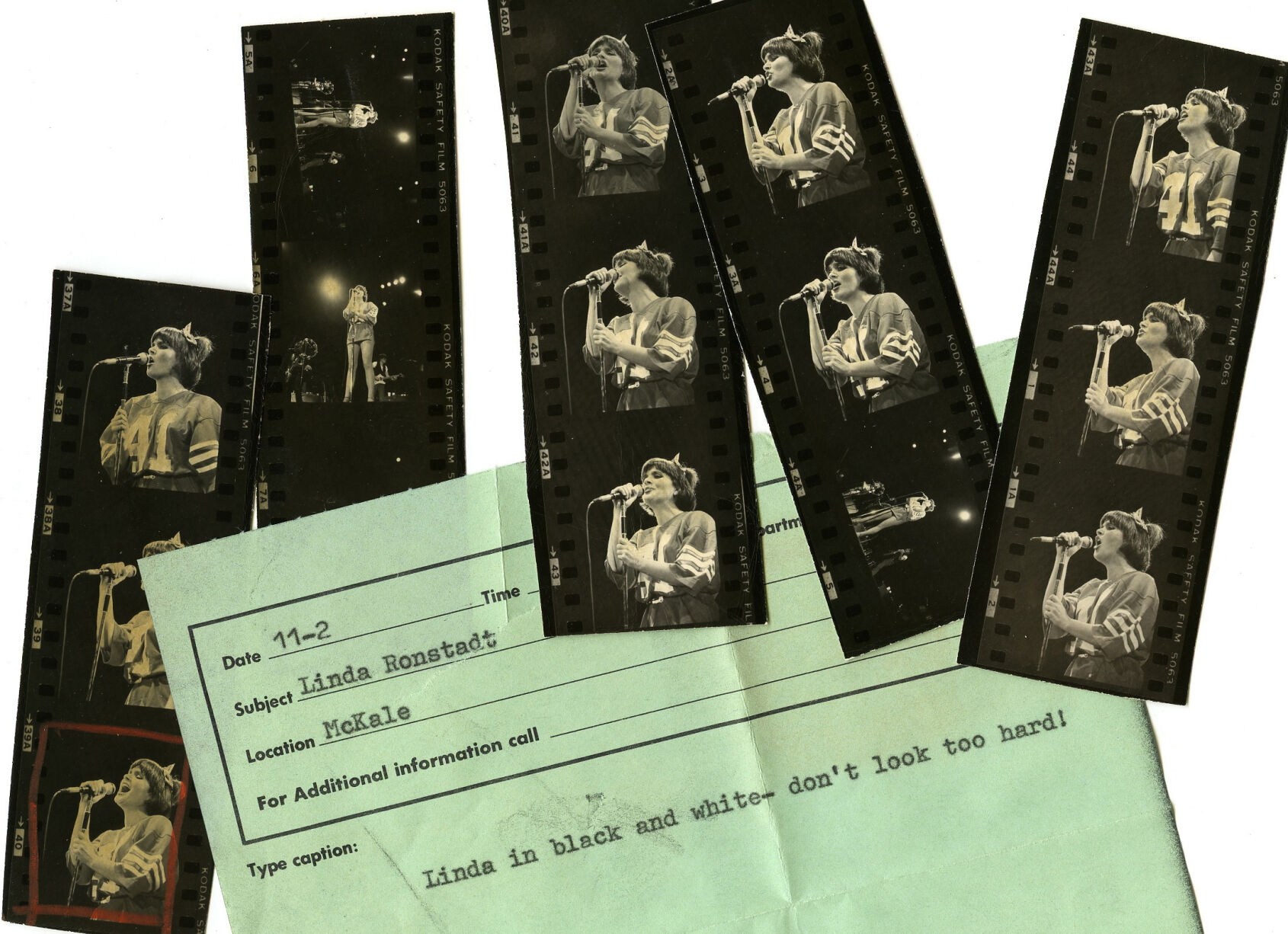
Linda Ronstadt in concert at McKale Center on Nov. 2, 1980. The original negatives are missing from the archives, but the contact sheets of all the outtakes remain. Note the comment on the photo assignment.
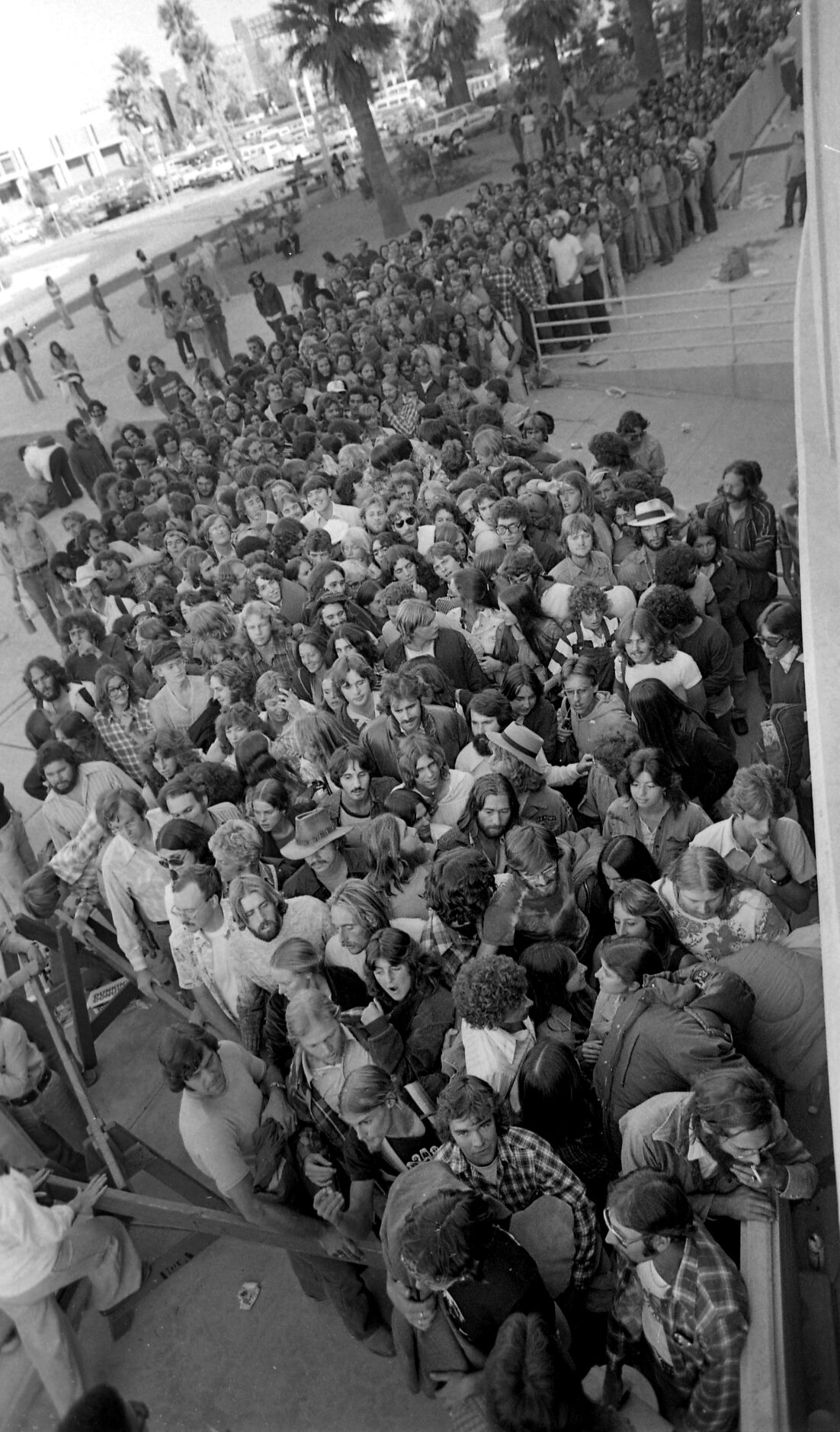
Thousands of people line up outside McKale Center on Oct. 15, 1978, for tickets to see Bob Dylan in concert at the arena. Dylan performed for 11,000 fans on Nov. 19.

Donald Trump with girlfriend Marla Maples at a University of Arizona basketball game at McKale Center, Tucson, on Dec. 27, 1990. (© Arizona Daily Star)

University of Arizona women's basketball coach Joan Bonvicini works with players at McKale Center in 1991, her first year as coach.

Barbara Brady answers the phone in the University of Arizona basketball office in McKale Center in 1997. The office was in the midst of a major face left. Improvements included enlarging quarters for Coach Lute Olson and redecorating the rest of the office.

A.J. Greene looks over the shoulder of UA student Anna Marie Butler in 1998 as she signs the bottom of a piece of the new basketball floor in McKale Center.
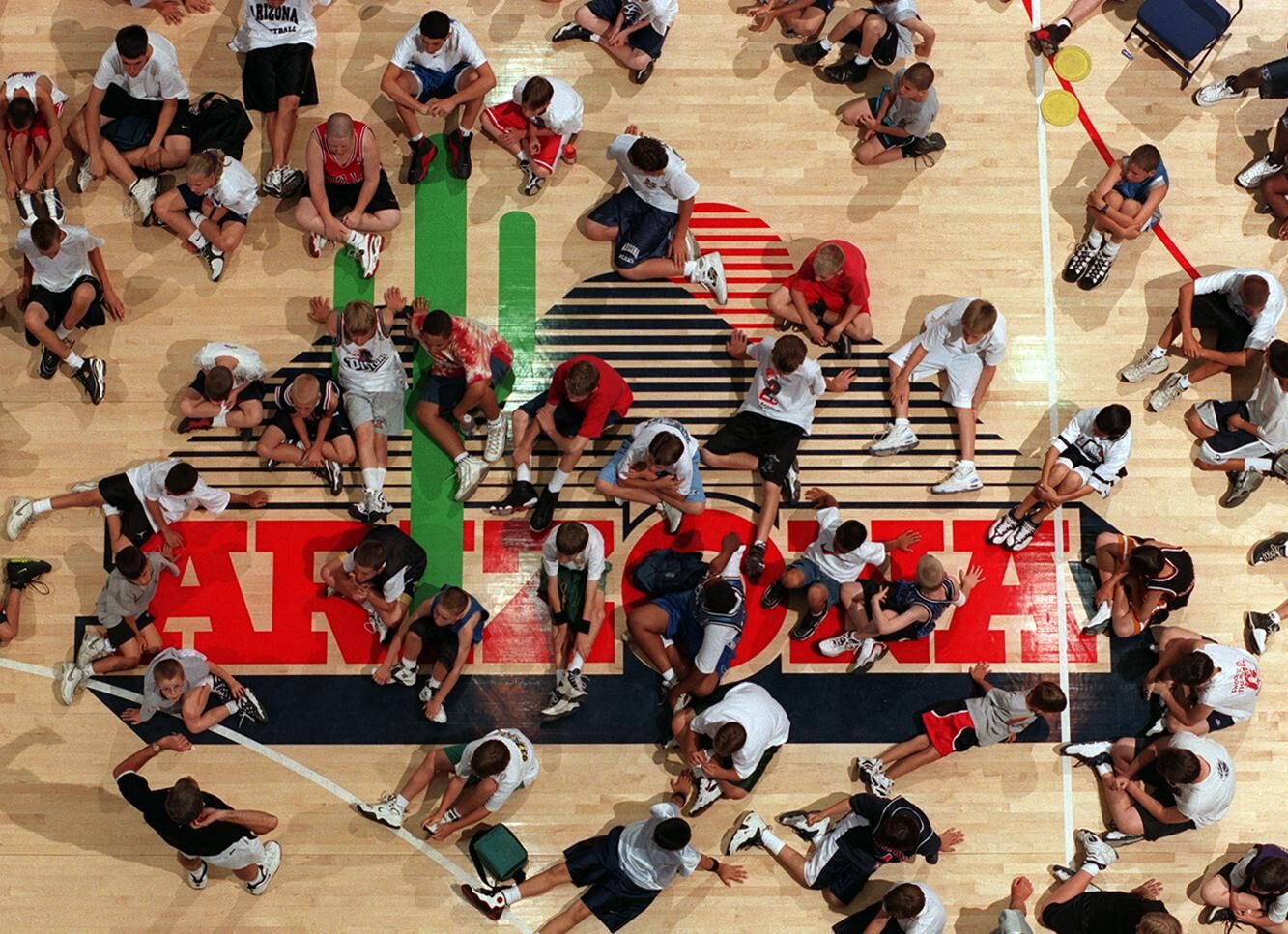
Assistant UA basketball coach Jim Rosborough explains some basketball secrets to 270 Lute Olson Basketball Camp participants during an afternoon lecture on June 16, 1998.

UA basketball coach Lute Olson waves to the crowd as he is introduced during the midnight madness practice game at the McKale Center on Oct. 12. 2001. UA competed in their second NCAA national championship game the previous season.

Arizona junior Sirena Linton finishes her bar routine while fellow teammates watch during Arizona Wildcats Gymnastics final home meet against Sacramento State at McKale Center in Tucson, Ariz. on March 10, 2022.

Arizona outside hitter Kendra Dahlke rises high from deep on the court to smash a spike against Arizona State at McKale Center on Sept. 21, 2016.

Arizona guard Aari McDonald (2) flies into the pain against Wyoming in their round of eight game of the WNIT at McKale Center on March 31, 2019.

Arizona guard Aari McDonald high-fives fans as she enters the court in McKale Center on March 1, 2020.

Sand volleyball player Jianna Bonomi walks past some of the images of legendary University of Arizona basketball players such as Steve Kerr, Sean Elliott, Gilbert Arenas, Mike Bibby and others in a hallway in McKale Center in 2015.

Graduates get one last celebration on the floor of McKale Center following the Spring 2012 Commencement. Dr. Peter Rhee, Chief of Trauma and Critical Care at UMC during the 2011 mass shooting, was the honorary guest speaker. A total of 4,206 undergraduate degrees, 882 master's degrees, and 298 doctoral degrees were conferred.

Hallways at McKale Center have been upgraded through the years to commemorate the UA's basketball history, such as the 2011 display honored legendary coach Lute Olson.

University of Arizona deputy director of athletics Kathleen "Rocky" LaRose makes her rounds through the coaching offices in McKale Center during her last full day of work on Oct. 8, 2013, after 30 years in athletics.

Forward Cate Reese slams the NCAA March Madness bracket after a first-round victory over UNLV at McKale Center on March 19, 2022.



