

Being a football wife can be a blessing and a curse.
Wives take wins and losses much more seriously than the average fan. Wins can mean stability and saving for your kid’s college education, while losses can bring life changes such as moving and having no health insurance. This reality bonds sports wives across the country and can create a family environment among good staffs. I have relied heavily on my gaggle of football ladies in the past. We have laughed, cried, cheered and commiserated for two decades.

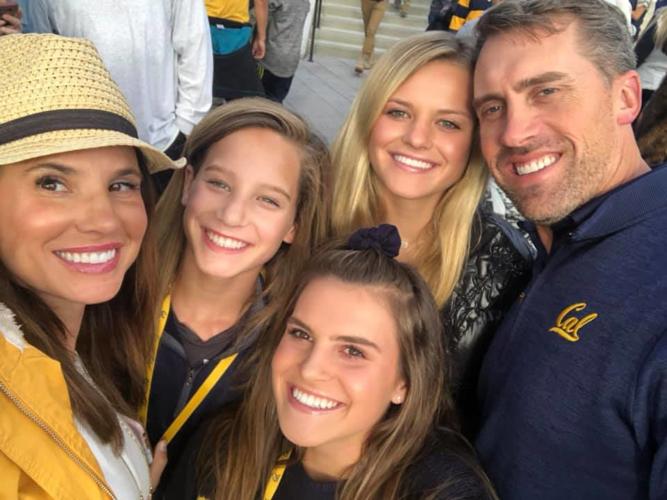
Carrie Cecil met up with the Sirmon family at last weekend’s UA-Cal game.
Last Saturday, I trekked through the belly of Arizona Stadium in search of Lindsay Sirmon. Lindsay is the wife of Cal associate head coach Peter Sirmon, who played linebacker under my husband Chuck with the NFL’s Tennessee Titans. We shared a hug and pictures of our kids, and then went on to cheer for opposing teams.
For 20 years I’ve been connecting with my football sisters on the visiting sidelines, in hotel lobbies and in stadium tunnels on this blessed journey called life. Although we may holler for different teams, I was happy to share some much-needed-love from Lindsay on Saturday night. I’m grateful for the game of football, but more grateful for the extraordinary women I’ve met along the way.
In the biz
University presidents and athletic directors face more risks today than ever. From the mob mentality on social media to hiring leaders that later implode, the collegiate athletic ecosystem has pivoted in a perilous direction.
A little over a year ago, I sat on a crisis management panel at the National Association of Athletic Directors with then-Auburn AD Jay Jacobs, Eastern Washington AD Lynn Hickey and former Big 12 commissioner Dan Beebe. We were all asked to assess the greatest risk facing athletic directors. Without pause, Jacobs said “hiring.” A year later, Jacobs resigned due to alleged improper behavior from both a softball coach and men’s basketball coach. He is an amazing leader, but paid the price for what others did behind closed doors.
This unsettling trend continues. This year’s headlines include the unprecedented firing of Tennessee AD John Currie and president Beverly Davenport for a disrupted coaching search, and today’s rumors that Maryland president Wallace Loh and AD Damon Evans are on the hot seat following an investigation into football coach DJ Durkin. While it is the president and athletic director’s responsibility to ensure institutional and athletic integrity, there is no blueprint for these men and women to follow — or a feasible way to discover an employee or potential candidate’s dark side.
Tech talk
I love Facebook, but the platform is still reeling from its biggest security breach since its inception. The attack was discovered on Sept. 16, and it took some of the most talented engineers at Facebook 11 days to plug the data hole. While the motive and the culprit still remain a mystery, over 50 million users may have had their information, including their posts, friends and even private messages accessed.
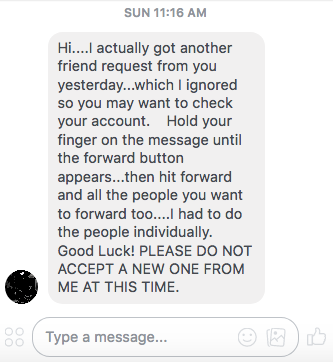
Many people have been nervous about the platform. Making matters worse is the recent hoax that millions, including me, have received as a private message in their inbox. It says, “Hi. ... I actually got another friend request from you yesterday ... which I ignored so you may want to check your account. Hold your finger on the message until the forward button appears ... then hit forward and all the people you want to forward too ... . I had to do the people individually. Good Luck!”
The best thing that you can do if you receive this message is to delete it. Please don’t share this message as it’s just perpetuating the fear and spreading spam. Facebook officials have stated the messages do not appear to be related to their hack in security in September. While the messages may not be a virus, they are nerve-wracking and very effective old-school chain mail. Need help with social media education? Email me at info@teamsm2.com.

Feeling good
Kudos to the UA College of Medicine on its upcoming 40th anniversary of the Commitment to Underserved People (CUP) program. CUP gives medical students the opportunity to provide free medical care and education to underserved people in Tucson and Southern Arizona. Since its establishment 40 years ago, CUP has grown to 36 distinct programs and clinics that serve specific populations in Southern Arizona. Through CUP, medical students work regularly with the homeless, refugees, inmates and other marginalized populations.
In one year, CUP clinics served over a 1,000 patients. CUP operates on a limited budget and medical students often must fundraise for basic medical supplies, medications and lab tests. If you are interested in volunteering with CUP, contact Hildi Williams at hildi@medadmin.arizona.edu. If you would like to support CUP monetarily, visit http://www.bit.ly/SupportCUP.

