



Every Monday throughout the season, we’ll take a look back at Arizona’s previous game after re-watching the TV broadcast and present five key takeaways. Here are the five from the UA’s 49-24 loss to Colorado on Saturday:
1. Dawkins/Solomon 2016
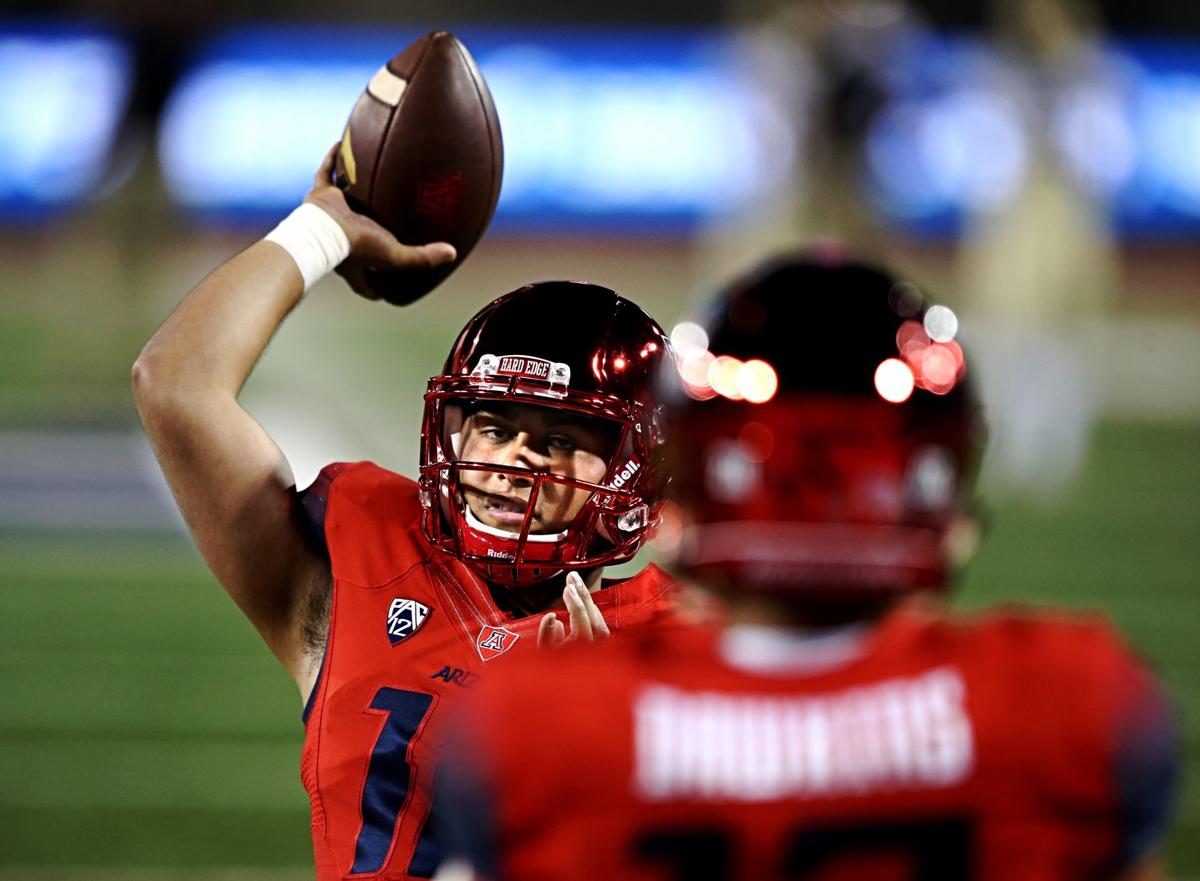
Like John Oliver reluctantly opening his show each week with the 2016 election, we once again start with the quarterback situation. I was genuinely surprised that Rich Rodriguez didn’t give Anu Solomon a chance to start against the Buffaloes. It would have done wonders for his confidence, and it might have given the Arizona offense the jolt it needed to start fast and force Colorado to play catch-up. But Rodriguez stuck with Brandon Dawkins, who didn’t play poorly. He helped put the Wildcats in scoring position multiple times; for a variety of reasons (penalties, missed field goals, etc.), some of those drives ended up as empty possessions. My second look at Dawkins’ performance revealed much of the same: excellent escapability and open-field running, limited field vision when he needed to find a second or third outlet. Dawkins seems hesitant to take chances as a passer – which is understandable given the Wildcats’ negative turnover ratio. Solomon briefly sparked the offense before failing to connect on his final two possessions. The timing was just a tad off between him and his receivers. Considering that he came in cold off the bench with less than a minute left in the third quarter, that’s hardly surprising.
2. Not good, but better
I can’t sit here and say the Arizona defense played well after Colorado scored 49 points and converted 7 of 14 third downs. But at least the Wildcats looked like their aggressive selves, unlike the previous week against Washington State. I counted eight legitimate quarterback hits among Sefo Liufau’s 29 dropbacks (not counting the UA’s two sacks). Arizona showed a variety of fronts, including, on several occasions, a look where all the linemen stood up and moved around before the snap. Tough, veteran quarterback that he is, Liufau generally did a good job of handling it. For example, on his 40-yard touchdown pass to Jay MacIntyre in the second quarter, Liufau took a hit from Michael Barton and threw a perfect ball down the left sideline. Interestingly, when Arizona used the WSU strategy – rush three, drop eight – it invariably ended up in a checkdown, and the Wildcats did a good job of rallying to the ball and limiting those gains. They were hustling to the very end, which is a positive sign.
3. Growing pains
As I’ve said before in this space, this exercise is not about picking on particular players (who aren’t paid professionals and don’t deserve that level of criticism). But I want to focus on one particular player to illustrate a point. The player is sophomore safety Demetrius Flannigan-Fowles, who had a rough night against the Buffs. Flannigan-Fowles got flagged three times for defensive holding or pass interference. He got beaten on the MacIntyre touchdown. He also missed some open-field tackles. Flannigan-Fowles hasn’t played as well in the second half of the season as in the first, when I named him the Wildcats’ midseason defensive MVP. The point is, he’s still a young, developing, relatively inexperienced player. This is Flannigan-Fowles’ first year as a starter after playing as a backup as a true freshman (and sitting out his senior year of high school because of an eligibility dispute). There were bound to be growing pains. The important thing moving forward for Flannigan-Fowles – and all of Arizona’s young players – is learning from the mistakes and getting better. If that happens, he and the Cats will have gotten something out of this otherwise fruitless season.
4. This time it’s personnel
Every week I’ll provide some notes on individual players, so here goes … Samajie Grant continues to show really good stuff as a tailback – quickness, speed, shiftiness, desire, patience. He’s obviously at the end of his college career, but perhaps this experience will help him get a job. NFL teams always value versatility. … Guard Freddie Tagaloa’s talent is tantalizing; no other UA lineman moves like him. When he does things right, it’s magnificent. But for whatever reason, he’s never been able to put it together for consistently long stretches. … Guard Jacob Alsadek is playing hurt – and he got rolled up twice during the Colorado game. Alsadek briefly came out in the first half before re-entering. You could see he was impaired on the final-series sack of Khalil Tate. … Receiver Shawn Poindexter has a lot of talent, but he has shown the past two weeks (two drops) how far he has to go. … Aiulua Fanene has emerged as a real force against the run. The move back to the defensive line has been a good one for him and the Wildcats. … Middle linebacker Michael Barton played his heart out despite a knee that undoubtedly wasn’t 100 percent. He was in on a lot of plays. … All of Josh Pollack’s misses were to the left, so there must have been some mechanical flaw. He had been fine on placements before Saturday. He can be the long-term guy there. But he shouldn’t be the punter too. That experiment has to end.
5. On to Oregon State
Can any positives be taken out of Arizona’s latest loss? I think some can. The Wildcats outgained the Buffs. Arizona ran effectively against a team that had been extremely stingy against the run. The UA should have a real chance against Oregon State – assuming the Wildcats give the Beavers their full, undivided attention. It sounds ridiculous to say that a 2-7 team could look past anybody, but that’s a real concern this week with the Territorial Cup looming. It’ll be dark and cold and probably rainy in Corvallis, and if the Cats don’t get off to a good start, it’s easy to imagine their minds drifting to Arizona State. That, to me, is a true test of coaching. Can Rodriguez – who’s obviously under a ton of scrutiny – keep the Wildcats motivated and focused? My pitch would be this: We haven’t won a football game in two months. We have a real shot to win this one. Let’s give it everything we’ve got. If that doesn’t work, the problems within the program might be deeper than we know.

