



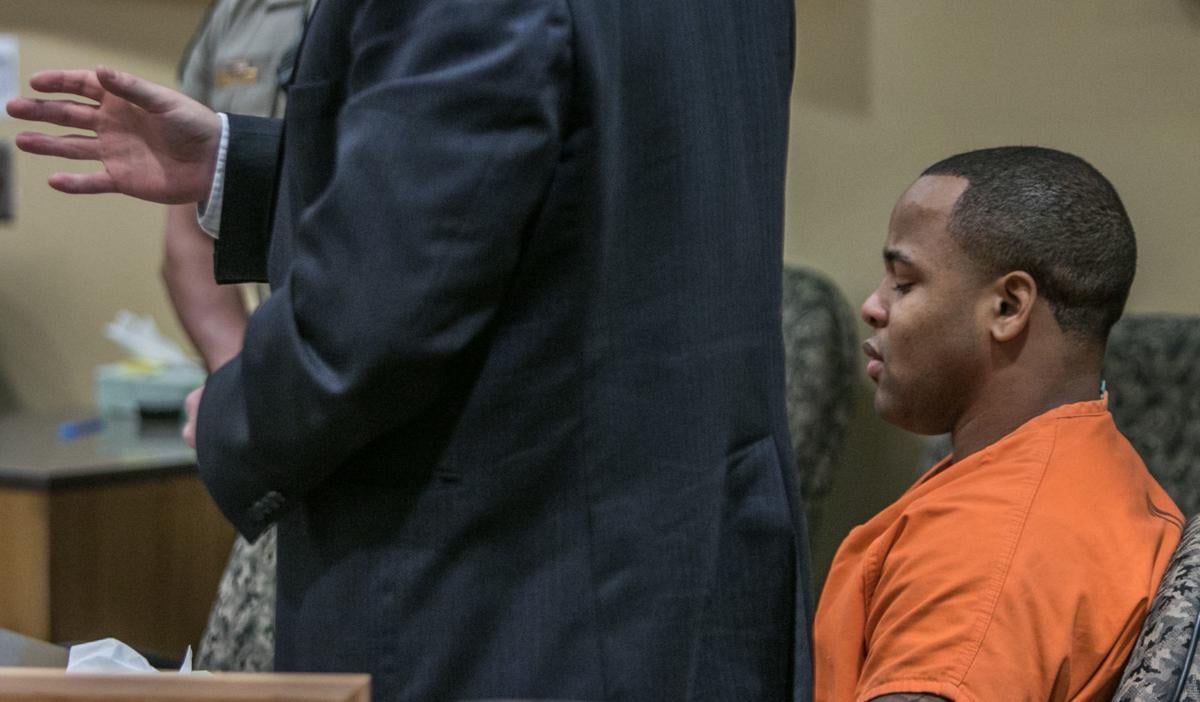
University of Arizona officials were made aware of former running back Orlando Bradford’s abuse of women nearly a year before he was arrested, but did little to stop him, a recently filed federal lawsuit says.
The school didn’t even begin to investigate until November, two years after a Wildcats softball player told her coach that Bradford was beating her and around the same time he was sentenced to five years in prison for choking two other students, according to the lawsuit.
One grassroots organization says schools need to move faster to protect their students from abuse. The American Association of University Women says universities have a duty to investigate as soon as students report abuses to certain employees, and can begin investigations based on both witness reports and second-hand information.
“Schools are on the hook. They have to make sure that sexual violence is ended, prevented, and they need to remedy situations when they occur,” said Anne Hedgepeth, the organization’s interim vice president of public policy and government relations. “Part of that equation is that schools need to take action when they know or should have known about sex discrimination that’s occurring.”
The UA’s investigation into Bradford seemingly began too late — and then seemed to move slowly, if at all.
One of Bradford’s three victims told her coach and athletic department employees that she was being choked and beaten, according to a campus police report. According to UA policy, everyone she told had an obligation to report the abuse to the dean of students or the Title IX office. Title IX laws prohibit sexual discrimination in educational settings, including sexual violence and harassment.
Another Bradford girlfriend routinely reported to her job in McKale Center with black eyes and bruises, according to the federal suit. Still, none of the athletic department photographer’s bosses or co-workers came forward to school officials. Several months before Bradford’s September 2016 arrest, the woman’s mother called the Dean of Students office to say that Bradford was abusing her daughter.
The Star contacted Greg Byrne, who led the UA’s athletic department during that time, for an interview. Byrne, now the athletic director at Alabama, declined the Star’s request because of ongoing litigation in the federal suit.
However, Byrne spoke to a Ch. 4 reporter about the issue in December.
“When you have 500 student-athletes, you have 20-plus programs, 350 employees, you’re going to have issues,” he told the TV station. “It’s gonna happen and what the important thing is that you make the best decision you can with the information that you have when those things come along.”
‘Responsible employees’ have obligation to victims
Schools can investigate potential Title IX violations regardless of if the complaint comes directly from a victim or through second-hand knowledge, Hedgepeth said.
While Hedgepeth could not comment directly on the Bradford case because of pending litigation, she said schools often don’t take students’ reports seriously. Accusers are more likely to leave the school — and a bad situation — when they’re not being helped, she said.
“We know that we need to make sure that schools understand that they have to move forward and make sure that students can stay in school,” she said.
The UA, like all universities, has designated “responsible employees” who are required to take reports of abuse to the school’s Title IX coordinator or deputy coordinators, campus police or staff in the office of institutional equity or dean of students.
The UA’s website says that “most employees” have a duty to report, including those in supervisory roles, like coaches and athletic department administrators.
That may not be enough, Hedgepeth said. She hopes schools are also educating their students about bystander obligations to ensure that students and employees are speaking up if they suspect abuse. The UA runs a “step-up” program designed to teach athletes about the importance of bystander intervention, but officials told the Star in December that it doesn’t necessarily mean breaking up domestic violence situations. At least four of Bradford’s Wildcats teammates watched as he abused multiple girlfriends; none reported the crimes to police, their coaches or anyone in McKale.
While the school’s opening of a sex discrimination investigation depends on the specifics of the situation, there are “absolutely” some actions schools can take when they receive second-hand information, Hedgepeth said.
“When schools have a real concern about repeat offenders or generally the hostile climate that could be present at a school, they should move forward and investigate a bit more about what’s happened and figure out if there’s an action that’s appropriate for them to take,” Hedgepeth said. “There are absolutely ways in which schools must weigh whether or not — even with a third-party report — there is a path forward and they should have a process in place to do that.”
Believing witnesses in a ‘student-centered’ process
The UA’s willingness to open an official investigation based on a witness or second-hand information depends on the “totality of circumstances presented in a given situation,” Mary Beth Tucker, the UA’s Title IX coordinator, wrote in an email to the Star.
“Sometimes someone may come forward and share a concern about someone else and may or may not have full or accurate information,” she said. “In those cases, we will review and assess the information and may reach out to the individual(s) to make an inquiry or share information and resources.”
The school’s inquiry could lead to a student code of conduct investigation, Tucker said. The UA’s process is “student-centered,” meaning the victim decides how far they want to pursue the case. Two years ago, Wildcats basketball player Elliott Pitts was found to have violated several code of conduct policies, including sexual misconduct, after a fellow student said he sexually assaulted her. Pitts was never charged with a crime, but eventually received a one-year suspension from the UA. He left the university — and the team — on his own.
“A student may request confidentiality with regards to an investigation against another student,” Tucker said. “This is a complex process and every case is different, but we make every effort to consider the student’s wishes in light of the information we have available to us at the time.”
The UA also has immediate measures available that can be put into place without an official investigation or determination of guilt, according to the UA’s Title IX website.
While school officials took some of those interim steps, issuing a no-contact order and moving Bradford off campus after the softball player reported the abuse to campus police, it’s unclear if the UA opened an investigation into Bradford’s behavior prior to last fall. UA officials say they can’t comment due to the pending lawsuits.
Regardless, the Arizona Board of Regents is pushing for more accountability when it comes to reporting abuse.
The regents proposed a policy revision to coaches’ contracts last week that requires athletic directors and head coaches to comply with all ABOR policies, including Title IX and other laws related to sexual violence, sexual assault and all related conduct. Put simply, coaches can now be more easily disciplined — or even fired — for failing to report those types of situations.
“It’s smart for schools to be very clear about who has that obligation, and be very public about it,” Hedgepeth said. “So they should be letting faculty and staff know if they’re responsible employees and they should absolutely be letting students know who are responsible employees.”

