



We knew this day was coming.
The feelings that have come along with it?
Bittersweet, to say the least.
After 45 years in the Pac-12 Conference — half a lifetime — the University of Arizona is headed to the Big 12. The official announcement came Friday night from the Big 12. The UA quickly followed up with its own official comment.
The ineptitude of the Pac-12 forced UA leadership, spearheaded by President Robert C. Robbins, to make a decision it didn’t necessarily want to make. A decision that’s about remaining viable. A decision that’s about survival. A decision that’s about money.
The Big 12’s media-rights deal offers more of the latter than what Pac-12 commissioner George Kliavkoff presented to university presidents earlier this week. It offers more certainty and stability.
Most of us, were we in Robbins’ loafers, would take the money and run. It’s the smart play. It’s the safer play.
The Pac-12 streaming deal with Apple offers more potential upside — especially with so many cutting the cord, dropping ESPN’s household penetration by about 30 million over the past decade — but projections don’t pay the bills. And as I understand it, the UA, like so many of its brethren, is deeply in the red.
Actions have consequences, though. With Colorado having already made its move for the Big 12’s superior security and exposure — and Arizona about to follow that same path — the Pac-12 became further imperiled. The 108-year-old conference, which has won more NCAA national championships across all sports than any other, went on life support when Oregon and Washington left for the Big Ten on Friday. ASU and Utah formally applied for membership in the Big 12 later in the day, as expected.
And that’s pretty much that for the Pac-12. It either becomes a glorified version of the Mountain West or just vanishes into the ether. The once-proud “Conference of Champions” — which has a legit chance to place at least one team in the College Football Playoff this year — becoming a mere historical footnote is borderline depressing.

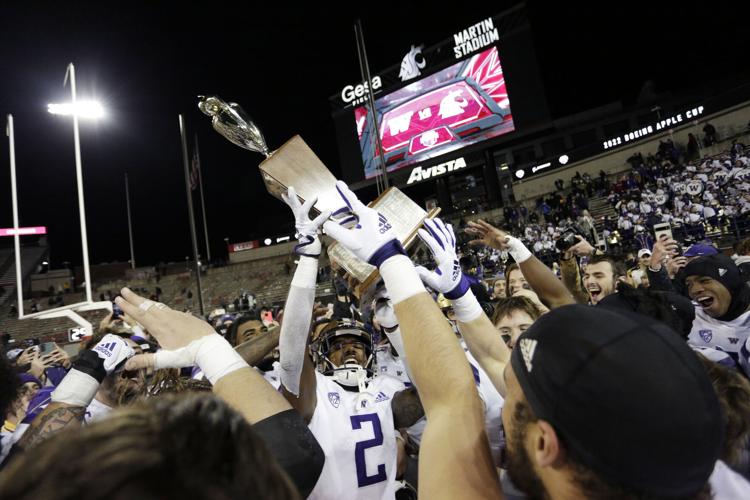
Washington players celebrate with the Apple Cup trophy after their 51-33 win against Washington State in November 2022. Will the rivalry game continue with UW joining the Big Ten and WSU having an uncertain future?
What makes college sports, and especially college football, special are its rivalries and regional distinctiveness. The Pac-12’s impending extinction could put an end to the Apple Cup and the game formerly known as the Civil War. Washington State and Oregon State have nowhere to go besides the Mountain West. Could those rivalry games be repositioned as non-conference affairs? It’s possible. But it wouldn’t be the same.
With all due respect to the Mountain West — a proud and competitive league that annually provides one of the participants in Tucson’s Arizona Bowl — #MountainWestAfterDark doesn’t have the same cachet as #Pac12AfterDark. Who didn’t love a game between the Cougars and Beavers that ended at 2:02 a.m. EST with a score of 56-53?
As college football continues to conglomerate — at the behest of TV networks and executives — it becomes increasingly homogenous. It becomes more like the NFL. If you view college football as the Triple-A version of the NFL, maybe you’re fine with that. Most college football fans I know fell in love with the sport because it was different, kinda quirky and bursting with vigor that often morphed into vitriol.
At least some of that was lost Friday, as these long-rumored maneuvers became official or close to it. Maybe a lot of it.
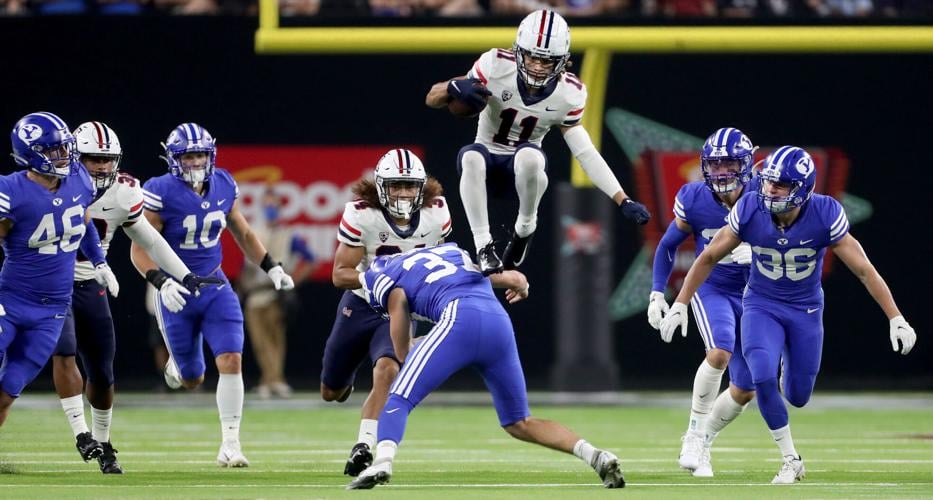
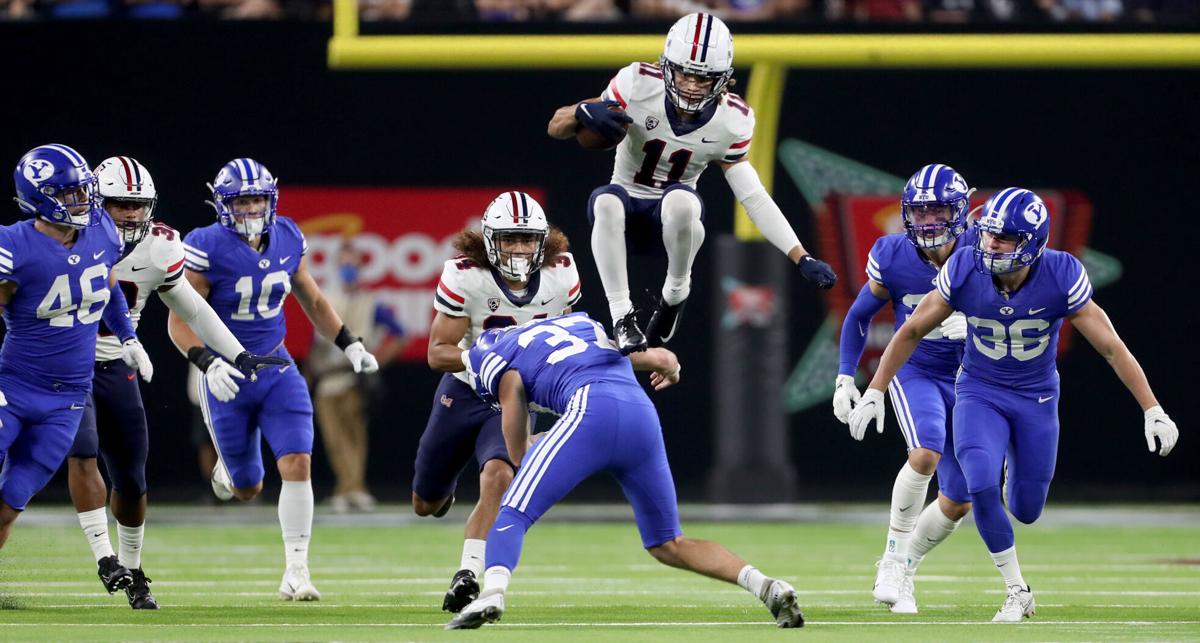
Arizona will be fine. Its rivalries with ASU, Colorado and Utah will remain intact. BYU is part of the Big 12 now too, and that’s a rivalry waiting to happen. The Cougars and Wildcats have faced each other 25 times in football, with each winning 12 games and tying once. Unlike most of the other moves in conference realignment, the geography makes sense as well.
The bigger, bolder Big 12 will be an absolutely hellacious — and fun — men’s basketball league. The final AP Top 25 of 2022-23 featured six members of the new Big 12: Houston (No. 2), Kansas (4), Arizona (8), Baylor (11), Kansas State (15) and TCU (22). Texas Tech finished in the Top 25 in four of the previous five seasons.
Even with its additions, the Big 12 represents a slight downgrade from the current Pac-12 in women’s basketball. But the league boasts Baylor, which has won three national championships over the past 20 years. And Arizona will have a chance to compete for the league title right away.
The Big 12 is losing the NCAA’s best softball program, Oklahoma, to the SEC. But Oklahoma State has made 15 appearances in the Women’s College World Series, tied for fifth most all time. Two of the teams ahead of the Cowgirls: Arizona (29) and ASU (19).

Arizona and Garen Caulfield faced Texas Tech in the State Farm College Baseball Showdown at Globe Life Field in February 2022. The Wildcats and Red Raiders are about to become conference foes in the Big 12.
Big 12 baseball also will be a battle royale. Three Big 12 schools — yeah, that sounds weird — have made at least 18 appearances in the College World Series: ASU (22), OSU (20) and Arizona (18).
Additionally, many more games in those non-revenue sports will air on ESPN, FOX or ESPN+ — a win for fans, especially those who couldn’t access the Pac-12 Networks, and a boon for recruiting.
The UA, led by Robbins, did what it had to do. It was left little choice. Some will fault Arizona for plunging the knife that much deeper into what remained of the Pac-12, but it’s misguided to lay blame at Robbins’ feet. If Larry Scott and his enablers hadn’t made numerous missteps; if his successor, Kliavkoff, hadn’t overplayed his hand; and if USC and UCLA hadn’t left for the Big Ten, none of this would have happened.
So now we’re left with a college sports landscape devoid of the Pac-12, an inconceivable concept five years ago but an inevitable outcome 13 months ago. I predicted as much. I wish I’d been wrong.
“Everyone feels the same way,” one person familiar with the various negotiations told me Friday morning as it was all going down. “Is there any way to save this? The answer is no, there isn’t.”
The Pac-12 began sinking when USC and UCLA announced they were abandoning ship. Arizona had to jump into a lifeboat before the conference struck the iceberg. It was the right thing to do.
But if that’s true, then why, in so many ways, does it also feel wrong?
Arizona football assistant coach Chuck Cecil, a legend in his playing days in Tucson, shares at the team's media day Aug. 1, 2023 the importance of the UA/ASU rivalry amid the college realignment conversation. Video by Brett Fera/Arizona Daily Star

