



Editor's note: This story was originally published in 2017.
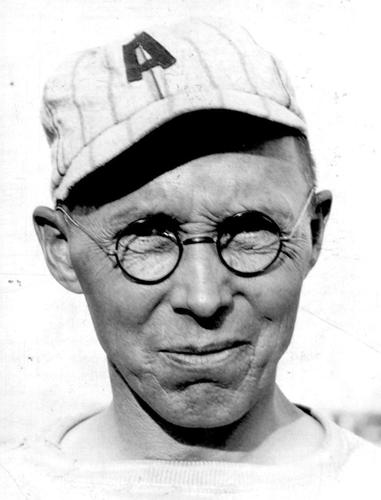
On a February afternoon in 1938, Arizona athletic director Pop McKale announced the school’s upcoming football schedule but strangely left the final week blank.
It didn’t include Arizona State, and McKale awkwardly declined to comment on ASU’s conspicuous absence.
Two months later, the Wildcats announced their final game would be against Montana.
Thus began four years of fear and loathing unmatched in the football rivalry between Arizona and ASU, a contempt that went beyond anything generated across the last 80 years, and, yes, that includes the long domination of Frank Kush and the Larry Smith-inspired “Streak” of 1982-90.
By comparison, the much-documented unfriendly relationship between Arizona coach Rich Rodriguez and ASU’s Todd Graham seems innocuous.
From 1938-41, Arizona refused to schedule the Sun Devils — then the Bulldogs — because the school pirated three top prospects from the UA’s campus six weeks before the 1937 opening game against, yep, ASU.
“Pop decided not to play them again until those three kids were gone,” Arizona’s 1940 all-conference halfback John Black told me in 1999. “He said ‘screw ‘em’ but in much harsher terms.”
It was a football conspiracy for the ages.
On a late August night in 1937, ASU student manager Tom Lillico devised a plan to get former Glendale High School all-state football players Walt Ruth, Wayne Pitts and Rex Hopper out of their UA dormitories and onto the ASU roster.
In 1979, Lillico told The Arizona Republic he got permission to borrow ASU coach Rudy Lavik’s car to carry out the most daring case of football poaching in Arizona history.
“They kidnapped those three kids,” Black said.
“Coach Lavik didn’t know anything about it,” Lillico said 40 years later. “We had to borrow his car because he was the only guy we knew who had a car that could make it to Tucson and back.”
Lillico drove to Tucson and returned overnight with Pitts, Ruth and Hopper. All were said to be unhappy because the UA had not yet promised them full scholarships. They spent the late summer working menial jobs in Tucson as arranged by A. Louis Slonaker, the UA’s “graduate manager,” which was essentially an assistant athletic director’s position.
Once UA coach Tex Oliver realized his three prized Glendale recruits were gone, Slonaker phoned ASU President Grady Gammage, who acknowledged he had met at his house with Pitts, Ruth and Hopper the day they arrived from Tucson.
Gammage guaranteed full scholarships and, according to a Republic story in 1979, told them “we’re going to have a football team up here.”
Dean Smith, author of the 1970s book “Eight Decades of Sun Devil Football,” wrote that kidnapping three UA players “was a chance to put the haughty Wildcats in their place.”
McKale and the Wildcats staged a scheduling boycott. They did not play ASU in 1938, 1939 and 1940, replacing them with Montana, Loyola Marymount and Marquette. ASU added Gonzaga, West Texas A&M and Whittier to its schedule.
The tension grew. Dwight “Red” Harkins, who owned College Theatre in Tempe — the same Harkins whose family now owns the Harkins Theatre chain — developed a five-minute movie trailer challenging Arizona to play ASU.
Harkins proposed a 1940 December bowl game, Arizona vs. ASU, matching the 7-2 Wildcats against 7-1-2 ASU. McKale declined, even though ASU was officially declared Border Conference champions, and the UA was promised $15,000, a small fortune in 1940.
By 1941, Ruth, Pitts and Hopper — all of whom played for coach UA alumnus Red Couch’s undefeated 1936 Glendale High powerhouse — were gone. McKale added ASU to the schedule for Oct. 25, 1941 in Tempe.
Payback. Revenge. Madness.
Arizona’s ambitions were never higher. McKale scheduled the school’s ’41 opener at Notre Dame and the Wildcats played the Irish tough, losing 38-7. They won the next three easily, by a combined 104-13.
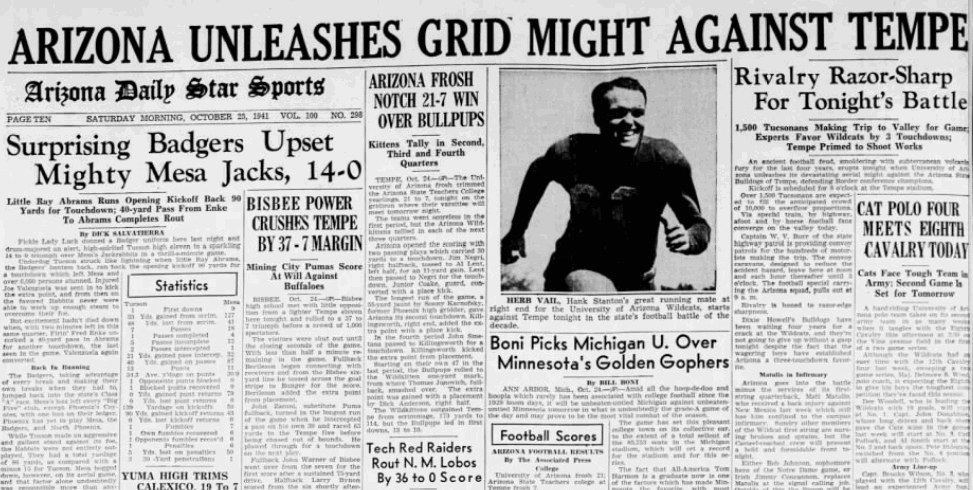
ASU entered the game 2-2-1, having lost to Texas A&M-Kingsville and West Texas A&M. All 12,000 tickets to Goodwin Stadium were sold in advance. The Star’s day-of-game advance story was provocative:
“An ancient feud, smoldering with subterranean volcanic fury for the last four years, erupts tonight when Arizona unleashes its devastating aerial might against the Arizona State Bulldogs of Tempe.”
UA fans were so eager to get to Tempe that they arranged for the highway patrol to convoy hundreds of vehicles on the old highway from Tucson to Phoenix, escorted by police starting at noon and beginning each half hour until 3 p.m.
The Star’s story continued: “The Wildcats have listened to insinuations and insults for four years about being afraid of Tempe. Tonight, they’re determined to a man to show no mercy.”
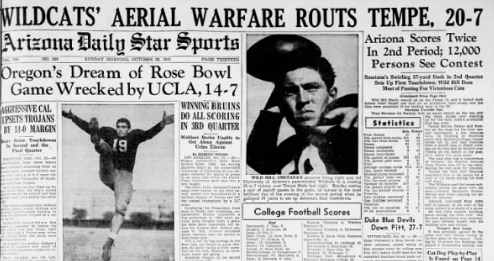
Arizona won 20-7.
The headline in the next day’s Star said:
WILDCAT ROOTERS
RUSH FIELD
TEAR DOWN
GOAL POSTS
Seeing the celebration, hundreds of ASU fans stormed onto the turf in attempt to regain possession of the goal posts. Police were powerless to stop the brawl. Someone at ASU turned off the lights.
“It was a wild, milling melee,” the Star reported.
An hour later, as hundreds of Tucsonans boarded a late train home, ASU fans threw rocks and fruit at the train, injuring several of UA fans.
Later in the week, the Star reported that “it was a corking good game” and blamed the post-game brawls on “hostilities fostered by hoodlums.”
As for the three players ASU kidnapped from the UA dormitory: Hopper played one season and left school. Ruth was a three-year starter. Pitts became an all-Border Conference halfback and later principal at an elementary school in Avondale.
In 1978, suffering from heart disease, Pitts scheduled a quadruple bypass. The man who never played a game of football for or against Arizona, had his life-saving surgery at the UA’s University Medical Center.
Every UA/ASU football game since 1975:
Photos: Every U of A vs. ASU football game since 1975
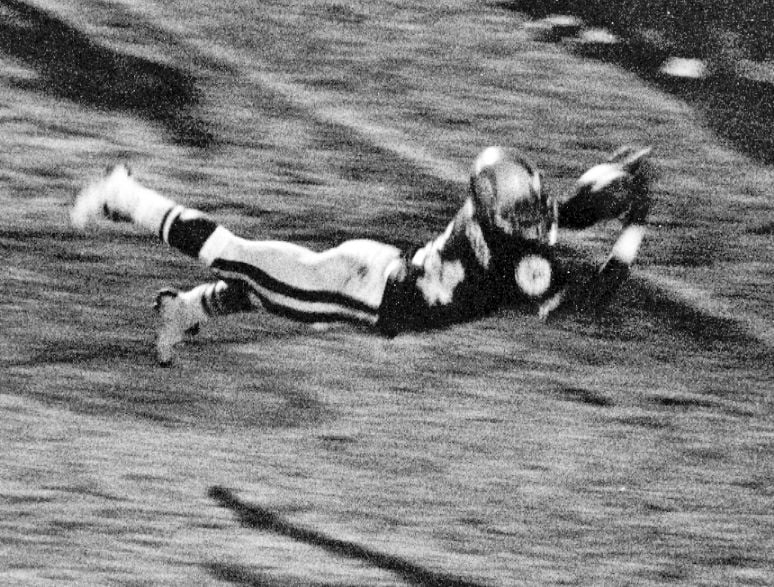
1975: ASU 24, UA 21 – "The Catch" by Arizona State University receiver John Jefferson during the 1975 ASU/UA football game. Courtesy ASU

1976: ASU 27, UA 10 – This ASU receiver missed the catch, but ASU won the game against UA on Nov. 27, 1976. Arizona Daily Star
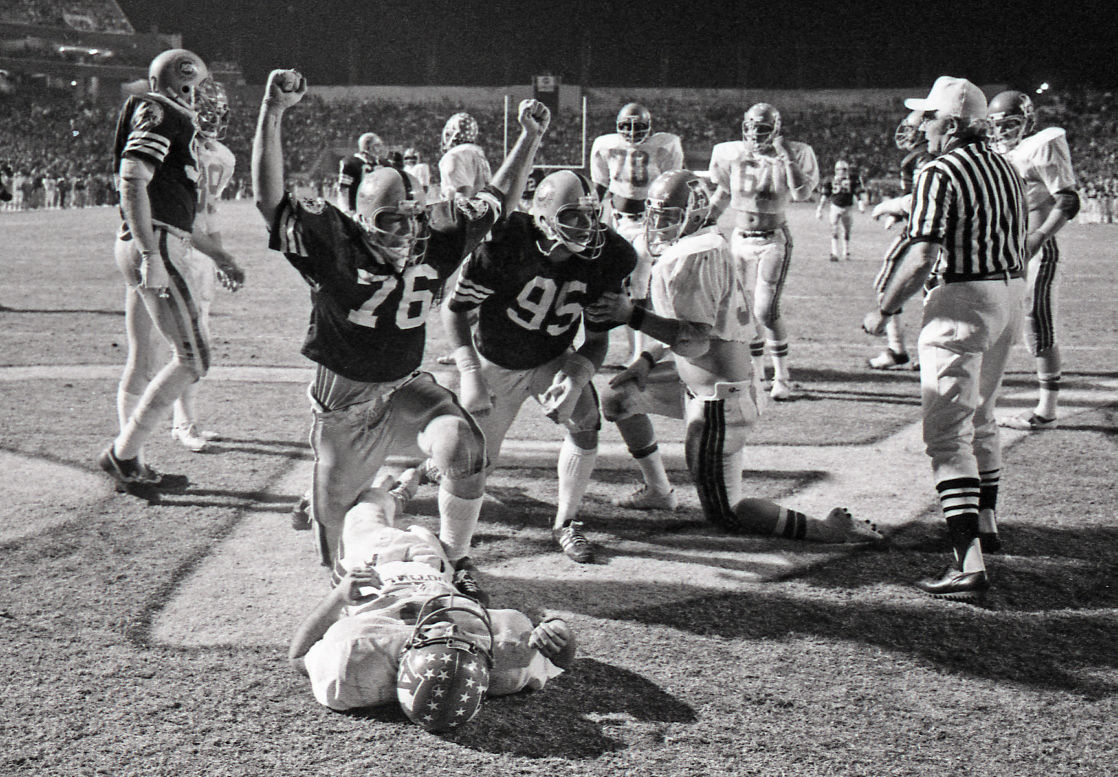
1977: ASU 23, UA 7 – Arizona State’s Bob Pfister raises his arms over a downed University of Arizona quarterback Marc Lunsford after ASU forced a 2-point safety on Nov. 26, 1977 in Tempe, Ariz. ASU won, 23-7. P.K. Weis / Tucson Citizen

1978: ASU 18, UA 17 – Arizona State quarterback Mark Malone is sacked by an University of Arizona defender in Arizona Stadium on Nov. 25, 1978. H. Darr. Beiser / Tucson Citizen

1979: UA 27, ASU 24 – Arizona Wildcats players celebrate after edging Arizona State, 27-24, in Tempe on Nov. 24, 1979. H. Darr Beiser / Tucson Citizen
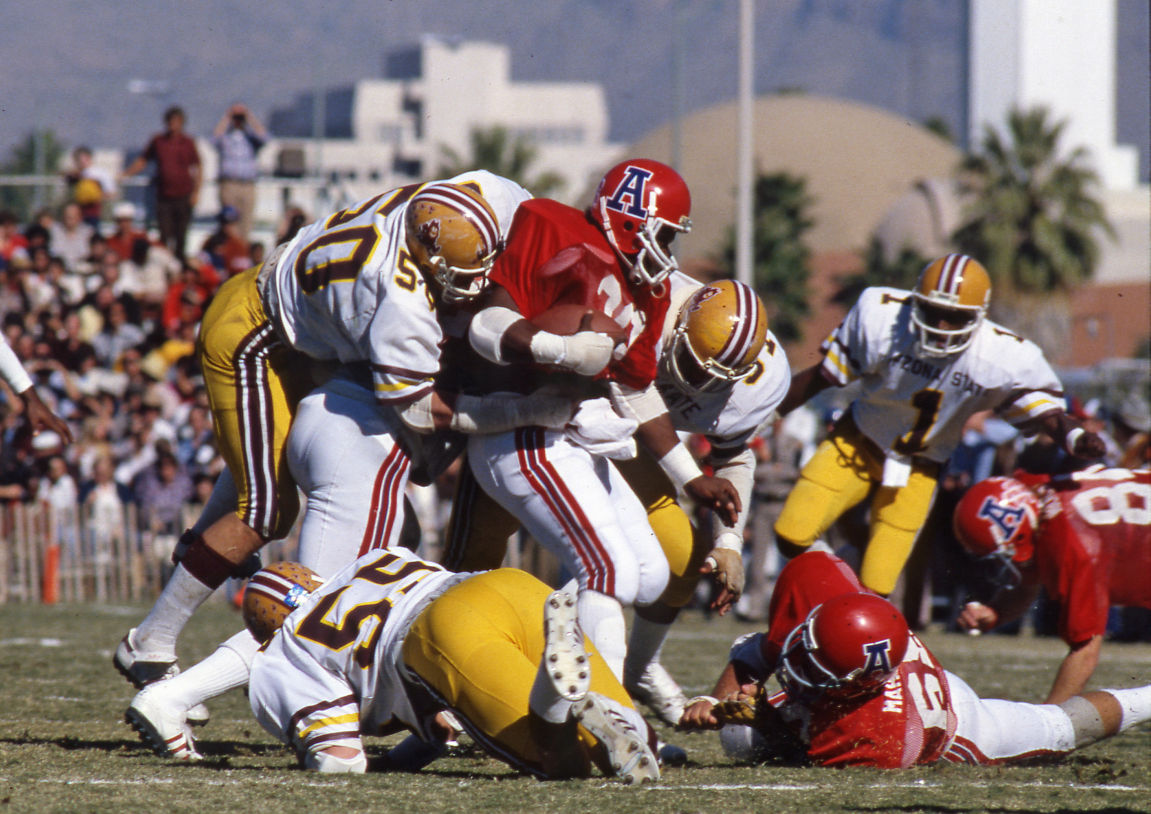
1980: ASU 44, UA 7 – UA fullback Courtney Griffin is wrapped up by the ASU defense on Nov. 29, 1980 in Tucson, when the north end zone was still wide open. P.K. Weis / Tucson Citizen

1981: ASU 24, UA 13 – The celebration was short-lived for the Wildcats, since the Sun Devils pulled off a victory on at wet, muddy day on Nov. 28, 1981. Peter Weinberger / Tucson Citizen

1982: UA 28, ASU 18 – University of Arizona quarterback Tom Tunnicliffe looks to pass during the 1982 ASU/UA football game. Tucson Citizen
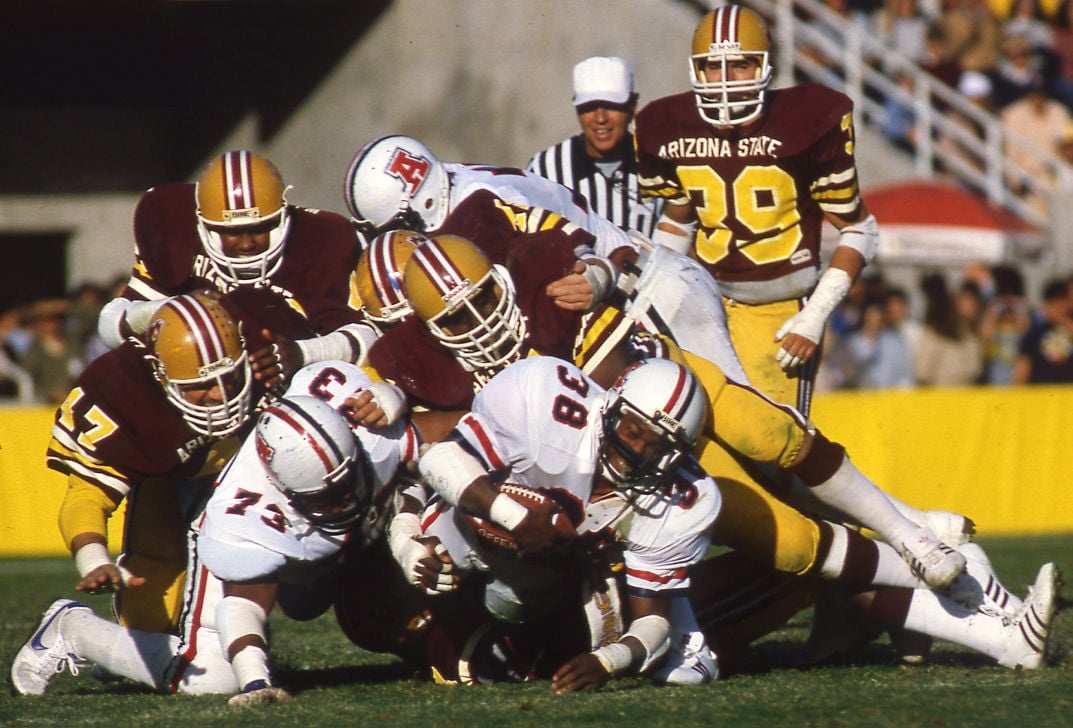
1983: UA 17, ASU 15 – The Arizona offense stretches for yardage against ASU on Nov. 26, 1983 in Tempe. Glenn Capers / Tucson Citizen

1984: UA 16, ASU 10 – The goal posts came down at Arizona Stadium on Nov. 24, 1984, as Arizona edged ASU. David Schreiber / Tucson Citizen

1985: UA 16, ASU 13 – Max Zendejas of UA leaps into the air after booting the game-winning field goal against ASU on Nov. 23, 1985 in Tempe. Warren Faidley / Tucson Citizen

1986: UA 34, ASU 17 – UA's Chuck Cecil #6 races out of the ASU end zone enroute to a 106-yard interception for a touchdown in the fourth quarter on Nov. 22, 1986. Photo by Bruce McClelland / Arizona Daily Star

1987: ASU 24, UA 24 – An Arizona running back gets wrapped up by ASU defenders on Nov. 28, 1987. Warren Faidley / Tucson Citizen
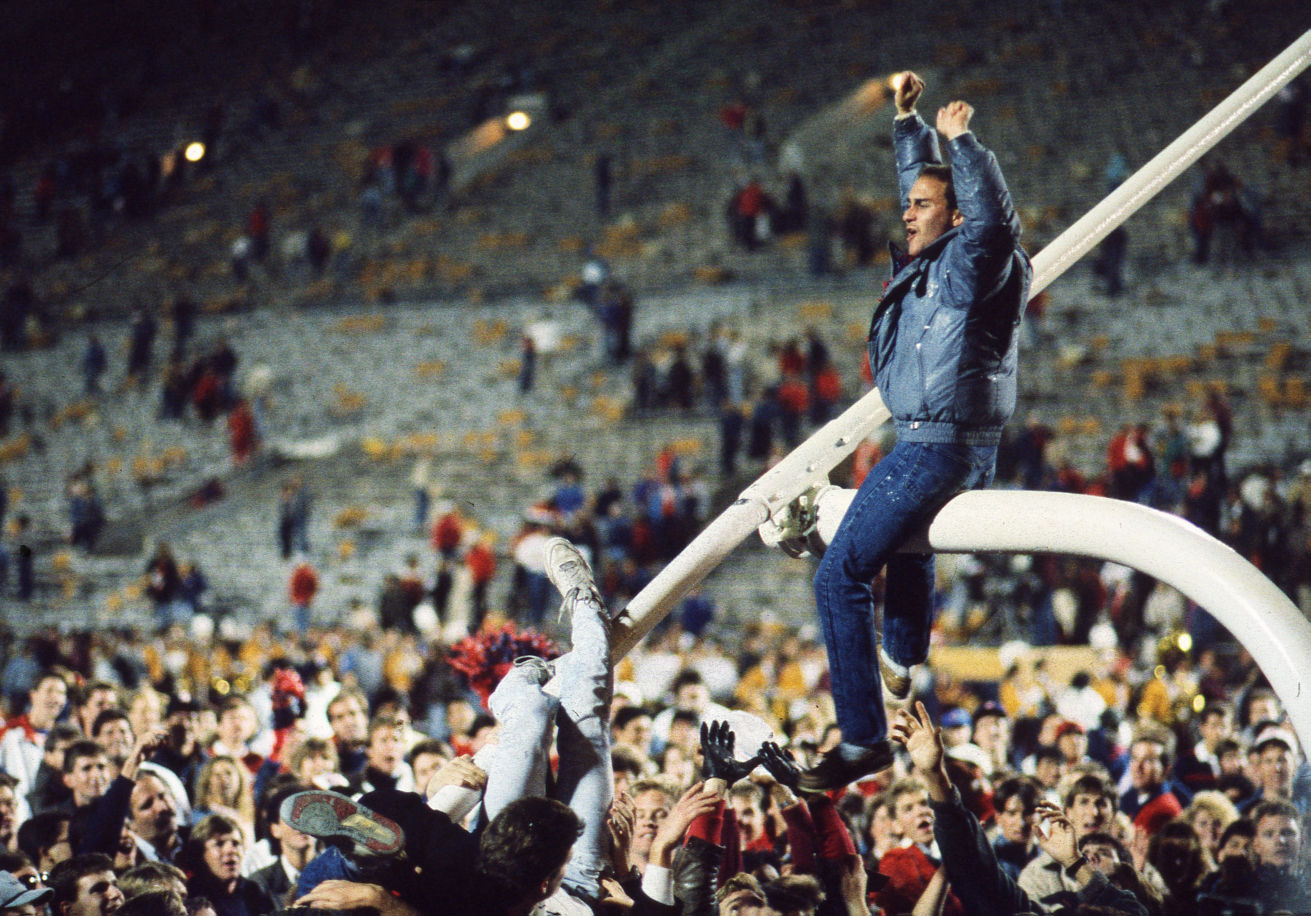
1988: UA 28, ASU 18 – Fans toppled the goal posts after UA beat ASU in Tucson on Nov. 26, 1988. Rick Wiley / Tucson Citizen

1989: UA 28, ASU 10 – UA’s Reggie Johnson forces ASU quarterback Paul Justin to fumble, which set up a UA score on Nov. 25, 1989 in Tempe. Rick Wiley / Tucson Citizen

1990: UA 21, ASU 17 – ASU’s Adam Brass dips his head after UA scored on a bad snap on Nov. 24, 1990 in Tucson. Rick Wiley / Tucson Citizen
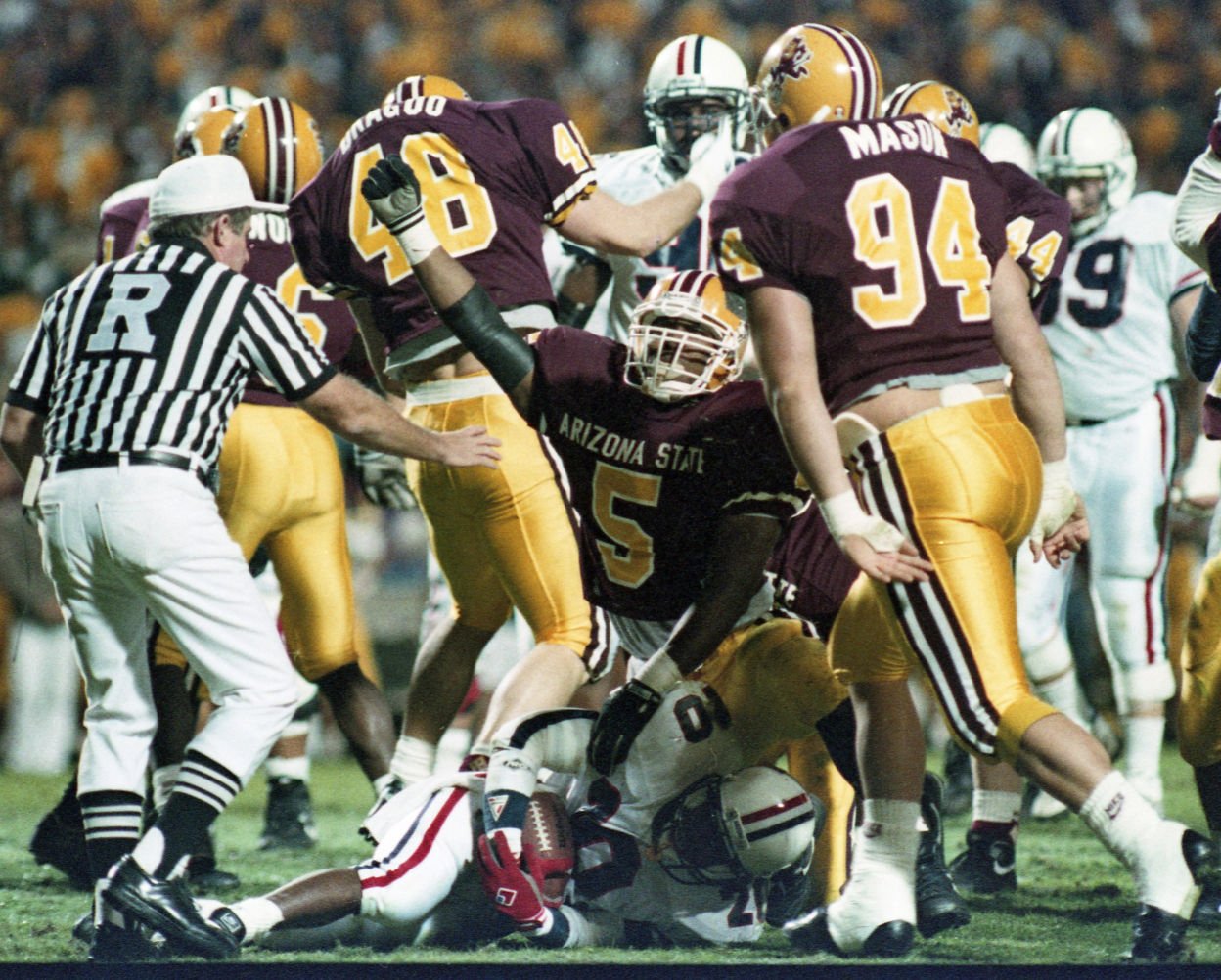
1991: ASU 37, UA 14 – ASU’s Michael Williams defiantly downs UA running back Ontiwaun Carter on Nov. 23, 1991. Rick Wiley / Tucson Citizen

1993: UA 34, ASU 20 – ASU quarterback Jake Plummer on the turf after he was downed by UA’s defense, including Tedy Bruschi, on Nov. 26, 1993 in Tempe. Rick Wiley / Tucson Citizen
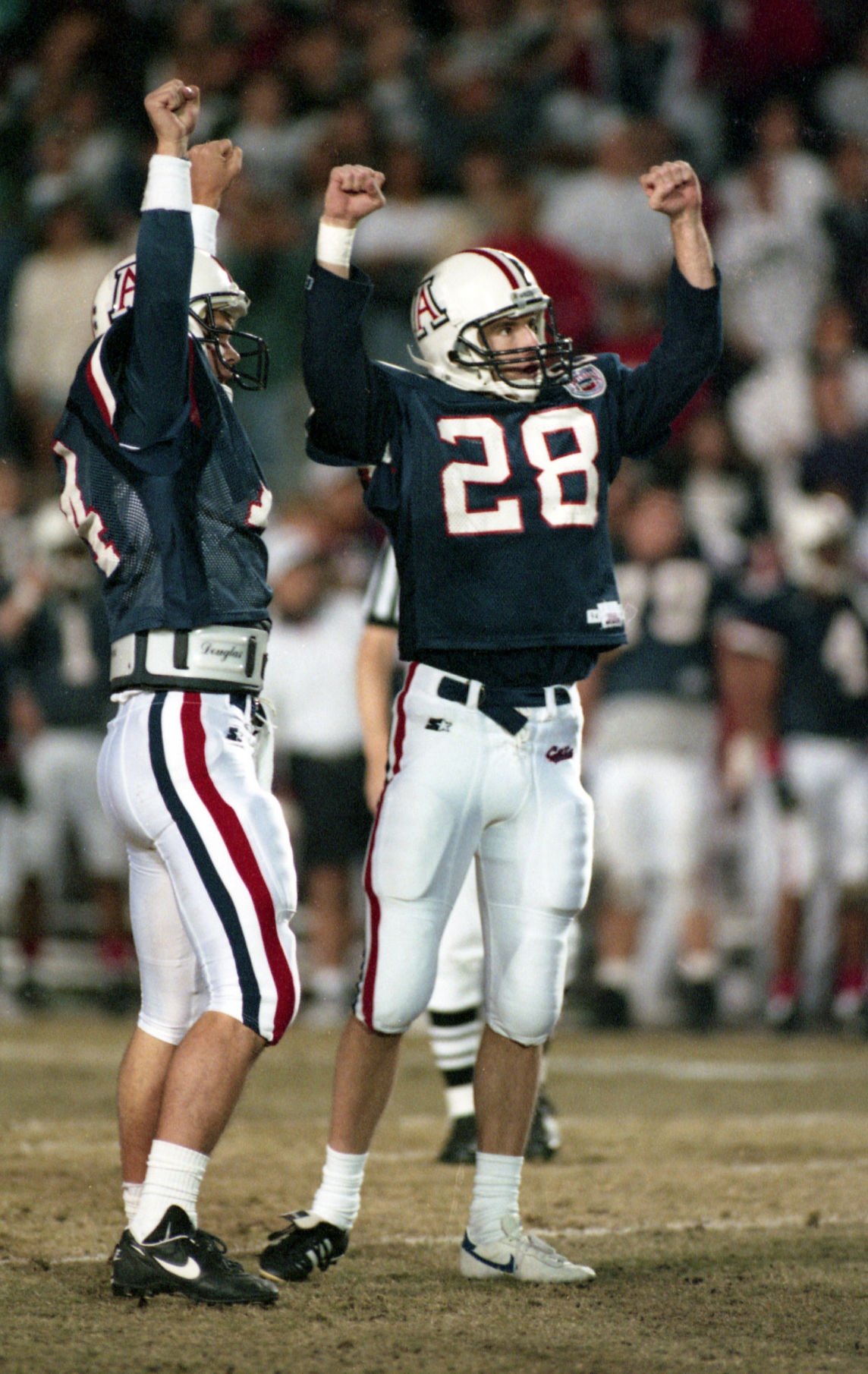
1994: UA 28, ASU 27 – UA kicker Steve McLaughlin, right, and holder Ryan Hesson watch the ball go through the uprights during the Arizona State vs. Arizona football game on Nov. 25, 1994. Photo by Rick Wiley / Tucson Citizen

1995: UA 31, ASU 28 – ASU head coach Bruce Snyder greets UA head coach Dick Tomey after the game during the 1995 Arizona vs. Arizona State football game on Nov. 24, 1995. Photo by Bruce McClelland / Arizona Daily Star

1996: ASU 56, UA 14 – ASU's Jake Plummer got his revenge, powering the Sun Devils to victory on Nov. 23, 1996 and a trip to the Rose Bowl. Brian Winter / Arizona Daily Star

1997: UA 28, ASU 16 – UA Tight End Mike Lucky #88, catches a pass in front of ASU's Damien Richardson #39 on Nov. 28, 1997. Jeffry Scott / Arizona Daily Star

1998: UA 50, ASU 42 – ASU QB Ryan Kealy #8 is sacked by UA's Mike Robertson #55 on Nov. 27, 1998. UA went on to finish the season with a 11-1 record, the best the school has ever had. Benjie Sanders / Arizona Daily Star

1999: ASU 42, UA 27 – UA's Dennis Northcutt is trying to get away from ASU defender Adam Archuleta #40, who dragged down Northcutt for a loss on Nov. 27, 1999. Benjie Sanders / Arizona Daily Star

2000: ASU 30, UA 17 – UA football coach Dick Tomey walks off the field at Arizona Stadium after congratulating ASU coach Bruce Snyder on Nov. 24, 2000. Tomey resigned after the game.
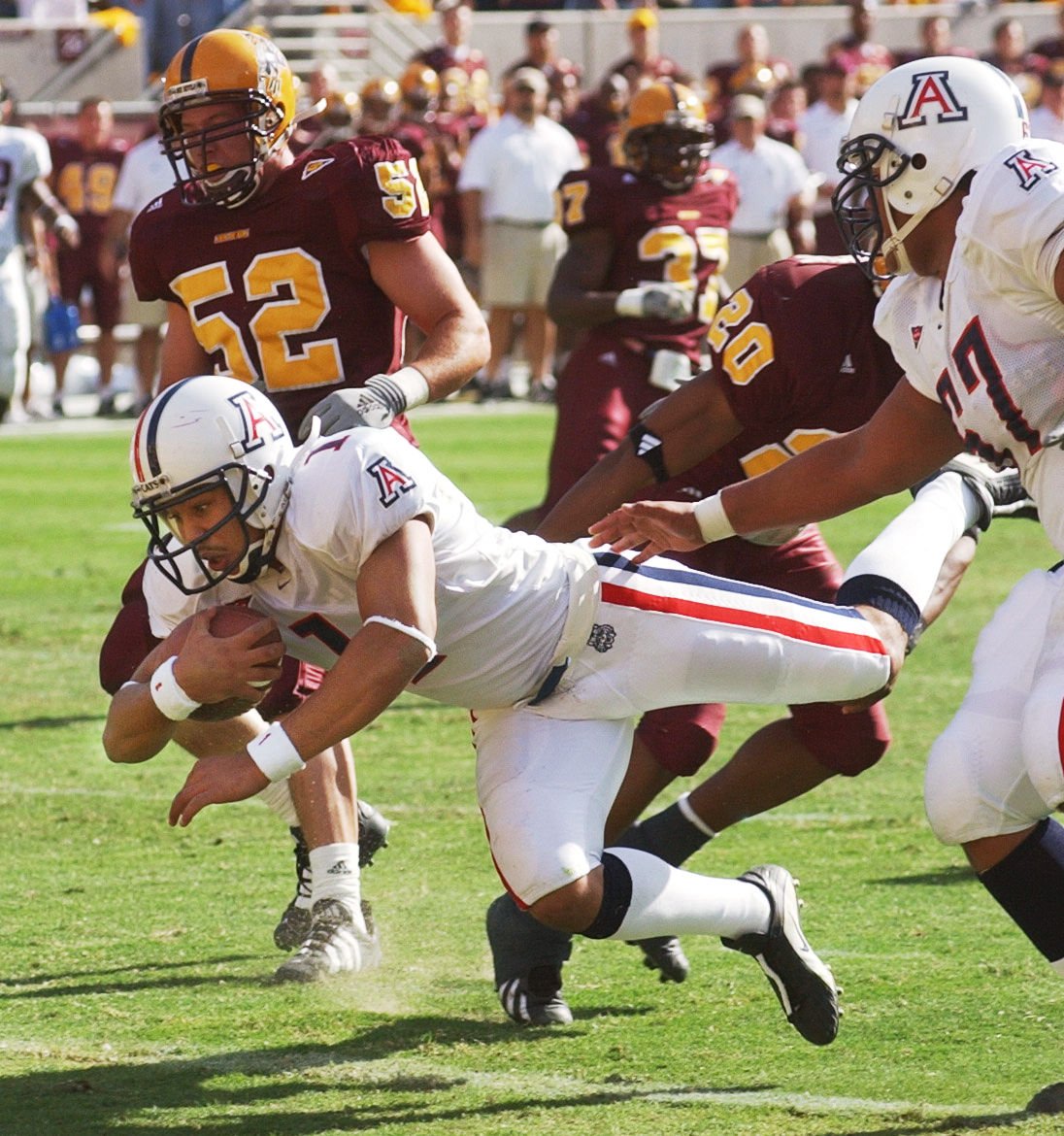
2001: UA 34, ASU 21 – Arizona's Bobby Wade, a Phoenix native, scores the first touchdown of the game on Nov. 24, 2001. His 11 catches and 157 yards were career bests for the junior. David Sanders / Arizona Daily Star

2002: ASU 34, UA 20 – ASU tailback Mike Williams dives into the end zone for one of his three second-half touchdowns Nov. 29, 2002 against Arizona. Aaron J. Latham / Arizona Daily Star

2003: ASU 28, UA 7 – Arizona State's Chris McKenzie, left, holds on to Arizona wide receiver Ricky Williams after Williams caught a pass from Kris Heavner on Nov. 28, 2003, in Tempe. (AP Photo/Roy Dabner)

2004: UA 34, ASU 27 – Arizona's Steve Fleming (87) out runs Arizona State's Chad Green (21) for a second quarter touch down. Xavier Gallegos / Tucson Citizen

2005: ASU 23, UA 20 – Off and running: ASU's Terry Richardson sprints down the sidelines on the way to a 71-yard punt return for a touchdown against Arizona on Nov. 26, 2005, that tied the game at 20. David Sanders / Arizona Daily Star

2006: ASU 28, UA 7 – Arizona State wide receiver Chris McGaha (13) and Jamaal Lewis celebrate McGaha's touchdown at Arizona Stadium on Nov. 25, 2006. Greg Bryan / Arizona Daily Star
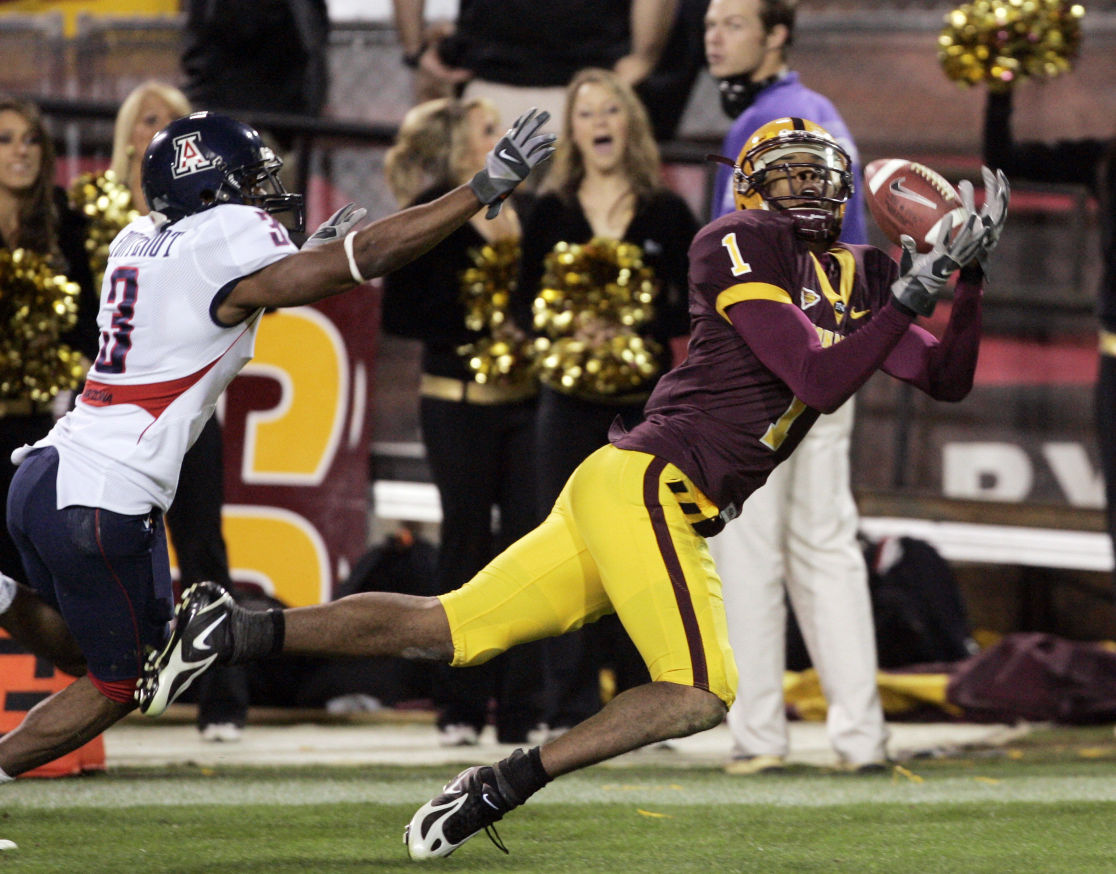
2007: ASU 20, UA 17 – ASU Receiver Michael Jones hauls in a TD pass in front of UA's Wilrey Fontenot in the fourth quarter in Tempe on Dec. 1, 2007. David Sanders / Arizona Daily Star

2008: UA 31, ASU 10 – Arizona's quarterback Willie Tuitama is carried off the field by the crowd after engineering a 31-10 win against ASU at in Tucson on Dec. 6, 2008. Kelly Presnell / Arizona Daily Star
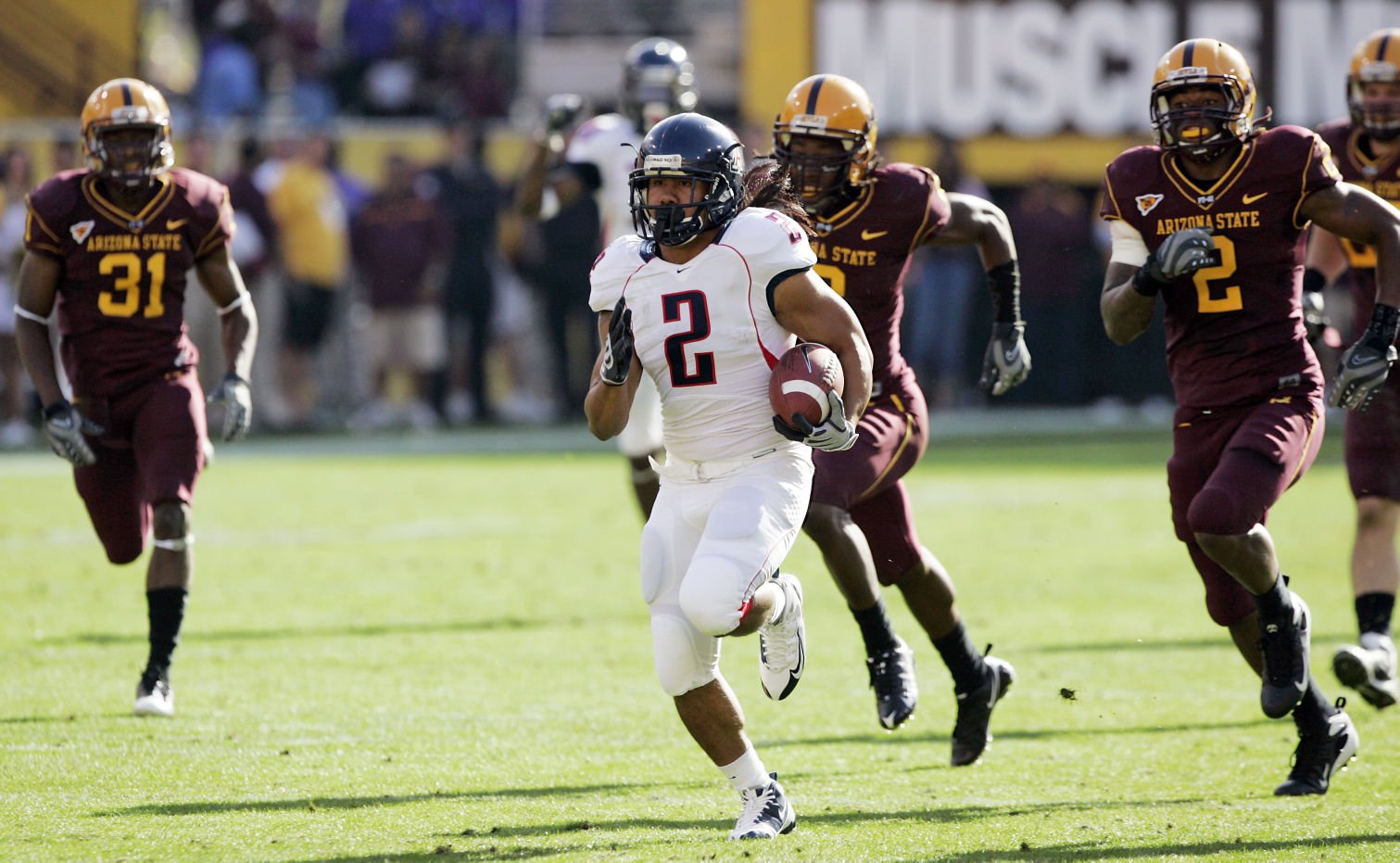
2009: UA 20, ASU 17 – University of Arizona running back Keola Antolin breaks downfield for Arizona's first score against ASU on Nov. 28, 2009 in Tempe. Dean Knuth / Arizona Daily Star
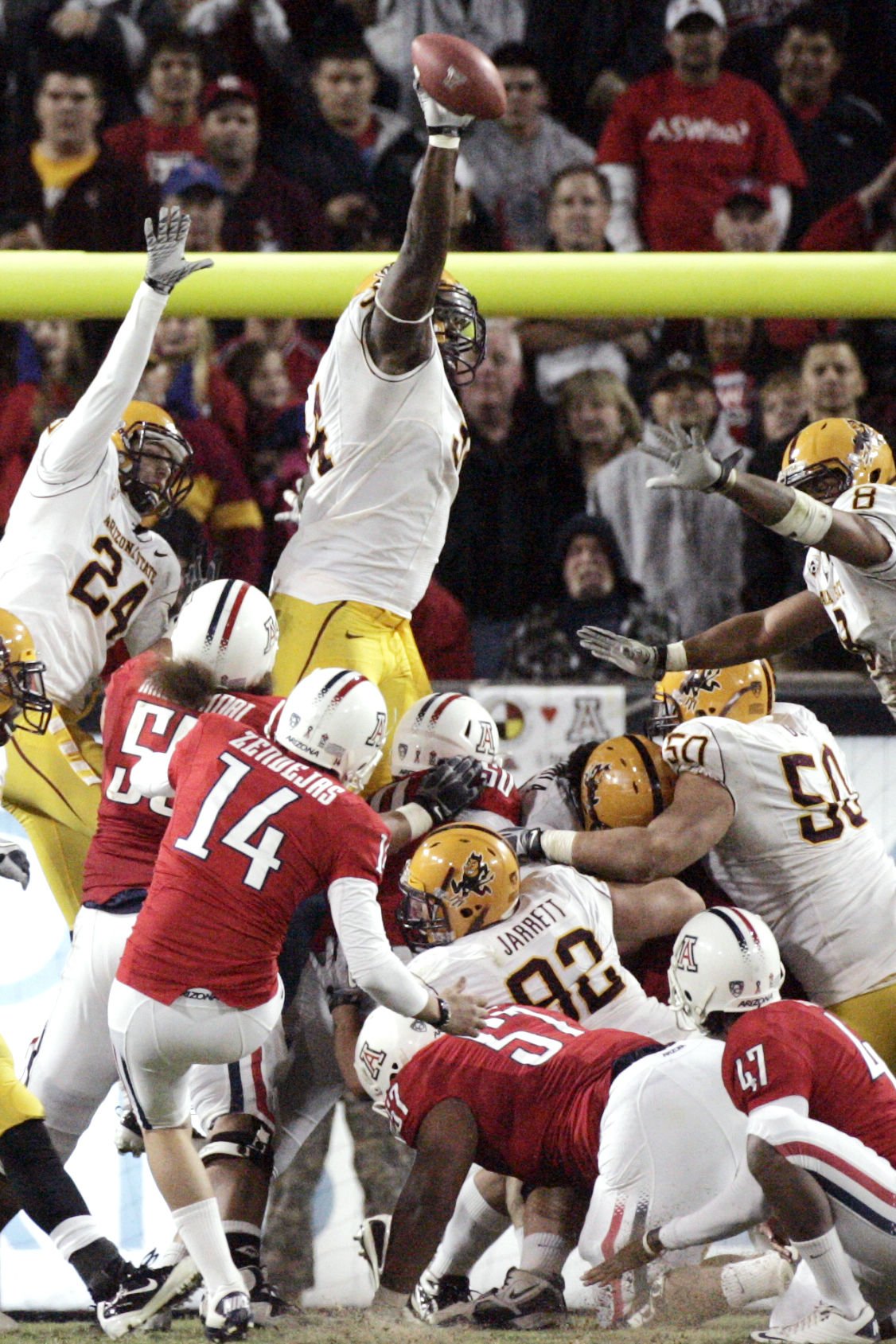
2010: ASU 30, UA 29 2OT – With the scored tied 20-20, University of Arizona's Alex Zendejas has his game winning extra point blocked by ASU's James Brooks at Arizona Stadium on December 2, 2010. Arizona lost in double overtime 30-29. Dean Knuth / Arizona Daily Star

2011: UA 31, ASU 27 – After Mike Stoops was fired, interim coach Tim Kish and quarterback Nick Foles carried Arizona through the end of the season, culminating in a victory over ASU in Tempe on Nov. 19, 2011. David Sanders / Arizona Daily Star

2012: ASU 41, UA 34 – Arizona State's Marion Grice leaps over a teammate on Nov. 23, 2012, at Arizona Stadium.

2013: ASU 58, UA 21 – Arizona head coach Rich Rodriguez looks on none too pleased during the fourth quarter on Nov. 30, 2013 in Tempe.

2014: UA 42, ASU 35 – Arizona wide receiver Samajie Grant strides into the end zone on a 69-yard touchdown pass on Nov. 28, 2014

2015: ASU 52, UA 37 – Arizona State Sun Devil running back Demario Richard (4) runs into a swarm of Arizona Wildcats defenders during the fourth quarter of the Territorial Cup at Sun Devil Stadium on Nov. 21.

2016: UA 56, ASU 35 – Arizona Wildcats cornerback DaVonte' Neal (19) celebrates his interception during the first quarter of the Arizona State University Sun Devils vs. University of Arizona Wildcats in the Territorial Cup college football game on Nov. 25 at Arizona Stadium. The Wildcats redeemed a dismal season, beating the Sun Devils, 56-35.

2017: ASU 42, Arizona 30 — Arizona State Sun Devils players celebrate with the Territorial Cup after the University of Arizona Wildcats vs. Arizona State University Sun Devils in the Territorial Cup college football game on Nov. 25.

2018: ASU 41, Arizona 40 — Arizona State Sun Devils offensive lineman Steven Miller (71) rams the pitchfork into the Arizona Wildcats end zone after the Territorial Cup on Nov. 24 at Arizona Stadium in Tucson. Arizona State rallied in the fourth quarter for the win.

2019: ASU 24, UA 14 – Arizona Wildcats wide receiver Jamarye Joiner (10) jukes Arizona State defensive back Evan Fields (4) as he moves the ball up field for a touchdown during the Territorial Cup at Sun Devil Stadium in Tempe on Nov. 30.

Arizona’s bench watches the second quarter unfold in the Wildcats’ 70-7 loss against Arizona State at Arizona Stadium on Dec. 11, 2020. Head coach Kevin Sumlin was fired afterward.

2021: ASU 38, UA 15: Arizona Wildcats safety Jaxen Turner brings down Arizona State wide receiver Ricky Pearsall after a midair catch in the third quarter at Sun Devil Stadium. The loss ended a disappointing first season for new head coach Jedd Fisch at 1-11. But the slow rebuilding process was showing fruit, with better morale and a Homecoming win over Cal.

