


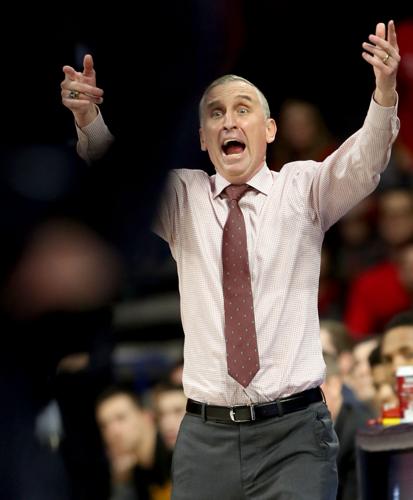

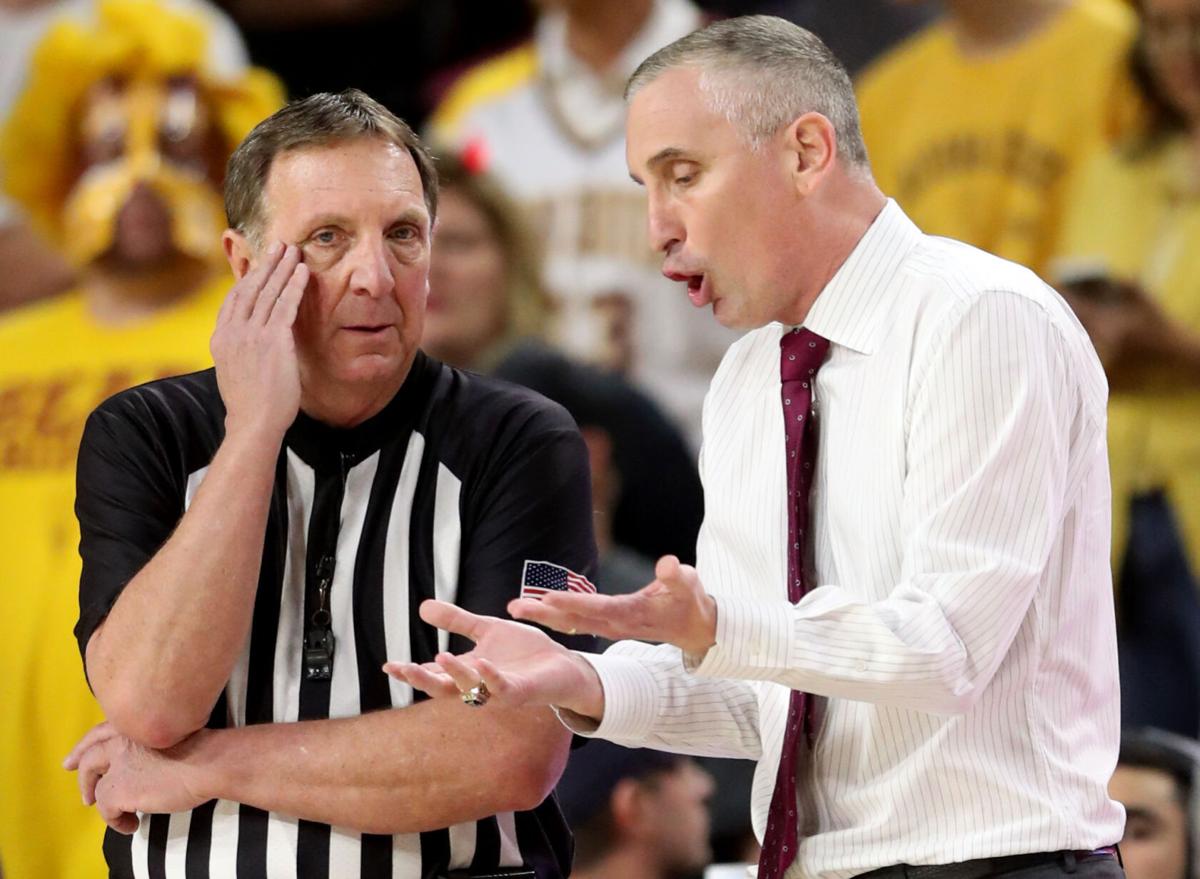
Bobby Hurley brings four deeply needed elements to Pac-12 basketball: Anticipation. Identity. Emotion. Rivalry.
For too many years, Pac-12 basketball has been about as genteel as golf or tennis. Hurley was in the process of changing much of that.
That’s what stings so much about Arizona State’s spiritless start to the 2020-21 season. In a league desperate for anticipation, emotion, identity and rivalry, the Sun Devils have all but vacated the premises.
The timing couldn’t be worse. In what was supposed to be a long-overdue Year of the Sun Devils, ASU has been intercepted by COVID-19 issues, made incomplete more than any team in the conference.
The Sun Devils team that lost to hapless Oregon State on Saturday at Gill Coliseum is not what anyone could have expected when ASU opened the year ranked No. 18 in the AP poll and was chosen to finish No. 2 in the Pac-12, which had happened once in 35 years.
Most fans of Arizona basketball won’t like this because most UA fans don’t like Hurley. And that’s why he is so important to the Pac-12. He brings fear and loathing (in a good way). He brings what so many anonymous coaches through the league cannot bring — tension and attention.
The so-called “rivalries” in Pac-12 basketball are not really rivalries, not in the true sense of the word. Over the last 25 seasons, the league’s neighborhood rivalries have been so lopsided that they often draw a shrug. Here’s the win-loss standings of that period:
• Oregon 39, Oregon State 13
• UCLA 30, USC 20
• Washington 33, WSU 20
• Stanford 34, Cal 19
• Arizona 31, ASU 13
No wonder the most anticipated rivalries of those 25 years have strayed away from neighborhood boundaries. The league’s biggest rivalries have been UA-UCLA, UA-Stanford and UA-Oregon.
That’s why the Pac-12 needs someone like Bobby Hurley to shake things up. Hurley has a larger game-night presence than any coach in the league. The league needs Arizona-ASU to become a national game that ESPN can’t resist, and Hurley is the one man who can make it happen.
He is 3-3 against Arizona the last three seasons. Every game has been sold out.
It’s my contention that Hurley is one of the three most potent coaching hires of Pac-12 basketball over the last 40 years. He is one of the few non-vanilla head coaches that have seemed to overpopulate this league forever.

Bobby Hurley brought a fire and personality with him to Tempe when he was hired away from Buffalo six years ago.
The only two coaches hired by the Pac-12 with a higher national presence were Arizona’s Lute Olson, a Final Four coach at Iowa, and ASU’s Bill Frieder, pirated away from Michigan where three of his last four Wolverine teams were ranked Nos. 2, 5 and 10 in the final AP poll.
Frieder needed six years to rebuild ASU basketball. In Year 6, the Sun Devils swept Arizona, went to the Sweet 16 and finished third in the Pac-10. The UA-ASU rivalry seemed to be building toward a Duke-North Carolina or Kentucky-Louisville platform, but then it all came apart when one of Frieder’s leading players, Stevin Smith, was convicted in a point-shaving scandal.
Frieder was fired. The Sun Devils have since won a mere two NCAA Tournament games, finishing in the Top 25 just once. That’s an empty quarter-century.
That all changed six years ago when ASU athletic director Ray Anderson shrewdly hired Hurley away from the growing program at Buffalo. In one transaction, the Sun Devils were able to put one of the most recognizable names/faces in NCAA basketball history into a league whose idea of hiring a high-profile basketball coach was Tim Floyd or Steve Alford.
This wasn’t just another guy.
This is Hurley’s sixth season at ASU, which seems to be the most reasonable frame for building a Top 25 program and sustaining it.
Olson needed six seasons to build Arizona into back-to-back years of being ranked No. 1.
In Year 6, ASU’s most successful basketball coach, Ned Wulk, went 26-3 and was ranked No. 4 in the Final AP poll, 1963.
UCLA’s Jim Harrick went 26-7 in his sixth season, then took it a step beyond a year later, winning the national title, 1995. Just as Harrick had reached equal status with Arizona, he was undone by a feud with his athletic director and alleged fake expense account controversy.
Off-court issues eliminated Frieder and Harrick just when they were helping to put a higher profile on Pac-12 basketball.
Oregon’s Dana Altman went 31-7 in his sixth season, 2016.. He broke through to a Final Four a year later. But Altman isn’t a personality. He doesn’t draw eyes to an ESPN telecast. He’s a capable coach who has effectively worked Nike’s resources and brand to surpass Arizona as the league’s No. 1 program.
But when he walks into the gym heads don’t turn, emotions don’t rise.
Hurley seemed to be on the same path as Olson, Wulk, Harrick and Altman until COVID-19 hijacked ASU’s season. At least that’s least how it looks today.
When Arizona plays at ASU on Thursday, there won’t be much of a home-court advantage, which is regrettable. Since being hired, Hurley has ignited such a climb in community interest that attendance to the UA-ASU game at Desert Financial Arena has increased, in order, from 8,044 to 9,494 to 13,693 to 14,731 and to 13,500.
I have prayed to the basketball gods for years that Arizona and ASU could someday finish 1-2 or 2-1 in the Pac-12 and become the showpiece of Western college basketball. The only rivals in the league to ever pull that off were USC and UCLA, and not since 1991.
It seems inevitable that Hurley will someday return to Duke and replace Mike Krzyzewski. That’s why there is so much urgency to this UA-ASU series. The anticipation of each game hasn’t been this intense since McKale Center opened in the early ’70s.
Instead of UA fans being hopeful Hurley bids a quick goodbye and returns to Duke, the best interests of this growing rivalry would be to say “Bring it, Bobby.”



