



Tucson’s professional sports scene has been raided by both Cowboys and Indians, infested by Sidewinders, Gila Monsters, Toros and Roadrunners, blessed with Padres and soaked by a Monsoon.
There have been Fireballs and a Flame. The Scorch, whatever that is, burned fast — and then burned out.
That Tucson has such a long list of names is what makes Thursday’s announcement of its new Indoor Football League team — the Sugar Skulls — so unique, with bonus points for local flair.
Heck, it beats the Scorpions or any of the number of Southwestern clichés suggested over the last month.
“It was your typical animal, the weather, the desert, the wild, wild West,” team founder and co-owner Kevin Guy said Thursday, when the name was unveiled at the Mercado San Agustin Annex just west of downtown.
“We wanted something unique. We wanted to honor Tucson and the people of Tucson because we really felt like it was part of the culture.”

Leah Rhey of Sahuarita suggested Sugar Skulls as part of a name-the-team contest. She won two season tickets.
Sahuarita’s Leah Rhey suggested Sugar Skulls as part of the name-the-team contest, beating out more than 1,000 other entries — including Tacos and Chimichangas. Rhey has long loved Tucson’s All Souls Procession, and thought the event’s most iconic logo — the sugar skull — would look good on a helmet. For her creativity, she won two season tickets to the team’s inaugural season. The Sugar Skulls open their season at Tucson Arena in March. The eight-on-eight indoor game is played on artificial turf using the same dimensions as a hockey rink. The Sugar Skulls will share the arena with the Tucson Roadrunners of the American Hockey League.
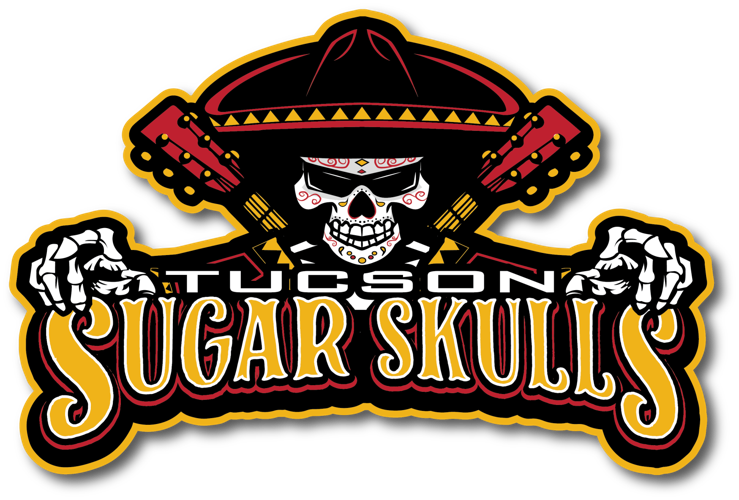
The team’s colors are black and gold — “Mexican marigold,” Guy corrected — with maroon accents. The primary logo depicts a sunglasses-wearing skeleton, a sombrero on his head, wrapping his bony hands around the team’s wordmark.
A secondary logo depicts a skull flanked by guitar necks; it’s reminiscent of the 1995 movie “Desperado,” a name the team also reportedly considered, and bears a resemblance to the logo used by the old AFL’s New Orleans VooDoo. (There may be a reason for that; Sugar Skulls executive director Mike Feder used to run the VooDoo). The Sugar Skulls will wear that logo on their helmets.
The team has launched a website, tucsonsugarskulls.com, and is also on Twitter, Facebook and Instagram. The Sugar Skulls have been taking season ticket deposits since Tucson was granted an expansion franchise last month. Marcus Coleman, former defensive coordinator of the Iowa Barnstomers, was recently named the team’s first-ever coach.
Tucson’s addition to the IFL is part of what the league hopes is a gradual Western expansion. The Sugar Skulls have a natural rival in the Arizona Rattlers, the Phoenix-based team that has dominated arena football for decades. Complicating and intensifying matters is the franchises’ shared lineage. Guy is the Rattlers’ longtime coach, and plans on staying with the Phoenix team for at least a few more seasons. His wife, Cathy, is running the Tucson franchise.
Sugar skulls, or calaveras, have been ubiquitous in Mexico since the 18th century. Sugar skulls featuring the names of departed relatives are traditionally placed as part of a family’s ofrenda — offering — during the Day of the Dead. Locally, it’s most connected to the procession. Every November, tens of thousands of Tucsonans paint their faces, dress up and parade through the Barrio Hollywood and Menlo Park neighborhoods to honor their deceased loved ones.
By any name, sugar skulls are identifiable to most Tucsonans. And for those who might be confused by the sweet-sounding name?
“That’s what Google’s for. You can Google it,” Guy said with a smile. “I don’t think we’re going to have to explain it to anyone in Tucson. … It’s all over the place in Tucson.”
Feder, a longtime Tucsonan and veteran sports executive, said he wants indoor football games to be “a reflection of the sugar skulls tradition of celebrations, honor and festivity.”
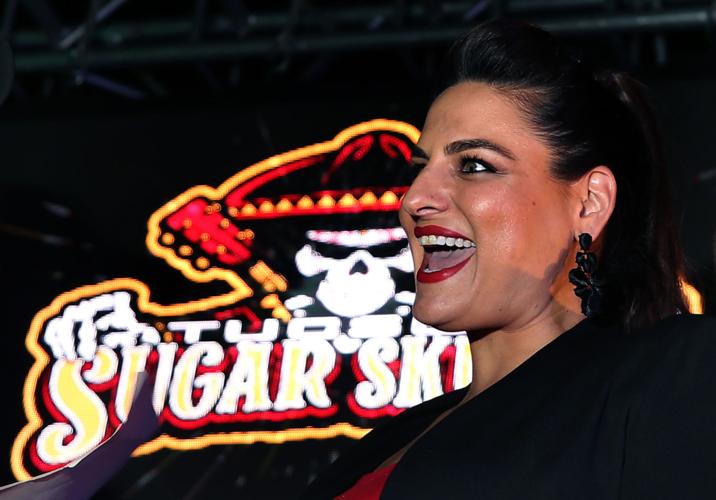
Thursday’s fiesta was a good start: The announcement came complete with stilt-walkers wearing white facepaint, fire machines and, of course, newly minted merchandise.
Sugar skulls are “a tradition that dates back hundreds of years,” Feder said, “and we will treat the name with the dignity and the respect that it deserves while hopefully establishing some new traditions.”

