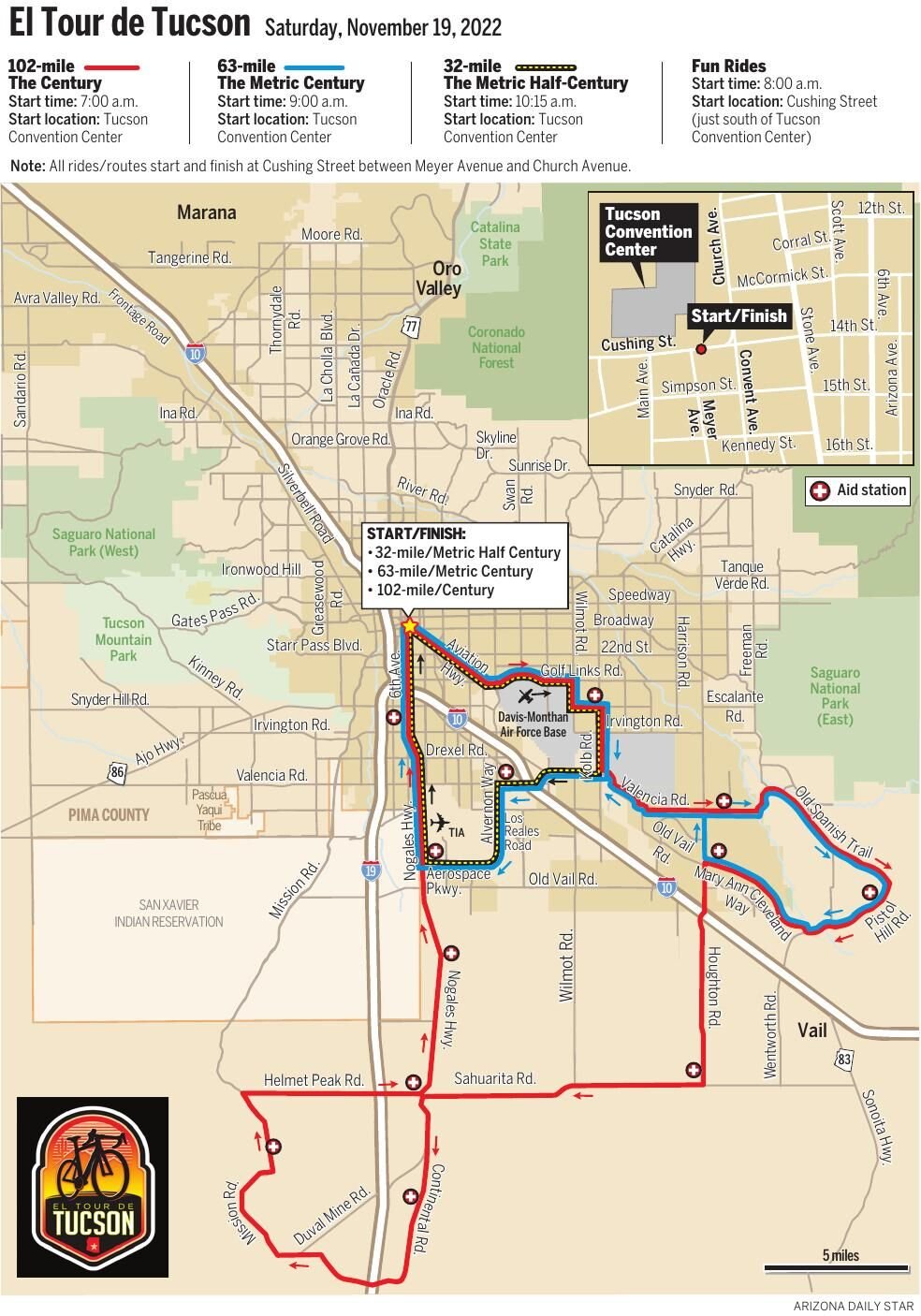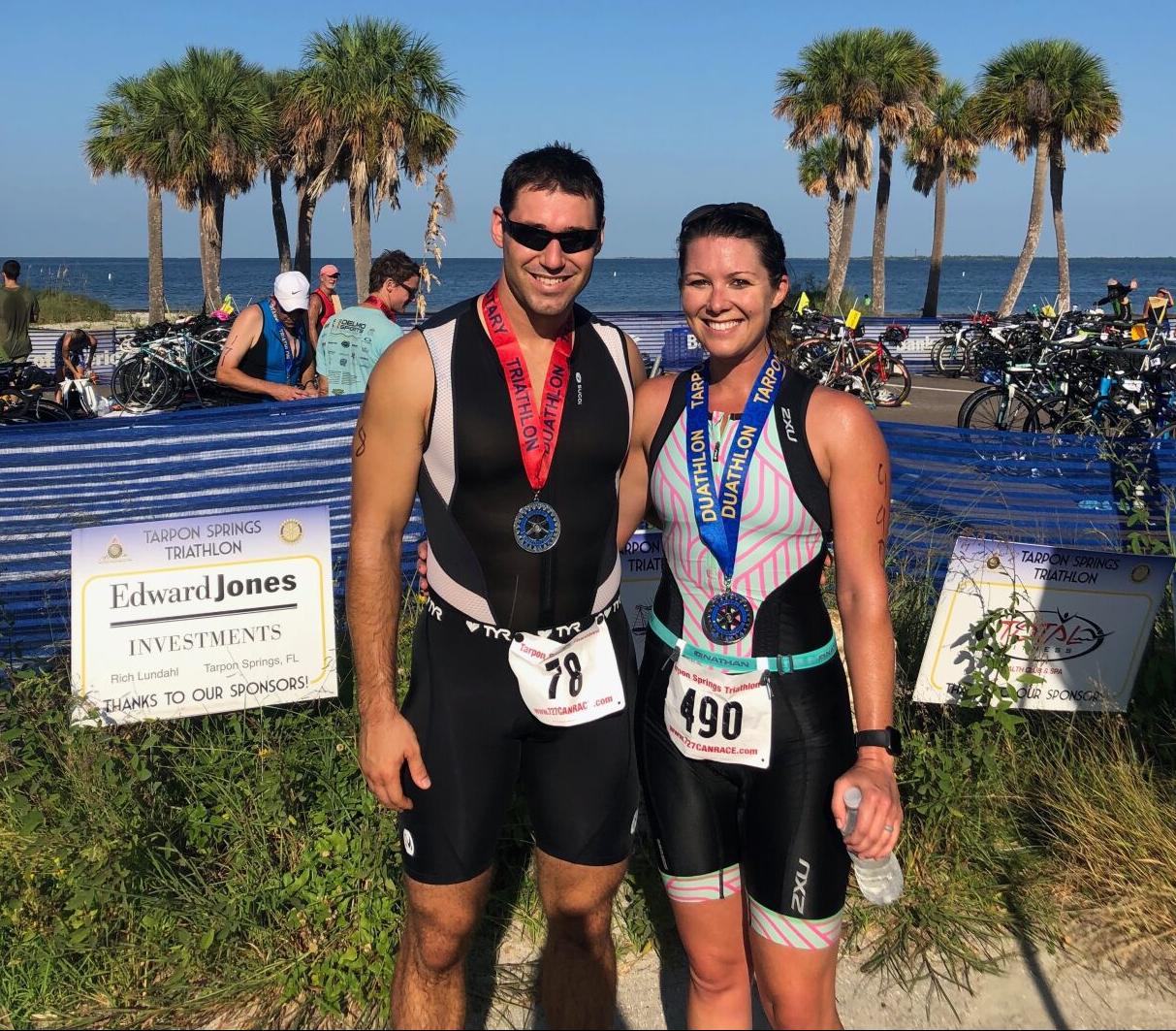
Sometimes the easiest word to say is “Yes,” so when pregnant 34-year-old Lucy Witzig asked her husband, Ryan, if he would step up for her — and her friend Rona Howard — and ride in Saturday’s Banner-University Medicine 39th El Tour de Tucson to raise money for Tucson’s Friends of Aphasia, there was never really ever doubt what his answer would be.
This is an Air Force search-and-rescue officer after all, someone who spends his professional life coming to people’s aid.
What is a 32-mile bike ride on a beautiful Saturday morning for a lifelong fitness nut who has finished triathlons and even a 100-mile bicycle ride? It’s a no-brainer.
‘It impacts everyone very differently’
Aphasia is a silent killer, in more ways than one.
For one, it often causes silence, or, at least, difficulties with communication. Often caused by a stroke or a brain injury or brain tumor, aphasia impacts a person’s ability to express and understand spoken and sometimes written language.
But it has nothing to do with intelligence or capability of thought. And that’s where it becomes a killer — a confidence killer, a detriment to social life, a disorder that hampers the ability to connect on a human level.
“We think about communication or language from the aspect of speaking, but we have to understand what others are saying, too, and then there’s written communication, and all of those areas can be impacted by aphasia,” said Dr. Fabi Hirsch Kruse, who co-founded Friends of Aphasia along with former congresswoman Gabby Giffords in 2018. “We have some folks who have problems finding words, and some folks who struggle with each word. Then we have folks, like Rona, who have trouble speaking but strong writing skills. It impacts everyone very differently. The real hallmark of it is difficulty using words.
“But a person’s intelligence or speaking skills are not impacted. People can be super smart, but it’s about coming up with words, and that makes it doubly frustrating.”
Giffords, who suffered a traumatic brain injury when she was shot at close range during a constituent meeting held at a Safeway parking lot in 2011, has worked with Hirsch Kruse for nearly a decade to help restore her speech and communication skills. They formed Friends of Aphasia, a Tucson non-profit organization — one of just a few nonprofits dedicated to aphasia research and support — just a few years ago.
The organization provides therapy in 1-on-1 and group environments, helping create a sense of community for those who so often lose theirs because of unforeseen communication difficulties.
“People come for three hours at a time — patients, volunteers, grad students — and we certainly work on improving communication skills, but something we do is foster a sense of community,” Hirsch Kruse said. “If all of a sudden, your ability to talk is pulled away from you, imagine how your social circle disintegrates. Even close friends and family back away. They don’t want to put someone on the spot, and people get very isolated. When they come here, they’re in an environment where everyone gets it, and they’re not embarrassed when something comes out wrong. Everyone supports each other so beautifully.”
Members of the group have participated in El Tour de Tucson for years, but this year they’ve added a fundraising component, as the recent diagnosis of famous actor Bruce Willis has thrust aphasia into the public consciousness. That, along with a documentary on Giffords’ life that debuted this year entitled “Gabby Giffords Won’t Back Down” — which airs Sunday night on CNN — has brought more attention to Friends of Aphasia than ever.
“We’re swamped,” Hirsch Kruse said. “People requesting information and services; we really need the resources now if we’re going to provide the support the community needs. We need to raise a lot more money to bring on more people like Lucy to help our members and to address all of the interest we’ve had in our program.”

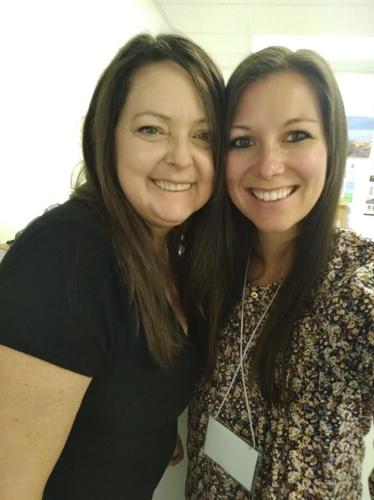
Rona Howard, left, poses with speech pathologist Lucy Witzig. Howard has aphasia after suffering a stroke.
‘A small price to pay’
For four years, Howard — a stroke survivor — has ridden in El Tour herself, raising money to pay for her therapeutic sessions with Friends of Aphasia. This year, because of a medical situation, she was unable to ride. Lucy Witzig, her speech pathologist, was ready to ride for her. Working together for months, they’d formed a fast friendship.
Lucy’s obstetrician had different thoughts. She’s four months into her second pregnancy, and the doctor wanted her to cut out exercise from her routine. That’s tough for the active mother of a 2-year-old boy. Lucy is holding out hope that she can still ride — she hasn’t canceled her entry just yet.
“When I first heard I wasn’t able to exercise, my first thought was how am I going to tell Rona?” Lucy said. “I’m not good at staying still. Exercise is a huge part of my life and my family’s. But my priority is to my family and my unborn child. But I won’t lie — I have one more appointment, and I’m gonna beg her to ride. I’m still signed up for the race. I’m going to ask one more time. I will follow docs orders, but if she clears me, I’ll absolutely ride.”
But she made a backup plan, just in case, and that’s where Ryan comes in.
Stationed at Davis-Monthan Air Force Base, Ryan Witzig is accustomed to stepping up on short notice.
He’s not exactly accustomed to 50-kilometer bike rides, but he’ll get the hang of it, probably around mile 10 or so.
“I’m not so worried about finishing — I don’t fear the ride — but there will definitely be some discomfort,” he said. “In the military, we’re pretty comfortable doing memorial events. You say to yourself, this is uncomfortable, but I’m doing this for a reason, on behalf of the ultimate sacrifice. I think about it in that sense. It’s a small price to pay, being someone blessed with the ability to do something like this, that discomfort is just a small price.”
Ryan is an outdoor aficionado, regularly hunting, fishing, hiking and camping. He actually has plans to camp with some friends on Saturday night, but not before cooling down a bit after the long ride.
“I know about their connection and how excited she was to do the ride. Seeing my wife not be able to do this was frustrating, and I knew it would mean a lot to her if I stepped in. I’m a strong teammate with my wife, knowing how much it meant to her, it was a no-brainer.”
For Lucy Witzig, who along with Ryan expects to be in Tucson for only a short time as he expects to be stationed elsewhere come April, riding for Rona was too important to cancel.
“I fell in love with Friends of Aphasia and I completely support their mission,” Lucy said. “From the day I started forward, I’ve been working there. Great community, great home base for individuals with aphasia. They’re not very found everywhere, and it’s unique for Tucson to have this place. So I’m doing it for both the organization, to raise awareness about aphasia, but especially for Rona. She’s one of the hardest workers I’ve ever met. She has aphasia but it does not keep her from the community.”