

She is 13 years old with a heart of gold, and now she has the medal to match it.
Adrina Castro, the youngest member of the Tucson-based Arizona Storm women’s wheelchair basketball team — which won the National Wheelchair Basketball Association championship in July — loves the game.
She lives it. Breathes it. She’s a tiny ball of pluck and energy; her Instagram name is itty_bitty_beastmode, and that’s the least of her handles. You should see her on a breakaway.
She discovered wheelchair basketball when she was 9 years old, two years after spina bifida robbed her of balance and gait. That was the year she had her second surgery, with more after that. She’d been a budding young soccer player then, sports always a big part of her life.
But in wheelchair basketball, she has found more than a hobby.
“As soon as I rolled onto the court, I felt like this is where I belong,” she said. “This is what I see myself doing for the rest of my life.”
You see, then, just how important it was for the Storm to have been able to play in the 2021 NWBA Tournament, much less win it.
At the end of a season that was not a season — capping off a year that wasn’t much of a year — the Storm got just what they needed.
Not the title. For most of the members of the Storm, this gold medal was just the latest of many.
But to play. Just to have the chance to play. That’s all they wanted.
Resilient, determined
These have been trying times.
For months, the Storm had nowhere to practice. Their partner in practice, the City of Tucson, still hasn’t re-opened its indoor gyms. So too, the Jewish Community Center, another regular option in normal times for the Storm.
The team initially moved its practices outdoors, and that was fine for a while, but it hit about 108 degrees on the court during the first week of June, and it hasn’t cooled down.
Then came the monsoons, and you try getting back on defense during a monsoon.
Not like there were any games to play, anyway.
With travel and recreational space limited, regular-season matchups were skipped, tournaments cancelled altogether. The national tournament was supposed to be in Phoenix at Ability360 Sports & Fitness Center early this year; they had to cancel. It was moved to the University of Texas at Arlington, then delayed until July.
And July’s tournament only included six teams from a field that normally includes 12 to 14.
“It was difficult, challenging, and there were barriers — yes,” said Mia Hansen, who runs Southern Arizona Adaptive Sports and manages the Storm. “But that’s what these players overcome every day as disabled athletes. COVID added a twist, but one thing I’m so proud of, especially with the women’s (team) — we’re resilient. We’re determined. This team that included professionals, students, refugees — they’re very focused on achieving. Achieving through sports or their professions or being mothers. You can’t understate the importance of team sports in a time like this.”
The pandemic may have ground the world to a halt, but Hansen’s cause continued.
“Tragedies don’t stop just because of a pandemic,” she said. “There were car accidents, gun shots, diseases. People still have needs, and their lives have purpose and meaning. There was no choice of stopping.”
Hansen found a way to help keep SAAS running. With basketball shelved, she had people outside playing golf and tennis. SAAS expanded its hand-cycling program three-fold. Hansen kept up with her grant writing — despite myriad difficulties and financial hardships, the SAAS operating budget fell only just over 25%, from $250,000 in 2019 to just under $200,000 last year.
She kept finding new people to participate.
“I’m always recruiting,” she said. “I’ve been known to stop someone on the street and hand them a business card. They look at me funny.”
But for several members of the Tucson Storm, basketball is no laughing matter.
It’s serious business, really; one obvious reason to credit for their national title: All five members of the starting lineup were either current or former Team USA wheelchair basketball Paralympians.
The team normally rosters three regular past or present Paralympians: Josie Aslakson, the head coach of the University of Arizona’s women’s wheelchair basketball team and a former Wildcats player, and Courtney Ryan, the assistant coach for the Wildcats and tournament MVP at the nationals, are current members of Team USA, which travels to Tokyo for the 2021 Paralympics later this month; and Jenn Poist, the former UA head coach and a two-time Paralympian.
But because several teams across the country were unable to field teams for competition in this year’s nationals, the NWBA allowed its teams to absorb unrostered players.
That’s how the Storm rounded out its roster with two more Paralympians: Natalie Schneider, a four-time Paralympic gold medalist, and Gail Gaeng, a member of the 2016 gold-medal winning team. San Diego’s 16-year-old future star. Michelle Bautista, joined too.
So, to be sure, this is no Cinderella story. The Storm were stacked. There are no glass slippers here.
Just Nikes.

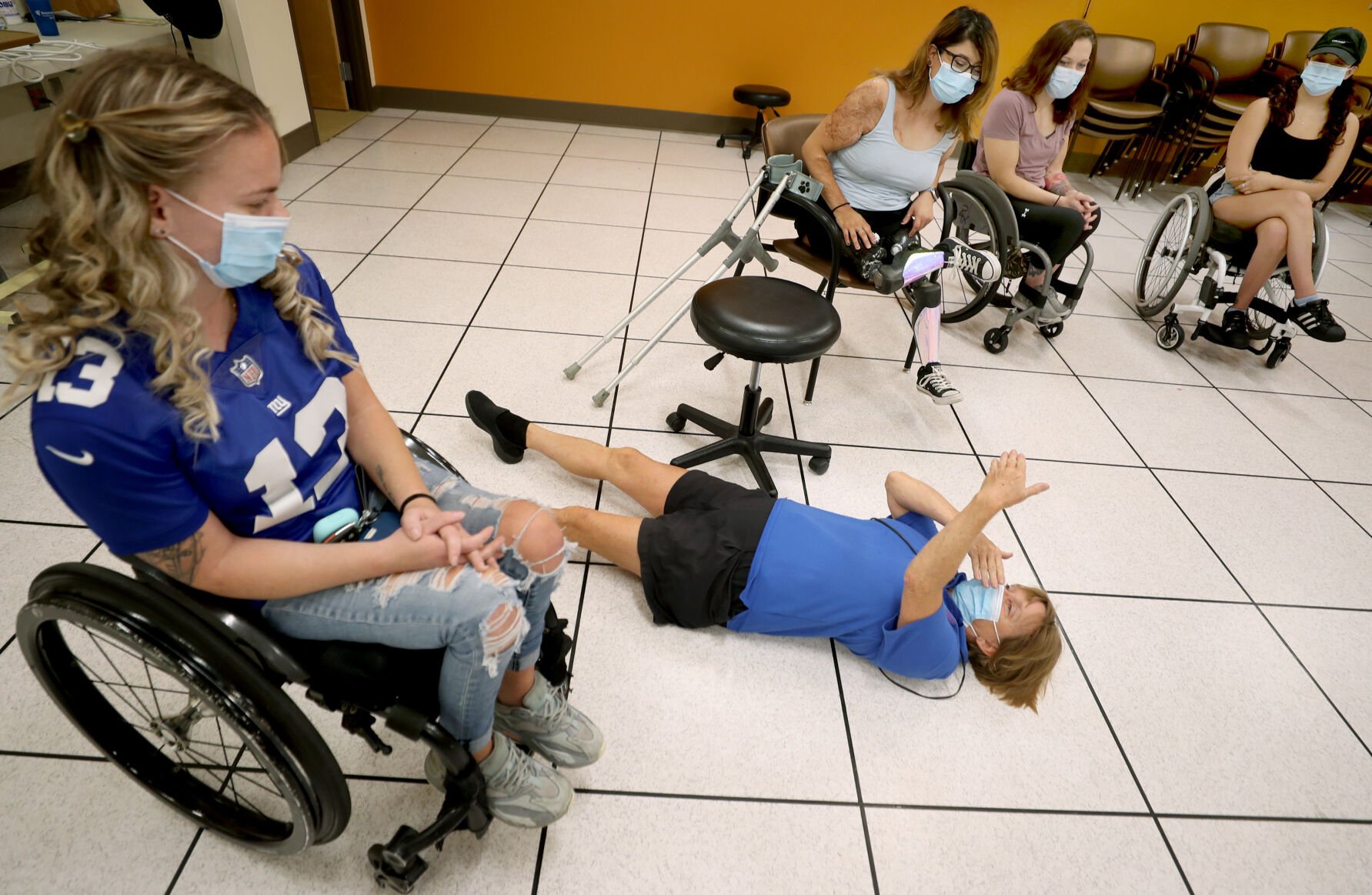
Jennifer Poist, center, talks about her experience with the Arizona Storm wheelchair basketball team to several patients with spinal injuries. "It’s important for them to realize this is a lifelong thing, but that there are positives," she says. "I’ve been paralyzed for 25 years at this point. I’ve overcome it all and so will they.”
‘A reminder of what there is to gain’
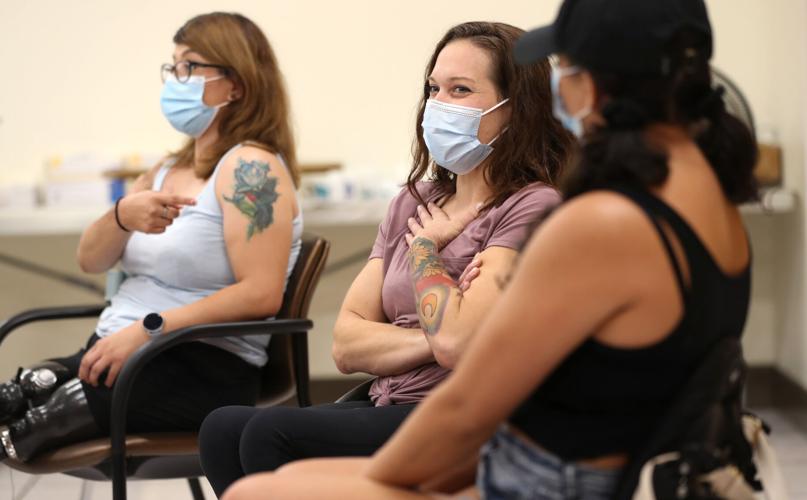
It was a Wednesday morning in Tucson, and the real opportunity came calling for Poist. Hansen brought her and other peer mentors to Encompass Health Rehabilitation Institute to speak with three young female patients.
As fun as the NWBA nationals were, and as wonderful as it was to win once more, this is what drives Poist.
There have been so many tournaments, and so many trophies. But this? This was the good stuff.
Poist told her story, spread the gospel of basketball and inclusion — and witnessed the looks on the faces of women struggling to accept their new realities.
“This gives everyone a purpose,” Poist said. “When you go through an injury, a lot of people lose what they were passionate about. They may have to find a new purpose. You have to do something with your life. It’s important for them to realize this is a lifelong thing, but that there are positives. I’ve been paralyzed for 25 years at this point. I’ve overcome it all and so will they.”
Sam Szczublewski, a physical therapist at Encompass, witnessed Poist’s message first-hand.
“For this to be a resource for people, it’s life changing,” Szczublewski said. “One of the girls I spoke to about this, she said she was feeling depressed and sad and this meeting changed that. It provides a new perspective, and a new respect, too. It gives them a true sense of hope, which a lot of time can get lost. To see these young girls be independent, successful and thriving — it is life-altering for them.”
Hansen has seen it time and time again. Not just the power of positive thinking, but the power of purpose.
“It is a tough moment when you’re first dealing with a new body and a new level of mobility,” Hansen said. “Oftentimes, people think of what they’ve lost. These girls who play, it’s a reminder of what there is to gain.”
A 13-year-old role model
Castro, the Storm’s youngest player, took up the sport four years ago.
“She’d have her practice for an hour, and then the adults would play for another hour or two and we’d sit there and watch,” said her father, Alex. “Then they started to let her play in, and she just fell in love with it.”
The basketball court became the one place she wasn’t treated like a kid — or, worse, treated with kid gloves because of her disability. She hoped to just hang with the big kids, and three years ago, in her first national appearance, she scored four points. Now she’s blossomed into a big-time bench scorer for the Storm.
“Knowing that I have their respect and that I’ve actually worked toward earning it makes it 10 times better,” she said. “They know I’m capable of doing things. I’m not someone who just takes up space.”
Castro has developed a following on social media and has garnered a sponsorship. She hears from kids all over the world. Jerseys come in from all corners.
She may be only 13 years old, but Castro is learning what it means to be a role model.
“It feels pretty good to know I have people looking up to me,” she said. “A lot of kids with disabilities feel like they can’t do anything. I want to make sure they know they can believe in themselves.”

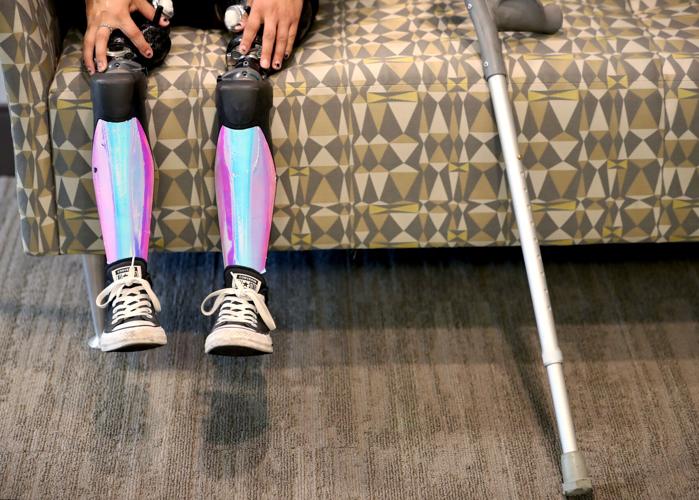
Norma Trujillo sports a pair of Chuck Taylors as she waits to talk to young women with spinal injuries at Encompass Health Rehabilitation Institute earlier this month.
‘Confidence’ to accomplish anything
That, Hansen believes, is the real gold medal.
She has faith that SAAS can continue to grow, that Tucson can remain a mecca for adaptive athletes.
After all, Hansen sees the power of purpose. Even in getting to one tournament with six teams at the end of a season that wasn’t. And especially in winning it.
“It gives you the confidence you can accomplish something,” Hansen said. “Just the act of boarding an airplane with 10 personal wheelchairs and 10 game chairs is an exercise in patience.
“Just getting there was half the battle.”

