



John Chayka woke up Thursday morning in Scottsdale and, after changing into a dark suit and tie, drove to Tucson.
The Arizona Coyotes’ 26-year-old general manager arrived at the Tucson Convention Center Arena two hours later.
“A little less than that, actually,” he said. “An hour fifty?”
Excitement and optimism ruled during Thursday’s news conference at TCC, where the NHL’s Coyotes announced their purchase and relocation of an American Hockey League team to Tucson.
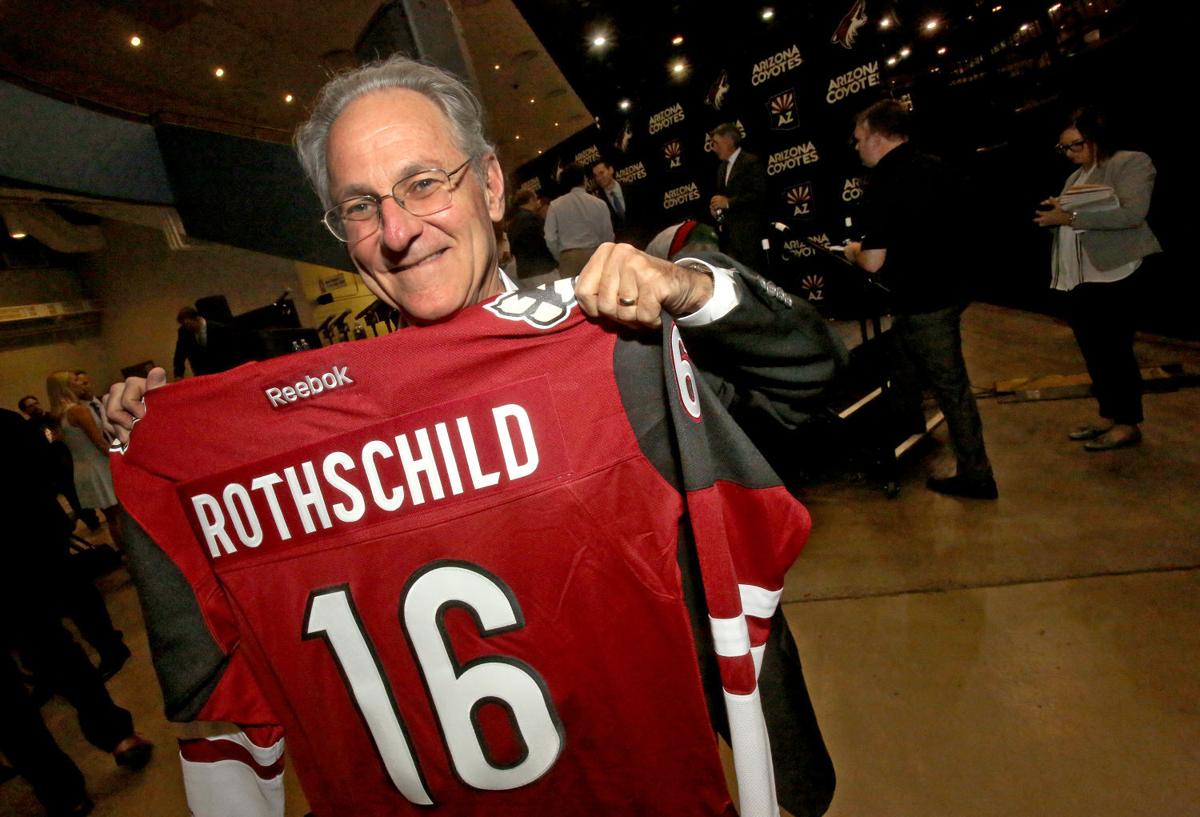
The Coyotes’ mascot, Howler, and the team’s ice girls dressed up — and drove down — for the event. Coyotes coach Dave Tippett and President Anthony LeBlanc attended, as did Tucson Mayor Jonathan Rothschild and Rio Nuevo chairman Fletcher McCusker. Other local officials and a handful of die-hard fans watched as the yet-to-be-named team was introduced mere feet from its new home ice.
The word “synergy” was passed and shot — a one-timer, used multiple times — by officials Thursday, but there’s a better word for the Coyotes-Tucson pairing: Convenience. It’s the reason the Coyotes chose to purchase the Springfield (Massachusetts) Falcons and move them to Tucson. It’s the reason Tucson officials believe they can capitalize on the parent club’s fan base to fill seats at TCC.
And it’s why Chayka, the youngest GM in the history of the sport, lit up when talking about the possibilities. The Coyotes promoted the co-founder of the Stathletes analytics service two weeks ago with hopes he could develop talent in the minor leagues. As the Coyotes’ assistant GM a year ago, Chayka watched Springfield games from his laptop and flew east as frequently as he could.
Now, he’s driving distance away.
“That’s a huge aspect of this whole move,” he said. “For the players, even for them to turn on the TV and watch the Arizona Coyotes, it’s a huge help for their psyches. They know they’re not somewhere far away that feels far away.”
Said Tippett: “Fans can be one night watching an American League player and they have a heck of a game, the next night, they’re playing for Arizona. We want to build both teams in the same mold: with fast, exciting players.”
The AHL is the NHL’s top minor league, with 30 teams spread throughout the country. A recent westward expansion brought franchises to San Diego, Ontario, Bakersfield and San Jose, California; all were moved there by an NHL club for the same reasons that the Coyotes approached Tucson. The NHL team’s proximity to its top affiliate will allow club officials to drive down for a morning skate, watch a night game without staying at a hotel, or summon a player to the big club on short notice.
For Chayka, from the “Moneyball” school of player development and roster management, it’s a big deal.
“There’s a reason 90 percent of players come through the AHL to the NHL: They have some deficiencies in their games that are very specific, and we address those,” Chayka said. “They’re getting that NHL experience. You can’t put a value on that from a hockey ops standpoint.”
Chayka and his staff plan on visiting Tucson repeatedly once the AHL season begins in October. The GM said Thursday that he anticipates AHL players visiting the Coyotes’ headquarters, and home ice, during their days off. Communication and collaboration, he said, are “the two cultural pillars” of the Coyotes’ new front office.
Local government officials delivered a lesson in both as they negotiated two deals over the span of three weeks. First, Rio Nuevo promised $3 million to renovate the TCC to meet AHL standards. Then, the city of Tucson negotiated a 10-year lease with the Coyotes that includes protections in case the NHL club’s optimism fizzles.
The Coyotes anticipate intense local interest: Team officials said they found tens of thousands of Tucsonans in their ticket-holder files, and said that — with some work — the fans that trek to Glendale would become fans of the Tucson … Monsoon? Sonoran Dogs? Dry Ice?
An answer will come soon. The Coyotes are holding a name-the-team contest and vowed to pick a moniker that reflects Tucson, its culture and its history. The last professional team here, the Triple-A Tucson Padres, were moved to El Paso and christened the Chihuahuas.
Chayka, upon hearing it, checked — forechecked? — the big-eared dogs off his list of preferred team names.
Moments later, the statistical analyst was back to talking about his commute. Notably, how to shorten it further.
“I plan” he said, “on making this trip a lot.”

