


The Pac-12 began this pandemic season with two goals: Play as many regular-season games as possible as safely as possible; and send as many teams to the NCAA Tournament as possible with the highest seeds possible.
On the former matter, the season was a resounding success: The conference played 126 of the 130 scheduled games, including all 10 in Las Vegas.
On the latter matter, the season was only a qualified success.
The Pac-12 received five bids to March Madness, although it was a nervous stretch for the fifth: UCLA, the conference’s only bubble sitter, didn’t hear its name called until the final region was unveiled.
The five bids marked the largest haul for the conference since the 2016 tournament, when it placed seven teams in the field, and provides a foundation from which to begin repairing its reputation nationally.
But in the area of seeding, the Pac-12 fell short of ideal. Its highest-seeded team, Colorado, was merely a No. 5 — marking the second consecutive tournament the conference has failed to produce a top-four seed.
The Buffaloes didn’t get unfairly downgraded, either. That was the best seed they could have hoped for, which speaks to the lack of dominant teams at the top of the league.
Pac-12 seeds and opponents:
- No. 5 Colorado vs No. 12 Georgetown
- No. 6 USC vs. No. 11 Drake/Wichita State
- No. 7 Oregon vs. No. 10 VCU
- No. 11 UCLA vs. No. 11 Michigan State
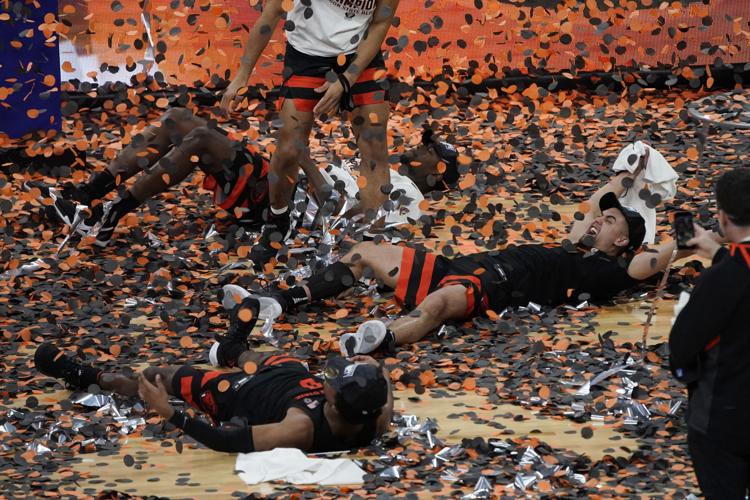
- No. 12 Oregon State vs. No. 5 Tennessee
Then again, the seeds don’t carry their normal significance this year because all the games are being played in Indianapolis.
In other words, the geographic preference usually given to the high seeds doesn’t exist, thus leveling the competitive balance for the No. 5-12 seeds.
Oh, and one more point on Pac-12 seeds before we dive into the bracket:
No teams were slotted into the No. 8-9 game, allowing the conference to avoid second-round matchups against the powerhouse No. 1 seeds.
Here we go …
Winner: The Big Ten. Led all conference with nine bids, including two No. 1 seeds (Michigan and Illinois). The Big 12 and ACC received seven bids, followed by the SEC with six and the Pac-12 with five.
Loser: Michigan. Of the No. 1 seeds, the Wolverines have the most difficult path to the Final Four with Alabama, Texas and Florida State ready to pounce.
Winner: UCLA. Had the Bruins been left out of the at-large field after losing their last four games — and blowing that huge lead against Oregon State in the conference tournament — Year Two of the Mick Cronin era would have been a colossal disappointment.
Loser: UCLA. That said, the Bruins’ opponent, Michigan State, is assuredly the first team ever assigned to the First Four with two victories over No. 1 seeds. The Spartans handled Michigan and Illinois in recent weeks, along with No. 2 Ohio State. They opened as a 1-point favorite over UCLA.
Winner: USC. The Trojans should be solid favorites over their first-round opponent (Drake or Wichita State) and are slotted to face Kansas in the second. That might not be as daunting as it seems: The Jayhawks pulled out of the Big 12 tournament because of COVID-19 issues and could have a depleted rotation.
Loser: Blue bloods. The tournament will not include Duke or Kentucky — the former for the first time since 1995, the latter for the first time since 2013. Also not participating: Arizona (ineligible), Indiana and Louisville. And three others cut it awfully close: Syracuse, UCLA and Michigan State are No. 11 seeds.
Winner: The Pac-12. Each game played in the NCAA tournament is worth approximately $1.8 million over a six-year period (split evenly among the 12 schools). With five teams in the field, the conference is guaranteed $9 million, even if it goes winless. Which it won’t, probably.
Loser: TV ratings. See item above about blue bloods.

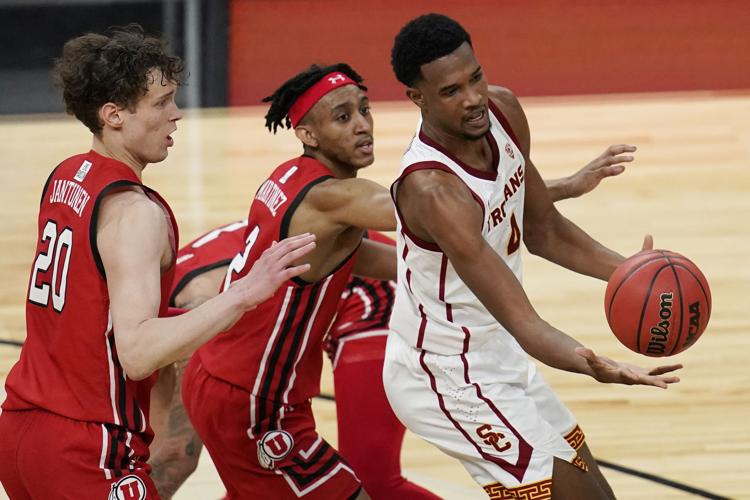
USC’s Evan Mobley, right will have the attention of NBA scouts during the Trojans’ NCAA Tournament game(s).
Winner: Sports wagering. Projections from the American Gaming Association indicate approximately 50 million people will gamble on the NCAAs, legally or not.
Loser: Mountain West. San Diego State and Utah State made it; Colorado State and Boise State did not. As a result, the six conferences in the western third of the country claimed a mere six at-large bids: BYU, Utah State and the four Pac-12 teams.
Winner: Oregon. The Ducks surely aren’t complaining about drawing Virginia Commonwealth as a first-round opponent. And their projected second-round foe, Iowa, is a far better matchup (despite the presence of big man Luka Garza) than two of the other No. 2s (Ohio State and Alabama).
Loser: Colorado. Sure, the Buffaloes received their highest seed ever — a No. 5 seed — but they are matched against one of the hottest teams in the country, Georgetown, which just won the Big East.
Winner: Gonzaga. The West Coast Conference champs are the tournament’s No. 1 overall seed and are attempting to become the first team since Indiana in 1976 to complete a perfect season.
Loser: Louisville. The Cardinals were the highest-profile snub, squeezed out of the at-large field when Georgetown and Oregon State stole bids by winning their conference tournaments.
Winner: NBA scouts. The top-three NBA prospects in college basketball play for teams that qualified for the tournament: Oklahoma State’s Cade Cunningham, USC’s Evan Mobley and Gonzaga’s Jalen Suggs.
Loser: Oregon State. Of the potential No. 5 seeds, the Beavers drew the most difficult matchup (Tennessee).
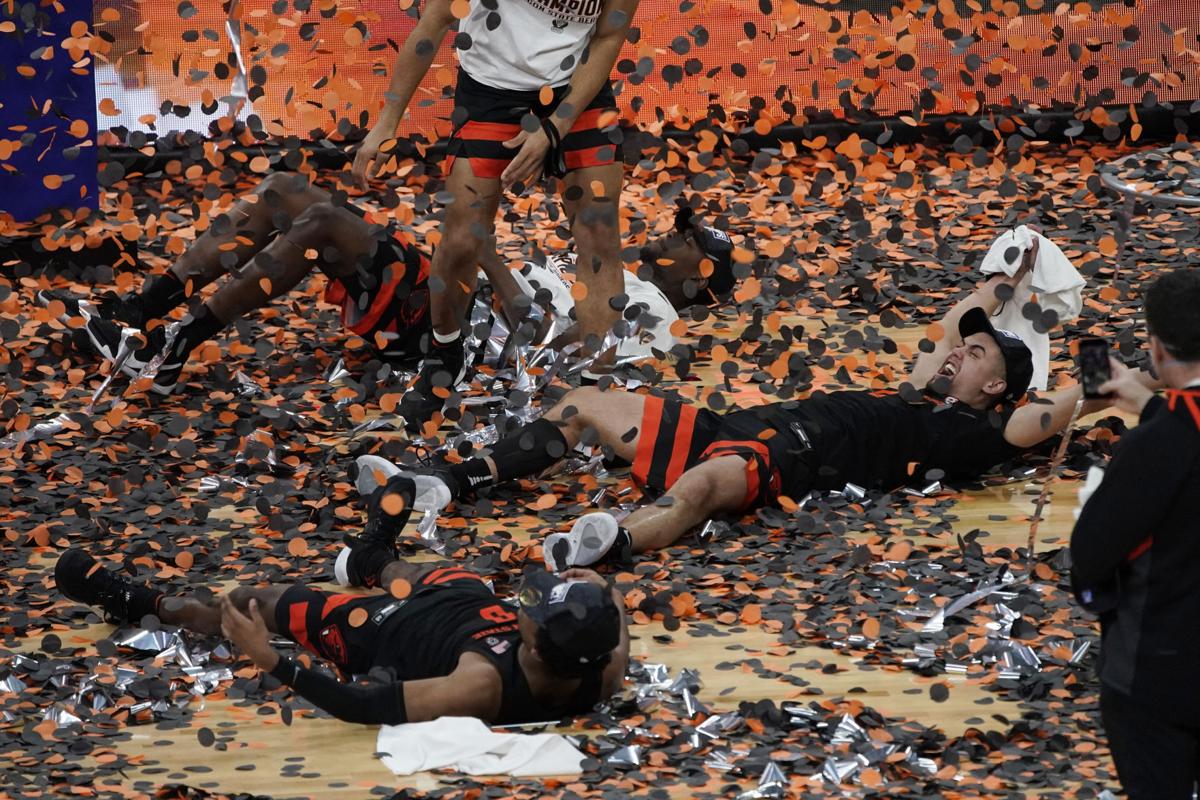
Winner: Oregon State. At this point, it’s all house money.

