



From the Arizona-UCLA rivalry, predicting the men's/women's Final Fours and Pac-12 races a case for Tommy Lloyd as the Pac-12's best men's coach, and more, the Star's longtime columnist blows open the upcoming college basketball season as both Wildcat teams get underway this week.
Arizona-UCLA is Pac-12 basketball
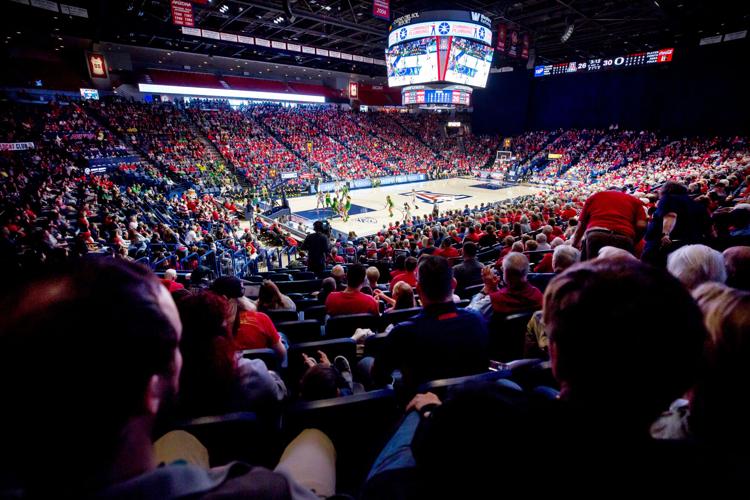
Four decades ago, few, if any, could’ve predicted the Arizona-UCLA basketball rivalry would become one of America’s most-watched college sports events.

is the longtime sports columnist for the
Arizona Daily Starand
Tucson.com.
It’s so close that it’s almost insane. Since Arizona joined the Pac-10 for the 1978-79 season, here are the cumulative UA and UCLA conference records:
• Arizona 556-260
• UCLA 556-261
Over more than 40 years, the Wildcats and Bruins are separated by one loss. Unreal.
The Bruins played just 18 conference games during the 2020-21 COVID season, while Arizona played 19.

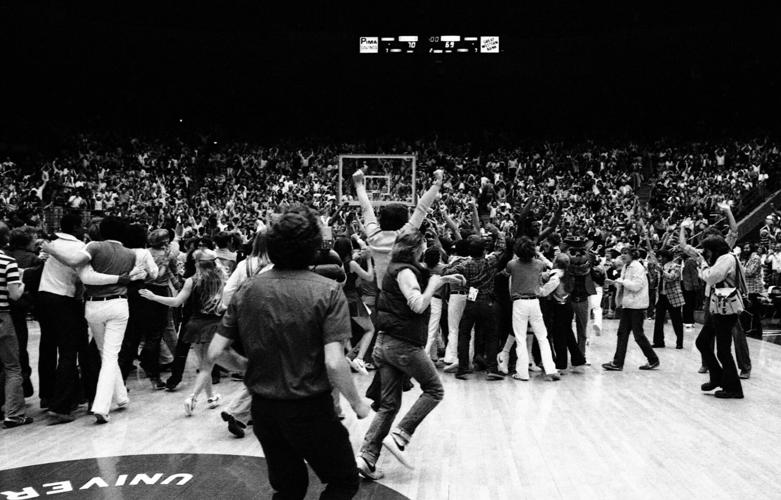
Fans swarm the court after University of Arizona defeated basketball powerhouse UCLA (then ranked No. 3 nationally), 70-69, at McKale Center on Jan. 18, 1979.
That’s the difference after 45 seasons: one game.
This year’s final home-and-home series will decide the winner.
The UCLA-Arizona rivalry wasn’t much at the start. UCLA won its first 11 games against Arizona.
And then Lute Olson came along. Once Olson got Arizona’s program up and running, Arizona has gone 44-40 against the Bruins dating to 1985.
In latter days, since the Pac-12 was formed in 2011, here are the conference wins leaders:
• Arizona 158-64
• Oregon 148-72
• UCLA 146-75
• Colorado 118-104
No other team has a winning record in that period.
Best teams of 1978-23? Here’s the elite list
Almost 500 individual teams have competed for Pac-10/12 basketball championships since Arizona joined the conference in 1978-79.
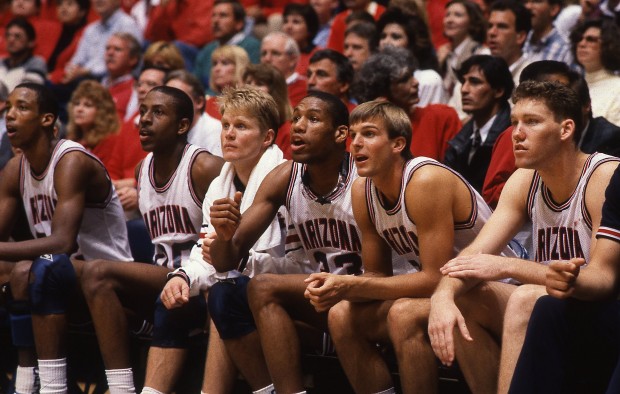
Arizona's starting lineup (plus reserve center Joe Turner) sit together on the UA bench during a 1988 game at Washington State. From left, Sean Elliott, Anthony Cook, Steve Kerr, Turner, Craig McMillan and Tom Tolbert.
Here are my picks as the four leading powerhouses of that period:
• UCLA, 1994-95. Coach Jim Harrick’s Bruins went 31-2 after starting No. 6 in the first AP poll of the season. The Bruins went on to win the national championship behind a seamless lineup that included Ed O’Bannon, Tyus Edney, George Zidek and prize freshmen Toby Bailey and J.R. Henderson.
Their NCAA title run included Edney’s treasured length-of-the-court drive and layup to beat Missouri in a Round of 32 thriller.
• Arizona, 1987-88. The Wildcats won a league-record 35 games (35-3) and went 17-1 in the Pac-12 while soaring to No. 1 nationally behind Steve Kerr, Sean Elliott, Tom Tolbert, Anthony Cook and Craig McMillan.
A Final Four loss to powerful Oklahoma is all that separated Lute Olson from his first national championship. Arizona set the league record by beating opponents by an average of 23 points per game.
• Oregon State, 1980-81. Coach Ralph Miller’s defense-first club wasn’t a surprise; the Beavers had gone 26-4 a year earlier, winning the Pac-10 with a 16-2 record. But the ’81 Beavers stepped it up, finishing 26-2, ranked No. 1 nationally, and going 17-0 in league play before losing the final game of the regular season to No. 4 Arizona State.
The top-seeded Beavers were stunned in the NCAA Tournament by Kansas State in a slow-down game before the shot clock was implemented. Center Steve Johnson was an All-American.
• Stanford, 2003-04. Mike Montgomery’s club finished 30-2, opening with a 17-0 record in conference before losing at Washington on the final day of the regular season.
Point guard Chris Hernandez and shooting forward Josh Childress led the Cardinal to victories over No. 3 Kansas and No. 3 Arizona along the way before being upset by Alabama in the NCAA Tournament Round of 32.
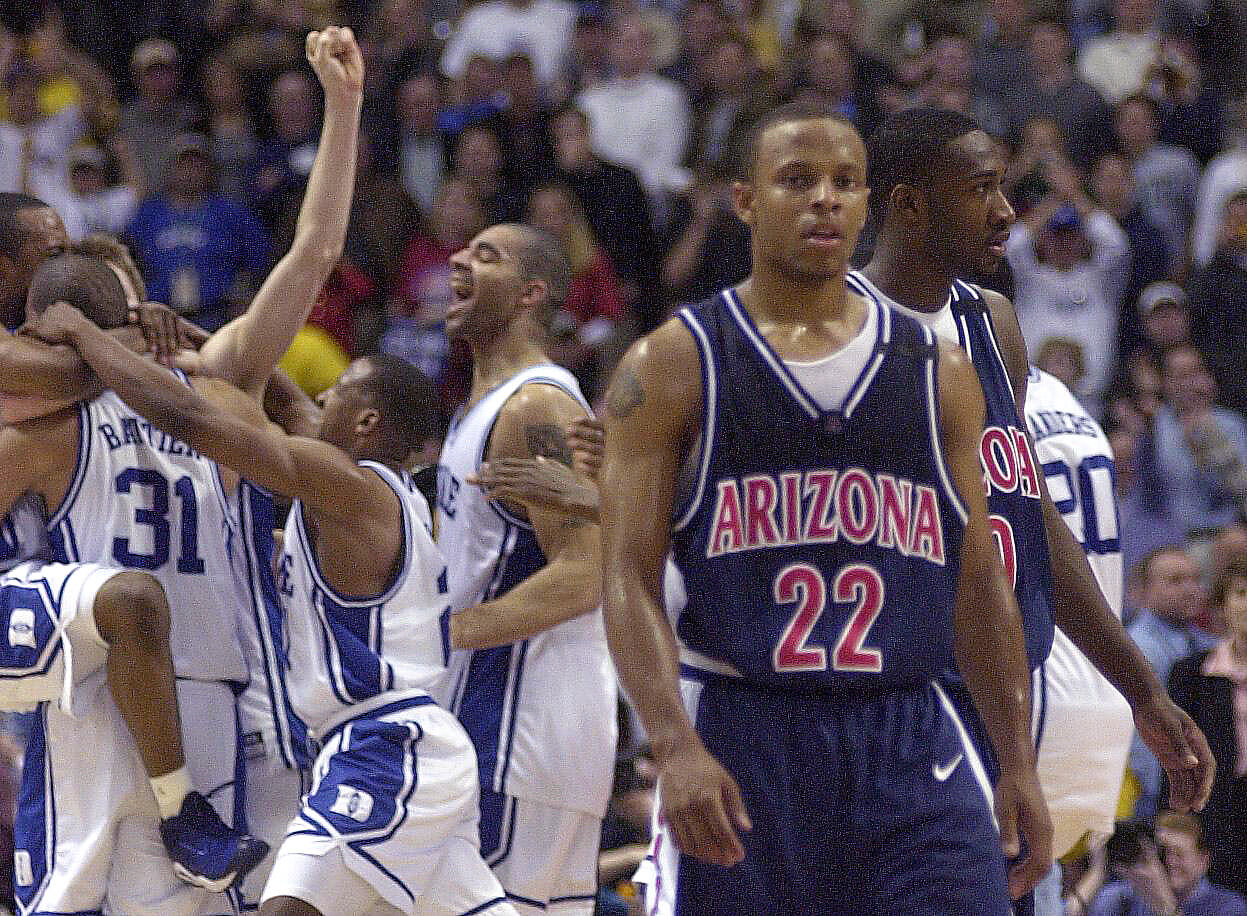
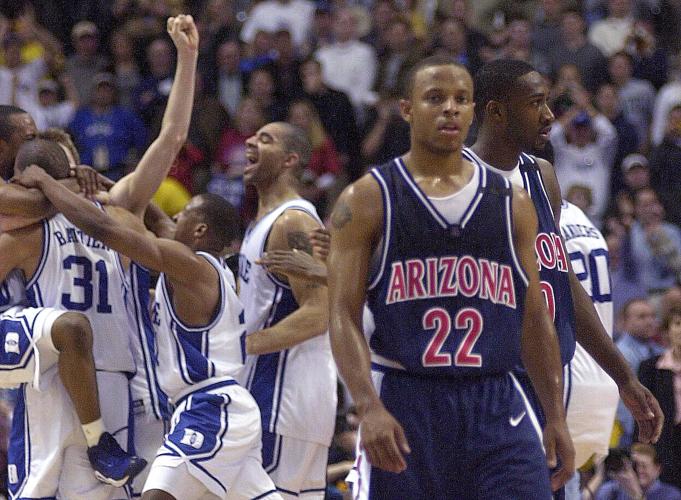
Arizona’s Jason Gardner and Gilbert Arenas walk off the court as Duke players celebrate the Blue Devils’ victory over the Wildcats in the 2001 men’s national championship game in Minneapolis.
First things first: Arizona v. Duke (again)
The Arizona-Duke rivalry was perhaps the most high-profile in college basketball from 1987-2001.
The powerful clubs met six times in that period in every precinct imaginable: in Tucson, at Cameron Indoor Stadium, at the Final Four, in Hawaii and in a made-for-TV showdown in New Jersey.
For whatever reason, the two clubs haven’t met since a 2013 game at Madison Square Garden.
That all changes when a home-and-home series begins Nov. 10 at Duke. Lute Olson and Mike Krzyzewski are gone, but the expectations still resonate.
Here’s how the eight-game Duke-Arizona series has gone from 1987-2013:
• December, 1987, at McKale Center: No. 1 Arizona defeated No. 9 Duke, 91-85. Leading scorers: Sean Elliott 24, Danny Ferry 29.
• February, 1989, in East Rutherford, N.J.: No. 2 Arizona defeated No. 9 Duke, 77-75. Leading scorers: Sean Elliott 31, Danny Ferry 25.

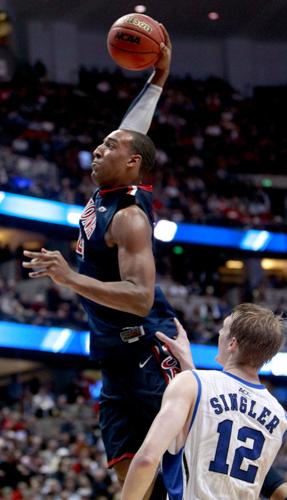
Arizona's Derrick Williams flies by Duke's Kyle Singler on his way to slam one home during the second half of the Wildcats' 93-77 blowout of the Blue Devils on March 24, 2011 in the NCAA West Regional Semifinal in Anaheim, California.
• February, 1990, in Durham, N.C.: No. 3 Duke defeated No. 21 Arizona, 78-76. Leading scorers: Brian Williams 19, Thomas Henderson, 28.
• February, 1991, at McKale Center: No. 9 Arizona defeated No. 7 Duke, 103-96, in double overtime. Leading scorers: Brian Williams 24, Christian Laettner 26.
• November, 1997, in Lahaina, Hawaii: No. 3 Duke defeated No. 1 Arizona, 95-87. Leading scorers: Miles Simon, 25. William Avery, 21.
• April, 2001, in Minneapolis (national championship): No. 1 Duke defeated No. 8 Arizona 82-72. Leading scorers: Loren Woods 22. Mike Dunleavy 21.
• March, 2011, in Los Angeles (Sweet 16): No. 14 Arizona defeated No. 3 Duke, 93-77. Leading scorers: Derrick Williams 32. Kyrie Irving 28.
• November, 2013, in New York: No. 4 Arizona defeated No. 6 Duke, 72-66. Leading scorers: Nick Johnson, 15. Rodney Hood, 21.
How college basketball’s makeup has changed
Pac-12 teams will open the 2023-24 season with 48 transfers and 42 foreign players, both categories believed to be the most in league history.
No one plays the transfer portal game more than Arizona State coach Bobby Hurley, who has nine transfers, from Louisville, Houston Christian, West Virginia, South Florida, Tulsa, Michigan, Ohio State and two from LSU. Who are those guys?
Washington has eight transfers, from Rutgers, Oregon, UNLV, N.C. Central, Notre Dame, Fresno State and two from Kentucky.
Utah is next with seven transfers, from BYU, Wisconsin, Utah State, Washington, Georgia Tech, Colorado and Cincinnati.
Arizona coach Tommy Lloyd set the standard for acquiring foreign players. This year? Seven. Lloyd has players from Serbia, Spain, Sweden, Mali, Estonia and two from Lithuania. He also has an assistant coach, Riccardo Fois, from Italy.
One thing UCLA coach Mick Cronin has done since watching Lloyd succeed with foreign players and by recruiting globally, is to follow Lloyd’s lead. This year, UCLA has players from Slovenia, Spain, Serbia, France, Turkey and two from Nigeria.
Cronin also hired a foreign coach to direct the club’s global recruiting by acquiring Nemanja Jovanovic, who is from Serbia.

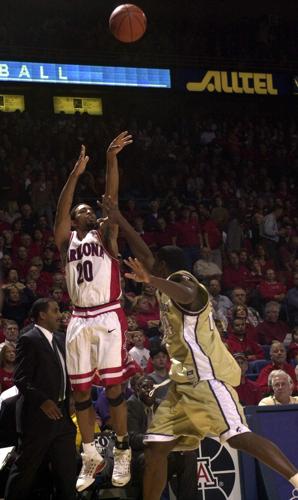
In the first half of a game against Washington at McKale Center on Jan. 13, 2003, Arizona's Salim Stoudamire puts up one of the school-record 342 3-pointers he made in his career, spanning 2002-05.
Arizona’s hallowed Pac-12 records, 1978-23
Arizona’s most coveted Pac-12 team records set over the last 45 seasons are probably:
• Most wins in a season 35, 1987-88
• Most points in a game, 127, vs. ASU, 1998
Five Wildcats set individual records that seem sure to be standing when the league shuts down in March. They are:
• Best 3-point percentage: .573, Steve Kerr, 1987-88 (114 of 199)
• Most conference coaching wins, 327, Lute Olson. (Runner-up: Stanford’s Mike Montgomery, 282)
• Most blocked shots in a game: 14, Loren Woods vs. Oregon, 2000
• Most assists in a game: 19, Russell Brown, vs. GCU, 1979
• Most 3-pointers in a career, 342, Salim Stoudamire, 2002-05

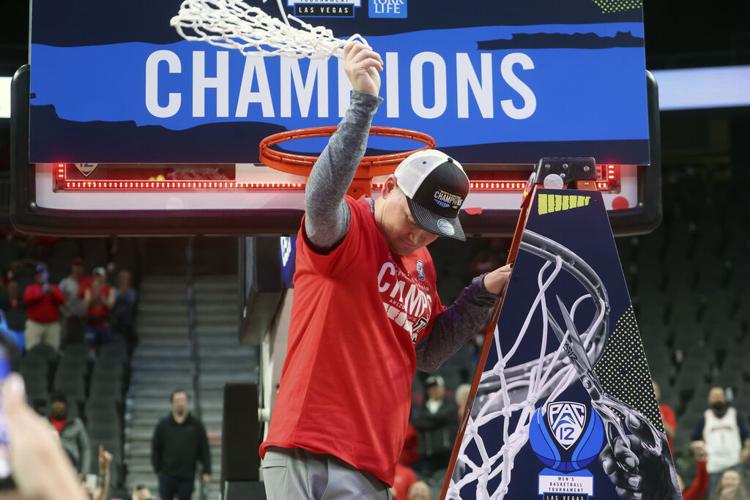
Arizona coach Tommy Lloyd celebrates after cutting down the net following the Wildcats’ victory over UCLA in the championship of the 2023 Pac-12 Tournament on March 11 in Las Vegas.
Pac-12’s best coach? The job is taking applications
Unlike Pac-12 football coaching, where Utah’s Kyle Whittingham is far and away the league’s most feared coach and toughest out, Pac-12 hoops does not have a go-to-coach.
Whittingham has been at Utah for 19 years. Upon entry to the Pac-12, the Utes struggled, going 9-18 in conference games, bottom feeders. Now they dine at the lead table, with the most menacing home-field advantage west of the SEC.
Oregon’s Dana Altman is the so-called dean of Pac-12 men’s basketball coaches, entering Year 14, but the Ducks have gone to the low-brow NIT three of the last five full seasons, and a day at Matthew Knight Arena isn’t anywhere near the league’s top home-court advantage.
Here’s how we rank the Pac-12 coaches:
1. Tommy Lloyd, Arizona. Age: 48. Season: third. Lloyd has more upside than any coach in the league because he embraced Arizona’s tradition and is by far the league’s most accomplished recruiter. Reputation: Run and gun, take no prisoners.
2. Mick Cronin, UCLA. Age: 52. Season: fifth. Cronin benefited greatly from inheriting franchise-type players Jaime Jacqez and Tyger Campbell. Both are now gone. To his credit, he has pounced on Lloyd’s example and has recruited seven European players. Reputation: Sourpuss, slow-and-go offense, no fun.
3. Dana Altman, Oregon. Age: 65. Season: 14th. This could be the twilight of Altman’s career. His transfers-first recruiting model hasn’t been a big hit. Matthew Knight Arena has difficulty drawing 65% capacity. Reputation: Vanilla. For all its financial resources, the UO basketball program doesn’t draw eyeballs.
4. Tad Boyle, Colorado. Age: 60. Season: 13th. The Buffs have won just 53% of Pac-12 games since entering the league in 2011. They’ve always been a tough out at home, one of the league’s most daunting arenas. This could be his best roster in a decade. Reputation: Boyle is a gamer. This could be CU’s year to shine.
5. Andy Enfield, USC. Age: 54. Season: 11th. Don’t look now, but the Trojans could win their first Pac-12 basketball title since 1985. Reputation: Enfeld is almost invisible in a national sense. He’s quiet and laid back. Sort of like the history of USC’s basketball program.
6. Bobby Hurley, ASU. Age: 52. Season: ninth. After a few bluffs, the Sun Devils have fallen back to mediocrity under the former Duke point guard. ASU is a mere 71-76 in conference games on his watch. Reputation: Surly Hurley. A sideline tinderbox to rival UCLA’s Cronin. But ASU needs to be more than just an occasional tough out.
7-12. It’s difficult to separate the remaining six Pac-12 coaches. Washington’s Mike Hopkins, an early success, vows to stop running his outdated zone-defense system this year. Is it too late? Utah’s Craig Smith might have his first postseason team, although it appears to be of NIT quality. Recruiting difficulties at WSU have laid Kyle Smith bare this season. Stanford’s Jerrod Haase, in his seventh year, has won just 45% of his league games yet keeps his job. Oregon State’s Wayne Tinkle has hit the bottom and is 58-110 in Pac-12 competition. Cal’s Mark Madsen has energy and talks a good game, but reality will soon strike the talent-poor Bears.
Pac-12 forecast, men's edition
• Arizona, 16-4. There are few, if any, holes in Arizona’s eight- or nine-man rotation. The ridiculously difficult nonconference schedule is apt to steel the Wildcats for what should be an unusually challenging Pac-12 schedule.
• USC, 15-5. The league’s most feared backcourt should be the Trojans’ Boogie Ellis and No. 1 overall freshman recruit Isaiah Collier.
• Colorado, 14-6. The twosome of K.J. Simpson and Tristan de Silva will make the Buffaloes a threat every night.
• UCLA. 13-7. By February, we should know the difference between Bruins big men Aday Mara and Adem Bona.
• Oregon, 11-9. The 11th-ranked recruiting class should fit nicely with 7-footer N’Faly Dante.
• Utah, 10-10. Is this the year 6-11 Branden Carlson becomes a franchise player?
• Arizona State, 10-10. With nine transfers on its roster, ASU may require extended time to find a rhythm.
• Washington, 10-10. Kentucky transfers Keion Brooks and Sahvir Wheeler provide much-needed hope.
• Stanford, 8-12. Not much to see here. Move on.
• Washington State, 6-14. The Cougars were depleted by offseason transfers and departures.
• Oregon State, 4-16. Guard Jordan Pope is solid. The rest of the Beavers? Not so much.
• Cal, 3-17. New coach Mark Madsen’s energy could help the Bears win two or three league games.

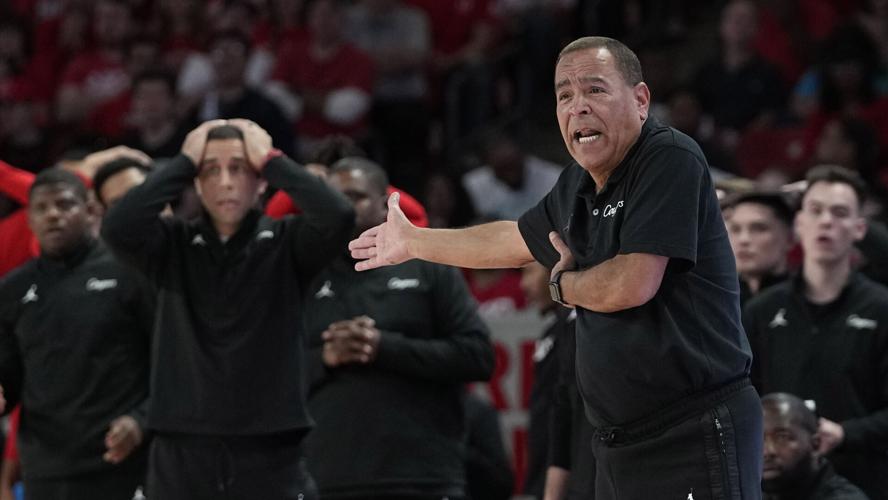
Houston coach Kelvin Sampson reacts to a foul call during the second half of a Dec. 31 game against Central Florida in Houston.
Men's Final Four prediction
• Purdue. The Boilermakers have gone 58-14 and been ranked No. 1 in each of the last two seasons. With 7-4 Zach Edey back for his senior year, this looks to be a breakthrough season.
• Houston. At 66, coach Kelvin Sampson only seems to be hitting his prime. The Cougars have gone 93-14 the last three seasons.
• Creighton. Time for coach Greg McDermott to get his day in the Final Four sun.

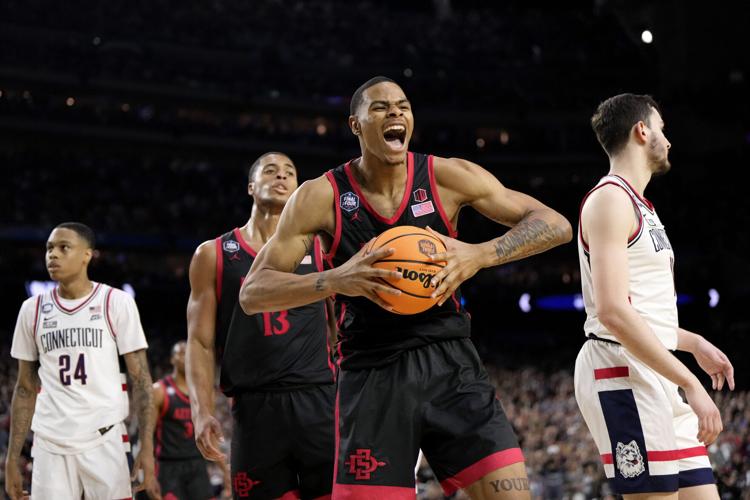
Forward Keshad Johnson (pictured against Connecticut in April in the 2023 national championship game while playing for San Diego State) and North Carolina transfer Caleb Love both bring Final Four experience to Tucson and the Arizona Wildcats this season.
• Arizona. Transfers Caleb Love and Keshad Johnson know the way to basketball’s Holy Turf, the Final Four.
Pac-12 women’s preseason: must-see nonconference matchups
During Adia Barnes' remarkable reconstruction of Arizona’s women’s basketball program, the Wildcats have excelled at every level — except in crafting a compelling nonconference schedule.
True, since 2018-19, the Wildcats are 43-2 in nonconference games, but they’ve never had a showdown game at McKale Center, no must-see game against women’s powerhouses such as Maryland or LSU.
Barnes has not played a Top-25 team at home in that 43-2 stretch, although she has whipped No. 8 Baylor in Texas and No. 6 Louisville on a neutral court.
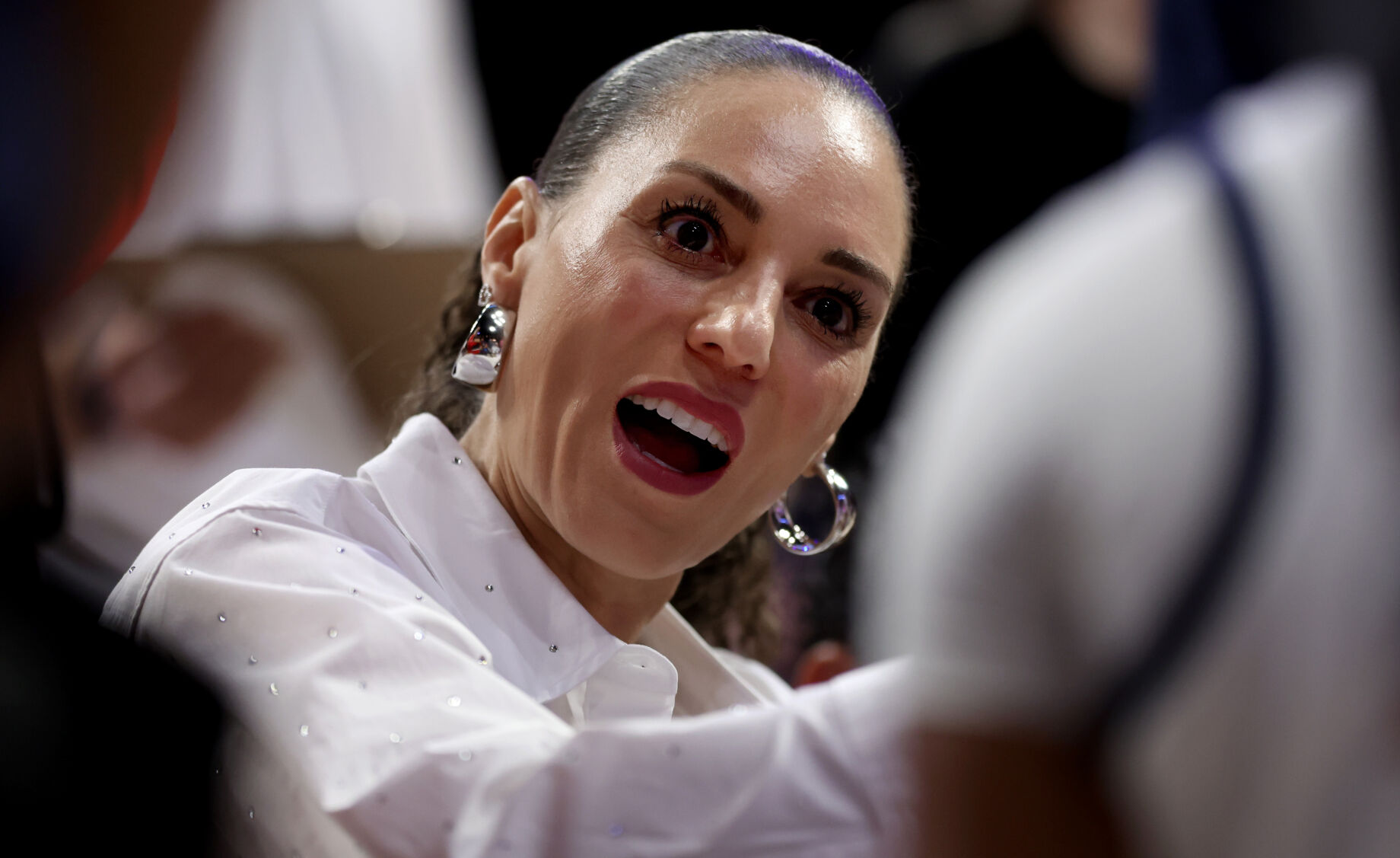
Arizona head coach Adia Barnes talks to her Wildcats during a timeout in their first exhibition game of the 2023-24 season on Oct. 25 against West Texas A&M at McKale Center.
That changes on Dec. 13 when 13th-ranked Texas plays at McKale.
Arizona’s nonconference success is shared across the Pac-12’s best programs. Here are the records of those Pac-12 schools dating to the 2018-19 season:
• Arizona, 43-2
• Colorado, 44-4
• Stanford, 45-6
• Oregon, 43-8
• USC, 47-10
Rising power Utah last year was 11-0 in nonconference games.
This year, the league plays five must-see games before the Pac-12 schedule gets underway. They are:
• No. 5 Utah vs. No. 6 South Carolina, Dec. 12 in a Connecticut tournament. No TV.
• No. 9 Indiana at No. 15 Stanford, Nov. 12, ESPN.
• No. 4 UCLA vs. No. 2 UConn, Nov. 24, in a Cayman Islands tournament. No TV.
• No. 24 Washington State vs. No. 14 Maryland, Nov. 23, in a Cancun tournament. No TV.
• No. 13 Texas at Arizona, Dec. 13. Pac-12 Networks.
Pac-12 women’s attendance: Cats, then everyone else
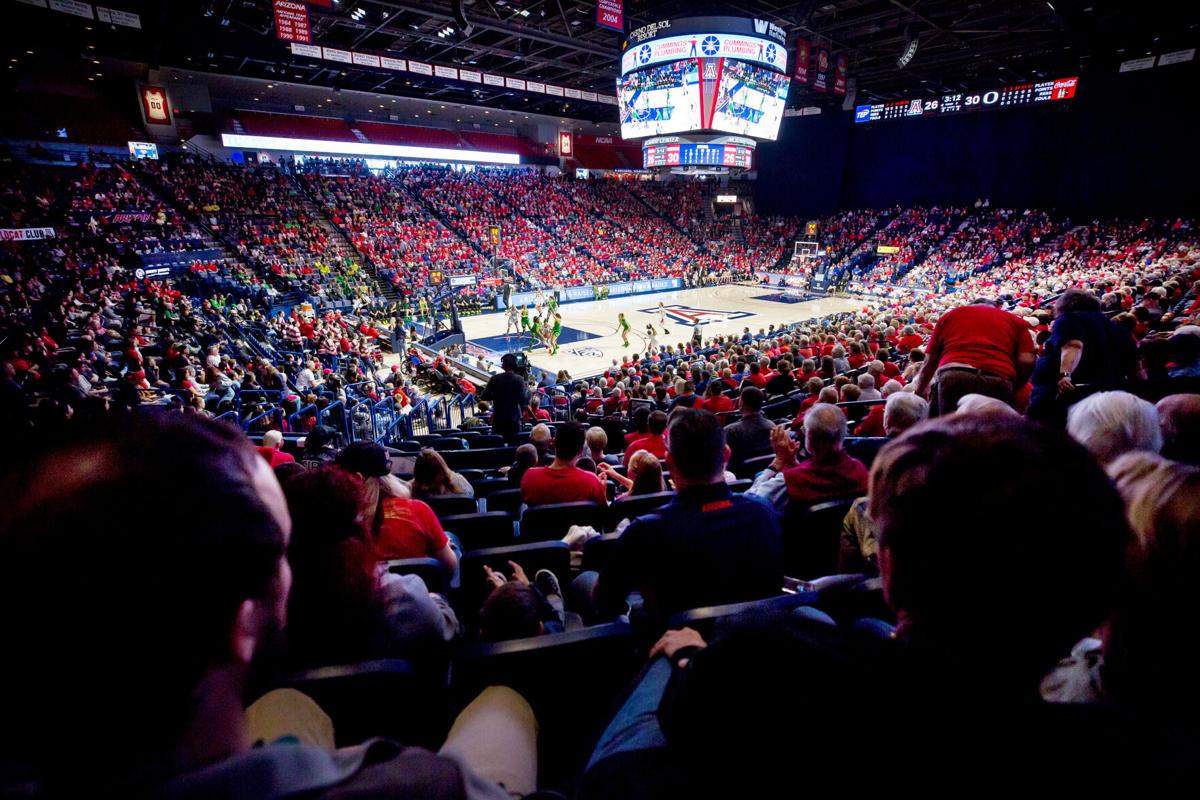
Arizona led the Pac-12 in home attendance last season with 7,679 per game. But others in the league have struggled to attract spectators to women’s basketball, mostly because the league’s premier program, Stanford, has difficulty filling Maples Pavilion.
The Cardinal averaged just 4,106 last season while rising power Utah managed just 3,628. Utah fans were slow to catch on, but it wouldn’t be much of a surprise if the Utes — last year’s conference co-champions — bumped their game attendance to about 5,000 or more this season.
Here’s last year’s NCAA women’s 10 attendance leaders:
• South Carolina, 12,942
• Iowa, 11,143
• Iowa State, 10,233
• UConn, 10,155
• Louisville, 8,779
• LSU, 8,733
• Tennessee, 8,150
• Arizona, 7,679
• Maryland, 7,132
• Ohio State, 5,955
• The Pac-12 runner-up in home attendance was Oregon at 5,658.

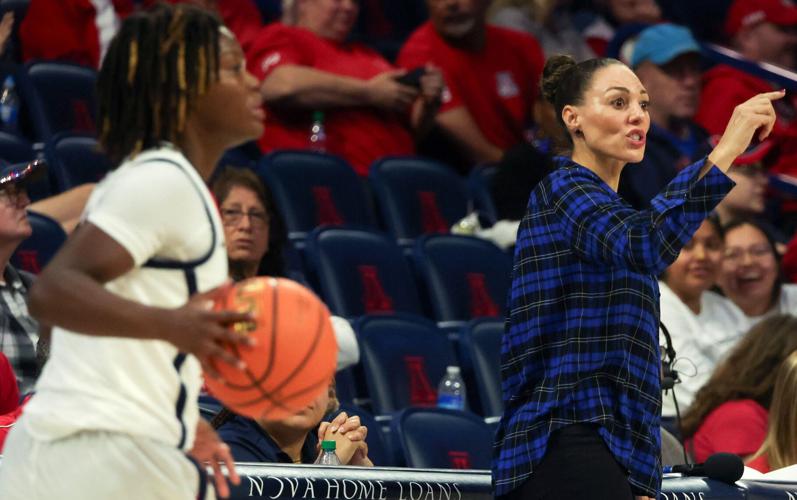
Arizona's Kailyn Gilbert (15) dribbles the ball while head coach Adia Barnes coaches from the sidelines in the match at the McKale Center, 1721 E Enke Dr, November 1, 2023.
Pac-12 not always kind to UA women
Arizona has been the Pac-12’s second most successful franchise the last five seasons under Adia Barnes, but when the league disbands in March, history won’t be kind to the Wildcats.
Because Arizona was so bad its first nine years in the league, 1986-95 — no winning conference seasons and a cumulative 23-87 conference record its first five seasons — they rank No. 9 among the league’s original 10 schools.
Stanford leads with a 579-87 conference record in that period. UCLA is the runner-up at 394-271.
Arizona is ninth at 265-398. The only team below Arizona is WSU at 184-481. ASU? The Sun Devils have gone 313-344 in conference history.
It wasn’t until Arizona hired Final Four coach Joan Bonvicini away from Long Beach State in Year 10 that the Wildcats began to win, although once Bonvicini stepped down after 17 years — she had gone 152-153 in the league — they went 34-110 in eight dismal seasons under Niya Butts.
Barnes changed all that, but it was too late to rewrite the Pac-12 record books.
Pac-12 Network will be missed by women’s hoops
The oft-criticized Pac-12 Network has been duly lambasted for, among other things, a woeful lack of subscribers, much-too-late start times for football games and just about anything you want to throw on former commissioner Larry Scott’s door.
But the one thing the Pac-12 Networks has done well is to dedicate itself to women’s basketball. It will broadcast 17 of Arizona’s 18 conference games this season, which has become routine and expected.
It’s the same across the league.
Arizona’s only league game that won’t be televised by the Pac-12 Networks — at USC — will be broadcast by ESPN2. The Pac-12 Networks will also televise the UA-Texas and UA-Gonzaga nonconference games.
The quality of broadcasting isn’t exactly at the Vin Scully or Joe Buck level, but it’ll be missed next season when Arizona goes to the Big 12. Most Big 12 women’s basketball games are available on the Big 12/ESPN streaming service, which can be frustrating to access.
Pac-12 forecast, women’s edition
• Utah, 15-3. Last year’s co-champs return their top six players, including power forward Alissa Pili, who is the league’s toughest defensive assignment.
• UCLA, 14-4. The Bruins are loaded with talent and experience. Senior forward Charisma Osborne has scored 1,798 points in her career and is a gamer.
• Stanford, 13-5. Picking the Cardinal third is almost unprecedented, especially with all-conference players Cameron Brink and Hannah Jump returning. It should tell you how good the league is.
• Colorado, 12-6. Coach JR Payne is on a roll, reaching the Sweet 16 last season and returning her top three scorers, including former Arizona center Aaronette Vonleh.
• Washington State, 11-7. The Cougars won the Pac-12 Tournament last year and have perhaps the most feared twosome in the league in Charlisse Leger-Walker and center Bella Murekatete.
• Arizona. 10-8. No one has mentioned the word “rebuilding’’ at Arizona, especially when you’ve got two McDonald’s All-American freshmen, Jada Williams and Breya Cunningham, on the roster. But it’s going to be a climb for Arizona to break .500 in league games.
• USC, 9-9. In another conference, any conference, the Trojans might be picked to contend for the title, but the Pac-12 is too strong for that this season.
• Oregon, 8-10. The Ducks are no longer Final Four material, but they are good enough to beat anyone, especially at home.
• Washington, 7-11. If there’s a team emerging as a potential powerhouse, it’s the Huskies and third-year coach Tina Langley.
• Oregon State. 6-12. It seems unfathomable that the Beavers were in the Final Four as recently as 2016 and in the Elite Eight two years later.
• Cal, 2-16. Are the Bears good at anything except rowing and swimming?
• Arizona State, 1-17. It’s possible that second-year coach Natasha Adair will follow her 1-17 debut season with an 0-18 finish.

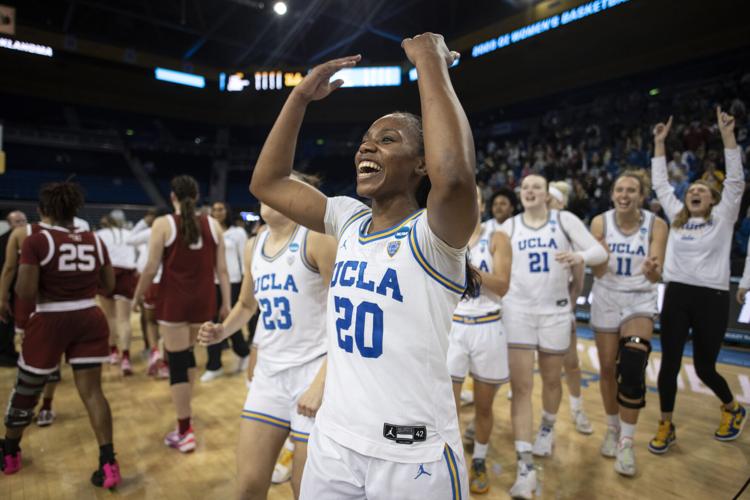
UCLA guard Charisma Osborne and teammates celebrate after the Bruins defeated Oklahoma in the second round of the 2023 NCAA tournament last March.
Women’s Final Four prediction
• LSU. The Tigers went 34-2 to win the national title in coach Kim Mulkey’s second season in Baton Rouge. All-American Angel Reese is back. There's a difference-maker like few others.
• Iowa. If you’ve got Caitlin Clark, the most head-turning player in women’s college basketball, returning from a 31-win team and the national finals, what else do you need?
• UConn. With star guard Paige Bueckers back from a knee injury, coach Geno Auriemma is on track to reach his 15th Final Four in the last 17 years.
• UCLA. The Pac-12 is so good that if figures someone — Stanford, Utah, UCLA or even Washington State — will bust through and reach the Final Four.
VIDEO: Arizona coach Adia Barnes speaks at Pac-12 Women’s Basketball Media Day Tuesday, Oct. 10, on the heightened fan support for her Wildcats in recent years, coinciding with multiple NCAA tournament appearances and five consecutive 20-win seasons. (Video courtesy Pac-12 Networks)

