

With the recruiting of 2026 high school graduates heating up this fall, UCLA coach Mick Cronin has a new plan.
Actually, two new plans.
One for a landscape in which the House settlement provisions — school revenue-sharing and strict outside NIL limitations — effectively eliminate booster-driven pay-for-play schemes.
Another is for if lawsuits break down those limitations, leading to the sort of unrestricted free agency that resulted in top men’s basketball players pulling down seven-figure deals in the transfer portal last spring.
In other words, you better have an NIL collective with plenty of cash on hand just in case.
“You have athletic directors nationwide that want to believe in the new system, that it’s reality, but you have to be ready,” Cronin said. “You have to have Plan A and Plan B. You have to have Plan B because if it goes back to where it was this spring, and other people have Plan B and you don’t, then you’re right back to struggling to get players.”

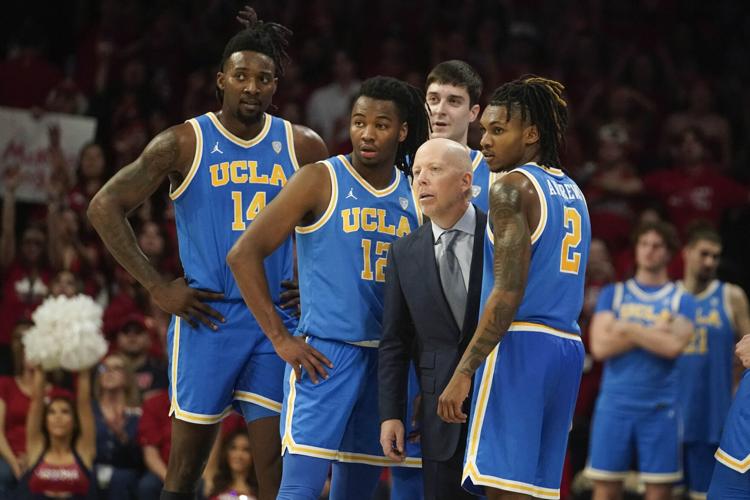
UCLA’s Kenneth Nwuba (14), Sebastian Mack (12), Lazar Stefanovic, rear, head coach Mick Cronin, second from front right, and Dylan Andrews (2) wait for a call from the referees during the second half of a matchup against Arizona in Tucson on Jan. 20, 2024.
Speaking to the Star and Blue Ribbon Yearbook earlier this month, as did several Western coaches, Cronin says he’s “not optimistic” that the House provisions will stick, especially after the College Sports Commission issued a statement last month that loosened restrictions on collectives.
Limiting NIL is “a noble attempt to put everybody on a level playing field, but I just don’t see in our country where it’s constitutionally legal to limit wages and tell people what their value is,” Cronin said. “I don’t see how it holds up in court.
“You hear all these coaches saying, ‘We just want to know the rules are, there’s got to be some sort of level playing field.’ But I don’t see how we get there.”
The CSC, which oversees the NIL GO program and its scrutiny of NIL payments, now says collectives and other entities can still sign athletes to NIL deals as long as they are for a “valid business purpose.” The CSC says it may require documentation proving the entity intends to profit from the sale of a product or service that the athlete promotes, but not whether the entity itself is profitable.
Morgan Lewis, a law firm that has a focus on college sports, wrote last week that the statement was “in response to a flood of backlash, including threats of action from counsel of plaintiffs in the House settlement.”
So maybe it was one step toward heading off actual legal challenges. Or maybe not.
“Three weeks after NIL Go started, they walked back the statement that that collectives couldn’t operate,” Cronin said. “So it becomes ‘How do we not get sued again? How do we not lose again?’”
Colorado coach Tad Boyle indicated he isn’t sure either. Known for running one of the most stable programs in the Pac-12 before moving to the Big 12 last season, Boyle would likely benefit from a new system that theoretically disincentivizes transfer activity.
If that system sticks.
“I don’t know the answer and I don’t think anybody does,” Boyle said. “If you listen to the powers that be, they expect it to stabilize. Not to sound skeptical, but I’m skeptical, because we basically have put a cap on something without collective bargaining.

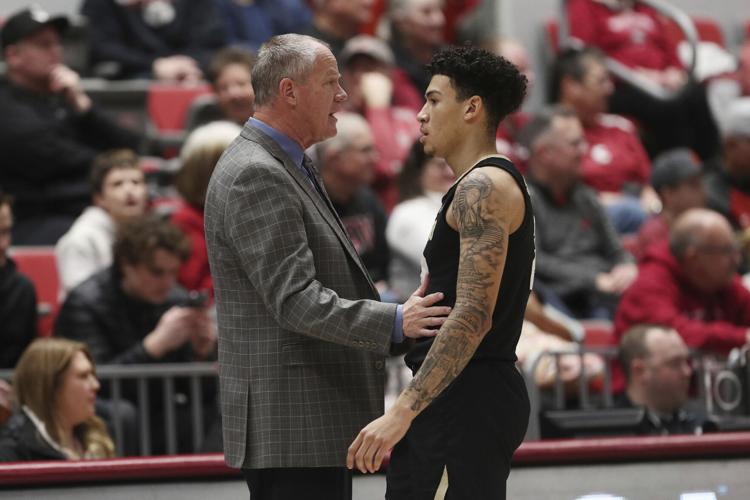
Colorado head coach Tad Boyle, left, speaks with guard KJ Simpson during the first half of a game at Washington State on Jan. 27, 2024, in Pullman, Washington.
“I’m not an attorney and I don’t pretend to be an attorney. But from everybody I’ve talked to, that won’t work long term.”
The only thing for sure about NIL is what’s happened in the past.
College athletes were first allowed to profit from NIL back in July 2021, giving notion to the idea that football linemen could endorse a barbeque joint or a star quarterback might appear at a car dealership for a small fee. But NIL quickly sprouted collectives, booster-funded groups that now often pay six- or seven-figure amounts to top athletes in exchange for a sometimes minimal amount of promotional activity.
Collective payments have jumped dramatically every year since 2021 and exploded notably over the past year, with coaches, athletes and collectives alike all racing to complete NIL deals before NIL GO became effective once the House settlement was approved in June.
According to NIL platform and advisory firm Opendorse, collective spending jumped 182% between April 2025 from April 2024 and was up 824% from June 2024 to June 2025, when the House settlement was approved.
That suggested intense escalation, especially during the 2025 spring transfer portal window, when NIL deals for men’s basketball players rose 5.3 times in the weeks following the transfer portal’s March opening, according to Opendorse data.
“The concept of ‘front loading’ payments — stacking collective payments prior to the approval of the House settlement and subsequent July 1 cap year — was not just a theoretical possibility,” Opendorse wrote. “The data proved it.”
The jump in NIL activity threatened the viability of budgets that both ASU coach Bobby Hurley and UA coach Tommy Lloyd carried into the spring.
“I think we had we had a good number to work with … but the market I think was probably 2½ times stronger than it was last year,” Hurley said earlier this month. “That factored into decisions we made with the roster.”
Hurley lost 11 players and wound up replacing them with six international players and several veterans of lower levels of college basketball, while Lloyd added seven freshmen plus Harvard grad transfer Evan Nelson, a Salpointe High School graduate who returned home for his final season.

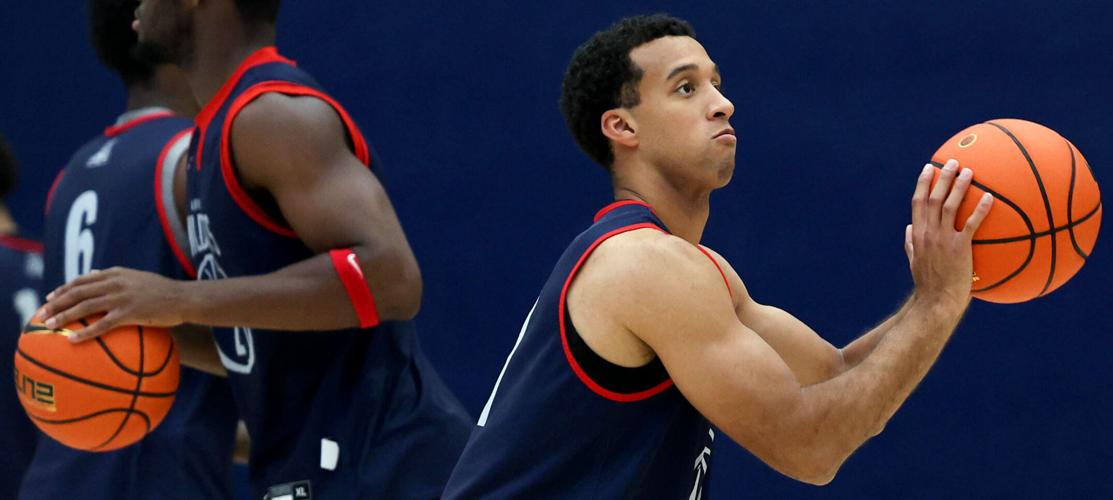
Arizona guard Evan Nelson (21) takes shots during a partially-open practice at Richard Jefferson Gymnasium, Aug. 12, 2025.
That helped the Wildcats offset the transfer portal losses of forward Henri Veesaar (North Carolina) and guard KJ Lewis (Georgetown), who left for what appeared to be better NIL opportunities.
“Did I anticipate this, basically the market, going as crazy as it did? Obviously I didn’t,” Lloyd said in June. “I think everybody thought that there might be a little bump, but to the level it did bump, I don’t think anybody could have predicted that. Fortunately, with the help of our athletic department, I think we were able to participate in a level that’s going to allow us to be competitive. And that’s what this program deserves.”
Things were just as challenging at Oregon State, which managed a 20-13 season while playing in the West Coast Conference last season during a forced hiatus from the now-rebuilding Pac-12.
The Beavers lost six of their last nine games, and coach Wayne Tinkle said some of the momentum was lost after “agents and folks” started calling players late in the season and telling them they could earn more if they entered the portal.
The agents were correct. Tinkle said his five starters last season together made about $400,000 — and those five are now making a collective $4 million at programs they transferred to last spring.
“Loyalty is really lost,” Tinkle said. “We’ve been heartbroken with a couple of kids in particular the last couple of years, where we gave them a chance, an opportunity that no other schools at our level did. They’re allowed to play through their mistakes and play when they’re young and really develop, then we lose them for their most fruitful years.

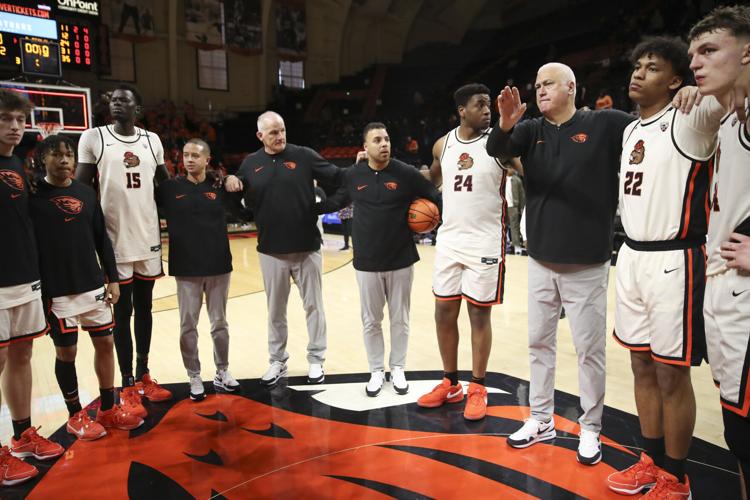
Oregon State head coach Wayne Tinkle, third from right, and his players circle up following home game against Colorado on March 9, 2024, in Corvallis, Oregon.
“It’s a tough deal. The reason we got into it was to really help mold young men as much as basketball players. That’s really taking a hit because it’s become mostly transactional.”
Like Hurley, Tinkle rebuilt with a combination of veteran transfers from lower levels of college basketball and international players.
But even coaches who could afford high-priced transfers last spring are sharing the same challenge as their less-endowed peers: They are annually flipping over half or more of their rosters, then attempting to rebuild chemistry every summer.
“It reminds me a lot of the two years I spent in the D league as far as building a roster,” says new Utah coach Alex Jensen, a former Ute standout who has played and coached at many levels. “ And there’s elements of Europe, too, because a lot of times in Europe, you’re building a new team every year.”
Also like Europe: Free agents often land where the money tells them to.
“No matter what players say about picking a school, they’re not going to pick schools that are offering them five times less money,” Cronin said. “No matter how good their relationship is with the coach, no matter how much they like the program. It’s just not gonna happen.”

