


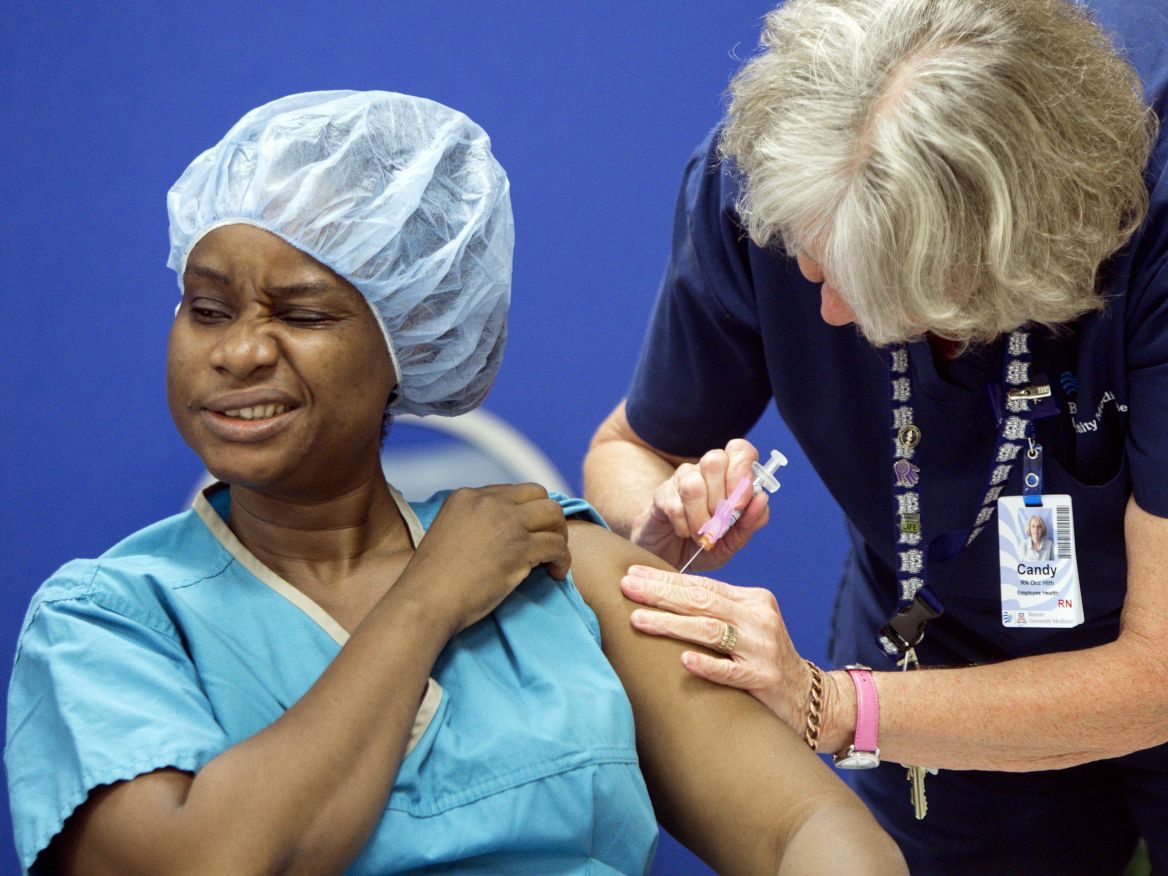
The pharmacy chain pitches started in August: Come in and get your flu shot.
Convenience is touted. So are incentives: CVS offers a 20-percent-off shopping pass for everyone who gets a shot, while Walgreens donates toward international vaccination efforts.
But flu season generally peaks in mid-winter or beyond and it’s unclear how long the immunity imparted by the vaccine lasts.
So when is the best time to go?
“The ideal time is between Halloween and Thanksgiving,” said Laura Haynes, an immunologist at the University of Connecticut Center on Aging.
The stores have figured out how “to deliver medical services in an on-demand way” which appeals to customers said Tom Charland, founder and CEO of Merchant Medicine, which tracks the walk-in clinic industry.
“It’s a way to get people into the store to buy other things.”
How long will the immunity last?
An early flu shot is better than no flu shot at all.
But...
“The data are very mixed,” said. John J. Treanor, a vaccine expert at the University of Rochester medical school. Some studies suggest vaccines lose some protectiveness during the course of a single flu season.
Flu activity generally starts in the fall, but peaks in January or February and can run into the spring.
“So some might worry that if (they) got vaccinated very early and flu didn’t show up until very late, it might not work as well,” he said.
But other studies “show you still have protection from the shot you got last year if it’s a year when the strains didn’t change,” Treanor said.
Will it actually prevent the flu?
In any given flu season, vaccine effectiveness varies. One factor is how well the vaccines match the virus that is actually prevalent. Other factors influencing effectiveness include the age and general health of the recipient. In the overall population, the CDC says studies show vaccines can reduce the risk of flu by about 50 to 60 percent when the vaccines are well matched.
Health officials say it’s especially important to vaccinate children because they often spread the disease, are better able to develop antibodies from the vaccines and, if they don’t get sick, they won’t expose grandma and grandpa. While most people who get the flu recover, it is a serious disease responsible for many deaths each year, particularly among older adults and young children. Influenza’s intensity varies annually, with the CDC saying deaths associated with the flu have ranged from about 3,300 a year to 49,000 during the past 31 seasons.
The vaccines can’t give a person the flu because the virus is killed before it’s included in the shot. This year, the nasal vaccine is not recommended for use, as studies showed it was not effective during several of the past flu seasons.
What strain will we see this year?
For the upcoming season, the vaccines will include three or four strains, including two A strains, an H1N1 and an H3N2, as well as one or two B strains, according to the CDC. It recommends that everyone older than 6 months get vaccinated, unless they have health conditions that would prevent it.

