



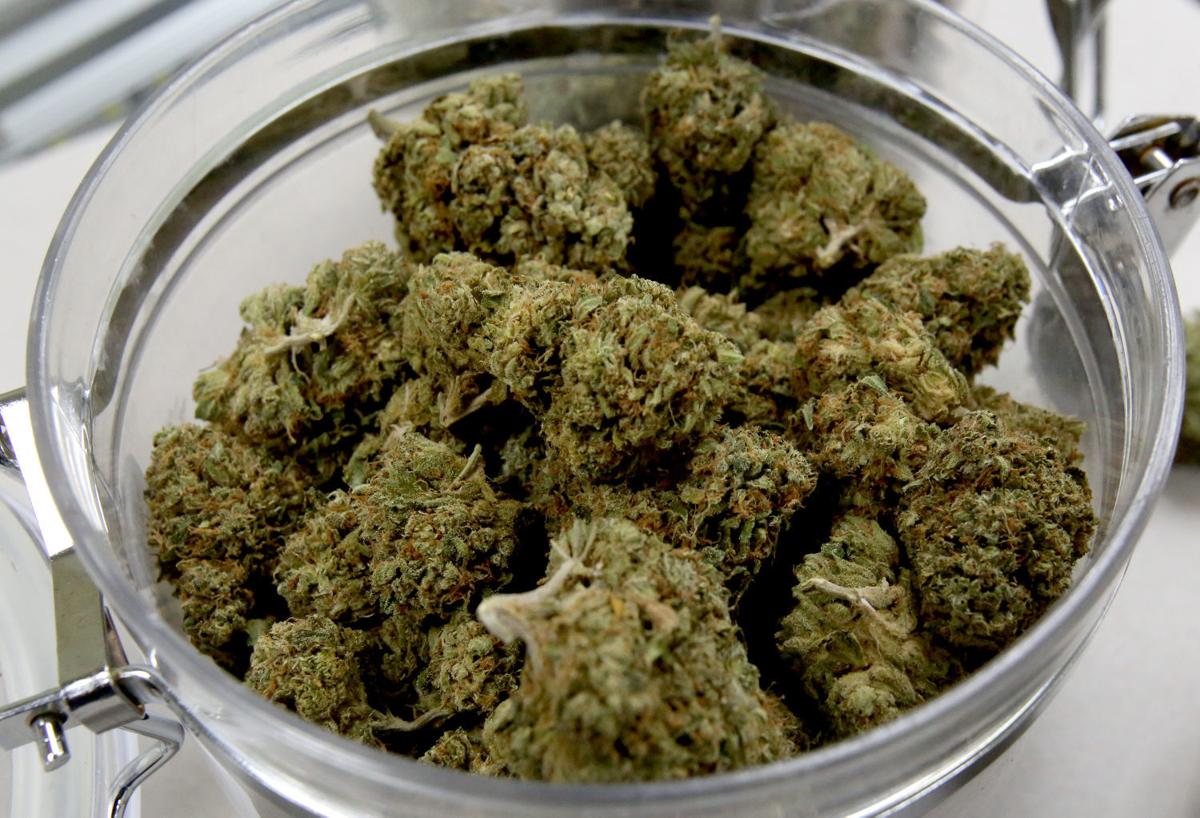
PHOENIX — State lawmakers are taking steps to ensure that rural residents have easy access to medical marijuana without having to grow their own.
SB 1286 would require the Department of Health Services to give top priority to applications to locate dispensaries in areas of the state where there was one before but which has since closed. Sen. David Gowan, R-Sierra Vista, said this will address what has become a shortage of places for patients in some areas of the state to get the drugs they need.
The unanimous approval of the House Committee on Regulatory Affairs on Monday sends the measure to the full House.
At the heart of the issue is how the state decides who gets a dispensary license.
The 2010 law that legalized marijuana for medical use required the health department to set up a network of nonprofit dispensaries, with one dispensary for every 10 pharmacies.
As that worked out, the number allowed was pretty much equivalent to the 126 “community health assessment areas.” So state health officials decided to issue one for each of those areas.
That pretty much assured a broad array of outlets, with the exception of some Native American reservations that did not approve the sale of the drug.
But those rules allowed those who were awarded dispensary licenses to pack up and move elsewhere after they had been in operation for at least three years. And Gowan said some of those who sought those rural licenses — the places with the least competition — probably had little interest in staying where they were.
“They all wanted to get into where the population is,” he said, mostly in Maricopa County. Complicating matters is that the existing rules say when the health department issues new licenses, the factors it has to consider include where there are the most patients. The result, said Gowan, is that about 60 percent of the licenses are within the state’s largest county.
The south Phoenix assessment area has four dispensaries, with an identical amount in the Peoria-Sun City area and in North Scottsdale.
Conversely, the latest data from the health department show several areas with just a single dispensary, like Yuma and Sierra Vista, with the same situation in Graham and Greenlee counties.
And there are several of these assessment areas in the state where there are no dispensaries at all, including Douglas, Holbrook, Eloy and the Page/Fredonia area. There also are none in Santa Cruz, La Paz and Apache counties.
Residents of these areas are not without some options.
Michael Weisser, state director of the National Organization for the Reform of Marijuana Laws, pointed out the voter-approved law allows those who are not within 25 miles of a dispensary to grow up to 12 marijuana plants “in an enclosed, locked facility.”
But he said that’s of little comfort to those who are sickest who may have little interest in cultivation and, more to the point, need alternate forms of the drug, like inhaling through a “vape” pen that requires a liquid that only a dispensary can provide.
The legislation would set up a three-tiered system for new licenses.
Top priority would go to those willing to set up in an area that at one time had a dispensary that moved away and is at least 25 miles from another dispensary. After that, the licenses would go to any area at least 25 miles from an existing dispensary.
On Twitter: @azcapmedia

