






Tucson Botanical Gardens has brought a little piece of Mexico City to Tucson.
The new outdoor exhibit “Frida’s Garden” opened in Tucson on Saturday, Oct. 11, and captures the essence of famed painter Frida Kahlo’s garden at her Mexico City home, Casa Azul, which is now a museum.
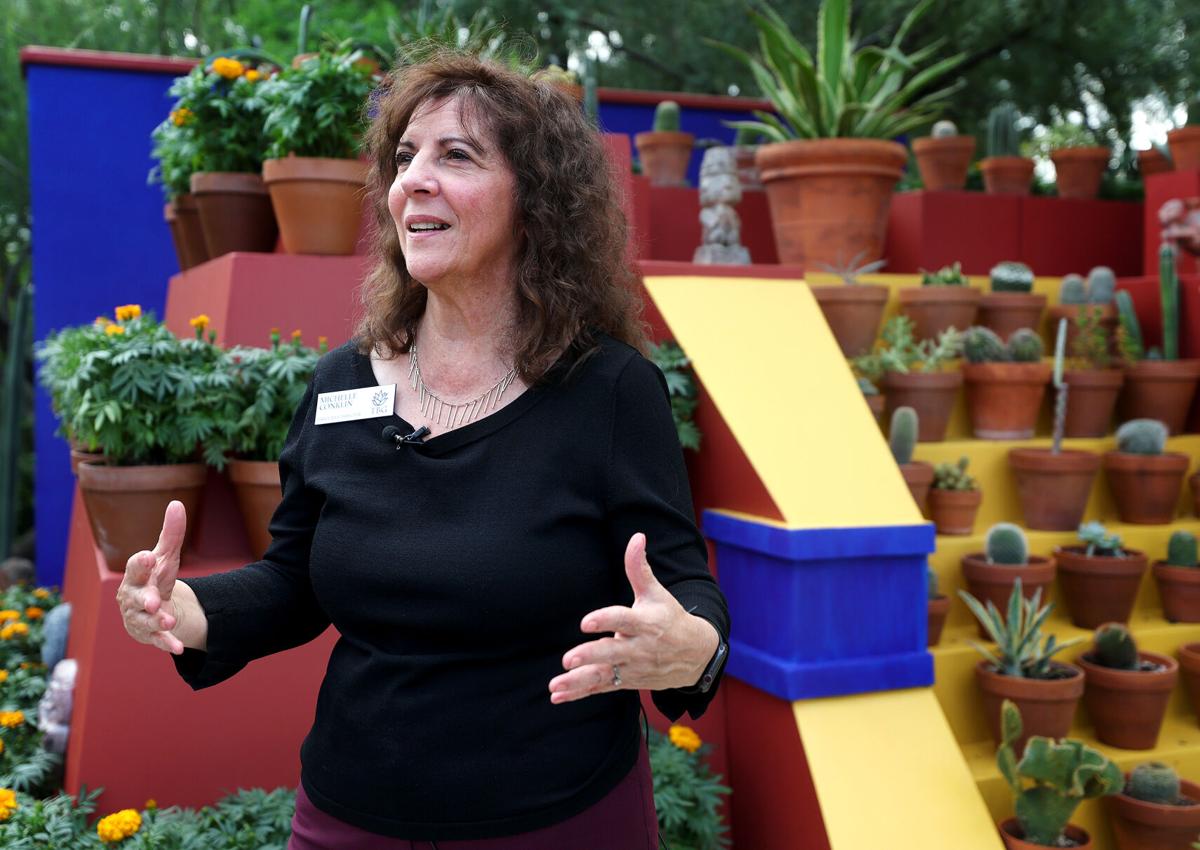
Michelle Conklin, chief executive officer of Tucson Botanical Gardens, is excited to bring Kahlo’s garden to Tucsonans.
“The Tucson Botanical Gardens mission is to connect people with plants and nature through art, science, history and culture, and the deep connection that this exhibit brings honors not only Mexican rich heritage, but also it’s really vital to our own history in Tucson as well,” Conklin said at a news conference Wednesday about the exhibit.
The garden mirrors the richness of the culture and history of Tucson, said Laura Leach, the botanical gardens’ director of development and marketing.
“Given our location, it feels entirely appropriate that we have at the center of our gardens, our Mexican American barrio garden, Frida’s Mexico City garden, and then just on the other side, we have our modernist Burle Marx garden, a South American landscape architect’s influence,” Leach said.

A table displays art supplies as a nod to Frida Kahlo's paintings as part of the “Frida’s Garden” exhibit at Tucson Botanical Gardens.
The Kahlo exhibit came to Tucson Botanical Gardens in an unusual way, Conklin said.
“About four years ago, I received a call from San Antonio botanical garden, and they were thinking of hosting a Frida Kahlo exhibit,” she said. “They built the exhibit, and it opened up to a blockbuster attendance. After that, they sold the exhibit to the Naples Botanical Garden. Again, it was very well received, and then within a year after that, the Naples Botanical Garden knocked on our door and asked the Tucson Botanical Gardens if we would like to purchase the exhibit.”
Conklin enthusiastically accepted.
“But we wanted to accept the exhibit, not on the terms that it would be a traveling exhibit. We would accept it if it could find a home here in Tucson, because we felt this was where Frida Kahlo’s Casa Azul belonged.”
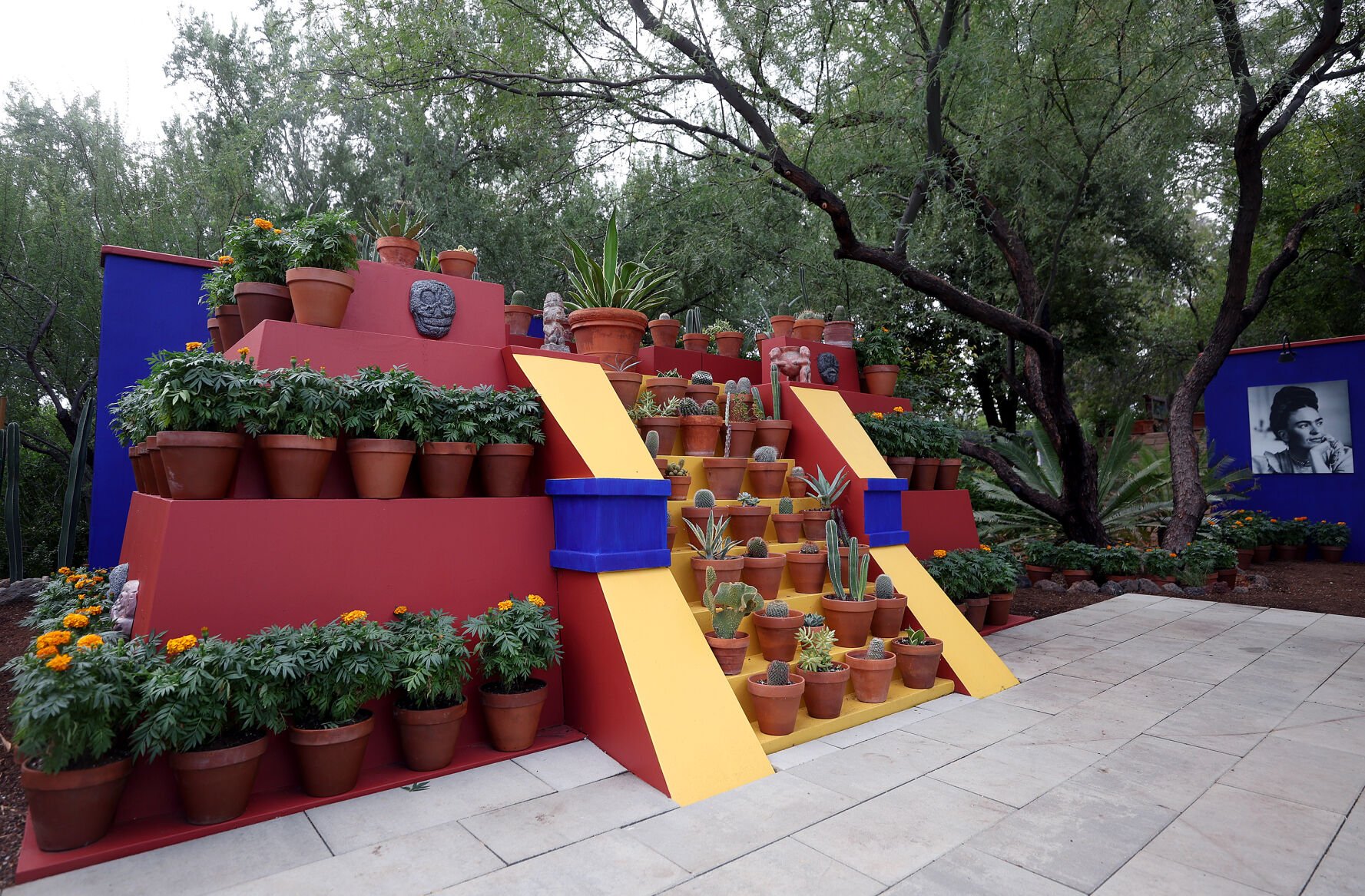
An Aztec-inspired pyramid is a sculptural focal point of the new “Frida’s Garden” exhibit at Tucson Botanical Gardens.
The planning for designing the new garden space began about two years ago, Conklin said, and included visits by the Tucson Botanical Gardens team to Mexico City and the Museo Frida Kahlo.
Installation of the garden features started in March of this year, working with Tucson landscape architect Maria Voris.
“We’ve dedicated about 5,000 square feet in the center of the garden property just to this exhibition. It’s shaded by mesquite trees, has a lot of native foliage, and of course, it holds a lot of the famous, iconic hallmarks of her garden, including the pyramid, the walls, and a frog-themed fountain,” Conklin said. “And we have a little section of Frida’s desk and easel,” in a replica.

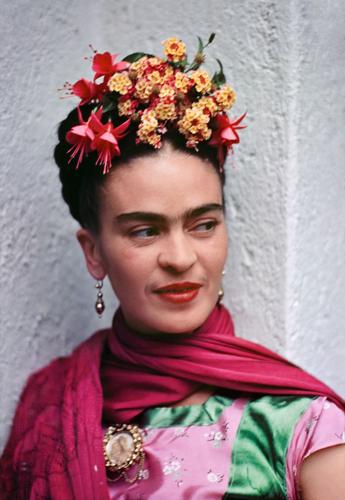
Frida in Pink & Green Blouse, a 1938 photograph by Nickolas Muray. Frida Kahlo was born in 1907 and died in 1954.
The team also took great care in capturing the precise color blue that Casa Azul is known for.
But of course, a garden is nothing without its plants.
The vision for the exhibit was to capture the spirit of the plants Kahlo kept in her own garden during her life.

Tourists walk the extensive gardens at La Casa Azul, the Museo Frida Kahlo, where artists Frida Kahlo and Diego Rivera lived and worked in Mexico City.
“We wanted to obviously include plants that she had in her garden, but we also wanted to embrace the reasons why she had those plants in her garden, and that was because she was wanting to embrace the native species of Mexico and down to South America,” said Adam Farrell-Wortman, Tucson Botanical Gardens’ director of horticulture.
“She didn’t necessarily have native species to the Sonoran Desert, right? If we want our garden to not just be a replica, but have the same spirit, then we needed to include our own native plants,” he said.
Farrell-Wortman and the team took inspiration from not only what the garden at Casa Azul looks like currently, but also from historical pictures and footage of Kahlo’s garden when it was originally planted.
“Initially she had a lot more cacti and yuccas and other succulents, so we looked to try to identify what plants those were,” Farrell-Wortman said. “We made some substitutions. Instead of planting the same species, we planted our native species.”
Visitors to the Tucson exhibit can walk among yucca, spider lilies, cacti, peppers, and seasonal marigolds in honor of the upcoming Día de los Muertos.
One of the limitations Farrell-Wortman encountered when picking plants to include in the garden was the difference in climate between Tucson and Mexico City, and the growth conditions needed by different plants.
“That definitely influenced choices as well,” he said. “Mexico City is a tropical temperate climate, so it never experiences a hard frost, and probably very, very rarely has any type of frost at all, and so they can grow a lot more plants than we can, or a lot different plants, than we can here in the desert.
“They’re also wetter, both in rainfall and humidity. So there’s some plants that will thrive in Mexico City that really would struggle, and would still struggle even with tons of water here in Tucson.”
Through the foliage, Farrell-Wortman also emulated the vibrant colors of Kahlo’s works, as well as flowers that featured in her paintings.
“And then we have two different types of yucca. We have one of our native yuccas — yucca pallida — and then we also have yuccas that she had in her garden — yucca elephantipes — which is like a big, tall tree.”
Leach said the new exhibit is a valuable addition to the gardens, and there is something special about the new space.
“For me, this garden zings. The vibrant color, the very deliberate plantings that are different from elsewhere in the gardens,” Leach said. “We have the intimacy of the barrio garden, and then we have this vibrant explosion of the senses in this space.”
“I think people will truly find this a very enlivening space to be in.”
The hope, Conklin said, is that visitors will be able to enjoy the exhibit for years to come. She said the botanical gardens want to incorporate it as a permanent feature.
“It’s a gathering place, and what could be better than bringing people together with a garden and with an artist such as Frida Kahlo?” Conklin said.

