




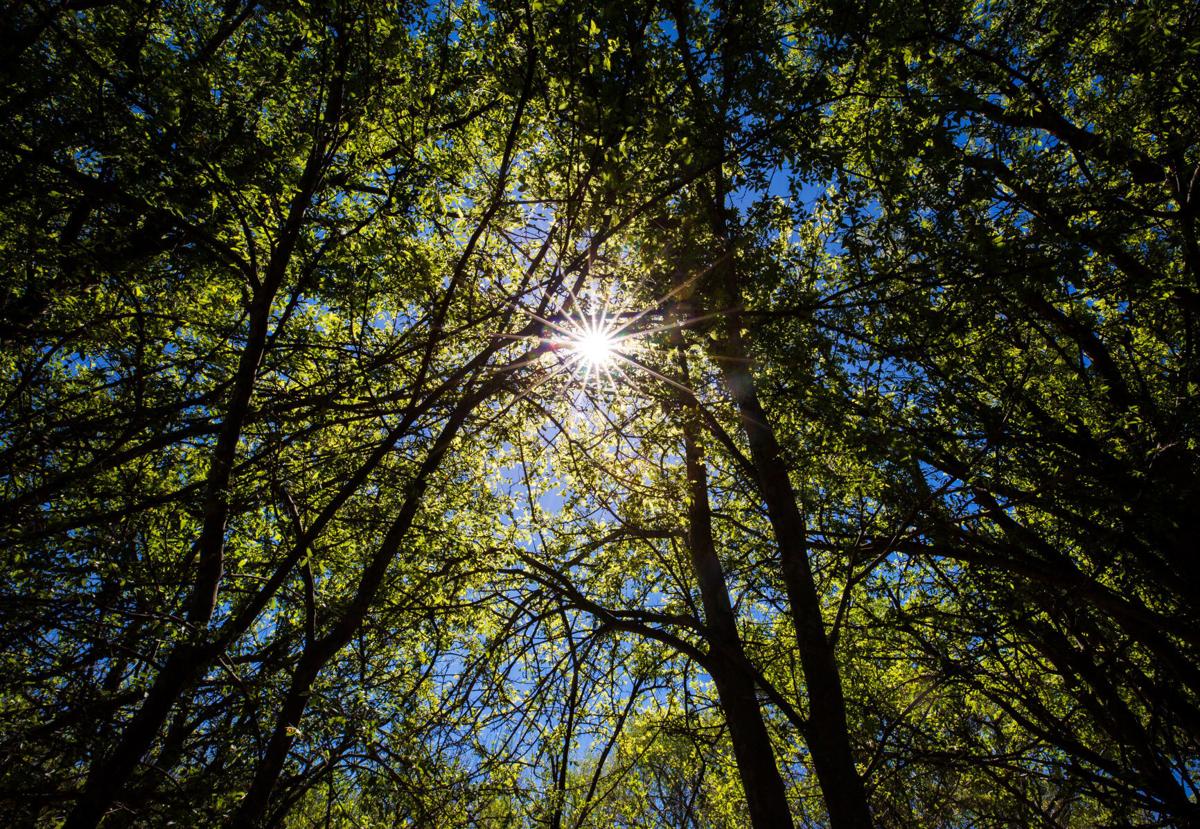
Also known as the canyon hackberry, the netleaf hackberry (Celtis laevigata, Celtis reticulata) is one of our native riparian trees. It grows large, 30-50 feet, depending on the regularity of watering. It does well in our sun, but will also tolerate partial shade.
I recommend this tree for areas where you want a natural habitat look. It’s fairly scraggly when young, but it’s a beautiful tree once it matures. The grey, ridged bark and the oval leaves contrast nicely with the berries which provide food for wildlife (and are also edible for humans). It’s an excellent habitat tree for birds, thanks to its size, the shelter it provides, and food supply.
It’s deciduous, so it works well for areas that require winter sun and summer shade. The leaves turn yellow before dropping in late fall, so it does provide some fall color — but also litter.
Due to its size and early awkwardness, plant it in areas farther from the house or more formal garden areas. Doing so will also avoid the issue of leaf litter. It will need at least 12 inches of soil to root and thrive, but tolerates poor soil.
In the wild it can get by with only 7 inches of rain per year. However, it will look its best in a landscape with supplemental watering, as it is a riparian tree. It has a moderate growth rate. You can plant it in full sun, but avoid reflected heat in urban environments to keep it looking its best. The tree is hardy to -20 F, making it a great choice for higher elevations.
Besides being a great habitat tree for birds, the netleaf hackberry is also a larval food for many local butterflies, and its flowers are a great source of nectar for native bees and other insects. The berries can be picked and processed into jellies and preserves, if desired. It can be propagated from cuttings or grown from stratified seeds.

