



An ambitious but failed attempt by Russia to return to the moon after nearly a half-century has exposed the massive challenges faced by Moscow's once-proud space program.
The destruction of the robotic Luna-25 probe, which crashed onto the surface of the moon over the weekend, reflects the endemic problems that have dogged the Russian space industry since the 1991 collapse of the Soviet Union. Those include the loss of key technologies in the post-Soviet industrial meltdown, the bruising impact of recent Western sanctions, a huge brain drain and widespread corruption.

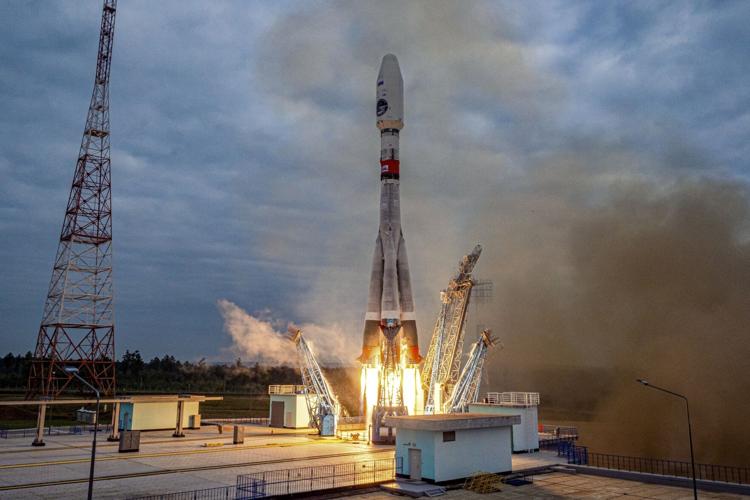
The Soyuz-2.1b rocket with the moon lander Luna-25 automatic station takes off Aug. 11 from a launch pad at the Vostochny Cosmodrome in the Russian Far East.
Yuri Borisov, the head of the state-controlled space corporation Roscosmos, attributed the failure to the lack of expertise due to the long break in lunar research that followed the last Soviet mission to the moon in 1976.
“The priceless experience that our predecessors earned in the 1960-70s was effectively lost,” Borisov said. “The link between generations has been cut.”
While the USSR lost the race to the United States to land humans on the moon, the Soviet lunar program had more than a dozen successful pioneering robotic missions, some of which featured lunar rovers and brought soil samples back to Earth. The proud Soviet space history includes launching the first satellite in space in 1957 and the first human in space in 1961.
Mikhail Marov, a 90-year-old scientist who played a prominent role in planning the earlier lunar missions and worked on the Luna-25 project, was hospitalized after its failure.
“It was very hard. It’s the work of all my life,” Marov said in remarks carried by Russian media. “For me, it was the last chance to see the revival of our lunar program.”

Russian Federal Space Agency Roscosmos CEO Yuri Borisov speaks June 30 to Russian President Vladimir Putin during a meeting at the Kremlin in Moscow.
“The priceless experience that our predecessors earned in the 1960-70s was effectively lost,” Borisov said after the lunar failure. “The link between generations has been cut.”
Borisov said the spacecraft’s thruster fired for 127 seconds instead of the planned 84 seconds, causing it to crash, and a government commission will investigate the glitch.
Natan Eismont, a leading researcher with the Moscow-based Institute for Space Research, told the state RIA Novosti agency said that signs of equipment problems had appeared even before the crash, but space officials still gave the go for landing.
Vitaly Egorov, a popular Russian space blogger, noted that Roscosmos may have neglected the warnings in a rush to be the first to land on the lunar south pole ahead of an Indian spacecraft that has been orbiting the moon ahead of a planned landing.
“It looks like things weren’t going according to plan, but they decided not to change the schedule to prevent the Indians from coming first,” he said.

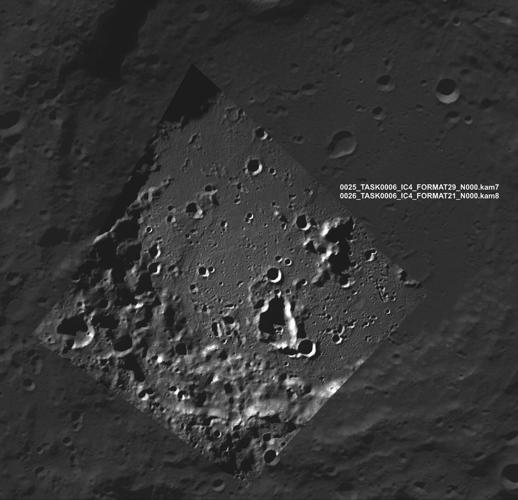
An image of the lunar south pole region on the far side of the moon captured by Russia's Luna-25 spacecraft before its failed attempt to land.
The lunar south pole is of particular interest to scientists, who believe the permanently shadowed polar craters may contain frozen water in the rocks that future explorers could transform into air and rocket fuel.
A major factor exacerbating Russia's space woes that could have played a role in the Luna-25 failure has been the Western sanctions on Moscow over its war in Ukraine. Those penalties have blocked imports of microchips and other key Western components and restricted scientific exchanges.
While working on the Luna-25 project, Roscosmos partnered with the European Space Agency that was to provide a camera to facilitate the landing. The ESA halted the partnership soon after the February 2022 invasion and requested Roscosmos to remove its camera from the spacecraft.

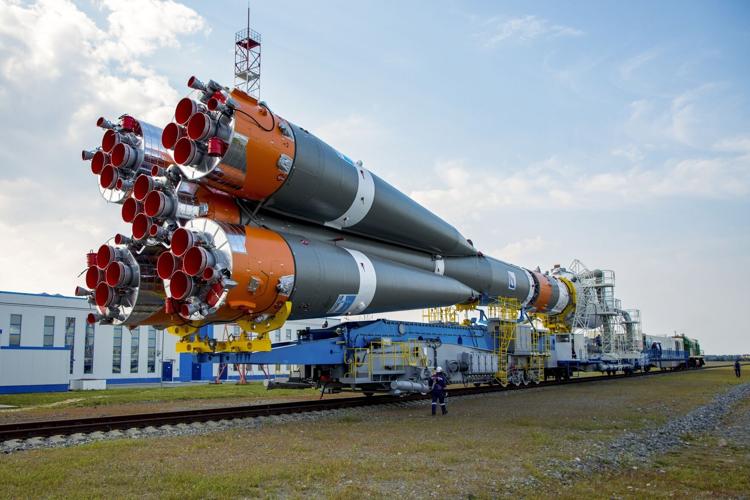
The Soyuz-2.1b rocket with the moon lander Luna 25 automatic station is transported to a launch pad Aug. 8 at the Vostochny Cosmodrom.
Years earlier, Russia hoped to buy the main navigation device for the lunar mission from Airbus, but couldn’t due to restrictions blocking the technology transfer. In the end, it developed its own equipment that delayed the project and weighed twice as much, reducing the scientific payload for the spacecraft that weighed over 3,800 pounds.
Many industry experts note that even before the latest Western sanctions, the use of substandard components led to the collapse of an ambitious mission to send a probe to Mars' moon Phobos in 2011. The spacecraft's thrusters failed to send it on a path toward Mars and it burned in the Earth's atmosphere — a problem that investigators attributed to using cheap commercial microchips that were unfit for the harsh conditions in space.
Some observers speculated that using the cheap components could have stemmed from a scheme to embezzle government funds, rather than importing the specialized equipment for the Phobos-Grunt spacecraft, which was designed by the NPO Lavochkin, the same company that developed Luna-25.

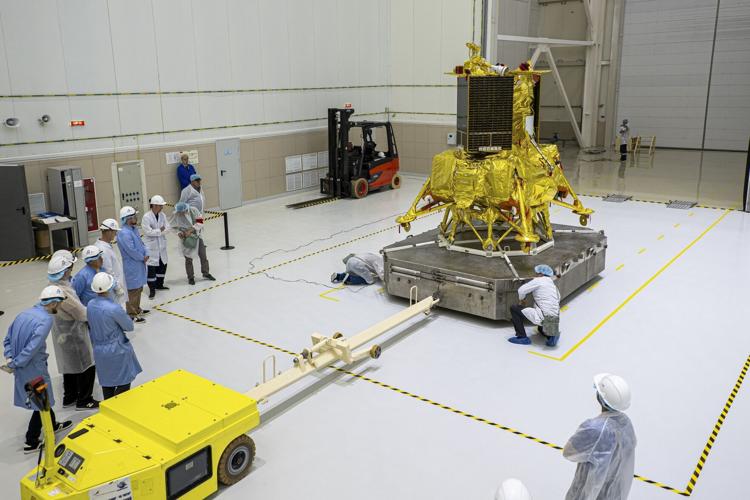
The moon lander Luna-25 automatic station is seen July 26 inside a plant shop at the Vostochny Cosmodrome in the Russia's Far East.
Amid the finger-pointing, some argued the failure could cost Borisov his job.
Some commentators said the Luna-25 crash dented Russian prestige and raised new doubts about its technological prowess following military blunders in Ukraine.
“The consequences of the Luna-25 catastrophe are enormous,” pro-Kremlin political analyst Sergei Markov said.
“It raises doubts about Russia’s claims of a great power status in the eyes of the global community. Many would decide that Russia can’t fulfill its ambitions either in Ukraine or on the moon because it lives not by its modest current capability but rather fantasies about its great past," he said. "People as well as countries want to side with the strong who win, not the weak who keep making excuses about their defeats.”
Space exploration galleries
Check out these galleries highlighting moments in the history of space exploration.

Space research and development is useful in many ways here on Earth, influencing everything from health care to selfies. These technologies ha…

Check out your newspaper today, or buy a copy, to find an exclusive 24-page special section commemorating the Apollo missions to the moon. You…

A SpaceX Falcon Heavy rocket lifted off Feb. 6 for a demonstration test flight at the Kennedy Space Center in Florida from the same pad where …

A look back at a largely-forgotten space tragedy that threatened the future of NASA's moon program.

The Hubble Space Telescope is a NASA space telescope launched into orbit on April 24, 1990, aboard the Space Shuttle Discovery. The telescope …

On March 23, 1965, the first manned mission in NASA's Gemini program completed three orbits around the earth aboard their spacecraft nicknamed…
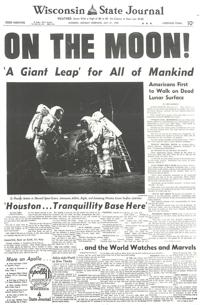
Forty-five years ago Sunday, Apollo 11's Neil Armstrong and Buzz Aldrin became the first humans to set foot on the moon.

