

When gardeners aren’t gardening, often they are reading about gardening. Here are 14 titles for the gardener on your holiday shopping list. Some are 2017 releases, while others are recommendations from local gardening professionals and experts.
NEW RELEASES
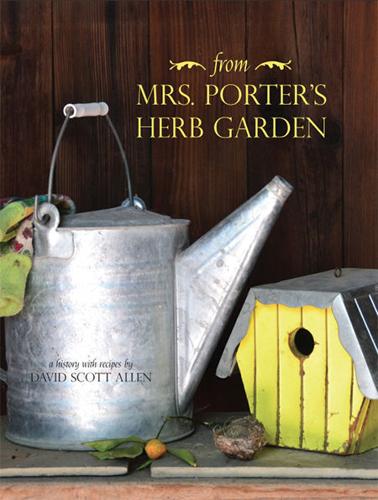
“From Mrs. Porter’s Herb Garden,” David Scott Allen, 2017.
Armed with a grant from the Southwestern Foundation for Education and Historical Preservation, food blogger Allen combined recipes with information on the herbs grown at Tucson Botanical Gardens.
Historical photos of the Porter family who lived on the current botanical gardens grounds pepper the 112-page paperback.
The original idea was to include Bernice Porter’s recipes that included cuttings from her herb garden.
“Mrs. Porter was not a cook,” says Allen, who is director of development for the University of Arizona Honors College. “Mrs. Porter had a cook. There’s a difference.”
Allen instead used his own recipes, some from his Cocoa and Lavender blog, some changed from his mother’s creations. He put together a couple of recipes like the lemon verbena butter cookies specifically for the book.
While the book doesn’t focus on growing the 29 herbs, it includes details on seasonal growth and how well they do in Tucson.
Sales of the book benefit the botanical gardens, which Allen, a long-time supporter, calls “one of the best things going in this town.”
He hopes the book expands readers’ cooking adventures. “I would hope people would start thinking more broadly about how they cook,” he says. “I want people to open up to the flavors that are out there.”
“Arizona Master Gardener Manual,” Edward C. Martin and Jay Gonzales, eds. (Alphagraphics, 2017).
The textbook that volunteers use to become certified master gardeners is now available to the public. Since 1998, a shorter, online version allowed gardeners to tap into the wealth of science-based information about growing plants in Arizona. That version was taken down when the second edition became available.
The updated version, reviewed and penned by 21 authors who are academic experts in agricultural topics, includes new sections on pest management, citrus, weeds and backyard composting. The second edition also updates practices recommended by scientists. “We brought it up to speed with new research,” says Rick Gibson.
Gibson, one of the manual’s authors, is a Pinal County cooperative extension agent. The University of Arizona Cooperative Extension is responsible for managing the state’s master gardeners, who are specially trained and certified as gardening educators.
“We feel that the book has a lot of key information that would be valuable to those who want to grow successful gardens and landscapes,” says Gibson.
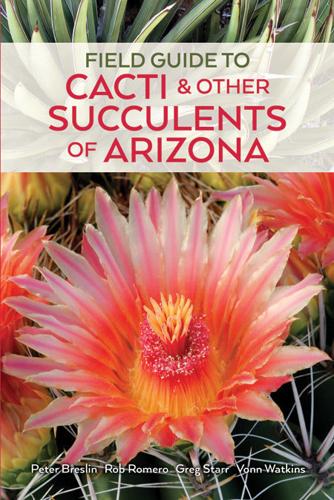
“Field Guide to Cacti & Other Succulents of Arizona,” Peter Breslin, et al (Tucson Cactus and Succulent Society, 2017).
This second edition, released in January, has new photos, better maps of plant distribution and a newly described species of Echinocereus.
Master gardener Lesley Oley calls it “a great book created by Arizona desert plant enthusiasts for Arizona desert plant enthusiasts.”
“Getting Potted in the Desert,” Marylee Pangman, 2017.
Landscape designer Elizabeth Przygoda Montgomery calls the former Tucsonan’s book “just such a great way to learn about how to pot in the desert.” Pangman issued a print-on-demand paperback version this year. It isn’t spiral-bound like the first edition.
BY LOCAL AUTHORS
“Plants for Dry Climates,” Mary Rose Duf-field and Warren Jones (HP Books, 1992).
“I take this book with me when I plant-shop because I can see what a plant will look like when grown,” says master gardener Cynthia Herron, “and it gives me information I need about each plant.”
“A Desert Gardener’s Companion,” Kim Nelson (Rio Nuevo Publishers, 2001) “is a great way to stay on top of monthly garden tasks,” says Jessica Paul, gardens manager for Community Gardens of Tucson.
“A Yard Full of Sun,” Scott Calhoun (Rio Nuevo Publishers, 2005).
“It’s a very personal journey of how he created his own gardens,” says Herron, “but is also full of useful information about all aspects of designing a garden for the desert.”
“Cool Plants for Hot Gardens,” Greg Starr (Rio Nuevo Publishers, 2009). “It is the go-to book for landscaping in Tucson,” says landscape designer Paul Connolly. “I have used many of the plants recommended in his book and they all perform as he describes.”
“Rainwater Harvesting for Drylands and Beyond,” Brad Lancaster (Rainsource Press, 2013).
“If you want to learn how to live sustainably in the desert while harvesting its bounty, this is the book to read,” says Paul.
EXPERTS’ FAVES
“A Natural History of Western Trees,” Donald Culross Peattie (Hougton Mifflin Harcourt, 1991). Landscape designer Greg Corman calls this and Peattie’s “A Natural History of Eastern and Central North America” “a joy to read ... No other plant books match them in scope or depth of coverage.”
“Extreme Gardening,” Dave Owens, (Poco Verde Landscape, 2000).
Owens is known in the Phoenix area as the “Garden Guy.” “I love his organic fertilizer and pest control methods,” says Paul, “as well as his companion planting recommendations.”
“The Arizona Low Desert Flower Garden,” Kirti Mathera (Gibbs Smith, 2007).
The Phoenix resident’s guide “is a really cool book arranged by color,” says Herron. The flip pages allow gardeners to mix and match low-, medium- and tall-growing plants, she says.
“Gardening with Less Water,” David A. Bainbridge (Storey Publishing LLC, 2015). David Mount, a master gardener and community garden coordinator, likes this collection of simple, inexpensive irrigation systems. “The descriptions are very clear and well-illustrated,” says Mount.
Other suggestions: any succulent book by Jeff Moore, as well as garden books by former Arizonan Mary Irish or Tucson gardening guru George Brookbank.

