



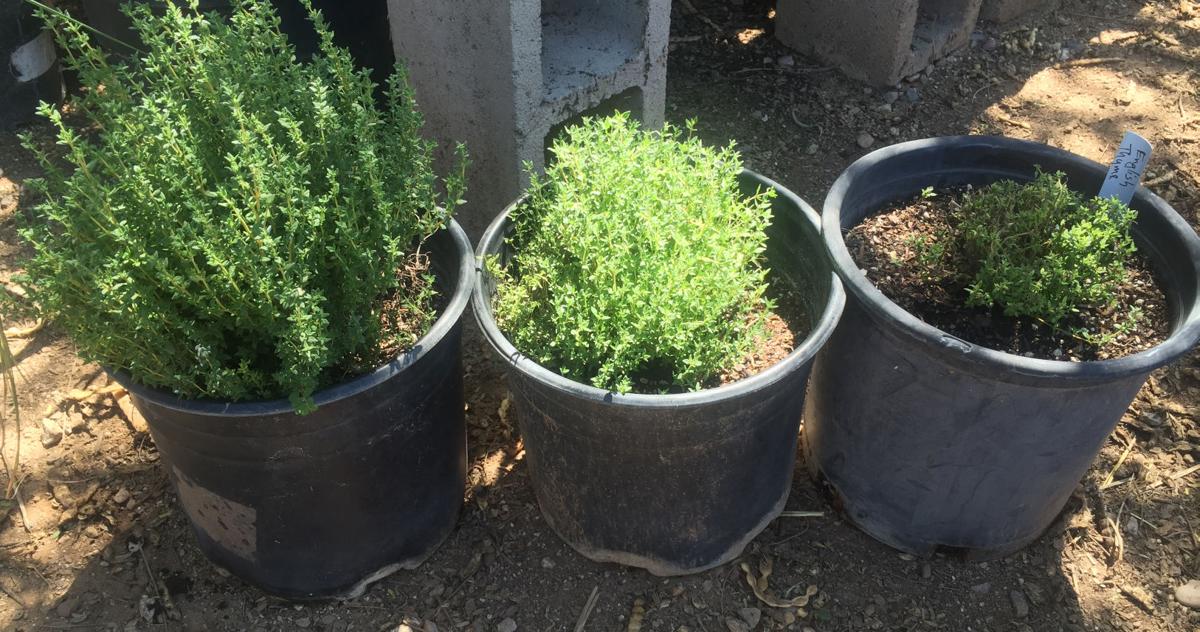
Group 1: Rosemary, sage and thyme
- All do best in the ground rather than in pots, she says. They like to dry out between waterings.
- Use a little extra perlite in your planting mix to ensure good drainage.
Rosemary
- When establishing rosemary, water every other day but increase to every day in the summer. Watch for yellowing leaves and if you see them, back off on the watering. In the ground, once rosemary’s established, you don’t need to water it at all, she says.
- Rosemary makes a great hedge and will flower in the winter, when there’s not much else for the bees to feed on.
- The prostrate type of rosemary is more pungent than the upright, she says.
- Watch for spider mites. Sprinkle diatomaceous earth (food-grade only — not the type used in pools) over the top of the plant and shake the plant slightly to distribute the powder. Rosemary is also susceptible to spit bugs. Use a hard spray of water 2 times per day to dislodge the critters, she says.
Sage
- Sage is drought tolerant and doesn't like soggy roots. It’s a good herb for drying.
- Harvest the tips and leave the lower leaves, as the woody lower stems don’t always grow back after trimming. Growth will slow down in November, she says.
Thyme (pictured)
- This herb also slows down with cold weather but will keep growing.
- When it gets tall and leggy, give it a haircut by trimming it with scissors by a third or more. It will grow back nicely, she says. Let the stems dry out a bit, then just strip the little leaves off with your fingers

