




Tucson business and civic leaders announced a new plan to accelerate economic development at and around Tucson International Airport, including the creation of new business parks and transportation corridors.
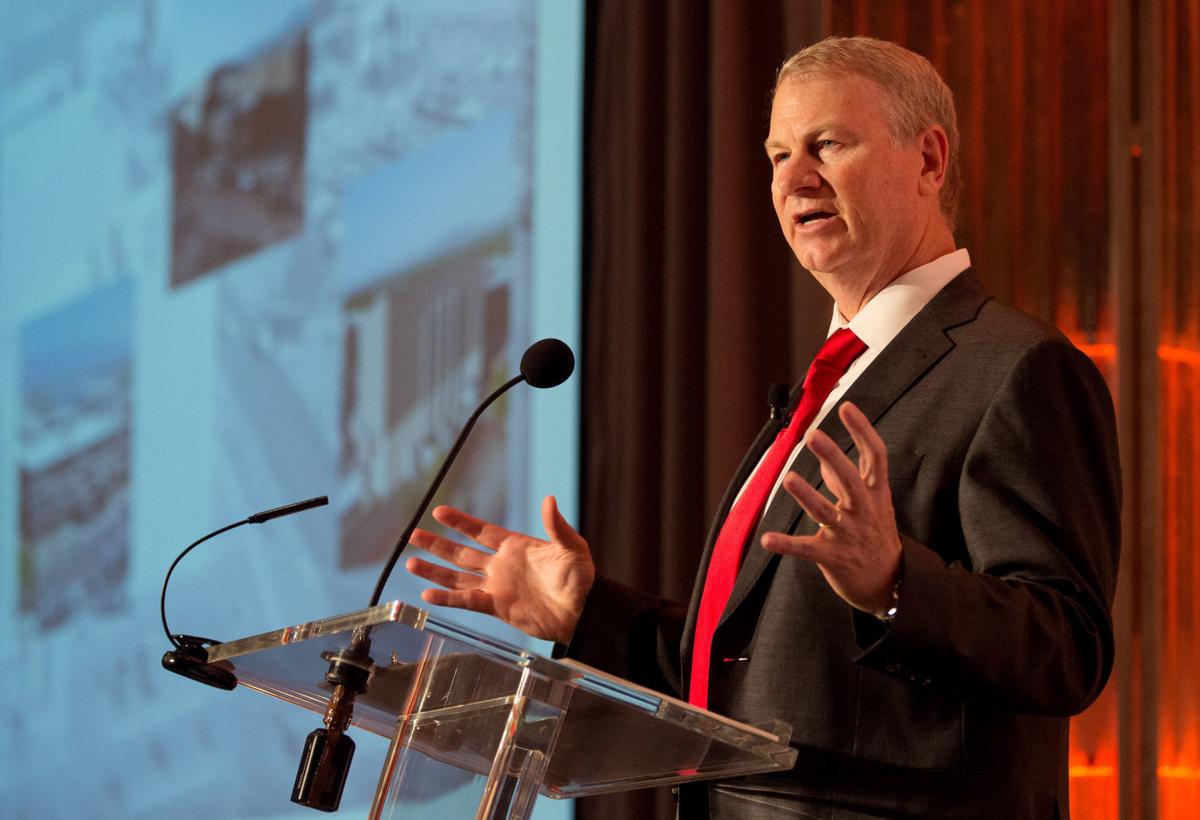
The plan, known as the TIA 2019 Economic Blueprint, was unveiled Thursday at the annual meeting of Sun Corridor Inc., which entered an economic-development partnership with the Tucson Airport Authority in April 2018.
The blueprint — which includes some updated elements of TIA’s last master plan in 2014 — calls for the airport to team up with Sun Corridor and other local business groups and government agencies to leverage the airport location, with a focus on courting aerospace and defense and transportation and logistics businesses.
The plan identifies three major land parcels for potential development, supports the establishment of special trade zones, calls for making currently available airport land “shovel ready,” and envisions a new airport terminal and entrance linked to Interstate 10 by a limited-access expressway.
Air service has improved and passenger counts are steadily rising at TIA, said Lisa Lovallo, chair of the Tucson Airport Authority and market vice president for Cox Communications.
“But we have, I think, some unmet potential in terms of how we handle economic development and growth in and around our airport,” Lovallo said.
Sun Corridor President and CEO Joe Snell said the airport has long been key to the region’s economic development but the new partnership is a natural fit that already promises to pay dividends.
Besides charting the airport’s strategy, the mainly business-supported Sun Corridor has been marketing the airport properties aggressively, Snell said, with an expanded sales staff visiting numerous areas including San Diego and other sites in California as well as Dallas, Salt Lake City, Denver and South Carolina.
“We’re really out there, and that effort has created a very strong pipeline” of interested companies, Snell said.
Raytheon, a TIA tenant and the region’s biggest employer, supports development in the airport area and has been encouraging other aerospace companies to land there, said Wes Kremer, who became president of Tucson-based Raytheon Missile Systems in March.
Kremer said efforts by the airport and local governments to establish a larger buffer zone to the south of Raytheon’s airport site were key to the company’s decision in 2016 to add some 2,000 jobs and build several new buildings at the airport campus.
He credited his retired predecessor at the helm of Missile Systems, Taylor Lawrence, for helping in the joint economic development effort as a member of Sun Corridor’s board.
“We’ve actually already reached our commitment to add 2,000 jobs, and we’re expecting to add more in the future,” Kremer said.
The airport plan identifies three major land parcels for potential development, including a 550-acre strip of former mining land south of Aerospace Parkway, adjacent to land that Pima County already has begun to develop to the west.
Also targeted are a 1,400-acre parcel southeast of the Aerospace Parkway tract that the Airport Authority purchased for airport noise control; and a 600-acre parcel on the airport’s northeast side, bordered by Alvernon Road to the east and Los Reales Road to the north.
The south acreage intersects proposed routes for the proposed State Route 410-Sonoran Corridor, while the 600-acre parcel was purchased for a future passenger terminal and third runway that aren’t expected to be needed until after 2045, the blueprint says.
The blueprint also calls on the airport to evaluate an east-west rail line to connect the open land south of the airport to the Port of Tucson.
Snell said the Tucson area has had a surge of business arrivals and expansions in the past two years, citing the Raytheon expansion, the arrival of Caterpillar’s Surface Mining Technology Division near downtown, expansions by Texas Instruments and self-driving truck pioneer TuSimple, and the soon-to-open Amazon distribution center with 1,500 jobs.
The activity has added a total of about 6,300 direct jobs and more than $500 million in capital investment, generating an estimated $5 billion in economic impact and more than $250 million in new state and local taxes over the next five years.
But Snell said with the economy possibly slowing in the next year, there’s not time to rest.
“The warning signs that the economy is softening are there, so the fight is going to get harder for us,” he said. “We’ve got to invest in our schools, it’s what drives all market decisions, and we’ve got to fix these roads.”
GALLERY: Tucson International Airport through the years
Photos: Tucson International Airport history in photos
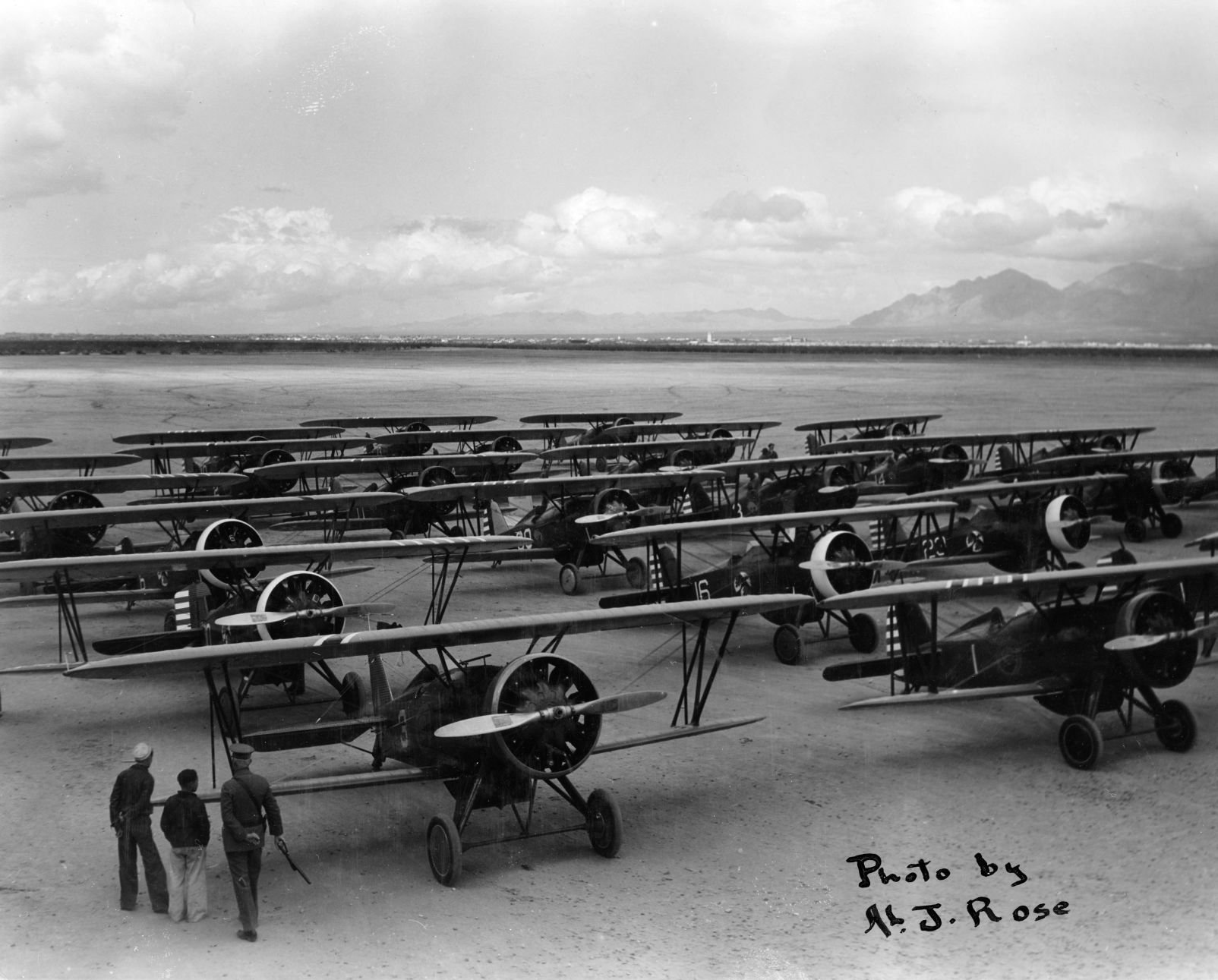
Curtiss biplanes from the U.S. Army Air Corps at Tucson Municipal Airport (now Davis-Monthan AFB) in 1933.

Tucson Municipal Airport (now Davis-Monthan AFB) in Feb. 1933.

Tucson Municipal Airport (now Davis-Monthan AFB) in Feb. 1933.

Runway lights at Tucson Municipal Airport, likely ca 1940s.

An old control tower at the Tucson Municipal Airport, now known as the Tucson International Airport. In the background are three hangars, one of which served as the old terminal building. Passengers waited in the shade of a long porch that extended from the terminal before walking to the airplane and climbing portable stairs to board the plane. The three hangars were the first buildings erected at the airport when it opened at its present location in the 1940s. They are still standing, and are located on the airport's west ramp.

Tucson Airport Authority "Rainbow" tower. Each layer painted a different color. Circa 1950.

Artist's rendering of what the control tower and operations building at Tucson International Airport will look like, January 14, 1957.

The new Tucson Municipal Airport control tower shortly after completion in 1958

Tucson International Airport iconic control tower in September, 1968.

Tucson International Airport tower in 1985.

A time exposure at Tucson International Airport in December, 1978. The lines are navigation lights from jets taking off.

The terminal building at the Tucson Municipal Airport, now known as the Tucson International Airport. Passengers waited in the shade of a long porch that extended from the terminal before walking to an airplane and climbing portable stairs to board the plane.

Passenger ramp under construction at Tucson Municipal Airport in 1948. Looking southeast from the original terminal building on the west side of the airport.

A pilot exits an F-84F Thunderstreak of the Arizona Air National Guard during the Ricks Memorial Trophy contest at Tucson International Airport on July 29, 1957. In the 1950s and 1960s the Air National Guard conducted the annual contest, a cross country timed air race designed to showcase the newly formed Air National Guard.

Spectators watch Arizona Air National Guard fighter jets compete in the Ricks Memorial Trophy contest at Tucson International Airport on July 29, 1957. In the 1950s and 1960s the Air National Guard conducted the annual contest, a cross country timed air race designed to showcase the newly formed Air National Guard.

Maj. Philip Colman streaks along the runway at 700 mph in an F-84F Thunderstreak as Arizona Air National Guard fighter jets compete in the Ricks Memorial Trophy contest at Tucson International Airport on July 29, 1957. In the 1950s and 1960s the Air National Guard conducted the annual contest, a cross country timed air race designed to showcase the newly formed Air National Guard.

Arizona Air National Guard fighter jets compete in the Ricks Memorial Trophy contest at Tucson International Airport on July 29, 1957. In the 1950s and 1960s the Air National Guard conducted the annual contest, a cross country timed air race designed to showcase the newly formed Air National Guard.

Tucson Municipal Airport air traffic controllers "scramble" Air National Guard fighter interceptor jets in March, 1959.
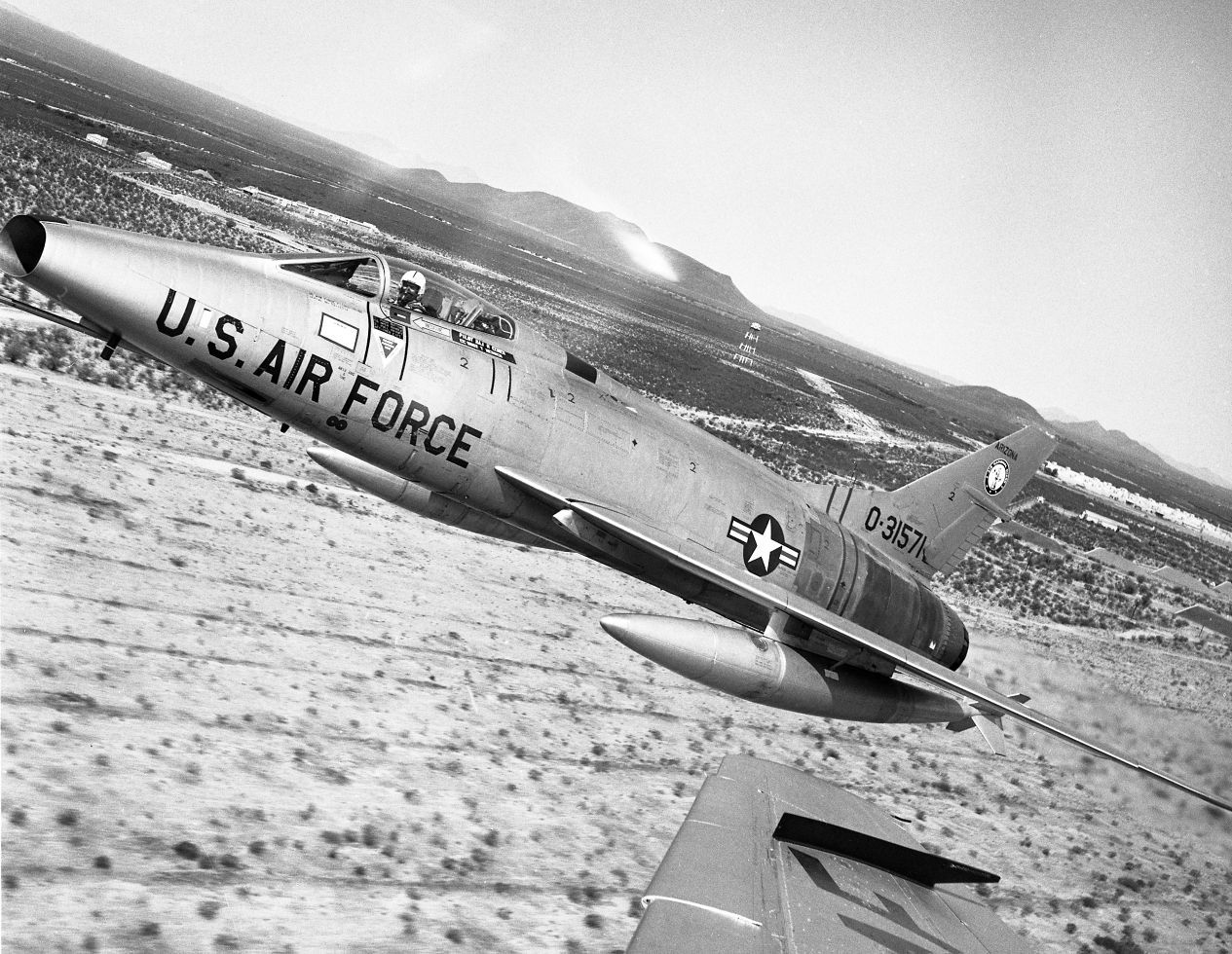
An Arizona Air National Guard F-100 fighter takes off from Tucson International Airport in June, 1965.

A new restaurant, left, opened with the RONtel Motel for "transient aviation" at the base of the tower at Tucson International Airport in 1960. Both buildings were designed by Tucson architect Arthur Brown.

The U.S. Weather Bureau office in 1959, near the flight line at Tucson Municipal Airport provided weather information for pilots and weather reports for Tucson residents.

Hangers on the west side of Tucson International Airport in 1970. The hangers were built in 1940s by Consolidated Vultee for modifications to B-24 bombers.
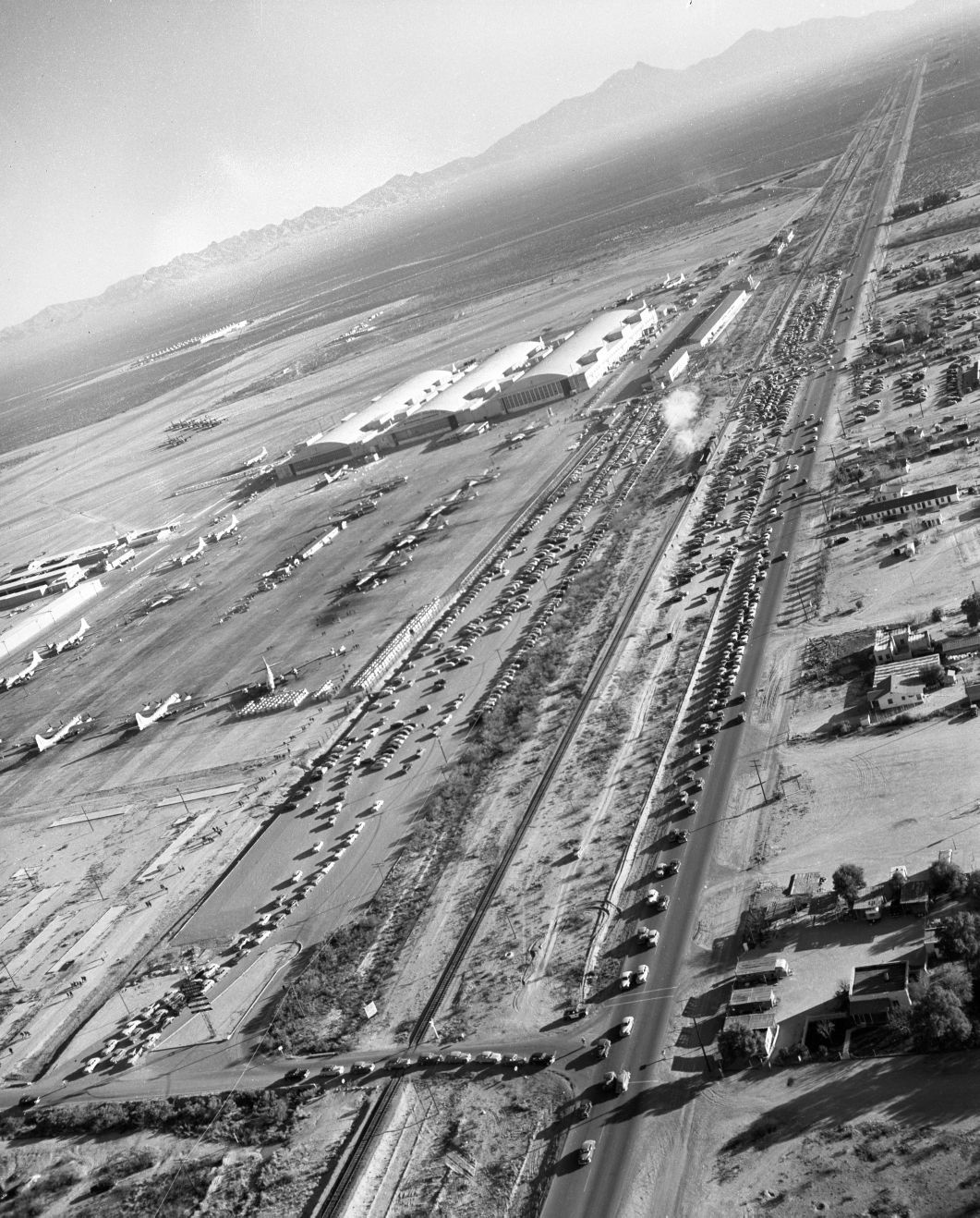
Vehicles pour out of the Grand Central Aircraft Company and other businesses at Tucson International Airport onto Nogales Highway in February, 1952. The Hughes Aircraft Co. building is under construction in the upper left corner. Note the Southern Pacific steam locomotive puffing down the tracks and what look to be Boeing B-29 bombers from WWII on the tarmac at Grand Central.

Tucson Municipal Airport in 1955 before the iconic Tower was constructed. Photo taken looking southeast. Hangers on the west side of Tucson International Airport in 1970. The hangers were built in 1940s by Consolidated Vultee for modifications to B-24 bombers.

Tucson International Airport manager Charles Broman interrupts welder Paul Allison while admiring his work on a new Tucson airport sign on Valencia Road in 1964.

High altitude aerial photo of Tucson International Airport in 1970.

The new terminal at Tucson International Airport in 1963: The car ramp at right leads from the passenger unloading area.

The Tucson International Airport passenger terminals under construction in March, 1963.

A 1963 photograph of the Tucson International Airport looking towards the southwest.

A 1963 photo of the construction of the terminal at Tucson International Airport.

Construction of Tucson International Airport, May 11, 1963.

Thomas G. Hickey (left), Sky Chef manager in Tucson, and Charles Broman, TAA general manager, examine the lobby in the new airline terminal at Tucson International Airport on Nov. 15, 1963.

Tucson International Airport in September, 1968.

Tucson International Airport passenger concourse in September, 1968.

Tucson International Airport passenger gates in September, 1968.

Tucson International Airport control tower in September, 1971.

Aerial view of the Tucson International Airport terminal and the approach road on March 28, 1966.

Undated aerial of the Tucson area with Tucson International Airport on the bottom along with Hughes Aircraft, later Raytheon. Photo is looking north toward the Santa Catalina Mountains on the right.

In this July 13, 1984 photo, Joseph Bonanno, a reputed mafia figure, walks through Tucson International Airport with his family after his parole from a federal prison in Lexington, Ky. Bonanno served nearly eight months of a 366 day sentence for obstructing justice.

Cactus Little League Team arrives at Tucson International Airport on August 28, 1973 after winner the championships.

On September 18, 1974, convicted California mass slayers Douglas E. Gretzer (with sack in front of face) and Willie L. Steelman were returned to Tucson from Vacaville Prision to face murder charges. The two men were hustled to the jail from Tucson International Airport under heavy police guard.

Travelers arriving at Tucson International Airport look for their luggage on Dec. 22, 1977.

New York Jets quarterback Joe Namath, left, and actress Ann-Margaret arrived at Tucson International Airport on April, 10, 1970, and were greeted by a "posse" who branded them as horse thieves. The two were in Tucson for filming of the movie, "C.C. Ryder and Company," written by Ann-Margaret's husband, Roger Smith (a University of Arizona graduate).
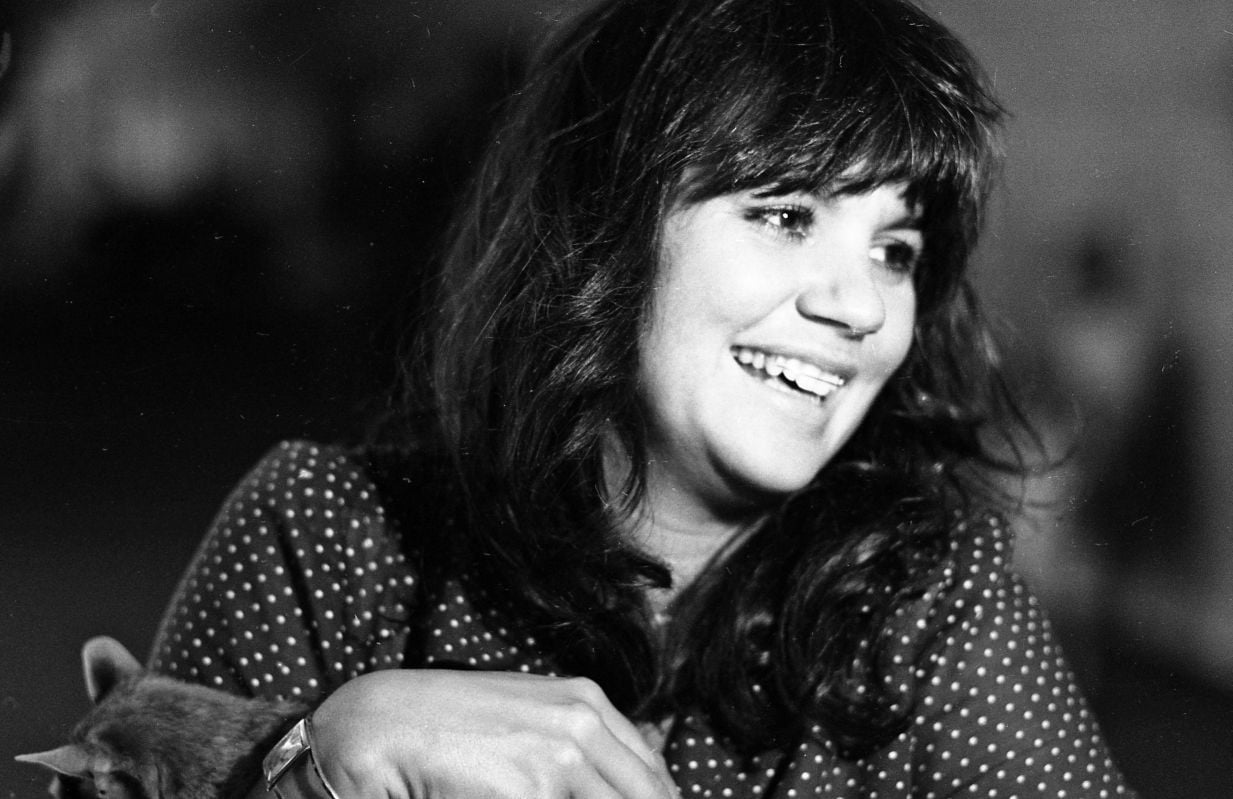
Linda Ronstadt arrives at Tucson International Airport on Sept. 16, 1976 for a benefit concert for the Arizona-Sonora Desert Museum.

Sen. Lyndon Johnson's campaign plane at Tucson International Airport on Sept. 15, 1960, during a Kennedy-Johnson presidential campaign event. His motorcade is assembled in foreground. Johnson flew first to Phoenix. He "hand-shook and child-hugged his way through a small crowd," according to the Tucson Citizen.

Actress Jayne Mansfield with boyfriend (later husband) MIckey Hargitay, left, and notable actor Broderick Crawford at Tucson International Airport in March, 1957. The trio was in town for a party at a local dude ranch. Actress Mariska Hargitay is their daughter.

Riding with from airport with John F. Kennedy during the Democratic Presidential candidate's 1960 visit to Tucson were City Democratic Chairman David Ginsburg, County Vice Chairman Joe Huerta, Mayor Don Hummel and County Democratic Chairman Frank Minarik. From "Jack Sheaffer's Tucson 1945-1965."

Robert F. Kennedy is greeted by many admirers at the Tucson International Airport during his campaign. He is to speak at the University of Arizona. March 29, 1968.

Texas Governor/Republican Presidential candidate George W. Bush Jr., greeted by Ray Castillo, Repub. Ward 1 candidate, Bob Walkup, Repub. mayoral candidate, Rick Grinnell, Repub. ward 2 candidate and Jim Click at the Executive terminal of Tucson Int. Airport in 1999.


Bernie Martin, an air traffic controller at Tucson International Airport, watches from his perch 10-stories above the tarmac as he keeps an eye on air traffic in 2005. Martin has been working as a controller with the FAA since 1981.

An Arizona Air National Guard KC-135 tanker makes a low pass over the iconic control tower at Tucson International Airport, Wednesday, June 18, 2014.

It is one of the Busiest days of the year at Tucson International Airport. Here Passengers pick up there luggage from a flight on Dec. 23, 1997.

The Tucson International Airport tower in 2000.

Air traffic controller Ryan Holaway watches the airspace over Tucson International Airport from the control tower, Wednesday, June 18, 2014.

Monique Medina waits for her mother to pick her up from the Tucson International Airport on Nov. 20, 2007, after spending 24 hours trying to get home from New York City were she attends School.

Ceiling tiles are down as renovations taking place at Tucson International Airport in May, 2007, in what will be formerly known as the A concourse.

On patrol: Arizona National Guard has been called on to provide a new element of security at Tucson International Airport on Oct. 9, 2001.

U.S. Air Force staff sergeant Garrett Wilkes gets to hold his one-month old son Colton for the first time after returning from duty at Bagram Air Base in Afghanistan to Tucson International Airport on June 20, 2013.

An Arizona Air National Guard F16 takes off as it passes the $42 million control tower which is under construction during regular daily activities at Tucson International Airport in April, 2015.


The new air traffic control tower, right, is juxtaposed with the older, more familiar tower at the Tucson International Airport in Nov. 2015.

Air traffic controllers watch for traffic from the new 252 foot tall Tucson Air Traffic Control Tower on September 23, 2016.

