



Operators of a new clinic in Tucson hope to cut into the time it takes to diagnose and get services for families affected by autism spectrum disorder, or ASD.
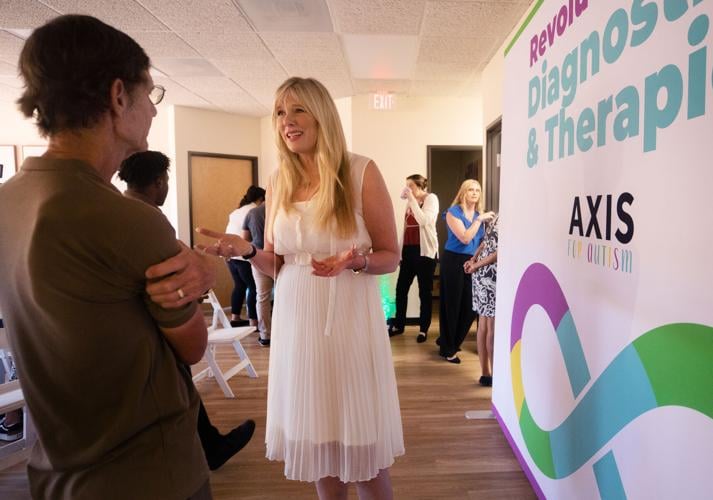
Arizona based Axis for Autism has opened a new therapeutics location in addition to its diagnostics office, with a goal of making diagnosis and treatment quicker and cheaper. A grand opening of the clinic took place Wednesday morning at 5055 E. Broadway Blvd., near North Rosemont Boulevard.
“Just three years ago when we were testing out the diagnostic wait times, we had families that were waiting 18-22 months just to get a diagnosis,” said Jessica Reese, vice president of clinical services at Axis.
The new clinic is a huge step forward for those affected by ASD, she said.
“Early intervention services that we all know are so critical, need to be put in to place between the ages of 18 months to 6 years old. If we’re losing 24 months on a waitlist that’s critical intervention time for our children here in Tucson,” Reese said of wait times they found when starting their research into the issue about three years ago.
Axis for Autism was founded by Christine Elrich. Having a son whose previous health issues required multiple surgeries, Elrich said she knew of the stress put on to families and individuals by complex diagnoses, like ASD.
“I knew very little about autism [when I started], but I knew what it was like to be a vulnerable parent looking for resources,” said Christine Elrich, founder and CEO of Axis for Autism. “The problem we decided to solve first was access to high-quality, evidence-based diagnoses. We’ve been able to do provide diagnostic services and evaluations within 45-60 days.”
The group diagnoses nearly 300 new patients every month at five locations across the state. At the new Tucson location, Axis is expecting anywhere from 30 to 50 individuals to come through its new therapeutics office monthly. It also is looking into opening clinical services on Tucson’s southwest side within the next 18 months.
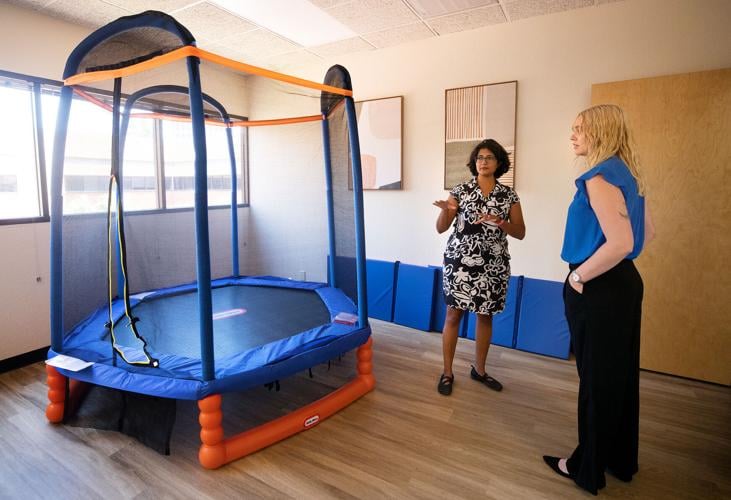
Their clinically-integrated network, which is modeled after the physical therapy field where Elrich spent time prior to Axis, uses diagnostic evaluation rooms equipped with cameras so patient behavior and interaction can be documented and uploaded in real-time to their electronic medical health network. That helps lower the timeframe from referral to diagnosis. Their new therapeutics office is steps away from the diagnostics location they’ve been operating.
“The average wait time for anyone under five is anywhere from three months to a year-and-a-half. The average wait time for anyone over five is six months to a year-and-a-half. For adults it’s two years,” said Maxine Mathews, from the Autism Society of Southern Arizona. “When Axis came in and were able to cut those times significantly, we were very happy to give that resource out to the people in the community so they can get their evaluations and diagnoses.”

