


Political scandals of the century ... so far
"There's no such thing as bad publicity," P.T. Barnum supposedly said. Try telling that to the Missouri House speaker caught sexting with an intern half his age, or two Illinois governors who wound up in prison.
Or the St. Louis city treasurer whose career ended in a swirl of bounced checks, employee drug dealing and ghost workers.
The St. Louis region has had its share (and maybe then some) of political scandals in the almost 18 years since the start of the 21st Century. The stories have riveted readers, lost elections, caused convictions and spawned fateful phrases like "legitimate rape," "Air Claire" and "f------ golden."
Here are our Top 10 political scandals of the century — so far.
—Kevin McDermott
No. 10: County employee's scheme starts with phony invoices, ends with a gunshot
Updated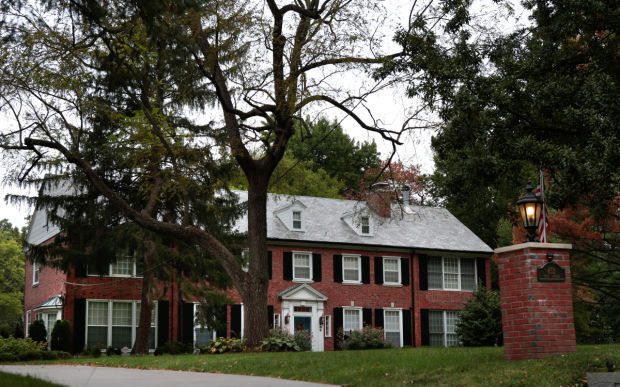
The home owned by Edward Mueth, a St. Louis County health department official, is in the 400 block of Gray Avenue in Webster Groves. In 2010, six years after filing for bankruptcy, Mueth purchased the home for $1.475 million. Photo by Robert Cohen, rcohen@post-dispatch.com

Ed Mueth, an official in the St. Louis County Health Department, was found dead of a self-inflicted gunshot on Sept. 19, 2013.
In the summer of 2013, St. Louis County health department staffers noticed something strange about a $187,450 invoice for technical services from a company called Gateway Technical Solutions.
Few health department workers, beyond the handful who had cut checks to the company, had ever heard of it. Records showed the company had sold the agency computer equipment and technical services for six years. But no one could recall ever using a laptop leased from the company or getting assistance when technical issues arose.
It turned out Edward Mueth, a health department official, had established a corporation that filed bogus invoices, falsely showing that the company sold the agency computer equipment and technical services. He even created a phony person to head the company.
In all, it would later be determined, Mueth embezzled some $3.4 million from the county. The health department actually received $60,000 in laptops from the fake company. Mueth took the remainder of the money and bought a $1.5 million Webster Groves mansion and had it landscaped for another $200,000. He also acquired $100,000 in firearms and bought expensive cars.
When a team of employees uncovered Mueth’s scheme, they went to his superiors, assuming the police would immediately be contacted. Instead, officials cut off Mueth's access to the county computer system and summoned him to a meeting the next morning.
Hours after being told of the meeting, Mueth pulled into a parking lot near his home and shot himself in the head with a .40 caliber Glock handgun.
One question left in the wake of Mueth's death was why county officials didn't immediately contact police, instead of setting up a morning meeting in the office with a potentially suicidal employee. "He could have killed me, he could have killed my family, he could have killed my co-workers,” one fellow worker pointed out.
Another question was how Mueth managed to bilk the county of so much money over so much time without detection. County Executive Charlie Dooley lost his re-election bid in the Democratic primary the following year, possibly in part due to controversy over both Mueth's undetected crime and the county's subsequent reluctance to reveal information about it.
No. 9: Suspicious absentee ballots spark re-do in Missouri House race
Updated
Bruce Franks Sr. (left) and Earline Banks congratulate their son, Bruce Franks Jr., as he arrives at Yaquis on Cherokee Street for a watch party after voting closed Sept. 16, 2016, for a 78th District House seat special election.

Missouri State Rep. Penny Hubbard
Ninety votes.
That was the margin of (temporary) victory for incumbent Missouri state Rep. Penny Hubbard, D-St. Louis, out of more than 4,300 votes cast in the August 2016 Democratic primary race to keep her 78th District seat.
Hubbard, a member of a deeply entrenched St. Louis political family, actually lost among voters who cast ballots in the polling places on Election Day. What put her over the top to beat challenger Bruce Franks Jr. was a huge margin of victory among a suspiciously large number of absentee ballots cast: 416 for Hubbard to 114 for Franks.
A Post-Dispatch investigation later found numerous irregularities with those absentee ballots.
Several voters said they were duped into filling out absentee ballots and were told to mark that they were incapacitated when they were not. Two former Election Board workers said Hubbard’s husband brought stacks of absentee ballots into the board headquarters downtown, a violation of state law. Two voters have said individuals who said they were with the Hubbard campaign filled out ballots for them.
“I really don’t know who to vote for,” said one of the residents. “The woman I was talking to said she’ll put down the same votes as hers.”
Franks, a Ferguson activist and political newcomer, sued to overturn the results. St. Louis Circuit Judge Rex Burlison ordered a new election. His decision was based on a relatively obscure technicality having to do with the envelopes used with absentee ballots, but his written ruling left little doubt of the seriousness of the issue.
“The Court is firmly convinced that these irregularities affected the outcome of the election," wrote Burlison. "These irregularities were more than petty procedural infirmities but abuses of the election law which cannot be ignored.”
The second time around, Franks won the primary with 76 percent of the vote, setting up a virtually automatically general-election victory in the overwhelmingly Democratic district.
No. 8: In a career littered with controversies, one proves too big for Larry Williams to overcome
Updated
Former St. Louis Treasurer Larry Williams
In three decades in office, former St. Louis city Treasurer Larry Williams survived bounced checks, scathing state audits and drug-dealing employees. What finally brought him down was a "ghost."
In 2011, Williams' friend and employee Fred Robinson was arrested by federal agents for fraud and theft, after stealing roughly $250,000 from a charter school. It turned out that Robinson also had enjoyed a phantom job on William's payroll for at least five years.
The U.S. Attorney's office said Robinson was a classic "ghost payroller," submitting false time sheets, taking pay for false hours worked and making about $35,000 a year starting in 2006. Over at least five years, the city paid Robinson as much as $175,000 for a no-show job.
Robinson ultimately was sentenced to two years in federal prison. Williams himself was never charged in the case, but it marked the beginning of the end of his scandal-marred career.
Williams was first appointed in 1981 by Mayor Vincent Schoemehl to fill an unexpired term. In the 1980s, he ran a check-cashing operation that lost money on bad checks. He personally bounced 32 checks totaling $12,264.
In 2004, one of his workers was arrested for selling crack cocaine out of a ticket booth at the City Hall parking lot.
Analysis from the Post-Dispatch in 2005 found six relatives of city aldermen and five members of the city's central Democratic committee on Williams' payroll. A 2008 state audit found 43 of Williams' employees were related to somebody else in the office.
Through it all, Williams managed to win seven full terms at the ballot box, running with little opposition. Even after Robinson's indictment, Williams said he would run for re-election, though he later opted to end his political career following the FBI investigation into his office.
No. 7: A candidate for governor commits suicide, exposing his party's inner turmoil

Missouri Auditor Tom Schweich announces his candidacy for governor in St. Louis on Wednesday, Jan. 28, 2015. (AP Photo/Jeff Roberson)
Had bets been taken at the beginning of 2015, many would have pegged Tom Schweich as the next governor of Missouri.
The elected state auditor and a rising star in the Republican Party, Schweich had launched a fiery campaign for the GOP gubernatorial nomination and was an early favorite to win it.
Then, on Feb. 26, in his Clayton home, Schweich put a .22 caliber pistol to his head and fired — ending his life at 54 and exposing deep fissures in the state Republican Party that would haunt it for the rest of the campaign.
In the aftermath of Schweich's suicide, his grievances against his fellow Republicans, previously kept behind the scenes within the party, began to sift out.
Schweich had been incensed at a mysterious radio ad that compared the slight, thin candidate to the television character Barney Fife, and called him a "little bug." The ad would later be revealed to come from Kansas City political consultant Jeff Roe, a major figure in national Republican circles who was allied with Catherine Hanaway, then Schweich's main challenger for the GOP nomination.
Schweich also had been furious at rumors of an anti-Semitic "whispering campaign" by opposing Republicans about his family's religious background. Schweich was Episcopalian but his father's family was Jewish. Then-Missouri GOP Chairman John Hancock, who had consulted for Hanaway in the past, would later acknowledge that he might have mentioned to people in passing his mistaken belief that Schweich was Jewish, but he adamantly denied it was intended as a smear.
The party's dirty laundry even made an appearance at Schweich's funeral. “The death of Tom Schweich is the natural consequence of what politics has become,” former U.S. Sen. John Danforth, R-Mo., a party elder and mentor to Schweich, said while delivering Schweich’s eulogy. “I believe deep in my heart that it’s now our duty, yours and mine, to turn politics into something much better than its now so miserable state.”
The GOP nomination ultimately went to a candidate who wasn't even known to most Missourians at the time of Schweich's suicide: Eric Greitens. He went on to become Missouri's first Jewish governor.
No. 6: When it comes to electing corrupt governors, Illinois is f------ golden
Updated
Former Illinois Gov. Rod Blagojevich surrounded a genteel scrum of media professionals during his federal corruption trial in 2011. (AP Photo)

Attorney Dan K. Webb (rear) arrives at the federal courthouse in Chicago with former Illinois Gov. George Ryan and Ryan's wife in a 2006 file photo. Webb represented Ryan in his racketeering and corruption trial. Webb is now representing Ferguson in the Department of Justice case against the city. (AP Photo/M. Spencer Green)
In 2003, former Illinois Gov. George Ryan, a Republican who had recently retired after one term, was indicted on federal charges including racketeering, bribery, extortion, money laundering and tax fraud. Most of the charges related to his selling of state influence while in office.
Ryan's immediate successor, Democratic Gov. Rod Blagojevich — never one to be outdone — was arrested in 2008 on federal charges that he attempted to sell the vacant U.S. Senate seat of then-President-elect Barack Obama.
"I've got this thing, and it's f------ golden," Blagojevich famously said in one wiretapped discussion about whom he should appoint to the seat and what he might get for it. "I'm just not giving it up for f------ nothing."
Ryan and Blagojevich both were convicted and served time. Blagojevich is still in. Together they have, in a touchingly bipartisan way, given Illinois a unique place in America's political history: It may well be the only state ever to see two consecutive governors led away in handcuffs.
“In any state, it would be awful if two governors were convicted in a century," U.S. Attorney Patrick Fitzgerald told reporters after Blagojevich's 2011 sentencing, "and yet we’ve seen it twice in five years."
It's actually worse than that.
Two other relatively recent Illinois ex-governors, both Democrats — Otto Kerner, who served in the 1960s, and Dan Walker, who served in the 1970s — both went to prison; Kerner was sentenced for bribery as governor, Walker for bank fraud after his tenure in office.
In all, Kerner, Walker, Ryan and Blagojevich comprised four of the eight consecutive Illinois governors who held the office between the early 1960s and the early 2000s. Which means that, during that half-century, as many Illinois governors went to prison as didn't.
Put another way, courtesy of comedian Jon Stewart: "Let's say you're the present governor of Illinois, and you're in a room with a former governor of Illinois on your right, and a former governor of Illinois on your left. Chances are, the room you're in is jail!"
—Correction: An earlier version of this post misstated Otto Kerner's political party. He was a Democrat.
No. 5: Mr. Smith goes to prison
Updated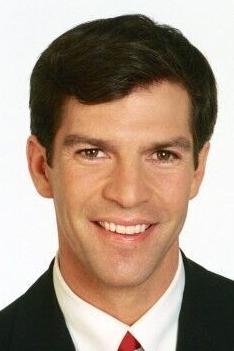
Jeff Smith once served in the Missouri Senate.
"Voters for Truth" they weren't.
Missouri state Sen. Jeff Smith, D-St. Louis, and two of his campaign aides spent years covering up their role in a 2004 election shenanigan tied to a shady group with that honorable name.
The lie would eventually cost Smith his Senate seat, and his freedom. The former campaign workers — Steve Brown and Nick Adams — earned probation for their roles in the scheme. Brown also would have to resign a Missouri House seat he won in 2008.
It all started with an anonymous mailer in the summer of 2004. At the time, Smith was trying to elbow his way into the U.S. House, after longtime U.S. Rep. Richard Gephardt, D-Mo., announced his retirement.
Winning wouldn't be easy. Smith had to distinguish himself in a crowded Democratic primary field and take aim at Russ Carnahan, whose famous last name carried serious weight among Missouri Democrats.
As later reported in the Post-Dispatch, someone identified in court records as "John Doe" with the group "Voters for Truth" coordinated with the Smith campaign in July 2004 to blast out mailers critical of "Rusty Carnahan." The fliers did not meet federal disclosure requirements.
In a sworn affidavit in September 2004, Smith denied knowing who created and sent the fliers.
The lie fell apart when investigators caught up with "John Doe" — a Democratic operative named Milton "Skip" Ohlsen III (who would later be convicted of an unrelated Clayton parking garage bombing). Through Ohlsen they got to Brown, Smith's campaign worker, then convinced Brown to turn on Smith.
Brown recorded conversations with Smith and Adams as the trio brainstormed ways to continue lying. Smith and Adams said they could blame Artie Harris, an associate who died by suicide in 2007.
"Artie would totally want us to throw him under the bus here," Smith said while Brown was recording.
Not long after, Smith's political career came crashing down. He pleaded guilty to two felony counts of conspiracy to obstruct justice and spent almost a year in federal prison. He was released in 2010, and has gone on to write and teach about his experience as an ex-con politician.
No. 4: The 'green balloons' scandal brings down a former legislative kingpin
Updated
Rod Jetton Former Missouri House Speaker mug
JEFFERSON CITY • What began as an attempt to reconnect with an old acquaintance ended with a former speaker of the Missouri House being charged with felony assault.
Along the way, the 2009 scandal that torpedoed former Speaker Rod Jetton’s political consulting business brought a new snicker-inducing term to the political vernacular under the Statehouse dome:
Green balloons.
The sordid story: A recently divorced woman who, as a kid, attended the Baptist church in Charleston where Jetton’s father was the minister reached out to the recently divorced former speaker.
The two soon agreed to meet for a sexual encounter. She and Jetton agreed on a “safe word” she could use if she wanted things to stop.
The woman, 35 at the time, later told police she was choked and smacked by Jetton and then she passed out, drunk on wine, until the next morning.
"You should have said 'green balloons,'" Jetton told the woman the next morning, according to a charging document.
Jetton, a Republican who was elected in 2000, played a key role in the Republican takeover in the 2002 elections. When he was elected speaker in 2005, he endorsed "personal responsibility" and pledged to protect "traditional family values."
In March 2010, at the same time Jetton’s attorney was entering a guilty plea to a misdemeanor assault in the “green balloons” case, Jetton testified before a federal grand jury investigating him on a bribery allegation involving $35,000 in campaign donations from the pornography industry.
Jetton was not indicted or charged in connection with that case.
In 2013, he wrote a chapter in a new book called “The Recovering Politician’s Twelve Step Program to Survive Crisis.”
His chapter is titled: “Own Your Mistakes, Take Responsibility and Sincerely Say, ‘I’m Sorry.’”
At a book signing ceremony that year, Jetton said he had become less judgmental as a result of his downfall.
“You make as many mistakes as I have, it’s hard to be judgmental, right?” he told the Post-Dispatch.
No. 3: Missouri House Speaker resigns after trading sexually charged texts with Capitol intern
Updated
John Diehl gives a brief speech before stepping down as Speaker of the House and vacating his legislative seat on Friday, May 15, 2015.
On a Wednesday in May 2015, the Missouri Capitol press corps was in the middle of a good old-fashioned stakeout. Reporters crowded around the entrance to House Speaker John Diehl's office, waiting for the Town and Country Republican to emerge.
Hours earlier, the Kansas City Star had posted an explosive report, with two-dozen screen shots of sexually charged texts between Diehl and a Capitol intern.
"God I want you right now," Diehl, who was married with three children, wrote in one text.
"I wish you could have me right now," the intern responded.
At least one reporter speculated that Diehl would spend the night in his office rather than show his face to the scrum.
But around 11 p.m., after hours holed up in his office, he came out.
"It was very regrettable," he told reporters. "It was a stupid thing to do, and I'm sorry."
Reporters wanted answers. How long had this been going on? Did Diehl send those texts? Why did he deny that he did write them when reporters starting asking questions weeks earlier?
He said a statement he issued earlier that day spoke for itself. It didn't.
Diehl, flustered, made his way down a Capitol staircase, with seemingly every journalist in Jefferson City following along. Someone picked Diehl up in the Capitol garage, driving him off into the night.
By the end of the week, Diehl had resigned, his political career in tatters.
In the months after Diehl's resignation, two other lawmakers resigned under clouds of sexually charged controversy. Sen. Paul LeVota, D-Independence, resigned in July that year following sexual harassment allegations involving Capitol interns. State Rep. Don Gosen, R-Ballwin, resigned the following February amid revelations that he had an affair while in office.
The string of scandals placed the toxic work environment many women faced in the Capitol under a microscope. The House reviewed and toughened its policies on sexual harassment.
No. 2: 'Air Claire' is a phrase that fails to lift Sen. McCaskill's proverbial wings
Updated
Democratic U.S. Sen. Claire McCaskill during the first debate in the Missouri Senate race Friday, September 21, 2012, at the Holiday Inn Executive Center in Columbia, Mo Photo by Laurie Skrivan, lskrivan@post-dispatch.com
It will forever be known as “Air Claire.”
Gearing up for what was expected to be a tough re-election in 2012, U.S. Sen. Claire McCaskill, D-Mo., faced revelations first published in Politico that she had spent nearly $76,000 in public funds to fly on a charter plane she co-owned with her husband, developer Joseph Shepard. She ended up repaying the government $88,000, then admitted that she had failed to pay taxes on the aircraft, sending a check to the state for $287,273.
McCaskill told reporters in March 2011, when the first revelations surfaced, that she had told Shepard to “sell the damn plane.” But the issue dogged her throughout the campaign, until her win over Republican Rep. Todd Akin, who faced a superseding controversy of his own with his comments about “legitimate rape."
"Planegate" was a political two-fer for McCaskill’s critics. They painted her as an out-of-touch, wealthy senator who at first avoided taxes, and then had the wealth to write a check in excess of a quarter million dollars to cover it.
The National Republican Senatorial Campaign Committee continuously reminded anyone who would listen that McCaskill had once said: “If my walk doesn’t match my talk, then shame on me and don’t ever vote for me again.”
Although it happened more than six years ago, the "damn plane" has come up already in McCaskill's 2018 re-election campaign.
After McCaskill made a reference to the plane at a town hall in Missouri earlier this year — she seemed to agree with a questioner's assertion that "normal people" could afford to fly private planes — the NRSC struck with another YouTube hit.
An infrequently updated "Air Claire" twitter account has also popped up, with a link to the NRSC.
It is likely to get updated a lot more frequently as the November 2018 election approaches.
Editor's note: This story was updated to include more detail about the initial reporting of her use of the aircraft.
No. 1: When two little words lost a U.S. Senate seat and sparked national outage
Updated
Todd Akin, during the fateful August 2012 interview in which he added `legitimate rape' to the national political lexicon.
In the end, Missouri's 2012 U.S. Senate race was decided by two words: "legitimate rape."
U.S. Sen. Claire McCaskill, D-Mo., was seeking re-election that year and, by August, she was in trouble. Her once-moderate state had moved sharply rightward since she'd taken office. The "Air Claire" scandal of the previous year was still potent. Her Republican challenger, U.S. Rep. Todd Akin, a staunch religious conservative from the St. Louis suburb of Wildwood, was beating her in most polls.
Then Akin taped a candidate interview at St. Louis' KTVI (Fox 2). Defending his opposition to abortion rights even in cases of rape, Akin opined: "If it's a legitimate rape, the female body has ways to try to shut that whole thing down."
Interviewer Charles Jaco didn't pause at the comment. But after the station posted the interview online on Aug. 19, and national media outlets began picking up on it, Akin's words quickly became as politically toxic as they were medically ridiculous.
Commentators across America expressed outrage at Akin for promoting fringe-y nonsense about female biology and implying that rape victims who become pregnant weren't really raped. Republicans, fearing the loss of a winnable Senate seat and a national backlash from women against their party, disavowed Akin in droves.
From presidential nominee Mitt Romney on down, they publicly implored him to leave the ticket so a more electable Republican could run. Akin refused, and spent the final two months of the campaign as an outcast in his own party.
At times, it seemed his only defender was McCaskill, the incumbent Democrat who didn't want her damaged opponent replaced with a stronger one.
"I honestly do have sympathy for him," McCaskill said of Akin at the time. "I think there are some big people in the (Republican) party that are trying to pull the rug out from underneath Missouri voters."
McCaskill beat Akin on Election Day by almost 16 percentage points.
As featured on

Governor seeks support from very lawmakers he scorned.

