



When you think about a day in the life of a firefighter, what comes to mind?
There’s wildland firefighting in the Catalinas, putting out fires in buildings, responding to medical emergencies — they’re the first responders for many crises, the worst moments of many of our lives. That’s why they need to be on call 24/7, which means they are living at the fire station.
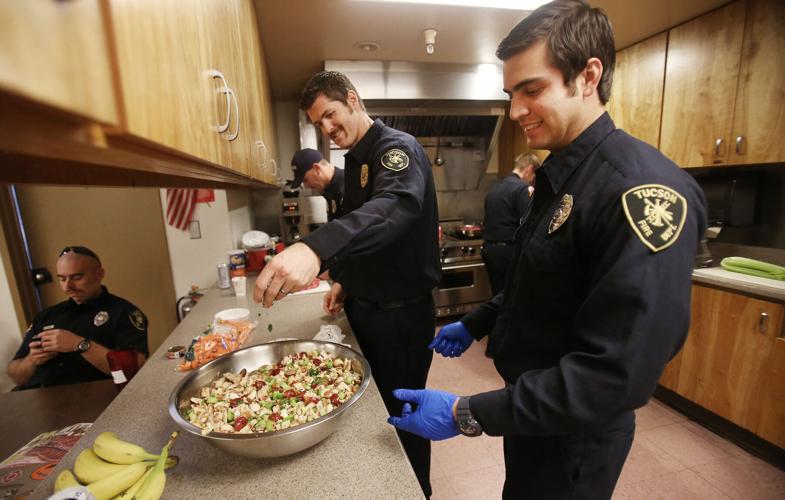
The station is where the more mundane parts of firefighting occur: the morning coffee, where they read the newspaper and someone pulls the coupons for grocery shopping; food prep to feed the station; nightly meals, eaten whenever someone has a down moment, but sometimes around the dinner table. The station is where firefighters work out, hang out, eat and rest.
It might surprise you to find out how much of a firefighter’s day is involved in home economics: planning meals to feed the most people the most macronutrients at the lowest cost.
“The emergencies are easier to deal with than scheduling how and when we’re going to make our meals,” said Scott “The Sauce Boss” Linaman, a firefighter EMT with the Tucson Fire Department.
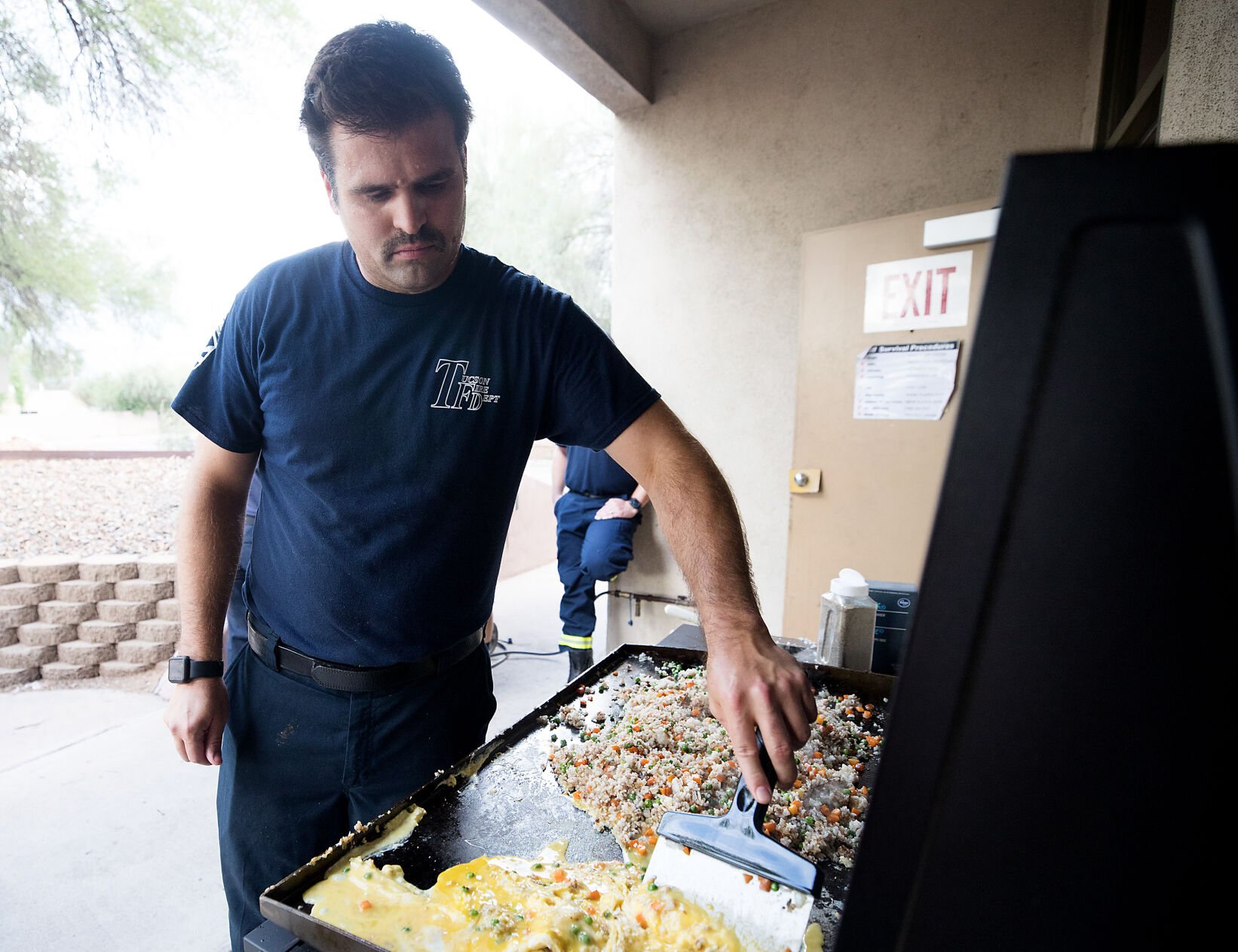
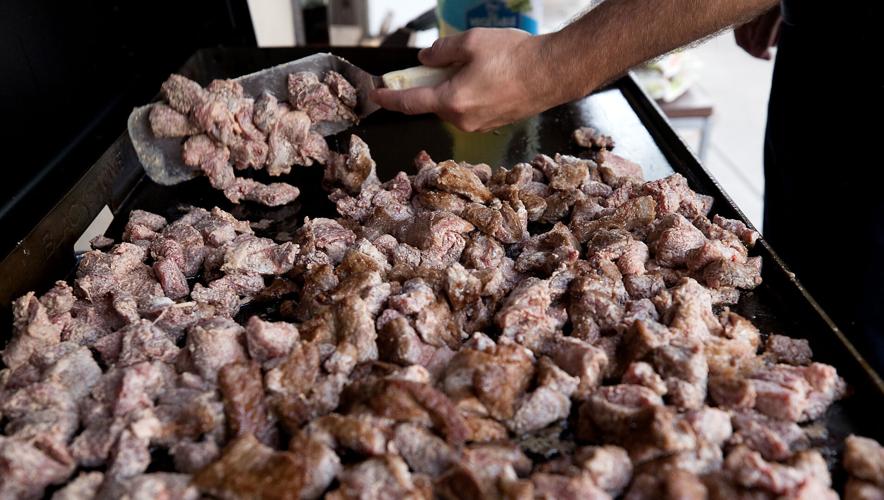
Scott Linaman, a firefighter/paramedic with the Tucson Fire Department, cooks up fried rice for a Mongolian beef dish at Station 7 on July 29, 2022.
Station 7, which has 14 firefighters on staff at a given moment, feeds each person one pound of meat a day, which is nearly 100 pounds of meat a week. Menus are often decided around which meats are on sale: when it’s imitation crab, they’ll be eating crab pasta salad. If there aren’t any coupons for meat, they’ll probably be eating something with inexpensive ground beef, like taco salad.
“We pay for our own meals and try to keep it relatively affordable for everyone,” Scott said.
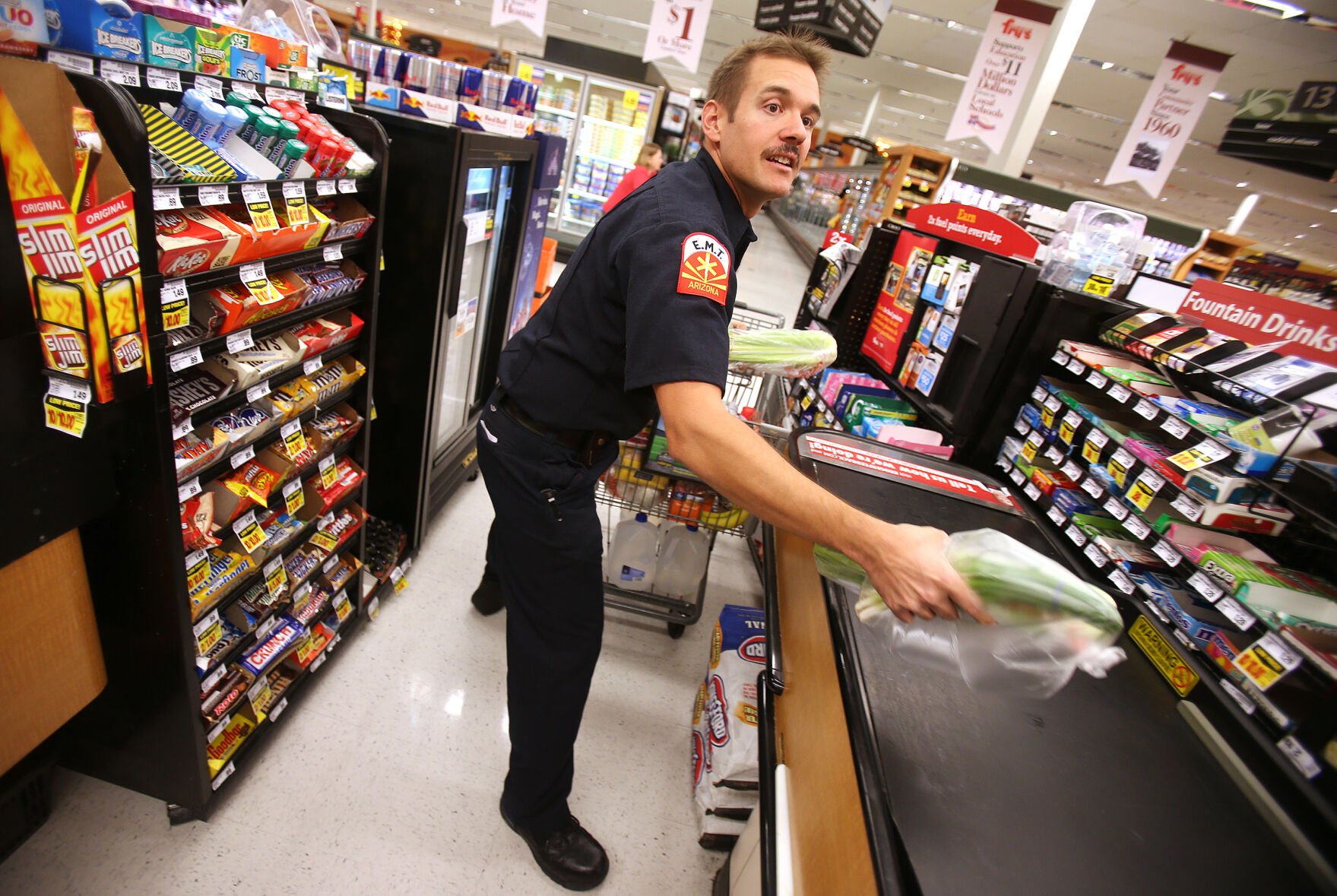
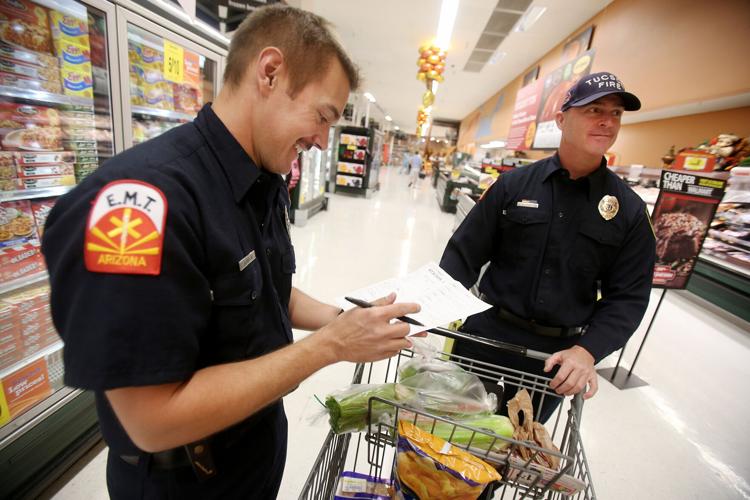
When firefighters are in their first probationary year, they’ll often be relegated to kitchen duty. That means clipping coupons first thing in the morning and figuring out the layout of the nearest grocery stores. Sometimes, when firefighters join straight out of high school, that means learning to cook for the first time.
Meal prep is broken down by teams: whether you’re on the engine, the ladder, or an EMT like Scott. Only one team is cooking at a time, so the other two can remain on call for the day.

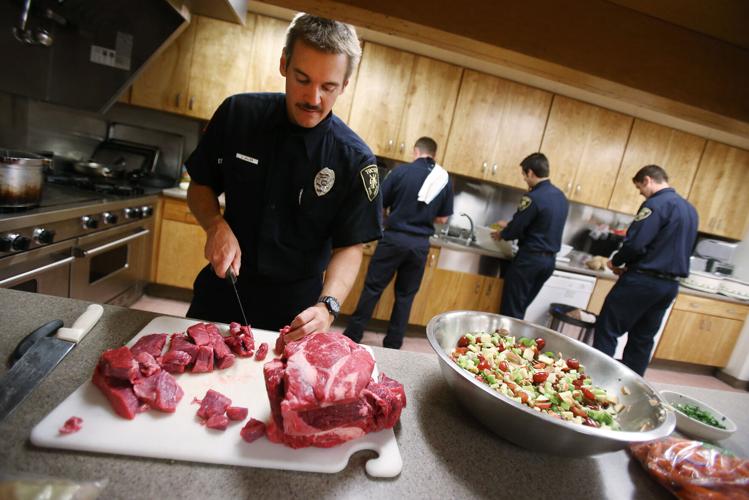
Station 7's Firefighter/EMT Jason Adler, left, cuts up portions of beef to prep for a beef stew dinner on Monday, Oct. 22, 2013.
“A lot of stores will allow us to keep our cart in the front storage cooler,” Scott said. It’s in case the team has to leave the cart unattended, full of food, due to an emergency call.
“The tough part of our job is, when these calls come out, it could last five minutes or five hours depending on the number of people injured or number of structures on fire. There’s no certainty,” he said. Shopping or a meal could be interrupted by seemingly endless back-to-back calls.
The firefighters are often out on calls during the day, so it’s imperative for lunches to be easy to eat on the go, or after chilling in the fridge for a few hours.
“The way that we prepare sandwiches to make sure that people can assemble them themselves, or if we’re grilling ... there’s an unspoken rule of preserving people’s food if they get on a call,” Scott said. They often use recipes that are “good cold, so if you miss a meal you’re not eating a soggy sandwich or a tough, cold steak,” he said.

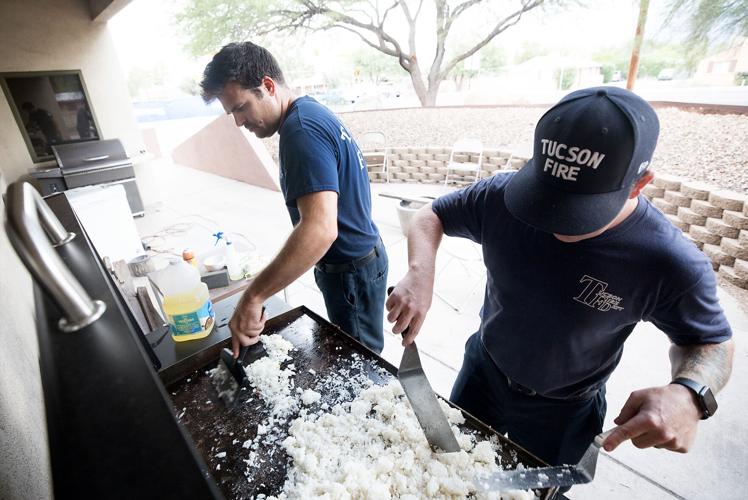
Because Station 7 is under renovation, Scott Linaman, left, a firefighter/paramedic and Daniel Dadasiewicz, firefighter, cook outdoors on the grill at Station 7, 4902 E Pima Street in Tucson, Ariz. on July 29, 2022.
Back in the olden days, when firefighters were all men who didn’t know how to cook for themselves, canned peaches and cottage cheese was a frequent favorite. Some old-school firefighters still like the combo, but most look forward to certain meals that some firefighters are known for.
Red chile beef, mandarin orange chicken salad and tamales around the holidays are some favorites “The Sauce Boss” looks forward to. He himself got his nickname from the marinades, dressings, salsas and sauces he’d make as part of a dinner team that elevated the whole meal.
“I really love making salsa and guacamole, either a chipotle mayonnaise or a spicy ginger mayo for different types of sandwiches we do at the station,” Scott said.
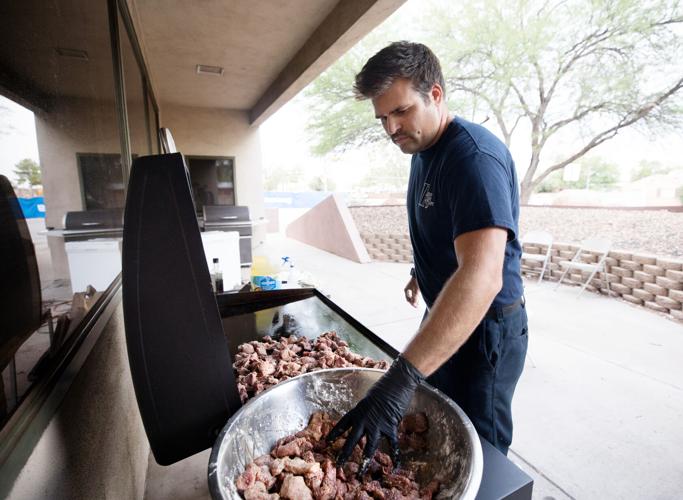
Now that Station 7 is getting renovated, marinades and barbecue sauces are especially appreciated. Their kitchen is under construction, with many parts unusable, so they’ve been relying on their outdoor tools: a smoker and a barbecue grill.

Because Station 7 is under renovation, Scott Linaman, a firefighter/paramedic, cooks outdoors on the grill on July 29, 2022.
“We’re trying to limit (our use of the) stove and oven because of the reno,” he said. “We’re trying to grill or use the smoker or do something outside. We have our sink ripped out, so we have a tiny temporary sink we’re cleaning massive pots and pans with. We’re using a tiny stovetop right now. We had fish tacos last night, which was delicious ... but a disaster to clean.
“It’s terrible in the summer. The smoker is great because we can set something on low heat and just check on it. The summer months are definitely not fun,” he said.
Balancing firefighters’ dietary restrictions is a labor of love. While the especially health-conscious (keto, paleo, etc.) have broken off and often cook for themselves, mostly the team works together to accommodate each others’ needs.
“With food allergies being more prominent, we’re working harder to accommodate people’s dietary restrictions: rice or gluten-free pasta for people allergic to gluten. We have a guy at our station who’s allergic to shrimp, so we avoid that when he’s around and then when he’s away we eat as much of it as possible.

Before Station 7's renovation, firefighter/EMTs Gilbert Castillo, right, and Mike Creamer top off lunchtime's chicken salad for the engine and medic crews on Oct. 22, 2013.
“One guy doesn’t like cilantro — thankfully, when you work with people for long enough, you know their preferences, you know to make the guac with the cilantro on the side, or stock up on gluten-free pastas,” he said.
The team looks forward to the lucky moments when they get to share dinner around the table together. The station is where they spend nearly half their weeks; you learn each other's needs and moods, and take care of each other.
“Not only is cooking for 14 people stressful in itself, but when you have those nuances and things to work around and still make everybody happy, it definitely takes on a family type vibe,” Scott said.
“We live together 24 hours a day. When we’re in a bad mood, people can tell. When you’ve had a disgusting or traumatic call, it’s important to have the person see you and ask, ‘Are you OK? Let’s go on a run, let’s work out, let’s play pickleball,’” he said. “Ice cream helps too.”

