


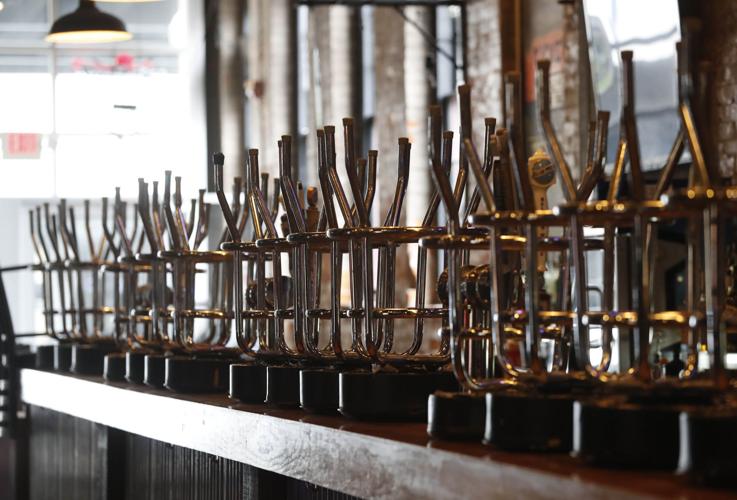
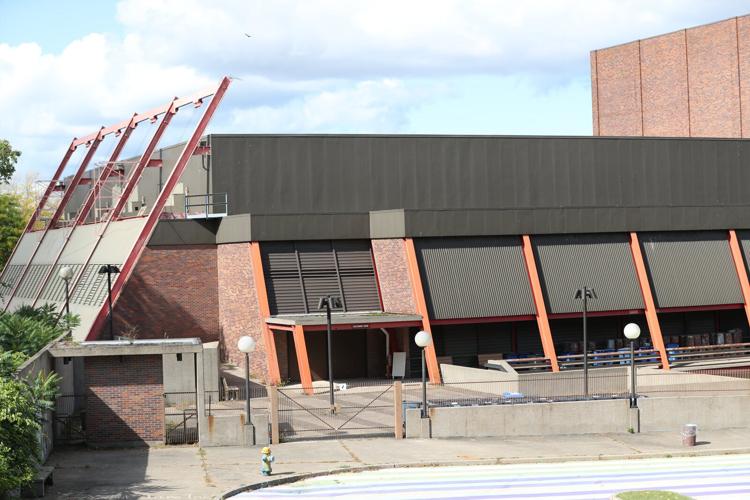
The live performance industry collectively exhaled as its members learned last week the $900 billion Coronavirus Response and Relief Act included the first national grant program dedicated to independent arts venues and cultural institutions.
Count the passing of the bipartisan-supported Save our Stages Act, part of the relief package, as one of the few pleasant surprises of 2020. Even more surprising than the act’s passage is the inclusion in its text of language that suggests a deep understanding of how independent venues and cultural institutions work, their needs and value as cultural and economic entities.
The Save Our Stages Act has been tailored to meet the specific needs of these venues, and to avoid handouts to corporate interests, in order to focus on those independent entities most in need.
“We are different, we operate differently than many businesses, and it's great for that to finally be acknowledged,” said Jennifer Brazill, owner and co-founder of the Borderland Music + Arts Festival. “We still have a long, uphill road ahead, but having light shed onto what has felt like a forgotten industry gives me hope that our industry will survive. Although it may be different for a while, we will be back.”
For Brad Grossman, owner of Helium Comedy Club in the Cobblestone District, the grassroots effort behind Save Our Stages has been a source of deep inspiration.
“To see all these independents come together in the time since April, and rally, to the point where more than 2 million emails were sent to Congress arguing for the importance of what we all contribute to the culture and the economy – it’s just been tremendous,” Grossman said. “It’s incredible. It will absolutely help us. ... It took a year, but it finally happened.”
Here’s a look at what it might mean for the crowd business in Western New York.
What it is
The bipartisan Covid relief package passed Dec. 28 includes the Save Our Stages Act, which provides $15 billion nationally for independent live venue operators, independent movie theaters and cultural institutions.
The language in the bill has been crafted to target the venues, entities and cultural institutions that have been pushed to the edges of solvency by the economic impact of the pandemic. The aid, to be dispersed as nonrepayable grants, will likely give dozens of local venues a new lease on life – or, at the least, a six-month extension on that lease.
Who could get it
The nonrepayable grant program is tailored to independent live venue operators, promoters, producers, talent representatives, independent movie theaters and cultural institutions.
A news release from the office of Sen. Charles Schumer said New York would receive “the lion’s share of the total national pot and that the legislation will provide temporary relief not only to the venues, but also to the employees, promoters, managers, producers and entertainers that support them.”

With so many deserving independent venues due to receive aid, and vaccine dissemination on the horizon, we have much to be grateful for, and much to look forward to, Miers says.
The grants are designed to provide six months of financial support to help venues cover business expenses including payroll, rent, mortgages, insurance payments, taxes and marketing costs. The aid will be dispersed in two-part grants, covering as much as 45% of a venue’s 2019 revenue, capped at $10 million for the first round; the second round will consist of a spring 2021 supplemental grant covering 50% of the first-round grant.
To qualify, a venue must be independently owned, have its own PA system, lighting and production, have been in business Feb. 29, 2020, and show a decrease in revenues of at least 25% on a quarterly basis, compared with 2019.
Venues showing a 70% to 90% revenue decrease will be given priority in grant allocation.
Among those targeted for aid are independent live venue operators, independent movie theaters like the North Park Theatre and the Aurora Theatre, cultural institutions such as art museums and live theater companies, the Buffalo Zoo, the Buffalo Museum of Science, the National Comedy Center in Jamestown and other live performing arts organizations that have been significantly hurt by the pandemic.
"Without this funding, it was likely that our industry faced mass bankruptcy filings," Dipson Theatres President Michael Clement said. "Funding will help us to continue our hibernation period until the vaccination process is completed. After that time, I'm confident that the major markets will resume operations and Hollywood will release new movies that our patrons are interested in seeing."
Based on the grant criteria, independent music venues, including the Town Ballroom, Buffalo Iron Works, Mohawk Place, the Riviera Theatre, Rapids Theatre, the 9th Ward @ Babeville, the Sportsmen’s Tavern, the Cave and Rec Room, also are likely to qualify for grants. Larger venues like Artpark and Shea’s Performing Arts Center also appear to qualify.
The application process for eligible businesses and individuals is due to begin in the coming weeks, though no exact date has been confirmed.

Artpark, one of the venues that could be helped by the passage of the Save Our Stages Act, generates an estimated $13 million in economic impact on the community annually, according to Executive Director Sonia Kozlova Clark.
Who doesn’t get it
Applicants with businesses that operate in foreign countries, or with venues in more than 10 states or with more than 500 employees, aren't eligible. This leaves out Live Nation, AEG and any other endeavor that is majority owned by a public company. Live Nation-owned venues, such as Darien Lake Performing Arts Center, are also ineligible for aid.
Individual musicians, actors, stagehands and the like will not be eligible for these grants – eligibility is broadly defined in the bill as pertaining to a "live venue operator or promoter, theatrical producer, or live performing arts organization operator."
The passage of the act does provide them ancillary benefits. Principal among them is the renewed possibility these venues, which are essentially the workplaces of these contracted individual workers, will still be there if and when the live event business can return to something approximating normalcy.
The long-term outlook
The grant program will provide essential relief for many venues that, even as recently as a week ago, found themselves on the cusp of closing their doors for good. That relief offers a stay of execution, but it does not solve the whole problem.
For the crowd business to return to even half of its pre-pandemic reality, widespread dissemination of vaccines will be necessary. The current vaccination pace means the crowd-based entertainment venues, cultural institutions and businesses most affected by the pandemic are not on the verge of a return to normal.
As Borderland’s Brazill put it, “This helps, but we’re still not out of the woods.”
In the meantime, members of the music and arts industries are looking to the future with something resembling hope.
“I’ve lived and breathed music, comedy and the arts for three decades of my life,” Helium’s Grossman said. “I remember being a kid and sitting in my living room with my family and watching Robin Williams, Billy Crystal, Whoopi Goldberg, Andrew Dice Clay and George Carlin, and that’s what was healing Americans. We could make fun of our politicians and the things that were happening, but it healed us.
“This is our moment, right now, to bring that all back and to heal this country, from all of the political nonsense, and this pandemic. Once we can bring this back safely, I know people will be ready for it.”

